
Filing GSTR-3B with an incorrect Input Tax Credit (ITC) amount can create problems for businesses during GST reconciliation and future return filing. You may have claimed more ITC than is eligible, missed some eligible purchase credits, or entered an incorrect figure while preparing the return. Once GSTR-3B is filed, correcting the mistake requires following the prescribed GST procedure.
The impact of an incorrect ITC claim depends on the nature of the error. Excess ITC may require reversal and could attract interest if wrongly utilized. On the other hand, eligible ITC that was missed may be claimable in a subsequent return, subject to GST conditions and the statutory time limit.
Understanding why the ITC amount was incorrect and taking timely corrective action can help businesses avoid further GST compliance issues. Sharda Associates assists businesses with GST return reconciliation, ITC verification, and compliance-related support.
Quick Answer
GSTR-3B generally cannot be revised after filing. However, eligible ITC errors can be corrected through the prescribed subsequent-return process, depending on whether excess credit was claimed or eligible credit was missed.
If excess ITC was claimed, identify the amount requiring reversal and check whether it was utilized. Applicable interest may arise where wrongly availed ITC was also utilized. If eligible ITC was missed, verify the invoice, GSTR-2B, eligibility conditions, and statutory time limit before claiming it in a subsequent return.
Why Does the ITC Amount Become Incorrect in GSTR-3B?
Incorrect ITC reporting can happen even when a business maintains regular purchase and accounting records. Some common reasons include:
1 Purchase Invoice Entered Twice
If the same purchase invoice is entered twice in accounting software, the ITC calculation may include duplicate credit. This can result in excess ITC being claimed in GSTR-3B.
2 GSTR-2B Not Reconciled Before Filing
Businesses sometimes calculate ITC using their purchase register without properly checking the corresponding GSTR-2B details. This can lead to differences between the available invoice information and the credit claimed.
3 Ineligible ITC Included in the Return
Certain purchases are not eligible for ITC under Section 17(5) of the CGST Act. If blocked or otherwise ineligible credit is included in the eligible ITC figure, the return may contain an incorrect claim.
4 Credit Notes or Purchase Returns Not Considered
When a supplier issues a credit note or goods are returned, the corresponding ITC adjustment may be required. Failure to account for these adjustments can result in an incorrect credit balance.
5 ITC Reversal Not Recorded
ITC may require reversal in specific circumstances under GST law, including certain cases involving non-payment to suppliers within the prescribed period or other applicable restrictions. Missing these adjustments can make the reported ITC incorrect.
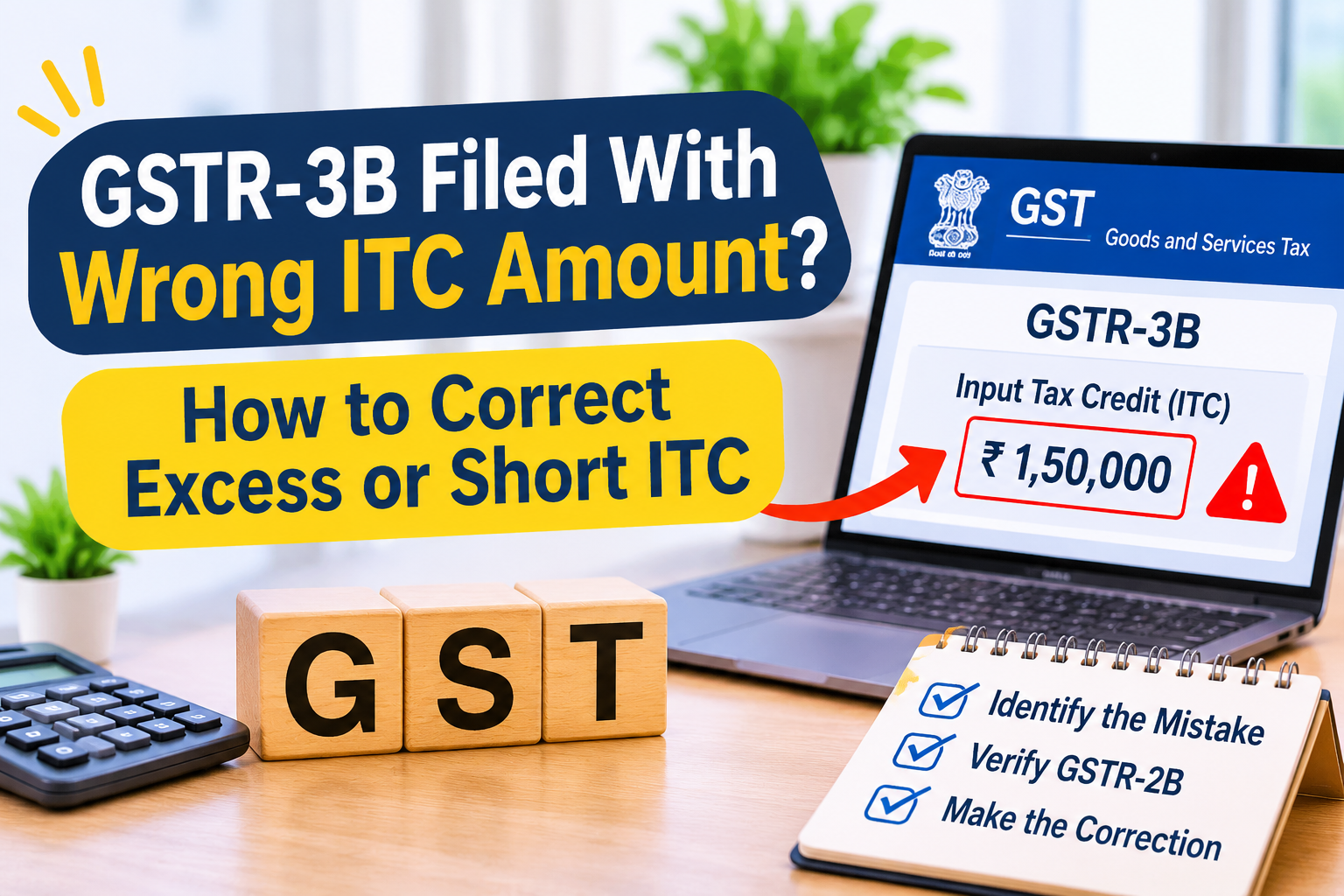
What Happens If You Claim Excess ITC in GSTR-3B?
Claiming excess ITC can increase the credit available in your electronic credit ledger and affect the calculation of GST payable.
However, the treatment depends on whether the excess credit was merely availed or was also utilised.
Under Section 50(3) of the CGST Act, interest may be applicable where ITC has been wrongly availed and utilised. Therefore, businesses should not automatically assume that interest applies to every incorrect ITC entry.
You should:
- Identify the exact excess ITC amount.
- Check the relevant GSTR-3B and GSTR-2B.
- Verify whether the excess credit was utilised.
- Determine the applicable reversal and interest, if any.
- Make the correction through the prescribed GST return process.
Maintaining a clear reconciliation statement can help support the correction.
What If You Claimed Less ITC Than Eligible?
Sometimes businesses report lower ITC because a purchase invoice was missed, an eligible credit was overlooked or the accounting records were incomplete.
Before claiming missed ITC, verify the following:
- The purchase invoice is genuine and contains the required particulars.
- Goods or services have been received.
- The supplier has reported the invoice where required under the applicable provisions.
- The credit is not blocked under Section 17(5).
- Other conditions under Section 16 of the CGST Act are satisfied.
- The claim is within the statutory time limit.
Under Section 16(4) of the CGST Act, the general time limit for claiming ITC is 30 November following the end of the relevant financial year or the date of furnishing the annual return, whichever is earlier, subject to applicable exceptions and special provisions.
How to Correct an ITC Mistake After Filing GSTR-3B
Since a filed GSTR-3B generally cannot be revised, the correction must be made through the applicable subsequent-return procedure.
Step 1: Identify the Nature of the Error : First determine whether you claimed excess ITC, missed eligible ITC or reported an incorrect reversal.
Step 2: Reconcile Purchase Records With GSTR-2B : Compare your purchase register, supplier invoices and GSTR-2B. Identify duplicate entries, missing invoices and ineligible credits.
Step 3: Calculate the Correct ITC Amount : Prepare a month-wise reconciliation statement showing:
- ITC originally reported.
- Actual eligible ITC.
- Excess ITC claimed, if any.
- Eligible ITC missed, if any.
- Reversal required.
- Potential interest liability, where applicable.
Step 4: Make the Required Correction : Depending on the error, report the appropriate adjustment or reversal in a subsequent GSTR-3B, following the applicable GST rules and return instructions.
Step 5: Check the Electronic Credit Ledger : After making the correction, verify the impact on your electronic credit ledger and outstanding GST liability.
How Can You Avoid ITC Mistakes in Future GST Returns?
Businesses can reduce ITC reporting errors by following a regular reconciliation process before filing GSTR-3B.
Some useful practices include:
- Reconcile the purchase register with GSTR-2B every month.
- Check duplicate and missing purchase invoices.
- Separate eligible and ineligible ITC.
- Review credit notes and purchase returns.
- Verify ITC reversals before preparing the return.
- Maintain proper supporting invoices and accounting records.
- Review the final GSTR-3B figures before submission.
A monthly GST reconciliation process is generally more effective than waiting until the annual return to identify differences.
How Sharda Associates Helps With GSTR-3B and ITC Errors
An incorrect ITC claim can affect GST liability, credit utilization, and return reconciliation. Identifying the exact error is important before making any adjustment.
Sharda Associates provides GST compliance and consultancy support to businesses, including:
- GSTR-2B and purchase register reconciliation.
- ITC eligibility verification.
- Identification of excess or missed ITC.
- Review of ITC reversals.
- GST return error identification.
- Guidance on correcting GST reporting differences.
With proper reconciliation and professional guidance, businesses can address ITC mistakes and maintain more accurate GST records.
Conclusion
Filing GSTR-3B with an incorrect ITC amount can create reconciliation problems and affect your GST liability. Whether you have claimed excess credit or missed eligible ITC,
The first step is to identify the exact difference and verify the applicable correction procedure. Regular GSTR-2B reconciliation, proper invoice records, and timely ITC verification can help prevent these errors. For professional assistance with GST reconciliation, ITC verification and return compliance, businesses can consult Sharda Associates.
Frequently Asked Questions
1. Can GSTR-3B be revised after filing?
Generally, no. Once filed, GSTR-3B cannot be revised like an income tax return. Eligible corrections are made through the prescribed subsequent-return process.
2. What happens if excess ITC is claimed in GSTR-3B?
Excess ITC may need to be reversed. Interest under Section 50(3) may apply where ITC was wrongly availed and utilised.
3. Can missed ITC be claimed in the next GSTR-3B?
It may be possible if the credit is eligible, all applicable conditions are satisfied and the statutory time limit has not expired.
4. Is interest payable on wrongly claimed ITC?
Interest may apply when ITC has been wrongly availed and utilised, subject to the applicable provisions and calculation rules.
5. How can I check whether my ITC claim is correct?
Compare your purchase register with GSTR-2B, verify invoice details, check blocked credits and review all applicable ITC reversals before filing GSTR-3B.
6. What should I do if GSTR-2B and GSTR-3B show different ITC amounts?
Identify the reason for the difference by checking purchase invoices, supplier reporting, reversals and eligible credit. Then determine whether a correction is required under the applicable GST provisions.