
Biomass Pellet
MNRE’s biomass subsidy process is simplified, delivering central financial assistance for pellets,with ₹21 lakh per TPH non-torrefied and ₹42 lakh torrified; in-principle approval via BioURJA portal replaces techno-economic report. Sources
Introduction to MNRE Biomass Briquettes & Pellets Subsidy
The Ministry of New and Renewable Energy (MNRE) has launched a streamlined subsidy scheme to encourage the establishment of biomass briquettes and pellets manufacturing units across India. This initiative aims to promote renewable energy, reduce agricultural waste burning, and support eco-friendly fuel production. Biomass briquettes and pellets are widely used as alternatives to coal and conventional fuels in industries, boilers, and power plants. Under this scheme, eligible businesses can receive financial assistance for plant setup, machinery, and infrastructure development. The subsidy helps lower project investment costs, improves business profitability, creates rural employment opportunities, and contributes to environmental sustainability and India’s clean energy mission.
On 4 April 2026, the Ministry of New and Renewable Energy (MNRE) introduced updated notifications that simplified the subsidy claiming process for biomass briquettes and pellets manufacturing projects. These new guidelines aim to make subsidy approvals faster, transparent, and more accessible for entrepreneurs and MSMEs. MNRE continues to provide production-based Central Financial Incentives (CFI) to encourage renewable fuel manufacturing and reduce dependence on conventional fuels.
Under the revised 2026 subsidy structure, entrepreneurs planning a biomass briquettes manufacturing project can receive financial assistance of up to ₹9 lakh per ton per hour production capacity, subject to a maximum eligible capacity of 5 tons per hour. Therefore, eligible projects can obtain subsidy benefits of up to ₹45 lakh for biomass briquettes manufacturing units, helping reduce project costs and improve business profitability.
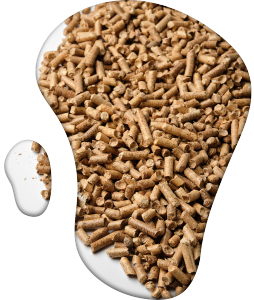
Unlock Lucrative 2026 MNRE Pellet Subsidy Rates for Maximum Project Returns
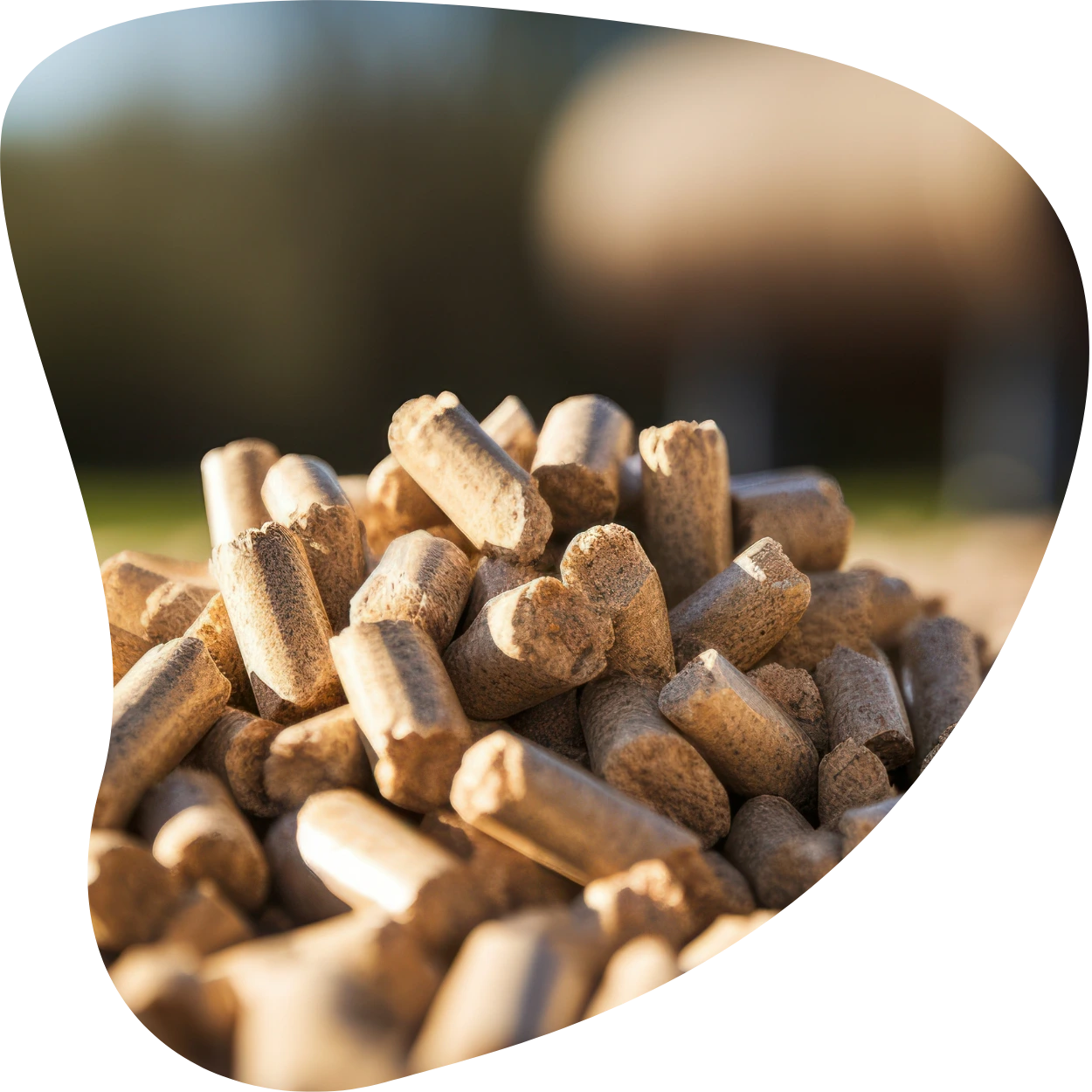
1. Subsidy for non-torrified biomass pellets
The Ministry of New and Renewable Energy (MNRE) provides financial assistance for non-torrified biomass pellet manufacturing units to promote clean and sustainable fuel production in India. Non-torrified biomass pellets are made from agricultural waste, sawdust, and other organic residues and are commonly used in industrial boilers and heating systems. Under the 2026 MNRE subsidy scheme, eligible businesses can receive capital subsidies based on plant capacity and project investment. The scheme encourages the use of renewable energy, reduces stubble burning, lowers environmental pollution, and supports rural employment generation while helping entrepreneurs establish profitable biomass fuel manufacturing businesses.
2. Subsidy for Torrified Pellets
The Ministry of New and Renewable Energy (MNRE) also provides attractive financial assistance for torrified pellet manufacturing projects under its biomass energy promotion scheme. Torrified pellets are advanced biomass fuels produced through a thermal treatment process that improves energy efficiency, storage capacity, and combustion performance. These pellets are widely used in thermal power plants and industrial boilers as a cleaner alternative to coal. Under the 2026 MNRE subsidy structure, eligible entrepreneurs and industries can receive capital support based on plant production capacity and approved project costs. This subsidy helps reduce investment burden, encourages renewable fuel production, and supports India’s clean energy and carbon reduction goals.
Contact Us
1. Easy IP Approval Procedure (Prior to Production Commencement)
This means that before manufacturing in your unit starts, you must first file IP applications with the Ministry, which are accessible through the Bio Urja portal. Therefore, you should submit your MNRE IP application for the capacity of the plant you wish to build up while you are planning a unit before production, such as when you are asking for a loan or putting up your machinery during that time.
You must submit a claim for the subsidy following IP approval. This procedure has been made simpler.
You must now submit an application for IP approval. Following the start of production, nodal authorities such as IREDA or other affiliated agencies conduct implementation inspections during this time.
You receive subsidy benefits following the inspection, which are determined by the production capacity framed. There used to be some technical issues and a lengthy application submitting process. It has now been greatly simplified by the department.
2. Techno-Economic Report Is Not Required Any More
Your banker, from whom you obtained the bank loan, had to sign a techno-economic viability or feasibility study that you had to submit on the Bio Urja portal as part of the previous procedure. Customers frequently encountered issues when banks were reluctant to sign or certify such techno-feasibility studies due to their ignorance of the technical aspects;
they are knowledgeable about the project’s financial viability but not its techno-feasibility aspects. Bankers and investors used to have a lot of problems because of this, and application files occasionally took longer than expected.
You are no longer required to submit this report because the techno-feasibility report clause has been formatted out. This will streamline your claim process and make the application submission process more simpler.
3. No More EIA Reports or Site Photos
The next change is that high-resolution photos of the location were previously taken. Along with the applications, you had to send in high-quality photos of your location. This has also been taken out.
This was accompanied by a requirement that you produce an Environmental Impact Assessment (EIA) report, which is typically necessary for highly hazardous commodities in order to evaluate the environmental impact of their manufacture. For biomass pellets and briquettes, that clause has also been eliminated, which would greatly simplify matters. No EIA certificate will be required.
4. Sales Agreement Flexibility
Additionally, the ministry included a clause requiring a two-year sales agreement when we submitted the claiming documents following our inspection. A copy of a contract proving that you have a two-year contract to sell biomass pellets had to be submitted. This was also a very difficult clause because, in most cases, we don’t need to have such an agreement for two years when we are producing. Now, though, they have greatly simplified it.
The next change is that high-resolution photos of the location were previously taken. Along with the applications, you had to send in high-quality photos of your location. This has also been taken out.
This was accompanied by a requirement that you produce an Environmental Impact Assessment (EIA) report, which is typically necessary for highly hazardous commodities in order to evaluate the environmental impact of their manufacture. For biomass pellets and briquettes, that clause has also been eliminated, which would greatly simplify matters. No EIA certificate will be required.
You may provide any copy of a sales agreement or an off-take agreement, which is an arrangement to sell or pick up your pellets from your factory at a later time. It is no longer required to be at least two years, indicating that the two-year requirement has been lifted. Therefore, any sales agreement or potential off-take agreement is acceptable.
How can you have a sales agreement in place while your production hasn’t begun?
Therefore, you may demonstrate an off-take agreement in this situation. If you begin manufacturing, any XYZ buyer will have a contract with you that states that you will sell to them. Additionally, the timescale has been eliminated, so it is no longer required to be two years; it can be one year or six months. To ensure that the Ministry knows that you are ready to sell what you are generating, all you need to do is submit a sales or off-take agreement. This clause is excellent.
5. Permitted IoT-Based Monitoring (in lieu of SCADA)
Along with this, many investors were concerned about a very technical and complex aspect: you had to establish a SCADA system or a remote monitoring system at your unit in order to measure production capacity. Because the entire subsidy is related to your plant’s production capacity, the Ministry needed to know how much your unit produced and at what capacity in order to measure it. A SCADA system or a remote monitoring system had to be installed, and its login and production information had to be transmitted to the Ministry.
The Ministry has now issued numerous relaxations in this regard. You no longer require an Internet of Things (IoT)-based monitoring system, which means any internet-based monitoring system that allows you to confirm your site’s production. It’s really simple: you can install any IoT-based monitoring system and share the data with the department, or you can give an undertaking that requires you to submit quarterly biomass pellet or briquette production to your department. It’s pretty simple: you can install any IoT-based monitoring system and share the data with the department to confirm that your production scale fits the standards, and the department will issue grants or subsidies appropriately.
So, don’t be concerned that you won’t receive MNRE benefits or that there will be significant delays. The agency has shown excellent initiative in this regard, and the biomass sector’s rapid growth across the country is extremely beneficial to companies.
We want to notify you about the other simpler measures they have planned. The next key aspect is that previously, after submitting your IP application and starting production, you had to notify the Ministry that you had started production. However, the strategy for doing so was not defined: how to provide advance notice, whether by mail, documents, physically, or by an option on their site to notify them. This used to cause numerous problems.
Now, the Ministry has included this feature on the Bio Urja webpage. This means that after you begin production in your units, you will be able to update this information on the site. It will be much easier for you to notify the Ministry now, as it was previously rather difficult.
6. Production operation time is reduced from 16 to 10 hours.
In the past, companies with lower order volumes found it difficult to satisfy the necessary operational hours of 16 hours per day for three consecutive months required for plant capacity checks. Due to the Ministry’s recent relaxation of these regulations, performance evaluations are now more adaptable and more in line with actual production realities.
Currently, 10 hours of operations each day will be taken into consideration rather than 16. Accordingly, your facility should operate for at least 10 hours per day in order to gauge your production capacity in accordance with the new standards. You can run your facility for at least ten hours and measure your production capacity, which will make things easier.
7. Full Subsidy Simplified Performance Benchmark
In addition, the incentives you received—also known as CFA, or Central Financial Assistance—and the amount you would receive—whether it was 100% or less, and at what capacity—were also major sources of confusion.
For instance, you purchased IP for a manufacturing capacity of 5 TPH (tons per hour). How much is your production, though, when it is measured? To what extent have you reached your rated capacity? You might not be able to produce precisely 5 TPH if your plant is 5 TPH because, in general, 100% of the rated capacity is not achievable. It has been much simplified here.
You will receive 100% CFA if your production capacity is 80% or above of your rated capacity. Put simply, 80% of 5 is 4, which is the same as your stated production capability of 5 tons per hour. Therefore, you will receive full grants and full subsidy advantages in accordance with your rated capacity, which is set at 5 tons, if your plant’s production per hour is 4 tons or more during the performance inspections. This indicates that you have achieved 80% or more of your rated capacity.
They have set a standard here, though, if you can’t reach 80% of your rated capacity. You won’t gain anything if you reach 50% or less of your rated capacity. If you reach 50% to 80%, you will receive a commensurate bonus.
If your plant has a rated capacity of 5 tons but you only produce 3.5 tons (70 percent), for instance, your subsidy will be prorated as follows: (100 / 80) × 70 = 87.5% of the total amount. You are only need to operate the plant for ten hours per day under the new regulations. Get 80% or more of your rated capacity to receive a 100% subsidy; if you fall below 50%, it’s proportionate.
8. The only industry eligible for a subsidy is pellet manufacturing.
Additionally, they have made it simpler by requiring you to align a one-minute video of your operational plant with a geographic location in order to confirm that your facility is operational. This is a really easy method that will make your life much easier. Here, the department has also offered an explanation, which is crucial. In order to benefit from both briquettes and pellets, many of our clients have set up combination operations for both or intend to do so.
However, the agency has recently made it clear that the benefits are limited to pellet manufacture. Therefore, please be mindful if you are setting up both machines in your plant. Regardless of whether it is torrified or not, you will only receive subsidy advantages for the installation of new machinery—not for old machinery—and only for pellets.
9. MNRE or CPCB: One Subsidy Scheme at a Time
Along with this, the Ministry has planned another clarification addressing the NCR region, which comprises Haryana, Punjab, and the territories surrounding Delhi. As previously mentioned in our videos and ebooks, the Central Pollution Control Board (CPCB) used to provide one-time financial incentives. Many investors and businessmen used to be perplexed about whether they could take both benefits or just one, or whether they could take the CPCB benefit or its expanded amount, because 40% was allowed in that and 30% was allowed in this for machinery costs.
So there was a lot of misunderstanding in the market. Here, the Ministry has emphasized that you can only receive one of the two perks. You can either take advantage of CPCB or MNRE benefits. You also have to provide an undertaking for this. This has been very clearly stated: you can only receive one of the two rewards. When you accept this benefit from the Ministry, you must provide an undertaking declaring that you have not received any benefit for the same plant from the CPCB. So the Ministry has cleared your doubts and clarified this.
Market Potential of Biomass Briquettes
The demand for biomass briquettes has been on the rise, driven by increasing awareness of sustainable energy solutions, government policies promoting renewable energy, and escalating fossil fuel costs.
- Industrial Applications:
Biomass briquettes are widely used in industries such as power generation, cement, brick kilns, and food processing as a substitute for coal and other fuels. Their high calorific value and low ash content make them an attractive choice for industrial applications. - Domestic Use:
In rural and semi-urban areas, briquettes are increasingly being used as a cooking and heating fuel. They offer a smokeless, odorless, and efficient alternative to traditional wood and dung. - Export Potential:
Countries in Europe, North America, and Asia are significant importers of biomass briquettes due to stringent environmental regulations and rising energy demands. Exporting briquettes to these markets can be highly profitable. - Government Push for Renewable Energy:
With India targeting 50% of its energy needs from renewable sources by 2030, biomass briquettes play a crucial role in achieving this goal. Policies like Renewable Energy Certificates (RECs) and Renewable Purchase Obligations (RPOs) are fostering the adoption of biomass fuels. - Environmental Benefits:
Biomass briquettes reduce deforestation, cut greenhouse gas emissions, and provide a practical solution to agricultural waste management. These benefits make them an attractive option for businesses seeking sustainable and eco-friendly operations.
Why Choose Sharda Associates?
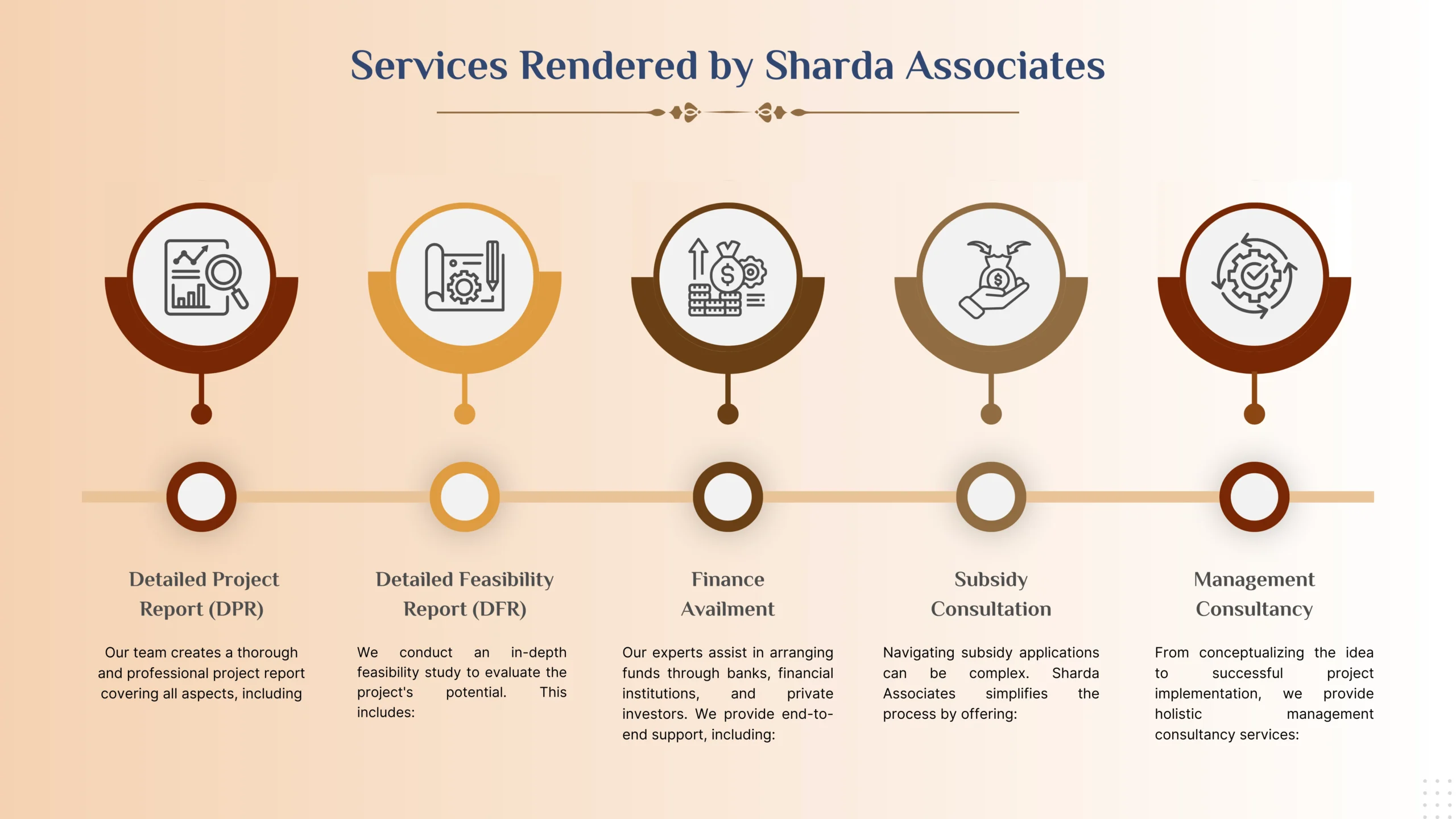
Sharda Associates is a trusted name in project consultancy with years of experience in renewable energy, finance, and subsidy management. Our commitment to client success ensures personalized solutions for every project. We take pride in simplifying complex processes, delivering actionable insights, and ensuring that your biomass briquette venture achieves its full potential.
Partner with Sharda Associates to make your biomass briquette business a sustainable and profitable success story!
Frequently Asked Questions
Biomass pellets are compacted organic materials such as wood, crop residues, or agricultural waste that are utilized as an environmentally acceptable fuel. They are renewable, cost-effective, and efficient for heating, power generation, and industrial use.
Biomass pellets are made by drying and compressing organic waste under high pressure in a pellet mill. There are no chemicals required, making them environmentally safe and simple to store or transport.
Biomass pellets minimize greenhouse gas emissions, lower energy prices, and serve as a renewable energy source. They are efficient, portable, and can replace coal or firewood in companies and households.
Biomass pellets are used to fuel boilers, power plants, heating systems, and furnaces. Industries, farms, and residential settings use them to reduce reliance on fossil fuels and encourage renewable energy sources.
Yes, biomass pellets are renewable, lower carbon emissions, and make use of waste materials. They are seen as a sustainable alternative to coal or fossil fuels, helping to clean the air and protect the environment.
Small-scale pellet manufacture at home is feasible with tiny pellet machines. Farmers and entrepreneurs often produce pellets from crop residues or wood waste for heating or small business purposes.