
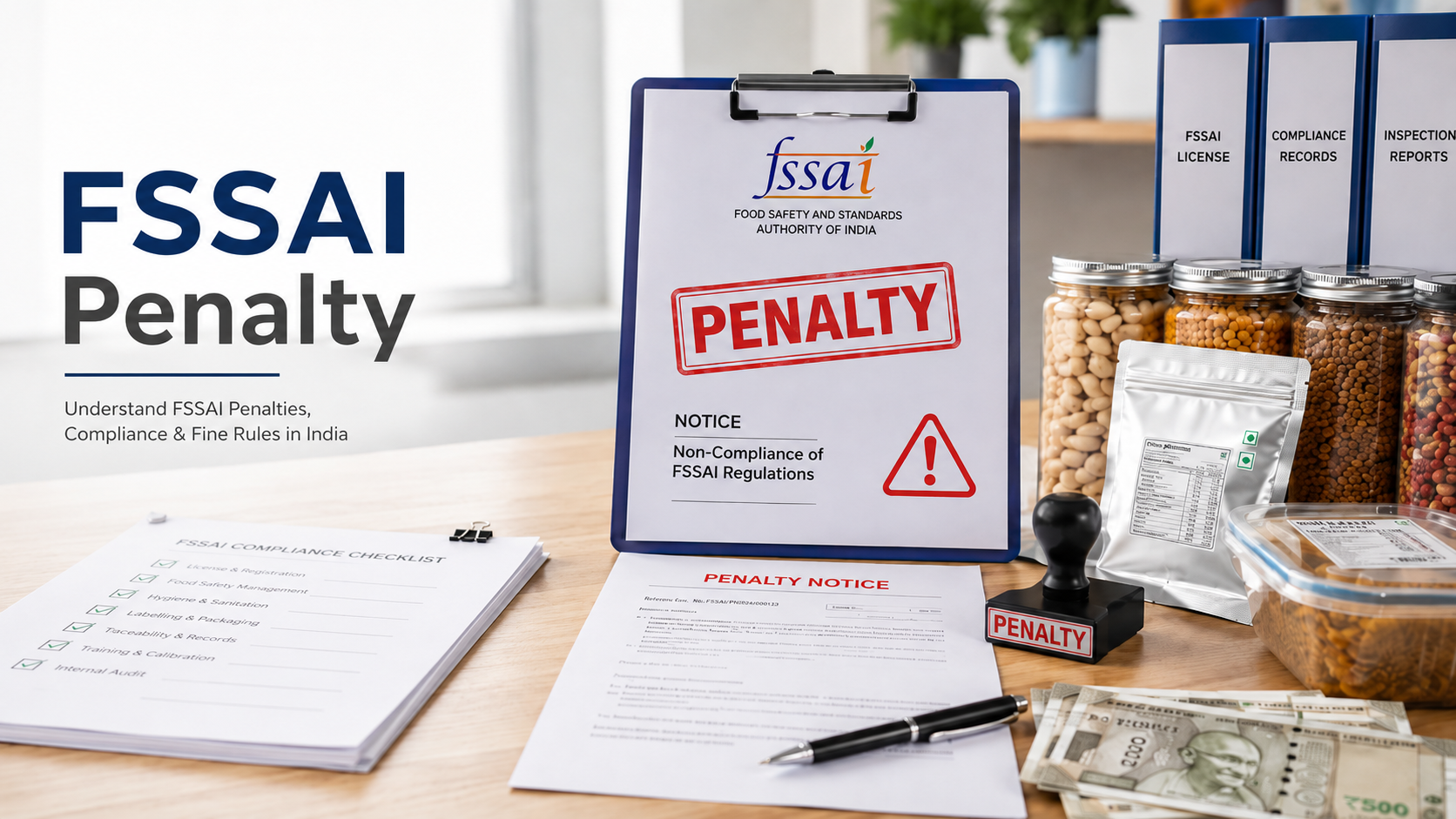
FSSAI Penalty: Food safety regulation is a critical framework for Indian food sector enterprises. Every Food Business Operator (FBO) must adhere to strict guidelines to ensure that the items they make, store, distribute, or sell are safe for public consumption.
The Food Safety and Standards Authority of India is tasked with regulating and monitoring food enterprises under the Food Safety and Standards Act, 2006. It assures that food sold in the market meets sanitary, labeling, and quality regulations.
What is FSSAI statutory compliance?
FSSAI statutory compliance entails adhering to all rules, regulations, and legal requirements enacted by the Food Safety and requirements Act, 2006.
Every food firm must adhere to:
- Food Regulatory Authority license rules
- Food hygiene requirements.
- Labeling Regulations
- Food Quality Standards
- Safety test standards
- Packaging norms
Failure to comply may result in consequences ranging from monetary fines to jail, depending on the gravity of the offense.
What are the FSSAI Penalties in India?
Food Authority penalties are fines imposed on food firms that violate food safety regulations. These punishments may include:
- Fines range from ₹25,000 to ₹10 lakh or higher.
- Suspended Food Regulatory Authority license
- Cancellation of License
- Product recall
- Seizure of food
- Imprisonment in heinous cases
The punishment amount varies according to the nature and severity of the offense.
Major FSSAI Offences and Penalties
- Running a food business without an FSSAI license.
Running a food business without a proper Food Regulatory Authority registration or license is a serious offense.
Fine:
imprisonment for up to six months.
Fines up to ₹5 lakh.
- Selling substandard food.
Food that does not meet the quality criteria specified by the FSSAI is termed substandard.
Fine:
Fines up to ₹5 lakh.
- Mislabeled or misleading food products
False labeling, deceptive claims, and misleading ads are strictly forbidden.
Fine:
Misbranding carries a fine of up to ₹3 lakh.
Misleading advertisements can result in a punishment of up to ₹10 lakh.
- Unsafe Food Products
Selling improper food that may endanger consumers is one of the most serious infractions.
Fine:
Imprisonment for 6 months to life (based on harm or death)
Fines up to ₹10 lakh.
- Food Adulteration
Food additives that are hazardous or of low quality are strictly forbidden.
Fine:
Up to ₹2 lakh for non-harmful adulteration.
Up to ₹10 lakh for hazardous adulteration.
- Unsanitary or hygienic food production
Food produced in filthy or dangerous settings violates hygiene regulations.
Fine:
Fines up to ₹1 lakh.
- Failure to Follow Food Safety Officer’s Instructions
If a food firm disregards inspection or compliance instructions.
Fine:
Fines up to ₹2 lakh.
- Incorrect or False Information Submission.
Providing authorities with incorrect data or deceptive paperwork.
Fine:
imprisonment for up to three months.
Fines up to ₹2 lakh.
Types of FSSAI Compliance Requirements:
- Licensing Compliance.
Each food firm must obtain:
- Basic Registration (small Businesses)
- State License (Medium Businesses)
- Central License (Large Businesses)
- Hygiene Compliance.
Food firms must maintain:
- Clean the production areas.
- Safe storage conditions.
- Proper sanitation system.
- Employee Hygiene Standards
- Label Compliance
Food packaging must contain:
- Ingredient list.
- Expiry Date
- Manufacturer’s details
- Nutritional Information
- FSSAI’s license number
- Quality Compliance.
Food must meet
- Safety Standards
- Contamination limits
- Approved Ingredient Usage Rules
License Suspension and Cancellation Rules
FSSAI authorities can suspend or terminate licenses in the following cases:
- Repeated infractions.
- Failure to correct improvement notices.
- Serious hygiene violations.
- Unsafe Food Production Practices
Failure to comply with improvement notices might result in the suspension or cancellation of the license.
The importance of FSSAI compliance for businesses
Food Authority compliance is critical since it helps:
- Protect consumer health.
- Avoid the legal fines.
- Build brand trust.
- Improve the business’s reputation.
- Expand market opportunities.
Noncompliance can erode business credibility and result in significant financial losses.
Common Reasons for FSSAI Penalties.
Many food firms face sanctions for:
- No valid FSSAI license.
- Poor hygienic practices.
- Misleading food labels
- Sale of expired products.
- Adulterated ingredients
- Improper storage conditions
How to Avoid the FSSAI Penalties
- Obtain the proper license.
Always register your food business with the FSSAI before beginning operations.
- Maintain hygiene standards.
Follow the necessary cleaning, storage, and food handling procedures.
- Follow Labeling Rules
Ensure that all packaged foods provide accurate and up-to-date information.
- Conducting internal audits on a regular basis
Perform internal checks to guarantee compliance.
- Train employees.
Teach personnel about food safety and cleanliness.
Latest updates on FSSAI compliance FY 2025-26.
- Stricter punishments for dangerous foods
- Increased digital inspections.
- Strong emphasis on food traceability.
- More stringent labeling enforcement
- Enhanced surveillance of packaged food items
Documents Required for FSSAI Compliance.
Food firms must maintain:
- Food Regulatory Authority license document and GST registration.
- Food Safety Records
- Manufacturing records
- Testing reports
- Audit reports
- Employee Training Records
Conclusion
FSSAI sanctions and mandatory compliance play an important role in ensuring food safety and public health in India. The Food Safety and Standards Act of 2006 establishes tight regulations to govern food enterprises and ensure safe consumption.
Businesses must follow licensing restrictions, cleanliness standards, labeling requirements, and quality norms to avoid penalties, legal action, and license revocation.
Proper compliance not only avoids penalties, but it also assists businesses in building trust, increasing reputation, and growing sustainably in the food industry.
Sharda Associates offers professional assistance with FSSAI registration, compliance management, audit support, and company licensing.
Frequently Asked Questions
- What is the FSSAI statutory compliance for food enterprises in India?
Food Authority statutory compliance refers to adhering to all food safety norms, cleanliness standards, labeling requirements, and licensing criteria outlined in the Food Safety and Standards Act of 2006.
- What are the consequences of running a food business without an FSSAI license in India?
Operating without an Food Regulatory Authority license can result in imprisonment for up to six months and a fine of up to five lakh rupees under food safety legislation.
- What happens if a food business sells subpar or low-quality food?
Selling poor food can result in severe fines of up to five lakh rupees and probable legal action, depending on the gravity of the offense.
- Can the Food Regulatory Authority cancel or suspend a food company license due to noncompliance issues?
Yes, the Food Authority has the authority to suspend or terminate licenses if enterprises persistently violate food safety regulations or fail to address compliance improvement notifications.
- What is the punishment for selling misbranded or deceptive food goods in India?
Misbranding or deceptive food advertisements can result in fines of up to 10 lakh rupees, depending on the severity of the infraction.
- Is hygiene necessary to avoid FSSAI penalties in food business operations?
Yes, inadequate hygiene and unhygienic circumstances can result in penalties, fines, and possibly suspension of the FSSAI license by authorities.
- What documents are necessary for Food Regulatory Authority compliance and audits in India?
Businesses must save their FSSAI license, GST registration, food testing reports, audit records, and manufacturing and safety compliance documentation.
- Why is FSSAI compliance critical for food industry growth and legal security?
Food Regulatory Authority compliance provides legal protection, avoids penalties, increases consumer trust, boosts brand reputation, and promotes long-term business success.