
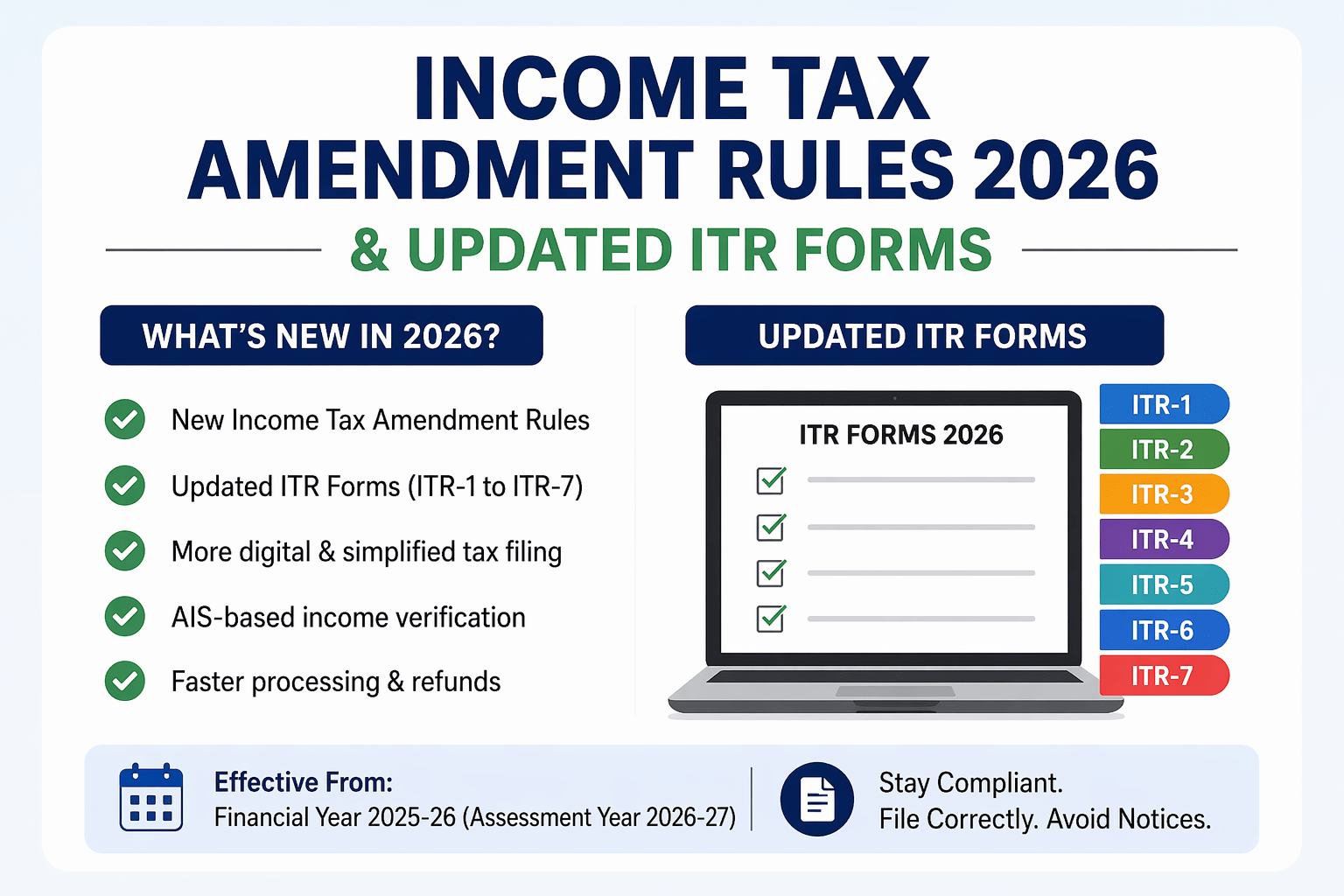
Income tax laws in India are updated regularly to make tax compliance simpler, improve transparency, and address the changing needs of taxpayers and businesses. These updates, known as Income Tax Amendment Rules, are issued by the Government of India and the Central Board of Direct Taxes (CBDT). They may introduce new compliance requirements, revise tax return forms, modify reporting standards, or simplify existing provisions. Recent amendments have also aligned tax administration with the new legislative framework, while ensuring continuity of existing approvals and registrations during the transition.
For salaried employees, business owners, startups, professionals, and investors, understanding these amendments is essential. Missing an important rule change can lead to incorrect tax filing, delayed refunds, notices from the Income Tax Department, or unnecessary penalties. Staying updated helps taxpayers make informed financial decisions and remain compliant with the latest regulations.
At Sharda Associates, we help individuals, startups, MSMEs, and companies understand the latest income tax provisions through professional consultancy, tax planning, return filing, and compliance support. Our experienced tax professionals also assist with CA-certified financial reports, project reports, and business documentation, ensuring that clients remain compliant with the latest tax laws while optimizing their financial planning.
What Are Income Tax Amendment Rules?
Income Tax Amendment Rules are changes made to the Income-tax Rules to improve tax administration, simplify compliance, and incorporate new legal or procedural requirements. These amendments may affect income tax return (ITR) forms, tax reporting obligations, deductions, exemptions, digital filing processes, TDS provisions, or other compliance requirements.
Unlike the annual Union Budget, which introduces policy proposals, amendment rules generally provide the operational framework needed to implement those changes. They help taxpayers, employers, businesses, and tax professionals understand how the revised provisions should be applied in practice.
The government periodically issues these amendments to reduce ambiguity, strengthen digital compliance, improve taxpayer services, and make the overall tax system more transparent. Many recent updates have focused on simplifying return filing, improving reporting accuracy, and supporting a smoother transition to the updated income tax framework.
Major Areas Covered Under Income Tax Amendments
Although amendment rules vary from year to year, they generally focus on several important areas of tax administration.
1. Changes in Income Tax Return (ITR) Forms
One of the most common amendments relates to the revision of ITR forms. These changes ensure that taxpayers provide updated financial information and comply with new reporting requirements. Every assessment year, the CBDT may revise return forms to improve disclosure and simplify filing procedures.
2. Updated Reporting Requirements
The Income Tax Department continues to strengthen reporting standards by expanding digital information collection. Taxpayers may be required to disclose additional financial details relating to investments, foreign assets, business transactions, or specified income sources depending on the applicable provisions.
3. Digital Compliance
Recent amendments encourage greater use of online verification, electronic documentation, and digital filing systems. This reduces paperwork while improving efficiency for both taxpayers and tax authorities.
4. TDS and Tax Compliance
Amendments also revise procedures relating to Tax Deducted at Source (TDS), return filing, certificates, and compliance requirements. These updates help improve tax collection while simplifying administrative procedures for deductors and taxpayers.
How Do These Amendments Affect Businesses?
Businesses are among the most affected by changes in income tax rules because they regularly deal with accounting, tax deductions, financial reporting, and statutory compliance. Even minor amendments may require updates to accounting systems, payroll processes, tax planning strategies, or reporting formats.
Companies should review new rules carefully before filing their returns to ensure that all disclosures are accurate and complete. Maintaining proper books of accounts, preserving supporting documents, and obtaining professional tax advice can help businesses remain compliant while minimizing tax-related risks.
For startups and MSMEs, timely compliance is particularly important because banks, investors, and government authorities often examine tax records before approving loans, subsidies, or funding proposals.
How Individuals Can Stay Compliant
For individual taxpayers, keeping up with changing tax rules is equally important. Filing returns using outdated information or overlooking revised provisions may result in processing delays or additional scrutiny.
A few simple practices can help taxpayers remain compliant:
- File income tax returns before the due date.
- Maintain proper records of income and investments.
- Verify Form 26AS, AIS, and TDS details before filing.
- Report all taxable income accurately.
- Keep supporting documents for deductions and exemptions.
- Consult a qualified tax professional whenever major amendments affect your financial situation.
Following these practices helps reduce errors and ensures a smoother return filing experience.
Professional Tax Assistance Can Make Compliance Easier
Income tax laws continue to evolve with changing business practices and government policies. While many amendments are intended to simplify compliance, understanding their practical impact often requires professional guidance.
Whether you are a salaried employee, freelancer, startup founder, MSME owner, or established business, expert assistance can help you interpret the latest amendments correctly, prepare accurate tax returns, and maintain complete compliance with applicable laws. Professional tax planning also helps identify legitimate deductions, improve financial record-keeping, and reduce the risk of future tax disputes.
With experienced tax consultants and CA professionals, Sharda Associates provides comprehensive support for income tax return filing, tax planning, business compliance, financial reporting, and project report preparation, helping individuals and businesses confidently manage their tax responsibilities under the latest Income Tax Amendment Rules.
Conclusion
The Income Tax Amendment Rules 2026 represent a major shift toward a fully automated and data-driven tax system in India. While these changes improve transparency and efficiency, they also increase the responsibility of taxpayers to maintain accurate financial records.
Proper understanding of updated ITR forms and compliance rules is essential to avoid errors, penalties, and delays in refunds.
If you need professional assistance for income tax filing, GST compliance, or financial reporting, Sharda Associates is here to help you.
Get your free sample consultation today and simplify your tax filing process with expert guidance. You can contact us at +91 8989977769 for any query or if you require our services to prepare a project report or a bank loan
Frequently Asked Questions.
1. What are the Income Tax Amendment Rules 2026?
Income Tax Amendment Rules 2026 are updated guidelines issued by the Income Tax Department to improve tax filing accuracy and transparency. They include changes in ITR forms, digital income reporting, AIS integration, and stricter verification of financial transactions to reduce errors and ensure better compliance across all taxpayer categories in India.
2. What is new in ITR Forms 2026?
ITR Forms 2026 now include more detailed income reporting sections. Taxpayers must disclose capital gains, freelance income, and digital earnings more clearly. AIS auto-filled data is expanded, making filing easier but more strict. Each ITR form has been redesigned for better accuracy, transparency, and automated cross-verification with financial records.
3. Who is affected by these new rules?
These rules affect all taxpayers including salaried individuals, freelancers, business owners, companies, and investors. Anyone earning income in India must follow updated reporting requirements. Even small digital earnings or investments now require proper disclosure to avoid mismatches and notices from the Income Tax Department during return processing.
4. Why is AIS important in 2026 tax filing?
AIS is important because it automatically shows your financial data like salary, bank interest, TDS, and investments. In 2026, ITR forms are matched directly with AIS. If there is any mismatch, it can trigger verification or notice. That’s why accurate AIS checking before filing is very important.
5. How can Sharda Associates help in income tax filing?
Sharda Associates helps taxpayers with complete income tax filing services including ITR preparation, AIS reconciliation, GST compliance, and tax planning. They ensure accurate reporting, error-free filing, and maximum tax benefits. Their expert support reduces chances of notices and makes the entire filing process simple and stress-free for individuals and businesses.