
MP Health Sector Investment Promotion Policy
Madhya Pradesh’s healthcare demand consistently exceeds supply—limited tertiary care, below-average doctor ratios, and near-absent organised healthcare in tribal districts. The MP Health Sector Investment Policy offers capital subsidy, interest subsidy, and single-window clearance for hospitals and medical colleges. Sharda Associates handles your complete investment journey

Introduction
Introduction to the Health Sector Investment Policy
Madhya Pradesh’s healthcare landscape is being transformed through the MP Health Sector Investment Promotion Policy The policy specifically targets private investment in healthcare infrastructure across the state—prioritizing multi-specialty and super-specialty hospitals in Tier 2 and Tier 3 cities, medical colleges in underserved districts, diagnostic centre networks, medical device manufacturing, and pharmaceutical production. The policy is designed to improve healthcare access for MP’s 8.5 crore population while creating a commercially viable investment environment for private healthcare operators.

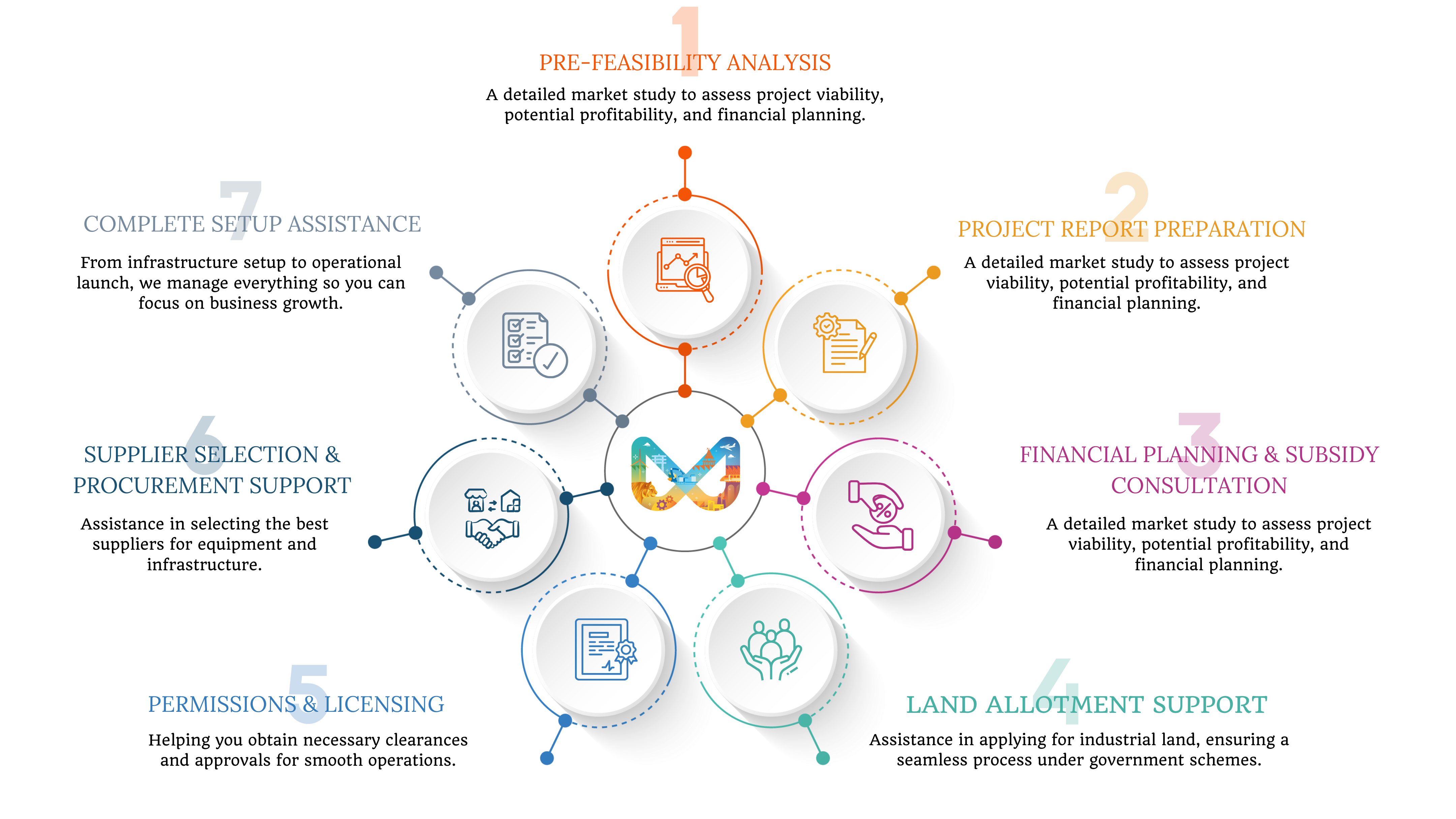
Sharda Associates provides end-to-end consultancy for healthcare investments under this policy—feasibility reports, CA-certified DPRs for bank loans, MPIDA land allotment applications, capital subsidy documentation, CDSCO and drug licence compliance, NaBH accreditation preparation, Ayushman Bharat PM-JAY empanelment, and ongoing CA compliance for operating healthcare entities
Narendra Modi
Prime Minister India


Dr. Mohan Yadav
Chief Minister Madhya Pradesh
Benefits
Key Incentives, Subsidies & Benefits
1. Capital Investment Subsidy
Hospitals, nursing homes, and medical colleges investing in Madhya Pradesh receive a capital investment subsidy on project cost:
- Multi-specialty hospitals (50+ beds): 15–25% capital subsidy on project cost, maximum ₹15 crore
- Super-specialty hospitals (100+ beds): Enhanced subsidy up to ₹25 crore for investments in underserved districts
- Medical colleges: Capital subsidy with priority land allotment in designated medical education zones
- Backward district and tribal area investments: Enhanced subsidy percentage — the policy specifically incentivises healthcare investment in MP’s 47 underserved districts where private healthcare is absent
2.Interest Subsidy
Up to 5% interest subsidy per annum for 5 years on bank loans for hospital and healthcare facility construction — reducing the effective borrowing cost for healthcare investors during the revenue ramp-up phase when occupancy is building.
3. Stamp Duty and Registration Fee Reimbursement
100% reimbursement of stamp duty and registration fees on land purchase and mortgage transactions related to the healthcare project. At MP’s 7.5% stamp duty rate, this represents substantial savings on land acquisition and financing costs.
4. Single-Window Clearance
Fast-tracked single-window clearance through MPIDA’s Investment Facilitation System (IFS) for all healthcare project approvals — including CMHO (Chief Medical and Health Officer) licensing, Clinical Establishments Act registration, MPPCB pollution control NOC, and municipal building permissions. A single window reduces what would be a 6–12 month multi-department process to 2–4 months.

5. Land Allotment at Concessional Rates
Government land available at concessional rates for hospital and medical college projects through MPIDA — particularly in Tier 2 and Tier 3 cities and in backward districts where private land acquisition is difficult. Healthcare projects receive priority in MPIDA’s land allotment process.
6. Electricity Duty Exemption
100% electricity duty exemption for the first 7 years for hospitals and healthcare facilities — a significant recurring saving for power-intensive medical operations including operation theatres, ICUs, medical imaging equipment, and air conditioning systems.
7. Employment Generation Incentive
Additional capital subsidy component linked to direct employment generation — relevant for large hospital projects that create significant nursing, paramedical, and administrative employment in the district.
Journey
How Sharda Associates Simplifies Your Investment Journey
Get free Sample

Healthcare Investment
Where the Healthcare Investment Opportunity
- Tier 2 City Multi-Specialty Hospitals: Gwalior, Jabalpur, Ujjain, Sagar, Rewa, Satna, Ratlam — each city has 5–15 lakh population with inadequate secondary and tertiary hospital infrastructure. A 50–100 bed multi-specialty hospital in any of these cities operates at near-full occupancy from opening. Patients currently travel to Bhopal or Indore for most specialties — a 3–6 hour journey that a local hospital eliminates.
- Medical Devices Manufacturing: MP’s pharmaceutical cluster at Pithampur (near Indore) is India’s third largest. Adjacent medical device manufacturing — surgical instruments, orthopaedic implants, diagnostic consumables, hospital furniture — benefits from shared supply chain and talent pool. MSME-scale investments (₹20–80 lakh) accessible through PMEGP and MSME term loans.
- Diagnostic Chain Network: A hub-and-spoke model with a central laboratory in Bhopal or Indore and collection centres in district headquarters — 20–30 collection points processing samples at a central lab — is a capital-efficient healthcare model. Investment: ₹1.5–4 crore for a viable statewide network.
- Ayurvedic and Wellness Hospitals: MP’s forests contain significant medicinal plant resources. Ayurvedic hospitals and wellness centres — particularly in scenic locations (Pachmarhi, Amarkantak, Orchha) — combine clinical healthcare with health tourism. MP Tourism Policy supports health tourism infrastructure.
- Mental Health and Rehabilitation: India has a severe shortage of organised mental health and rehabilitation care — MP more so than most states. Small-scale (20–40 bed) mental health clinics and rehabilitation centres are a high-need, lower-capital healthcare investment with strong government support under NMHP.
Investment
Why Sharda Associates for MP Health Sector Investment
- 45,500+ project reports and registrations delivered — including hospital DPRs, medical device PMEGP reports, and healthcare compliance documents across MP and all states
- Healthcare regulatory expertise — CDSCO registration, NaBH accreditation, Clinical Establishments Act, drug licence, Ayushman Bharat empanelment — all correctly reflected in project timelines and costs
- MP health market knowledge — district-level hospital gap analysis, Ayushman Bharat beneficiary density data, and MP government health scheme linkage correctly documented
- One-stop engagement — feasibility → DPR → land allotment → registration → subsidy claim → ongoing compliance. Single point of contact throughout
- CA-certified — all DPRs and financial statements accepted by MPIDA, all scheduled banks, and government healthcare scheme portals
- Starting at ₹4,999 for hospital DPR · Free revision until bank approves
📞 +91 89899 77769 | Bhopal, MP | All India service
FAQ
Frequently Asked Questions
Multi-specialty hospitals (50+ beds) receive 15–25% capital subsidy on project cost, up to ₹15 crore under the MP Health Sector Investment Promotion Policy 2025. Super-specialty hospitals (100+ beds) in underserved districts can access enhanced subsidy up to ₹25 crore. Stamp duty reimbursement (100%), electricity duty exemption (7 years), and interest subsidy (5% for 5 years) apply additionally.
Yes. Hospital project finance from any bank — SBI, HDFC, SIDBI, Bank of Baroda — requires a CA-certified DPR covering bed plan, equipment list, civil cost estimate, 10-year financial projections with occupancy ramp-up, DSCR calculation, and MP Health Policy incentive linkage. Sharda Associates prepares hospital DPRs starting at ₹4,999. Call +91 89899 77769.
AB-PMJAY empanelment allows hospitals to treat government scheme beneficiaries and receive reimbursement at package rates. MP has strong AB-PMJAY implementation — covering low and middle-income patients in Tier 2 and Tier 3 cities. An empanelled hospital in Gwalior, Jabalpur, or Ujjain receives consistent patient volume from day one — reducing revenue risk significantly in the initial operating phase.
Clinical Establishments Act registration, CMHO (Chief Medical and Health Officer) licensing, MP Pollution Control Board consent (Consent to Establish + Consent to Operate), fire NOC, building completion certificate, and for hospital pharmacies — drug licence. Bio-medical waste treatment facility registration or tie-up is mandatory. Single-window clearance through MPIDA's IFS coordinates most of these simultaneously.
NaBH (National Accreditation Board for Hospitals) accreditation is voluntary but practically required for insurance company empanelment, Ayushman Bharat tie-up, and attracting quality-conscious patients. Accreditation covers clinical care quality, patient safety, facility management, and infection control. Sharda Associates prepares NaBH accreditation documentation.
Pithampur near Indore hosts India's third largest pharmaceutical manufacturing cluster — creating demand for adjacent medical device manufacturing. Opportunities: surgical instruments, orthopaedic consumables, diagnostic consumables, IV set components, hospital furniture, and disposable medical products. Investment ₹20–80 lakh for CDSCO Class A and Class B devices. PMEGP and MSME term loans available.
NABARD provides refinance for rural health infrastructure investments through scheduled banks. Hospitals in rural and tribal districts of MP — which are specific targets of the Health Sector Investment Policy — may access NABARD refinance-linked term loans at lower interest rates. The interest subsidy under the Health Policy (5% for 5 years) combines with NABARD's lower base rate for significant interest cost reduction.
Step 1: Register investment intent with MPIDA through the Investment Facilitation System (IFS) before capital expenditure begins. Step 2: Complete construction and commissioning of the healthcare facility. Step 3: Obtain commencement of operations certificate. Step 4: File subsidy application with MPIDA including CA-certified capital expenditure statements, employment records, CMHO licence, and Clinical Establishments Act registration. Sharda Associates prepares the complete subsidy claim documentation.