
Project Report For Auto Cylinder Liners
Introduction
The Project report for Auto Cylinder Liners is as follows.
An auto cylinder liner, often referred to as a cylinder sleeve, is a precisely designed cylindrical part that is inserted into the engine block to give the piston and rings a strong, low-friction inner wall. As a sacrificial barrier that protects the engine block from the extreme heat, high pressure, and friction produced during combustion, these liners are essential for engine longevity in 2026. In addition to providing protection, they provide a gas-tight seal to sustain engine compression and enable effective heat transmission to the cooling system.
Three main functional types are used in the industry: finned liners, which use external ridges for air cooling in motorcycles and stationary equipment; wet liners, which are in direct contact with the coolant to provide superior thermal management for heavy-duty engines; and dry liners, which are thin sleeves press-fitted into the block without direct coolant contact. Cylinder liners meet contemporary needs for engine downsizing and fuel economy by making it simple to replace worn engine blocks, which eliminates the need for expensive engine block replacements.

Get Completely Custom Bankable Project Report
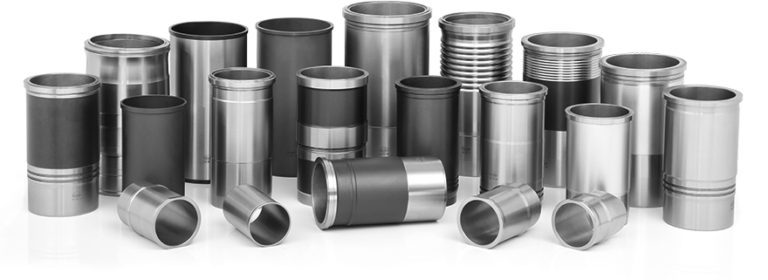
Three different liner layouts are used in modern engine construction in 2026, depending on structural stiffness and cooling needs. In tiny gasoline engines, dry liners—thin-walled sleeves that are press-fitted into the block without coming into direct touch with the coolant—are preferred for their structural support. Wet liners, on the other hand, are the industry standard for heavy-duty diesel vehicles and high-output industrial machines because they come into direct touch with the engine’s liquid coolant, enabling up to 40% greater heat dissipation.
Lastly, for air-cooled applications like motorbikes and stationary power generators, finned liners use exterior ridges to enhance surface area. Manufacturers are gradually switching from traditional cast iron to aluminum-matrix composites and plasma-sprayed coatings, which drastically lower engine weight and oil consumption while extending the powertrain’s entire service life, in order to achieve 2026’s stringent sustainability requirements.
Auto Cylinder Liners Uses
- Piston Sliding Surface: They avoid direct contact with the engine block by giving the piston and its rings a smooth, high-strength, low-friction route to travel up and down.
- Sealing and compression: They operate with the piston rings to form a gas-tight seal, ensuring that combustion pressure is completely used to generate power and preventing exhaust gases from seeping into the crankcase.
- Heat management: They serve as a link between the engine’s cooling system (air-cooled block for dry liners or liquid coolant for wet liners) and the combustion chamber.
- Engine Longevity: Because liners are interchangeable, they provide an affordable engine “rebuild.” Instead of rebuilding or remachining the complete engine block as the cylinder walls deteriorate, you may just replace the liners.
Market Potential Of Automotive Cylinder Liner
The market potential for automotive cylinder liners in 2026 is determined by a strategic balance between traditional internal combustion engine (ICE) demand and the rapid growth of hybrid powertrains. The worldwide market is expected to be worth $9.78 billion by 2031, up from $7.62 billion in 2026, with a compound annual growth rate (CAGR) of 5.1%.
Expenses

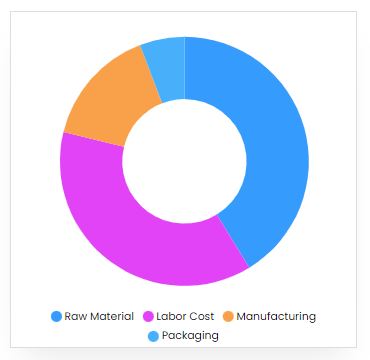
Product Cost Breakup
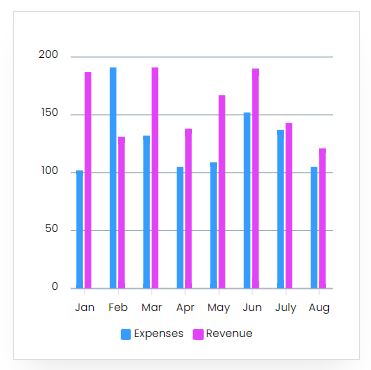
Reveneue Vs Expenses
Market Trend
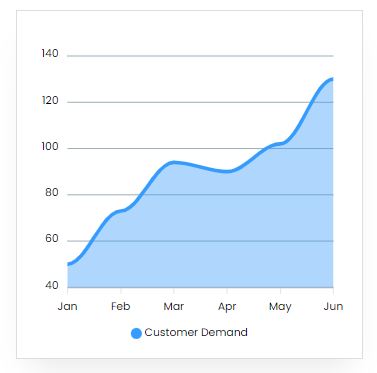
While the transition to full electrification in passenger cars poses a long-term volume ceiling, the immediate potential is boosted by the growth in hybrid-electric vehicles (HEVs), which account for more than 34% of new registrations in major regions. These engines need high-precision liners that can survive the specific thermal stresses of numerous stop-start cycles, prompting a shift away from basic iron and toward premium alloyed and plasma-coated options.
The heavy-duty and commercial vehicle sector is a significant component of this market’s strength, accounting for roughly 44% of total sales. Unlike passenger vehicles, long-haul logistics and construction machines rely significantly on wet cylinder liners for greater heat dissipation and serviceability. Because these liners enable for “in-frame” engine overhauls, they are critical for fleet operators seeking a 1-million-kilometer service life, assuring a steady and recurrent aftermarket income stream. Geographically, the Asia-Pacific region continues to dominate this industry, accounting for 41.7% of the market. This supremacy is supported by India’s thriving commercial vehicle production and China’s huge manufacturing infrastructure, which continues to provide both local and export markets with large quantities of cast iron and steel sleeves.