
Project Report for Automotive Stethoscope
Before removing an engine, a professional mechanic uses an automotive stethoscope to listen for faults. It is a diagnostic instrument found in every serious auto shop. India’s 35-crore-plus vehicle fleet and expanding workshop count generate steady demand. Sharda Associates creates CA-certified automotive stethoscope project reports and has delivered over 45,500 of them. Starting at ₹2,999.
Get free Sample
What Is an Automotive Stethoscope?
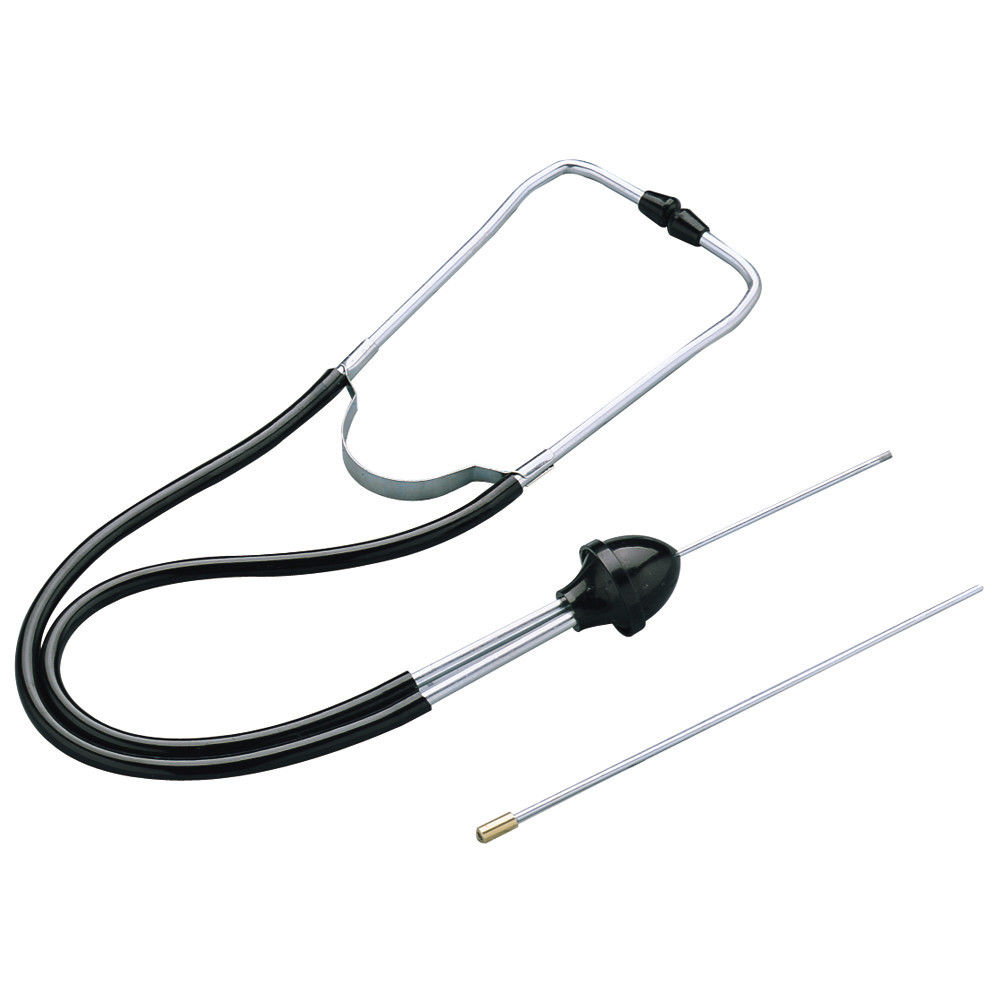
An automotive stethoscope, also known as a mechanic’s stethoscope or engine stethoscope, is a diagnostic listening tool used by mechanics to identify the cause of strange engine, transmission, bearing, and drivetrain problems by transmitting sound via a metal probe to earpieces. Unlike a medical stethoscope, an automotive stethoscope has a hard metal probe (200-400 mm) that is pressed against engine components while the vehicle is running, allowing the mechanic to precisely separate knocking bearings, valve train noise, timing chain rattle, and other mechanical sounds.
This tool can save hours of diagnostic time. Instead of disassembling the vehicle to identify a noise source, a qualified mechanic utilizes an automotive stethoscope in 5-10 minutes to determine whether the noise is coming from the main bearing, connecting rod bearing, valve train, or injector, directing repair to the relevant component instantly.
Market Demand Of Automotive Stethoscope
India’s 35 crore+ registered vehicle fleet generates massive ongoing repair and maintenance demand. With rising vehicle complexity, particularly modern direct-injection engines, variable valve timing, and turbochargers, noise-based diagnostics has become an essential mechanic ability. Automotive stethoscopes are a common instrument in professional workshops, and as India’s Tier 2 and Tier 3 city automotive servicing industries mature, tool kit upgrades promote usage.
The product also has a significant export channel; mechanical tools, especially automotive stethoscopes, are sold to the Middle East, Africa, and Southeast Asia via tool distributors and export firms in Delhi NCR and Mumbai.
Types of Automotive Stethoscopes
- Basic mechanical stethoscope: Steel probe + rubber tubing + earpieces. Economy segment. Entry-level workshops
- Electronic amplified stethoscope: Sound is electronically amplified by a microphone at the probe tip, making it louder, clearer, and compatible with engines. Professional caliber
- Chassis ear/wireless listening device: A wireless receiver at the mechanic and a remote magnetic sensor on the component enable listening while the car is being driven.
- High-end diagnostic instrument: Flexible extension probe stethoscope with several articulating extension probes to access tight spa
- Basic mechanical stethoscope: Steel probe, rubber tubing, and earpieces. Economic sector. Entry-level workshops
Project Cost for Automotive Stethoscope Manufacturing
Component | Small Unit (₹) | Medium Unit (₹) |
Machining (probe, earpiece housing) | 80,000–1,50,000 | 1,50,000–3,00,000 |
Electronic assembly (for amplified type) | 80,000–1,50,000 | 1,50,000–3,00,000 |
Raw material — steel, rubber tubing, electronics | 50,000–1,00,000 | 1,00,000–2,00,000 |
Quality testing + working capital | 50,000–1,00,000 | 1,00,000–2,00,000 |
Total | ₹2.60–5.00 lakh | ₹5.00–10 lakh |
Mudra Kishore/Tarun covers this investment level. PMEGP: 15–35% subsidy.
What Our Report Covers Product range
- The product line includes automotive stethoscopes, electronic stethoscopes, engine diagnostic listening devices, mechanical noise detection tools, bearing inspection stethoscopes, and professional garage diagnostic kits.
- The manufacturing process includes probe manufacturing, steel rod machining, acoustic tube fabrication, headset assembly, sensor integration (for electronic models), calibration, quality testing, and packaging.
- Raw material analysis includes stainless steel probes, acoustic tubes, headsets, electronic sensors, plastic components, rubber parts, connectors, and packaging materials.
- Machinery and equipment includes CNC machines, drilling equipment, assembly stations, calibration instruments, testing equipment, and packaging machinery.
- Compliance and Quality Standards: Industrial Tool Quality Standards, Diagnostic Equipment Specifications, Product Testing Protocols, and Manufacturing Compliance Requirements.
- Market Analysis: Automotive Service Centers, Vehicle Workshops, OEM Service Networks, Fleet Maintenance Companies, Technical Training Institutes, and Export Opportunities
Why Choose Sharda Associates
- 45,500+ reports — diagnostic tools, automotive equipment, Mudra and PMEGP applications
- Both mechanical and electronic versions covered — different investment, different markets
- Market demand study for the increasing automotive servicing, vehicle diagnostics, preventive maintenance, and garage equipment sectors.
- Machinery and assembly requirements were accurately aligned with expected production capacity and sales volumes.
- Profitability analysis includes ROI, DSCR, break-even point, and cash flow estimates.
- CMA Data and bank-ready financial statements are created for PMEGP, MSME, Mudra Loan, and manufacturing finance applications.
- Working capital assessment includes raw material inventory, assembly operations, testing procedures, and distribution cycles.
- Starting at ₹2,999 · 24–48 hours
📞 +91 89899 77769 | All India service
Frequently Asked Questions
An automobile stethoscope manufacturing project report assists banks in assessing company feasibility, machinery requirements, production costs, profitability, market demand, and repayment capacity. It is typically required for PMEGP, MSME, Mudra Loan, and automotive tool manufacturing finance applications.
Mechanical and electronic automotive stethoscopes cater to diverse customer needs, manufacturing methods, and pricing models. Electronic models require sensors and electronic components, whereas mechanical versions rely on sound transmission, resulting in varying investment requirements and profit margins.
Typically, an automobile stethoscope production unit requires CNC machines, drilling equipment, assembly stations, calibration instruments, testing equipment, electronic assembly tools, and packaging machinery. Proper equipment planning contributes to realistic production capacity and budgetary estimates.
The main raw materials include stainless steel probes, acoustic tubes, headsets, electrical sensors, plastic housings, connectors, rubber components, cables, and packaging materials. These parts are assembled and tested to produce diagnostic tools for car maintenance.
Automotive stethoscopes assist technicians in detecting strange sounds from engines, bearings, gearboxes, pumps, alternators, and other moving parts. Early detection of aberrant noises increases maintenance accuracy, lowers repair costs, and avoids catastrophic component failures.
The business presents great opportunities due to increased car ownership, organized service facilities, fleet maintenance operations, and automotive diagnostics. Profitability is determined by product quality, production efficiency, distribution channels, and the successful targeting of professional workshop markets.
A properly created project report illustrates financial viability, machinery planning, market demand, profit projections, and repayment capacity. It enables lenders to precisely assess project risk and considerably increases approval chances under the PMEGP, MSME, and Mudra Loan schemes.
Banks may reject applications based on unrealistic sales expectations, wrong machinery costs, inadequate market analysis, inaccurate working capital estimations, or imprecise financial projections. A detailed project report addresses these problems and significantly improves the overall loan application.