
Project Report for Rotary Kiln Machine
The global waste oil market is expected to increase from USD 15.22 billion, and every plant, transformer station, and hydraulic system in India requires oil purifying equipment to function properly. It is not a single product line, but rather the manufacturing of industrial machinery. Sharda Associates, which has delivered over 45,500 CA-certified project reports, provides oil filter machine manufacturing project reports in 24-48 hours. Starting at Rs. 2,999.
Get Your Report
What Does a Rotary Kiln Manufacturing Business Actually Involve?
Before we get started, it’s important to understand what this company does, because the name can be misleading: a rotary kiln manufacturer does not operate a cement plant; rather, it manufactures the large rotating cylindrical equipment that cement, lime, and mineral processing plants install and use for thermal processing.
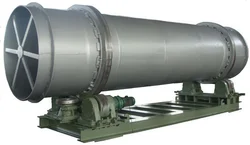
A rotary kiln is a massive, slightly inclined revolving steel cylinder lined with refractory brick that warms raw material to extremely high temperatures (often up to 1,450°C for cement clinker manufacture) as it gently tumbles from the feed end to the discharge end. .
At MSME scale, this business often takes one of the following forms:
Component and spare part manufacture. Producing kiln shell sections, riding rings, support rollers, driving gears, and refractory lining components for existing kiln installations—essentially the replacement and maintenance parts market for kilns that are already operational.
Small/batch kiln production. Producing full, lesser-capacity rotary kilns — batch or continuous units — for mineral processing, chemical calcination, activated carbon manufacturing, or smaller cement/lime activities that do not require the scale of a large cement plant kiln.
Why This Business Runs on an Entirely Different Sales Rhythm Than Most Manufacturing
Before developing a financial plan for this business, it’s critical to recognize that a cement or lime plant rarely purchases a new rotary kiln; a well-built kiln shell can function for decades with adequate maintenance.
This means that your revenue isn’t based on repeat purchases from existing customers who buy the same product again; rather, it’s based on a combination of winning new, large, infrequent project orders (new plant construction, capacity expansion) and a more frequent, consistent stream of spare parts and refractory relining work for kilns that are already operational.
A project report for this business should describe these as distinct revenue streams with various order quantities and frequencies; presenting them as a single smooth, evenly-distributed monthly revenue line misrepresents how this industry produces cash.
How Does This Business Actually Make Money?
Because each kiln or key component is designed for a specific capacity and use, pricing in this industry is primarily project-based rather than unit-based. A spare part or component order — a riding ring, a portion of kiln shell, drive gear components — might cost anywhere between Rs.5 lakh and Rs.40 lakh, depending on size and material specification. A complete compact batch-type rotary kiln for mineral or chemical processing typically costs between Rs. 40 lakh and Rs. 2 crore, depending on capacity. A whole kiln system as part of a micro cement or lime plant project (180-1,000+ tonnes per day capacity range) can cost several crores to tens of crores, and is often supplied under a multi-year EPC-style contract with progress billing.
Revenue calculation (small unit focusing on component/spares manufacture with occasional modest kiln orders): 3-4 component/spares orders each month at Rs.12 lakh average + 1 small batch kiln order per quarter at Rs.75 lakh = Rs.36-48 lakh/month from components + Rs.25 lakh/month averaged from kiln orders = about Rs.61-73 lakh/month blended revenue
This is genuinely lumpy, project-based revenue rather than smooth monthly sales — which is precisely why your project report’s working capital and cash flow planning must account for long order-to-payment cycles, advance payment structures common in heavy engineering contracts (typically 20-30% advance, balance against delivery milestones), and the time lag between when you commit material and labor to a large order and when you actually receive payment.
What Equipment Does a Rotary Kiln Manufacturing Unit Need?
- Heavy plate rolling and bending machine. The cost of shaping thick steel plate into the kiln shell’s cylindrical sections is from Rs.15 to Rs.40 lakh, depending on plate thickness and roll diameter capacity, and this is a significantly heavier-duty machine than ordinary sheet metal rolling equipment.
- Heavy fabrication welding setup (with submerged arc welding capability). Joining shell pieces with welds capable of withstanding continuous high-temperature operation costs Rs.8-20 lakh for a capable setup, as weld quality is directly related to safety and longevity, not cosmetics.
- Large CNC machining center. Precision-machining riding rings, support roller assemblies, and drive gear components to the tight tolerances required to prevent kiln misalignment during rotation costs between Rs.30 and 80 lakh, making it one of the largest single capital items in this business given the size and precision of the components involved.
- Heat treatment furnace (used to relieve component stress). Large manufactured steel components require stress-relief heat treatment to prevent warping and guarantee dimensional stability – a furnace capable of handling kiln components costs between Rs.10 and Rs.25 lakh.
- Overhead crane and heavy material handling. Given the tremendous weight of kiln shell parts and components, a capable overhead crane system (typically with a capacity of 10-25 tonnes or more) is a must-have infrastructure, costing between Rs.15 and 35 lakh.
- Equipment and skills for installing refractory linings. Whether constructing full kilns or supporting installation/relining work, refractory brick-laying, and castable application capacity, equipment costs are reasonable (Rs.3-8 lakh), but trained manpower for this job is a serious limitation that should be factored into staffing plans.
What Actually Separates a Manufacturer Who Gets Repeat Orders From One Who Doesn't
Two kiln manufacturers employing similar-grade steel can produce products with vastly different real-world performance, and the difference is nearly always due to dimensional precision on the riding rings and roller alignment, rather than raw material. A kiln shell that is slightly out of round, or riding rings that aren’t precisely concentric, causes uneven load distribution during rotation, which leads to accelerated wear, vibration, and eventually costly unplanned downtime for the buyer — and in an industry where plant downtime costs the customer enormously more than the equipment itself, this is precisely the kind of failure that ends a buyer relationship and damages reputation within a tight, relationship-driven industry.
Welding quality on shell sections is important for the same reason: a kiln operates continuously under substantial thermal stress for years, and a weld error that wouldn’t be noticeable in lighter fabrication might become a serious structural problem under that sustained load. This is why a realistic project report for this industry must treat quality control, precision machining tolerance, and weld inspection as significant continuing process costs, rather of a line item to be reduced for a lower overall project cost.
A typical unit’s staff structure includes a senior production/design engineer with heavy fabrication experience (Rs.35,000-55,000/month), welding and machining supervisors (Rs.22,000-32,000/month each), skilled welders and machinists (Rs.14,000-22,000/month each), and refractory installation specialists (Rs.13,000-20,000/month). This business requires a significantly higher proportion of skilled technical staff than most other manufacturing categories on this site.
Where Should You Set This Up, and Who Buys This Product?
Gujarat has an established cluster of rotary kiln and heavy process equipment manufacturers, particularly around Ahmedabad and Vadodara, with several companies citing 20+ years of experience in this specific niche — proximity to this ecosystem gives access to specialised steel suppliers, skilled heavy fabrication labor, and a base of potential subcontracting or component-supply relationships with established players before you’re ready to compete for complete kiln control.
On the selling side, your realistic buyer base includes cement and lime manufacturing plants (the largest segment, requiring either complete kilns for new capacity or maintenance/spare parts for existing installations), mineral processing operations (bauxite, kaolin, and similar calcination needs), chemical and fertiliser plants requiring calcination equipment, and activated carbon manufacturers (a smaller but rapidly growing segment). Export demand is also significant, as Indian heavy equipment manufacturers in this category have a strong presence in other expanding markets in Asia and Africa.
Compliance essentials: Because this is heavy engineering equipment, factory licensing, Pollution Control Board approval (for your fabrication facility’s own emissions), and adherence to relevant pressure vessel and structural engineering codes are genuine, substantial compliance requirements — not a checkbox exercise. Standard Udyam/MSME registration and GST registration apply to all manufacturing units, albeit at this scale, many units run over the MSME ceiling due to investment.
What Will This Actually Cost You?
Setup | Capital Cost (Rs.) |
Small unit focused on kiln components and spare parts | Rs.60 lakh-1.5 crore |
Medium unit producing small/batch-type complete kilns | Rs.1.5-4 crore |
Larger unit capable of full turnkey kiln systems for mini cement/lime plants | Rs.5-15 crore+ |
Given the capital scale involved, even the smallest realistic entry point in this business typically exceeds standard PMEGP and Mudra ceilings—this is fundamentally an MSME term loan or larger project finance category from the start, frequently structured with CGTMSE collateral-free coverage for the eligible portion where applicable, and almost always requiring a full Detailed Project Report (DPR) rather than a standard project report, given the size of financing invo level of technical and financial scrutiny banks apply to heavy capital equipment manufacturing proposals.
Why Choose Sharda Associates
- We’ve prepared over 45,500 CA-certified project reports, and heavy capital equipment manufacturing files like this one have a specific credibility test that determines whether a bank’s project finance team takes the report seriously — whether it reflects the company’s genuinely lumpy, project-based revenue pattern or smooths it into an unrealistic, evenly-distributed monthly figure.
- We simulate your revenue in the same way that this business makes cash: large, infrequent project orders combined with a steady stream of spares and maintenance. A report that portrays heavy equipment manufacturing income as smooth monthly sales appears naive to a bank’s project finance team, who have previously seen this category and are more knowledgeable.
- Working capital is based on real advance-payment and progress-billing arrangements, rather than a general short sales cycle assumption that does not reflect how heavy engineering contracts are actually structured and paid for.
- Component and quality-control expenses are accurately itemized — precision machining tolerance, weld inspection, and refractory installation are considered as significant, safety-critical cost lines, rather than being reduced to portray an artificially lower project cost.
- We are open about the realistic entry point. If your true starting point is the component/spares segment rather than full turnkey kiln systems, your report should reflect that honestly — because overstating your segment to a bank’s technical reviewer in an industry with established 20-year players costs you credibility on the entire file.
- The DSCR and financial structuring are tailored to the project-finance scale at which this business operates, rather than being handled as a normal small-manufacturing project report. Starting at Rs.2,999 for an initial report (with Detailed Project Report pricing scaled to project size), the initial draft is given in 24-48 hours .Call +91 89899 77769.
Frequently Asked Questions
A cement rotary kiln machine project report is prepared by analysing machinery requirements, production capacity, manufacturing process, raw materials, investment cost, operating expenses, revenue projections, and financial feasibility.
To start a cement rotary kiln manufacturing business, an entrepreneur needs to plan manufacturing facilities, arrange machinery, source raw materials, hire skilled manpower, establish quality control systems, and prepare a detailed business plan.
The investment depends on machine capacity, manufacturing setup, fabrication requirements, equipment cost, factory infrastructure, manpower, and working capital requirements.
A bank loan project report includes promoter details, business overview, technical specifications, machinery details, project cost, means of finance, production capacity, sales projections, profitability analysis, and repayment plan.
A cement rotary kiln is used for high-temperature processing of raw materials to produce clinker, which is a key component in cement manufacturing. The process involves heating, chemical reactions, and controlled cooling.
Profitability is calculated by analysing production capacity, machine output, selling price, raw material costs, power consumption, labour expenses, maintenance costs, and market demand.
Machine selection depends on production capacity, cement manufacturing requirements, fuel efficiency, automation level, plant size, and quality standards.
Financial projections are prepared by estimating production volume, sales revenue, manufacturing costs, operating expenses, depreciation, loan repayment, and expected profitability.
Entrepreneurs can apply for business loans by submitting a professionally prepared project report along with promoter documents, project cost details, machinery quotations, and financial projections.
A feasibility report evaluates market demand, technical requirements, investment needs, production planning, competition, and financial viability before setting up the project.