
Project Report For Electric Horn
Introduction
The Project report for Electric Horn is as follows.
An electric horn is a high-decibel safety device that uses clear audio communication to alert drivers and pedestrians. These gadgets, which operate on the fundamental concept of electromagnetic, are standard on nearly all passenger cars, motorbikes, and commercial trucks as of 2026. The contemporary electric horn is a small, high-frequency vibrator that transforms electrical energy from the vehicle’s batteries into sound waves without the need for an external compressor, in contrast to earlier mechanical bellows or air-compressed devices used in big locomotives.
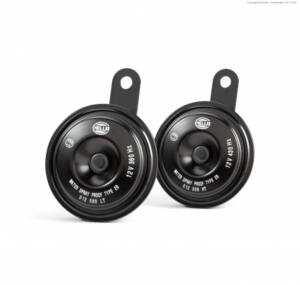
An electromagnet and a circular steel diaphragm are the central components of an electric horn. A circuit is completed when the driver clicks the horn button, enabling electricity to pass via a wire coil around a soft iron core. The diaphragm is drawn inward by the magnetic field this produces. The diaphragm’s movement causes a series of internal contact points to break the circuit, which collapses the magnetic field and causes the diaphragm to return to its initial position. Usually occurring at frequencies between 340 and 500 Hz, this cycle repeats hundreds of times per second, producing the fast oscillations that result in a loud, piercing “honk” or “beep.”

Get Completely Custom Bankable Project Report
Items And Application Of Electric Horn
Item
The most popular “beep”: style is the disc horn. They create a crisp, high-pitched metallic sound by using a flat metal diaphragm under a protective plate. They are highly valued for their exceptional durability and small, space-saving design.
Trumpet (Fanfare) Horns: Distinguished by a more profound “honk.” These provide a fuller, harmonic sound that resembles luxury or air horns by using a spiral-shaped plastic chamber (commonly referred to as a “snail”) to naturally increase the diaphragm’s vibration.
Solid-state oscillator-based: electronic/smart horns are a new market in 2026. For “soft-chirp” lock confirmations or pedestrian alarms in silent EVs, they may be customized with numerous tones or incorporated into car IoT systems.
Application
Automotive: To guarantee that they can be heard above contemporary soundproofing, passenger vehicles and SUVs are required to have dual-tone trumpet horns. Due to their restricted mounting area, motorcycles and scooters are better suited for disc horns.
Commercial & Industrial: Because of their powerful, far-reaching sound, heavy-duty disc horns are utilized in construction equipment and vehicles.
Safety & Security: Without the need for air compressors, electric horns serve as the main siren for anti-theft alarms and as “back-up” alerts for forklifts in warehouses.
Raw Material Requirement
The electromagnetic coil is made of copper (enameled wire), which has the high conductivity required to produce a powerful magnetic field.
The diaphragm’s main component is high-tensile steel. For it to vibrate at frequencies between 340 and 500 Hz without becoming tired, it has to be thin and elastic.
Soft iron is used for the plunger and core because of its high magnetic permeability, which enables the magnetic field to quickly rise and collapse.
Because of their high melting points, which stop welding during fast sparking, tungsten or silver alloy are used for the contact points (circuit breakers).
Surface Coatings: To stop corrosion from road salt and moisture, hard chrome, zinc plating, or powder coatings are used.
Market Potential Of Electric Horn
The worldwide push for automobile safety, the quick electrification of vehicles, and a booming aftermarket will all contribute to the unusually great market potential for electric horns in 2026. The industry is expected to reach over $5.2 billion by 2033, growing at a compound annual growth rate (CAGR) of 4.2% to 7.1% from its estimated $2.36 billion to $2.44 billion in 2026.
Expenses

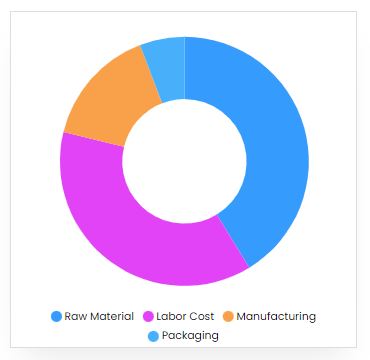
Product Cost Breakup
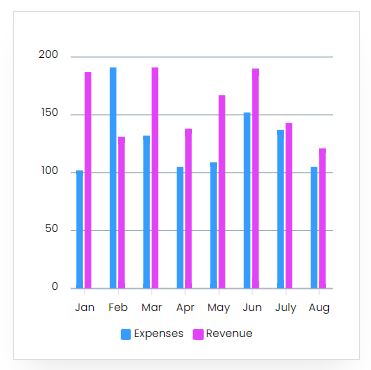
Reveneue Vs Expenses
Market Trend

The need for original equipment manufacturer (OEM) signaling systems continues to be a persistent industry need as global vehicle production targets for approximately 100 million units annually by 2030. This expansion is supported by the horn’s crucial role as a legally required safety component.
With about 45% of the world market, the Asia-Pacific region now serves as the main development engine. Large two-wheeler markets and rising passenger vehicle ownership are driving up demand in nations like China and India. The emergence of “Electronic and Smart Horns,” which are progressively replacing conventional electro-mechanical models, is a notable change in 2026. Because of their reliable sound quality, reduced power consumption, and compatibility with car Electronic Control Units (ECUs), these contemporary models are preferred. Lightweight, low-decibel “soft-alert” devices that shield pedestrians from silent cars without adding to urban noise pollution are in great demand in the Electric Vehicle (EV) market.