
Project Report for Electric Vehicle Charging Station
India’s EV fleet is rapidly expanding, with millions of two-wheeler EVs currently on the road and four-wheeler EVs gaining traction. Each one of them must be taxed somewhere. A public EV charging station is a legitimate infrastructure business with government subsidies (FAME II, PM e-DRIVE), per-kWh revenue from each charging session, and long-term demand that increases with each new EV sold. Sharda Associates provides CA-certified EV charging project reports. Starting at ₹2,999.
Get Your Report
What Is an EV Charging Station Business?
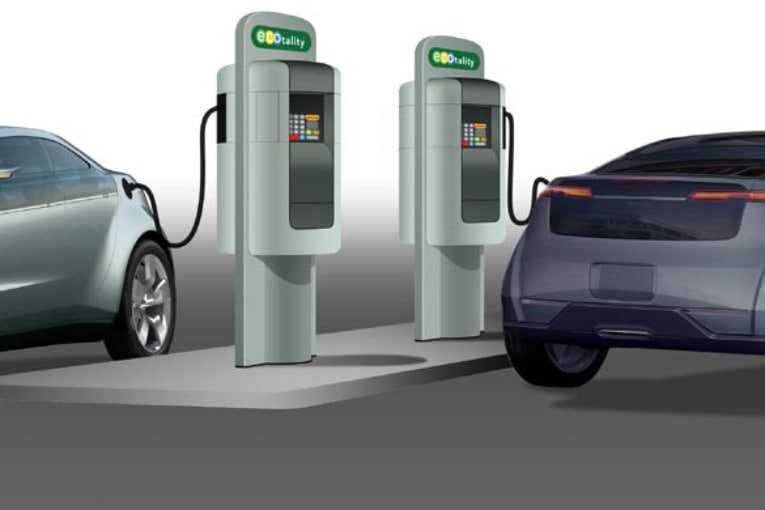
An EV charging station (also known as Electric car Supply Equipment or EVSE) is a type of infrastructure business that offers electric car owners the ability to charge their vehicles in exchange for payment. The operator installs charging equipment, purchases electricity from the DISCOM, and charges EV owners a higher per-kWh rate than the procurement cost – the spread is the principal source of revenue.
At the MSME level, an EV charging station business typically includes:
Public charging point operator (CPO): Installs and operates AC or DC charging points in commercial locations such as parking lots, malls, workplaces, gas stations, roads, and residential communities, charging visiting EV customers per session or per kWh.
Franchise/white-label operator: A national charging network brand (Tata Power, Ather Grid, BPCL Pulse, Statiq, ChargeZone) supplies the software platform, brand, and customer acquisition, while a local operator provides the location, investment, and day-to-day operations.
Captive charging facility: Charging infrastructure for a specific fleet (e-autos, e-rickshaws, delivery EVs, school buses) that serves a known, captive customer base rather than public walk-up EV users.
Types of EV Chargers — AC vs DC and Why It Matters
The most essential technical decision in EV charging business planning is charger type, which influences capital cost, charging speed, car compatibility, and per-session income potential.
AC Level 2 Charger (3.3 kW to 22 kW): The most popular and cost-effective charger type. Uses AC power directly, with no onboard conversion necessary for the charger. The charging period for most four-wheeler EVs is 4-8 hours, while two-wheeler EVs need 2-4 hours to charge completely. Offices, housing societies, hotels, and parking complexes are ideal locations for automobiles to park for extended periods of time.
DC Fast Charger (15 kW to 60 kW): Converts AC to DC on the charger and delivers DC power directly to the vehicle’s battery, bypassing the onboard charger. Significantly faster charging: 45-90 minutes for a four-wheeler EV to reach 80% charge. Best for high-traffic places where vehicles quickly stop, such as highways, gas stations, and commercial areas.
DC Superfast / Ultrafast Charger (60 kW to 300 kW+): Provides high-power DC charging for automobiles that allow rapid charging (15-30 minute charges). Used in EV highway corridors and fleet charging facilities. High capital cost (₹10,00,000–50,00,000+). Not typical of an MSME-scale entrance.
Two-Wheeler / Three-Wheeler Specific Charger: Smaller, lower-power chargers (1-3 kW) intended specifically for two-wheeler and e-rickshaw EVs, which account for the majority of India’s EV fleet volume. Much lower capital cost than four-wheeler fast chargers, but with lower per-session revenue.
Revenue Model — How EV Charging Stations Earn
The operator obtains power from the DISCOM at a commercial tariff (usually ₹6-12/kWh in most states) and charges EV users at a higher rate (generally ₹12-25/kWh, depending on charger type, location, and market positioning). The principal source of revenue is the per-kWh spread.
Example: Purchased electricity at ₹8/kWh and dispensed at ₹18/kWh, resulting in a ₹10/kWh differential. A DC fast charger dispensing 30 kWh per session × 10 sessions/day × 30 days: 30 × 10 × ₹10 = ₹90,000/month gross margin per DC charger, excluding electricity costs, equipment depreciation, and connectivity expenses.
AC charger (lower per-session, higher dwell time): An AC charger dispensing 8 kWh/session × 5 sessions/day × 30 days × ₹8 spread: 8 × 5 × 30 × ₹8 = ₹9,600/month per AC point—far lower per charger but also considerably lower capital cost.
Monthly or annual subscriptions for business clients, residential societies, or fleet operators generate predictable recurring revenue in addition to per-session prices.
Ancillary revenue includes F&B or retail at the charging facility (especially significant for highway stations where EV users spend 30-45 minutes), parking charge collection, and advertising revenue at high-traffic locations.
Location — The Single Most Important Decision
An EV charging station is a location company, whose revenue potential is virtually entirely decided by:
EV traffic at the location: How many EVs travel by or park at this place each day? An office campus with 500 employees, 30% of whom drive electric vehicles, is a better site than a residential colony with 50 houses and three EVs.
Dwell time: AC chargers require 4-8 hours to charge a four-wheeler; areas where vehicles typically park for 4+ hours (offices, hospitals, malls, airports, hotels) are excellent for AC charges. DC fast chargers require 30-90 minutes to charge, therefore high-traffic transit areas are preferable.
Power connection: A commercial power connection with enough load capacity is required for a charging station; a 3-point DC fast charger facility requires a connected load of 150–200 kW. It is much more expensive and time-consuming to establish a high-tension commercial connection at a site without HT infrastructure.
Competition: Is there a nearby charging station? India’s EV charging infrastructure is still poor in most regions, thus first-mover advantage in a prime location is genuine.
Government Support — FAME II and PM e-DRIVE
FAME II (Faster Adoption and Manufacturing of Electric Vehicles — Phase II): Public charging infrastructure is supported by capital subsidies under the national government’s premier EV program. Operators of qualified charging stations were given subsidies for EVSE equipment under FAME II, which partially covered the capital costs of DC fast chargers. The first phase of FAME II has ended, but the PM e-DRIVE program is still providing assistance.
PM e-DRIVE: The Revolution in Innovative Vehicle Enhancement: with PM Electric Drive PM e-DRIVE, which was unveiled in 2024, allots ₹2,000 crore for EV charging infrastructure throughout India, with a focus on fleet charging, metropolitan charging centers, and highway charging corridors. This program offers qualified charging station operators implementation subsidies and possibly capital support.
State EV policies: A number of states, including Maharashtra, Karnataka, Delhi, Gujarat, Rajasthan, and MP, have their own EV policies that offer further state-level incentives, such as capital grants, land at discounted prices for charging stations, and power tariff concessions for EV charging. The state’s infrastructure for charging EVs is specifically supported by the MP EV Policy.
BEE certification: Only BEE-certified EVSE are permitted to be used at public charging stations, according to the Bureau of Energy Efficiency’s obligatory certification standards for EV charging equipment marketed and installed in India. This influences the decisions made when purchasing equipment.
Project Cost for EV Charging Station
Configuration | Capital Cost (₹) |
2 AC charger points (22 kW each) + basic setup | ₹3–6 lakh |
1 DC fast charger (30 kW) + civil + connection | ₹6–12 lakh |
3 AC + 1 DC fast charger (mixed facility) | ₹12–20 lakh |
3 DC fast chargers (dedicated fast charging hub) | ₹20–35 lakh |
Highway charging station (4-6 DC fast chargers) | ₹35–80 lakh |
Electricity connection upgrade cost (if location needs new/upgraded commercial connection) adds ₹1-10 lakh depending on required load and distance from nearest substation.
Small AC-only stations fit Mudra Tarun. Mixed AC+DC or dedicated DC fast charging stations suit MSME term loans or PMEGP.
Why Choose Sharda Associates
- Delivered more than 45,500 project reports; extensive experience in renewable energy, infrastructure, and EV charging station projects throughout India.
- Revenue Models for AC and DC Chargers Appropriately Structured: Based on usage, charging sessions, and tariff structure, separate financial predictions are made for DC fast chargers and AC slow chargers.
- Included in the electricity cost analysis are the state-specific DISCOM price and the cost of purchasing electricity per unit, which are appropriately taken into account when calculating profitability.
- Benefits of Government Subsidies Documented: To lower project costs, state EV policy incentives, PM e-DRIVE, and FAME II are included when appropriate.
- Traffic flow, EV density, parking availability, power connection capacity, and charger demand analysis are all included in the business plan’s location feasibility assessment.
- Technical compliance paperwork, certified EVSE equipment, and charging infrastructure requirements are all included in the BEE-Compliant Equipment Specifications.
- Starting at ₹2,999 · 24–48 working hours ·
📞 +91 89899 77769 | All India service
Frequently Asked Questions
An EV Charging Station Project Report is a detailed business plan and financial document that explains the setup and operation of an electric vehicle charging station. It includes charger specifications, infrastructure requirements, investment cost, electricity requirements, operating expenses, expected revenue and profitability projections.
For bank loans, it helps financial institutions evaluate the project's feasibility, investment requirement and repayment capacity.
Sharda Associates prepares customized EV Charging Station Project Reports according to the entrepreneur's proposed investment and business model.
Banks and financial institutions may require a project report while evaluating finance for establishing an EV charging station.
The report helps explain the proposed location, charger capacity, equipment cost, installation expenses, revenue assumptions, operating costs and expected repayment capability.
Sharda Associates can prepare a bank-oriented EV Charging Station Project Report covering all required financial and technical details.
The investment depends on several factors, including:
- Type of charger installed
- Charging capacity
- Number of charging points
- Electrical infrastructure
- Land and location cost
- Installation expenses
- Software and payment systems
- Working capital requirement
A small charging setup may require lower investment compared to a multi-point fast charging station.
A customized project report helps calculate the actual project cost.
An EV charging station may require:
- AC or DC EV chargers
- Charging guns and cables
- Electrical panels
- Transformers (if required)
- Metering systems
- Safety equipment
- Networking and monitoring system
- Payment and billing system
- Civil and installation infrastructure
The equipment requirement depends on charging capacity and business model.
Common EV charger categories include:
- AC slow chargers
- AC fast chargers
- DC fast chargers
- High-capacity charging systems
The selection depends on vehicle type, customer requirement, location and expected charging volume.
An EV charging station can generate revenue through:
- Charging fees per kWh
- Time-based charging fees
- Subscription plans
- Fleet charging contracts
- Partnerships with businesses and vehicle operators
Revenue depends on location, charging capacity, customer traffic and utilization rate.
Major operating expenses may include:
- Electricity charges
- Land rent
- Employee salary
- Maintenance cost
- Software charges
- Internet connectivity
- Repair and replacement expenses
- Loan interest
A financial project report estimates these expenses to calculate expected profitability.
A detailed project report may include:
- Project cost
- Charger and equipment cost
- Installation expenses
- Working capital requirement
- Revenue projections
- Operating expenses
- Profit & Loss Statement
- Balance Sheet
- Cash Flow Statement
- Break-even analysis
- DSCR calculation
- Loan repayment schedule
Sharda Associates prepares these projections based on the actual project details.
Yes, an EV charging station project report can be prepared for presenting a business proposal to banks and financial institutions.
The report can include investment details, equipment requirements, business model, financial projections and repayment analysis.
Eligibility for any specific government scheme depends on the applicant profile, project type and current scheme guidelines.
The report includes:
- Business profile
- EV charging infrastructure details
- Charger requirement
- Project cost
- Investment analysis
- Working capital calculation
- Revenue model
- Profitability projections
- Cash flow analysis
- Balance sheet projections
- DSCR and repayment calculations
The report can be customized for electric car charging stations, commercial EV charging hubs, fleet charging facilities and EV infrastructure projects according to the entrepreneur's requirements.