
Project Report for Electronic Security System
Sharda Associates offers CA-certified 45,000 project reports for this business beginning at ₹2,999. A social gate that cannot be opened without a fingerprint. A business owner checks last night’s footage on his phone before getting out of bed. A factory that knows who entered the server room at 2 a.m. This is the electronic security industry, and it is one of the fastest-growing services in urban and semi-urban India.
Get Your Report
What This Business Actually Involves
Without the technical jargon, an electronic security system company does three things: it sells equipment (cameras, alarms, access control devices), it installs and configures that equipment at a client’s location, and — this is the part that makes the company truly valuable over time — it maintains and monitors that equipment for as long as the client pays for it.
That third section contains the majority of the real money. A camera sale is a single transaction. A camera that has its DVR checked every few months, its night-vision lens cleaned, its storage drive updated every couple of years, and its footage occasionally retrieved because “something happened last Tuesday” is a relationship. Banks want to see monthly or annual billing relationships on loan applications.
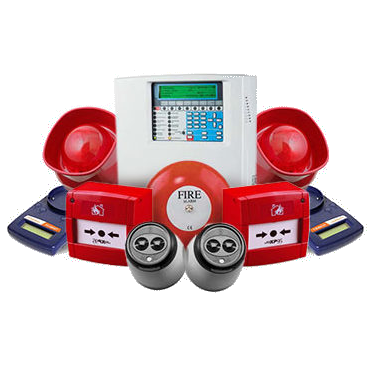
The products themselves cover a wide range: video doorbells and smart locks (a rapidly expanding residential category); biometric access control (fingerprint and face-recognition door entry—standard now in offices, increasingly common in upscale residential societies); burglar and intrusion alarms (motion sensors, door/window sensors, panic buttons); fire detection systems (smoke detectors, heat sensors—often bundled with security contracts for commercial clients who need both); and video management software/NVR systems (the “brain” that connects cameras.
Why This Market Keeps Growing — Even in Smaller Towns
Three things are happening at the same time, which explains why this is no longer a saturated big-city business.
First, prices have dropped. A quality CCTV setup, which cost a small fortune a decade ago, is now affordable to a mid-sized shop owner, a school, and a modest apartment block. What was once “only for banks and big offices” is now the norm for anyone running a business with cash, merchandise, or employees.
Second, Resident Welfare Associations (RWAs) have become important customers. Gated communities and apartment complexes, including those in Tier 2 and Tier 3 cities, now frequently install CCTV at entry points, biometric access to common areas, and visitor control systems. This is not a one-time transaction; RWAs sign annual maintenance contracts because residents want the system to function properly when something goes wrong.
Third, and this is unique to India, insurance and compliance are beginning to require it. Commercial property insurance is becoming important in security systems. Certain types of companies (jewellery, pharmacies, and liquor licensing in some states) have minimum CCTV requirements as part of their license. This transforms “nice to have” into “legally required” for an expanding variety of company sectors, creating a demand driver that persists even when economic conditions deteriorate.
The AMC Question — Why It Decides Whether This Business Works
A security systems business with 40 active AMC clients paying an average of ₹2,500 per month generates around ₹12 lakh in annual revenue without a single new sale. That is the difference between a firm that must work hard for every rupee and one that has a solid foundation.
AMC (Annual Maintenance Contract) pricing varies based on the number of devices covered and response time commitment. A basic AMC for a small shop with 4 cameras may cost ₹3,000-6,000 per year, while a commercial client with 20+ cameras, access control, and an alarm system may pay ₹25,000-60,000 or more.
The catch—and this is something a project report must get right—is that AMC revenue does not appear on day one. It expands as the installed base grows. The first year of a new firm is virtually completely installation/sales revenue; by the third or fourth year, AMC revenue should be a significant and growing proportion of the total. A financial prediction that predicts flat AMC revenue in year one, or no AMC revenue at all, is either unrealistic or overlooks the most critical aspect of the company strategy.
What It Costs to Get Started
Item | Approximate Cost (₹) |
Office + small showroom/demo setup | 1,50,000 – 3,00,000 |
Initial equipment inventory (cameras, DVRs/NVRs, accessories for first projects) | 2,00,000 – 4,00,000 |
Tools and installation equipment (drills, cable testers, ladders, vehicle for site visits) | 1,00,000 – 2,50,000 |
Technician training/certification (for biometric, fire systems if offered) | 50,000 – 1,50,000 |
Marketing, vendor registrations, working capital | 1,50,000 – 3,00,000 |
Total | ₹6.50 – 14 lakh |
This range is suitable for Mudra Tarun finance (up to ₹10 lakh) for a lean start or a small MSME term loan for a little larger initial inventory position. Vehicle ownership (for a service van) can raise the upper end even further, while many operators begin with a personal/rented vehicle and add a dedicated service vehicle once the AMC base justifies it.
Three Decisions That Shape the Whole Business
Brand reseller versus system integrator. Some operators adhere to selling and installing one or two brands (Hikvision, CP Plus, and Dahua are popular in India) — simpler, but margins are tiny, and you’re reliant on that brand’s pricing and inventory. Others present themselves as integrators, designing custom solutions across multiple brands, often exacting higher margins on larger commercial projects but needing deeper technical knowledge.
Residential versus commercial focus. Residential (individual houses, small stores) results in higher volume, smaller tickets, shorter sales cycles, and, increasingly, RWA bulk contracts. Commercial (offices, factories, retail chains) entails fewer, larger projects, longer sales cycles, but substantially higher per-project value and, in many cases, multi-site AMC agreements with the same client.
In-house monitoring vs. installation. Some firms end with “we install it and you watch it yourself.” Others add a monitoring layer — a small control room (with only a few of employees viewing screens, or remote monitoring software that warns on motion after hours) — which is a significantly different, higher-revenue, higher-staffing business model. Most MSME-scale businesses begin with the former and only contemplate the latter when there is enough client density in one location to justify it.
A bankable project report does not attempt to cover all of these at maximum scope; instead, it selects a realistic starting point and demonstrates a plausible path to developing from there.
Getting the Paperwork Right
Before you begin, you should be aware of the following registration and compliance points, which should be reflected in a solid project report:
PSARA (Private Security Agencies Regulation Act) licensing applies to businesses that provide manned guarding services; if your business is entirely electronic (no guards), this typically does not apply; however, the line can blur if you later add monitoring/response services, so it’s worth checking based on your specific service mix.
GST registration is customary for this firm once you exceed the threshold; most operators register early because B2B clients (particularly RWAs and commercial clients) demand GST invoices for input credit purposes.
If biometric access control is part of your offering, there is growing concern about data privacy in biometric data storage — not a licensing issue, but something to consider when positioning the business to commercial clients, who are increasingly being questioned about this by their own compliance departments.
Why Choose Sharda Associates
We’ve written project reports for IT-enabled services and technical installation companies, and electronic security systems fall into a category we understand well: partly hardware/inventory, partly skilled service, and heavily reliant on getting the recurring-revenue (AMC) build-up right rather than simply projecting a flat sales number.
What we specifically get right: the AMC ramp-up curve (not flat from day one, but not absent either), realistic equipment inventory cycling (you’re not buying a year’s stock upfront — inventory turns based on project pipeline), the residential-vs-commercial revenue split if your company targets both, and — where applicable — a sensible note on PSARA/compliance scope to avoid surprises later.
Reports start at ₹2,999, delivered in 24-48 hours,Call or WhatsApp +91 89899 77769.
Frequently Asked Questions
Yes, the growing usage of smart homes, mobile monitoring, video door phones, and remote surveillance systems is driving up demand in urban and semi-urban regions.
18-30 months is a realistic estimate. Most of your first year will be spent on new installations. As the installed base expands and clients renew (most AMCs are yearly), the recurring income layer begins to form - by year three, a decently active operator should have AMC revenue covering a significant portion of fixed costs, even during a weak sales month.
Many successful entrepreneurs in this field are essentially sales/business professionals that employ technicians for installation and servicing. What matters for the loan application is demonstrating that technical competency exists in the business, whether through the owner's own talents, hired staff, or a recorded arrangement with technicians, rather than the promoter directly holding the technical credentials.
Larger cities face more competition, but they also have a greater volume and higher value business clients. Smaller towns have less competition but the RWA/commercial-compliance demand drivers are newer there — meaning the market is often still in its growth phase rather than mature. Both can be effective; the project report should reflect actual client acquisition assumptions for your geographical location rather than transferring big-city numbers to a small-town strategy, or vice versa.
A lean 2-3 person business can achieve ₹1.5-3 lakh in monthly revenue by the second half of year one by combining a couple of installation projects (₹15,000-1,00,000+ each depending on size) with the first wave of AMC sign-ups from the same clients. This is a feasible and defensible aim. Year one figures should be calculated based on a realistic number of projects every month, rather than working backward from a projected annual total.
To begin, we'll ask about your target city, whether you're learning residential or commercial (or both), your estimated investment capacity, and whether you have any prior technical experience or staff. From there, we tailor the figures to your specific needs rather than a generic template.
CCTV cameras, biometric attendance systems, video door phones, access control systems, alarm systems, and smart home security solutions are currently in high demand among residential, commercial, and institutional clients.
Yes. Electronic security services and equipment installation enterprises are typically eligible for PMEGP, Mudra Loan, and MSME financing programs, subject to lender and scheme requirements.