
Project Report for Face Mask Manufacturing
Rising air pollution, workplace safety standards, and regular hygiene use maintain demand for face masks stable well beyond pandemic-induced spikes. Manufacturing surgical, N95, or reusable masks requires nonwoven fabric processing, ultrasonic welding, and quality testing, making it a scalable small-to-medium manufacturing enterprise. Low-to-mid capital entrance, B2B institutional demand, and export opportunities. Sharda Associates prepares CA-certified face mask manufacturing project reports. Starting at Rs. 2,999.
Get free Sample
What Is a Face Mask Manufacturing Business?
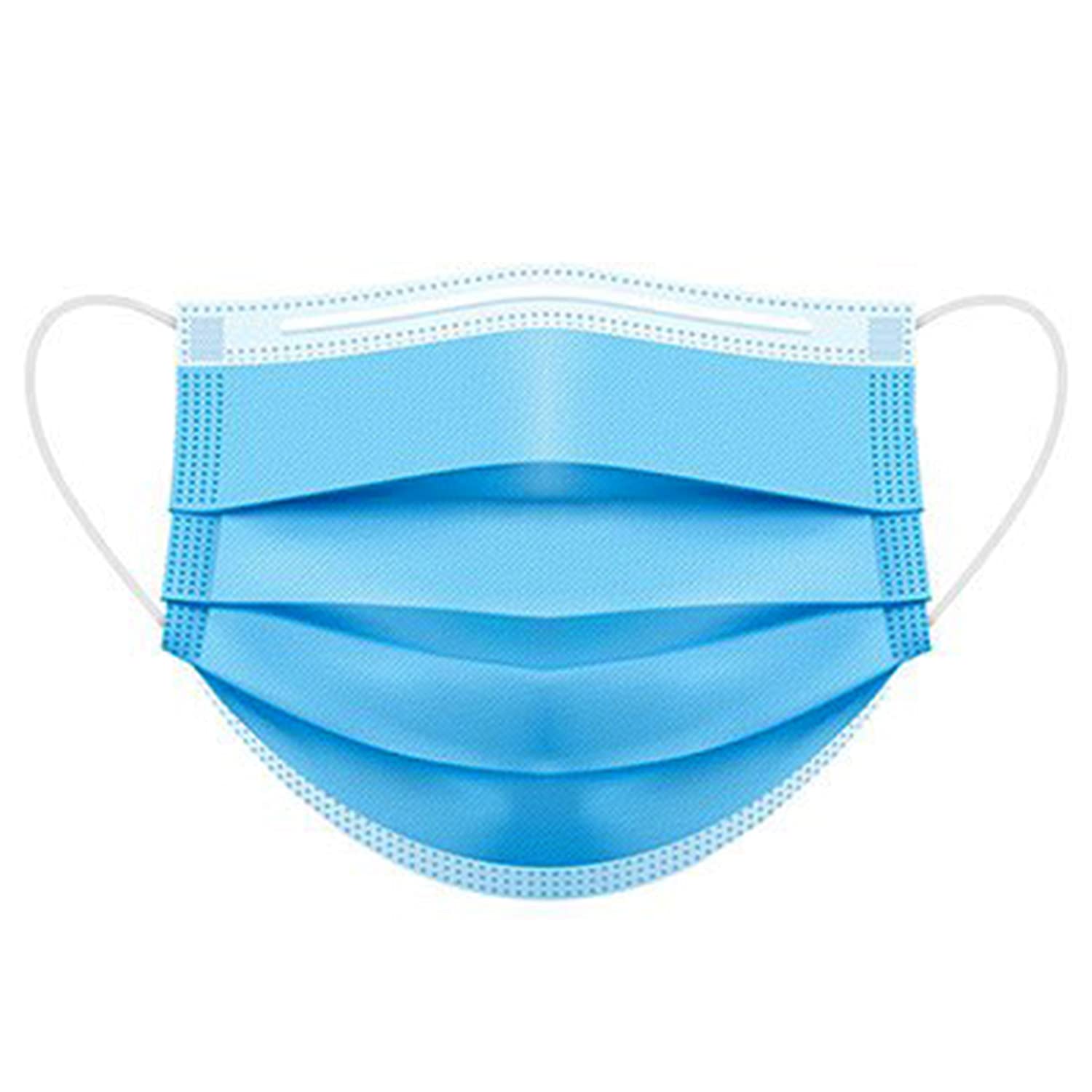
A face mask manufacturing company creates personal protective masks — surgical/medical masks, N95/FFP2 respirators, or reusable cloth/fashion masks — with multiple layers of non-woven polypropylene, melt-blown filter fabric, and ear-loop/nose-clip attachment.
A unit at the MSME level operates from a small-to-medium manufacturing facility, manufactures masks using automatic or semi-automatic machines, and sells to hospitals, pharmacies, corporate offices, and retail/e-commerce channels.
The business model is manufacturing-and-selling: finished masks are sold in bulk to institutional B2B purchasers (hospitals, corporations) at a per-piece wholesale cost, or in retail packs via pharmacies and e-commerce at a greater per-unit margin.
Customers include hospitals and clinics (medical-grade masks with recurring demand driven by regulations), corporate offices and factories (workplace safety compliance), pharmacies and retail chains (general public sales), and e-commerce/export buyers.
Beyond production, long-term success in the face mask industry is dependent on maintaining constant product quality, regulatory compliance, and an effective distribution network. Medical and surgical masks are frequently subjected to applicable quality standards and testing for filtration efficiency, breathability, and bacterial performance before being sold to institutional customers.
Revenue Model
B2B/institutional Sales (Primary)
Wholesale prices per piece: Rs.1-3 for basic 3-ply surgical masks; Rs.8-25 for N95/FFP2 respirators; and Rs.40-150 for premium reusable anti-pollution masks. Bulk hospital/corporate orders: negotiated rate, high recurring order volume.
To calculate revenue (50,000 pieces/day production, Rs.2/piece average for surgical masks, 26 working days/month), multiply 50,000 × Rs.2 × 26 = Rs.26 lakh per month gross revenue.
Secondary sales in retail, e-commerce, and export
Retail pack sales through pharmacies/e-commerce: Rs.5-10 per piece for surgical masks, Rs.150-400 for luxury reusable mask packs – larger margin per unit but with additional packaging and platform commission (8-15%). Export orders (particularly N95/medical-grade with certification): bulk container orders capitalize on India’s manufacturing cost advantage.
The P&L of a Face Mask Manufacturing Business
Raw material costs include non-woven polypropylene fabric, melt-blown filter material, nose-clip wire, and ear-loop elastic, which account for 45-60% of the selling price.
Mask-making machines (automated ultrasonic welding lines) consume a significant amount of electricity, ranging from Rs.15,000 to Rs.40,000 per month depending on production volume and level of automation.
Labor costs range from Rs.10,000-18,000 per month for machine operators to Rs.7,000-12,000 per month for quality-checking and packing staff, with a mid-scale facility typically employing 4-8 individuals.
Costs for testing/certification include BIS/ISI certification, CDSCO registration (for medical-grade masks), and periodic filtration-efficiency testing, which range from Rs.50,000 to Rs.2,00,000.
P&L breakdown (50,000 pieces per day, Rs.26 lakh monthly income, 3-ply surgical masks): Raw material (50%): Rs.13 lakh. Power: Rs. 30,000. Labour costs Rs. 80,000. Packaging: Rs. 1.5 lakh. Net profit of around Rs.10.4 lakh per month (40% net margin on basic-grade masks), with N95/premium reusable masks often giving a higher absolute margin per piece due to their higher selling price.
Raw Material Price Volatility — The Most Important Operational Factor
Melt-blown non-woven fabric (the core filtration layer) prices vary dramatically with crude oil/polymer prices, making raw material cost management the single most important issue influencing margin stability in face mask manufacture.
Stable sourcing (good): Long-term supply contracts with fabric producers at fixed or restricted prices safeguard margins even when raw material prices rise.
Unstable sourcing (bad): Spot-market purchases of melt-blown fabric during price spikes (as observed during pandemic-induced shortages) can boost raw material costs above 70% of selling price, thereby eliminating margin on fixed-price institutional contracts.
Instead of relying solely on spot-market purchases, the best plan is to get 6-12 month ahead contracts with 2-3 fabric suppliers and keep a buffer raw material supply on hand.
Machinery and Compliance
Equipment required: non-woven fabric unwinding unit, ultrasonic welding/sealing machine, ear-loop and nose-clip attachment machine, automatic folding and cutting unit, and UV sterilization/packaging line.
Quality standards: BIS/ISI standards and CDSCO registration are required for medical/surgical masks and N95 respirators sold in India, whereas international standards (ASTM F2100 for medical, EN 14683 for Europe) apply for export.
GST: Face masks (PPE) typically incur 5% GST (basic surgical/N95 masks categorized as essential medical items) to 12% GST (premium/fashion reusable masks), depending on HSN categorization. Registration is necessary for manufacturing turnover of more than Rs.40 lakh (Rs.20 lakh in special category states).
Factory license: Udyam (MSME) registration is required; a factory license under the Factories Act is required if the worker count or power load exceeds specified levels, as well as necessary pollution control clearance for the manufacturing unit.
Project Cost — Face Mask Manufacturing Business
Setup | Capital Cost (Rs.) |
Small semi-automatic unit (10,000-20,000 pcs/day) | Rs.8-15 lakh |
Mid-scale automatic unit (30,000-60,000 pcs/day) | Rs.15-35 lakh |
Large-scale/N95-certified unit (1,00,000+ pcs/day) | Rs.35-80 lakh+ |
Key items include a mask-making machine (semi-automatic/fully automatic), an ultrasonic welding unit, raw material initial stock, BIS/CDSCO certification costs, a packaging line, and a shed or workshop.
Mudra Tarun is suitable for small semi-automatic settings. Mid-scale automatic units are compatible with Mudra Tarun/PMEGP. Large-scale/N95-certified equipment are suitable for the PMEGP manufacturing sector.
Why Choose Sharda Associates?
- 45,500+ Project Reports — Medical/PPE manufacture industry Experience: Face mask manufacture is a raw-material-cost-dominant, certification-dependent industry with price volatility management as the primary profitability factor – we model everything correctly.
- B2B Institutional and Retail/Export Revenue Are Correctly Modeled: Separate revenue streams for bulk hospital/corporate contracts (solid, recurrent) and retail/e-commerce/export sales (higher margin, variable volume)—not a single blended assumption.
- Raw Material Price Volatility Correctly Modeled: The melt-blown fabric cost percentage is modelled with sensitivity to price fluctuations, reflecting genuine margin risk instead of a static raw material cost line.
- Certification charges Correctly Included: BIS/ISI/CDSCO registration and testing charges are included as both one-time and recurring expenses, as compliance is required and bank-critical for this product category.
- GST and Compliance appropriately Identified: The 5-12% GST classification, factory license thresholds, and pollution clearance category were appropriately identified based on the expected product type (surgical/N95/reusable) and scale.
- Seasonal Demand: Demand exhibits moderate seasonal upticks during high-pollution months (winter, particularly in northern India) and flu/respiratory disease seasons, with consistent institutional/B2B demand sustaining a year-round baseline.
- Starting at Rs.2,999 for 24-48 hours.
+91 89899 77769
Frequently Asked Questions
A manufacturing company that produces surgical, N95, or reusable face masks, with revenue generated through bulk B2B sales to hospitals/corporates and retail/e-commerce/export sales. For basic surgical masks, 50,000 units each day at Rs.2/piece on average over 26 days generates Rs.26 lakh in gross revenue per month, with a net margin of roughly 40%.
Udyam (MSME) registration is required. BIS/ISI standards and CDSCO registration are required for medical/surgical masks and N95 respirators. GST registration is necessary for manufacturing revenue exceeding Rs.40 lakh (Rs.20 lakh in special category states), with GST rates ranging from 5-12% depending on the mask category.
Melt-blown non-woven fabric (the filtration layer) prices fluctuate with crude oil/polymer prices and can skyrocket amid shortages, as witnessed during the pandemic. Since raw material is already 45-60% of selling price under normal conditions, an unmanaged price surge might drive it above 70%, completely eliminating margin – making forward supply contracts critical for margin stability.
Basic surgical masks have a net margin of 35-45%, with N95/premium reusable masks frequently having a higher absolute margin per piece due to their much higher selling price, albeit percentage margin is determined by certification and raw material cost control.
Yes, a small semi-automatic unit capable of producing 10,000-20,000 pieces per day can be put up for an expenditure of Rs.8-15 lakh. As order volume and certification level rise (towards N95/medical-grade), manufacturers often convert to fully automatic production lines.
Yes, Mudra Tarun is suitable for small to medium-sized semi-automatic/automatic units (Rs. 8-35 lakh). Large-scale or N95-certified units (Rs.35-80 lakh+) are ideal for the PMEGP manufacturing sector (15-35% subsidy). A CA-certified project report, including raw material volatility modeling and certification costs, is required.
Starting at Rs.2,999 with 24-48 hour delivery. Includes a B2B/retail revenue model, raw material and certification cost breakdowns, GST and compliance information in Mudra or PMEGP format. If the bank has any reservations, it can request a free revision. Call +91 89899 77769.
Surgical masks require less machinery investment and have a lower per-piece price (Rs.1-3 wholesale) but a large volume. N95/FFP2 respirators require specialist filtering material and CDSCO certification, which results in a substantially higher per-piece price (Rs.8-25) but tougher compliance costs. Reusable/anti-pollution masks have the biggest per-piece profit (Rs.40-150) but smaller volume, aimed at premium retail/export channels. The project report considers machinery, certification, and margin assumptions independently.
Institutional B2B demand (hospitals, corporations) is regulated and provides consistent, recurring bulk orders at a reduced per-piece margin, serving as the revenue engine. Retail/e-commerce demand is more variable, influenced by public health awareness and pollution levels, but also provides a greater per-piece profit — a balanced project report typically includes 60-70% institutional and 30-40% retail/export income mix.