
Project Report for Gardening Scythe Manufacturing
India has almost 140 million agricultural households. Most of them still use hand tools, and scythes (or their Indian equivalents, the darat and grass-cutting blade) are among the most commonly purchased. Blades wear out, become damaged, and must be replaced each season. Agricultural hand tool manufacture is a consistent MSME business with a strong demand. Sharda Associates creates CA-certified garden scythe project reports. Starting at ₹2,999.
Get Your Report
What Is a Gardening Scythe and What Indian Market Does It Serve?
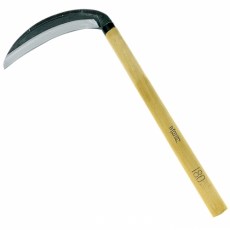
A gardening scythe is a conventional cutting implement with a curved or angled steel blade attached on a long handle (known as a snath or just a shaft) that is used to cut grass, weeds, crop residue, tiny shrubs, and vegetation near the ground. It operates with a rhythmic sweeping motion, allowing one person to clean a large area of land without the use of mechanical force.
In the Indian agricultural and horticultural environment, “scythe” refers to a number of related cutting tools:
Traditional agricultural scythe (darat/grass cutter): Widely used in rural India for crop residue removal, cleaning field boundaries, cutting green feed for livestock, and general farm vegetation management. Widely utilized in all agricultural states.
Garden scythe (smaller, lighter): Used in urban and peri-urban horticulture, including garden upkeep, nurseries, landscaping, parks, and municipal green space management. Growing alongside India’s urban green infrastructure.
Bush hook / billhook (regional variants): Blades with hooks used to clear shrubs, trim branches, and manage the forest floor. Related products from the same manufacturing category.
Types of Scythes and Related Cutting Tools for MSME Manufacturing
Garden/Grass Scythe (standard): Curved blade 30-60cm long, placed on a 1.2-1.8m wooden or metal handle. For lawn mowing, feed gathering, and garden vegetation control. The most popular and widely used variety.
Agricultural Darat (Indian variant): A shorter, heavier blade meant for cutting harder stalks such as sugarcane, crop debris, and prickly plants. Widely utilized in farming regions such as Uttar Pradesh, Bihar, Madhya Pradesh, Rajasthan, and Maharashtra.
Brushcutter Blade (disc and star blades): Replaceable cutting blades for motorized brushcutter machines, made of high-carbon steel and affixed to the brushcutter’s driving head. A comparable product that employs similar steel and press-forming procedures. Motorised brushcutters are making inroads into rural India, fueling industry growth.
Sickle (hasiya/daranti): A shorter, more curved cutting tool for harvesting grain crops like wheat, paddy, and pulses. Closely connected to the scythe in the production process. Many MSME scythe producers also make sickles.
Lawn Edger / Grass Hook: A small, one-handed cutting tool for garden edging and mild grass cutting. Niche, but expanding with the urban garden upkeep industry.
Manufacturing numerous comparable goods from the same steel-cutting and handle-assembly plant is a popular and efficient strategy, as blade form variations do not necessitate fundamentally separate machinery.
Manufacturing Process — Scythe Blade and Handle Production
Blade manufacturing:
Raw material: High-carbon steel (C55, C60, or C65 grade) or spring steel for blades that must maintain an edge under impact. Steel wholesalers supply flat bar and strip steel. The carbon content of the blade determines its capacity to be sharpened and keep an edge—too soft and it dulls quickly; too hard and it becomes brittle.
Blanking/forging: The blade blank is either cut from a steel bar with a power press (blanking method, simpler) or forged with a hammer (forging route, superior grain structure for impact toughness). The conventional MSME method for garden scythes is to blank them from strip steel.
Blade profiling and grinding: The blade is formed (curved profile, back taper, and thickness distribution) before being ground to a preliminary edge. This requires talent, as the blade geometry dictates how well the scythe slices and how readily it can be re-sharpened in the field.
Hardening: (heating to 780-830°C, quenching in oil or water) and tempering (reheating to 180-220°C) are used to obtain a blade hardness of 50-56 HRC, which is hard enough to keep an edge but not so brittle that it chips on impact with soil or stones.
Surface finishing: Shot-blasting or mild grinding to remove scale, followed by black oxide or paint coating to protect against corrosion.
Handle (snath) manufacturing:
Wood snath: Traditionally made from straight-grained hardwood (sheesham, eucalyptus, and bamboo in some areas). Roughly cut to length, shape, sand, and varnish or oil. Basic woodworking equipment demands relatively little capital.
Metal (GI pipe) snath: A simpler, more lasting option is gaining popularity: mild steel or galvanized pipe with a rubber grip at the hand position and a blade attachment socket at the end. Requires basic pipe cutting, bending, and welding abilities.
Assembly: The blade is riveted or attached to the snath using appropriate mounting hardware. Final edge sharpening, quality control, and packaging.
Market Demand — Who Buys Scythes in India
Farming households (directly and through agri-input retailers): India’s 140+ million farming households are the largest potential market. Scythe blades wear out and need to be replaced, which can happen once a season or once a year, depending on usage.
Municipalities and public works departments: Municipal corporations, PWD, national highways authority, railways, and defense institutions maintain extensive green areas like parks, road verges, and embankments, which necessitate the use of cutting equipment on a regular basis by maintenance personnel.
Horticultural nurseries and landscaping firms: To maintain their nurseries and landscapes, urban horticulture enterprises employ lighter garden scythes. With India’s burgeoning urban green projects, this market is expanding.
Cooperative and institutional purchasers: B2B buyers with regular procurement needs include sugar mills (for sugarcane residue management), forest agencies (for clearing undergrowth), and plantation firms (for tea, rubber, and coffee).
Export markets include Southeast Asia: sections of the Middle East, and African agricultural markets, where Indian hand tool prices are competitive and smallholder farming still predominates.
Project Cost for Scythe Manufacturing
Component | Small Unit (₹) | Medium Unit (₹) |
Power press + blanking die | 1,50,000–3,50,000 | 3,50,000–8,00,000 |
Grinding machine (blade edge) | 50,000–1,50,000 | 1,50,000–3,00,000 |
Heat treatment furnace | 80,000–2,00,000 | 2,00,000–5,00,000 |
Woodworking lathe/tools (handle) | 50,000–1,50,000 | 1,50,000–3,50,000 |
Welding setup (metal handle) | 30,000–80,000 | 80,000–2,00,000 |
Raw material stock (steel strip, handle material) | 1,00,000–2,50,000 | 2,50,000–6,00,000 |
Working capital | 50,000–1,50,000 | 1,50,000–3,00,000 |
Total (approx.) | ₹5.10–13.30 lakh | ₹13.30–30.50 lakh |
Both ranges fit within PMEGP manufacturing ceiling (₹50 lakh) — 15-35% capital subsidy applicable. Small units suit Mudra Tarun or PMEGP. Medium units suit PMEGP or MSME term loan.
Why Choose Sharda Associates
- 45,500+ project reports completed; extensive background in sheet metal fabrication and agricultural implements.
- Accurate Steel Grade & Heat Treatment Documentation: The target hardness, hardening method, and C55/C60/C65 steel requirements.
- Opportunities for Product Diversification Included: The business plan may address brush cutter blades, billhooks, sickles, and other agricultural instruments.
- Strong Agricultural Market Analysis: India’s sizable farming sector and ongoing replacement needs are the main drivers of demand.
- GeM & Institutional Sales Opportunities: Where appropriate, government procurement and institutional buyer channels are recorded.
- Opportunities in the agricultural markets of Africa, Southeast Asia, and the Middle East were identified as export potential.
- Complete bankable financial projections, eligibility for subsidies, and CA-certified documentation are all included in PMEGP, Mudra, and MSME Loan Ready.
- Starting at ₹2,999 · 24–48 working hours ·
📞 +91 89899 77769 | All India service
Frequently Asked Questions
A gardening scythe is a tool used to chop grass, weeds, crop leftovers, and plants. It has a curved steel blade on a long handle. In India, farming households utilize ancient agricultural cutting instruments (darat, grass cutters) to manage crop leftovers, clear fields, and cut fodder. The market for agricultural hand tools is stable, with over 140 million farming households and seasonal demand for new blades.
High-carbon steel (C55, C60, or C65 grade) has a carbon content high enough to support a sharpened edge while being thick enough for impact endurance. Steel is offered in strip or flat bar form. For the shaped steel to become a blade that cuts efficiently and maintains its edge in the field, heat treatment (hardening to 50–56 HRC, tempering for toughness) is necessary.
Blade profiling and first edge grinding, heat treatment (hardening and tempering), surface finishing (shot blasting, black oxide, or paint), handle assembly (wood or metal snath joined by riveting or bolting), and blanking from steel strip or bar using a power press (with blanking die). Cutting efficiency and ease of resharpening are determined by the blade's geometry, which includes its curve, taper, and thickness distribution.
Similar steel grades, press-forming, and heat treatment procedures are used in brushcutter replacement blades, billhooks (hook-shaped clearing tool), darat blades (heavier Indian agricultural cutting tool), and sickles (hasiya/daranti, shorter, more curved, for grain harvesting). Using the same machinery to produce several related items increases machine utilization and diversifies revenue.
GeM (Government e-Marketplace for municipal and government maintenance procurement), hardware and general stores in rural towns, weekly rural haats/markets, agri-input retailers and kisan seva kendras (primary rural channel), direct supply to sugar mills and plantation companies (tea, rubber, coffee), and export to agricultural markets in Africa and Southeast Asia.
Scythes and other agricultural hand tools are exempt from India's BIS Compulsory Registration requirements. However, quality certification or testing documentation is becoming more and more necessary for GeM government export and purchase. For the domestic retail market, several producers provide their own brand branding and quality control without official BIS certification.
Indeed, scythe production qualifies for MSME term loans, Mudra loans, and PMEGP subsidies since it is a small-scale manufacturing industry. The average project cost, which includes labor, raw materials, dies, machinery, and working capital, is between ₹5 lakh and ₹15 lakh. Loan acceptance often requires a CA-certified project report that includes information on the machinery, production process, financial predictions, and eligibility for subsidies.
For ₹2,999, a Scythe Manufacturing Project Report with CA certification may be obtained in 24 to 48 hours. Machinery specifications, steel grade selection, heat treatment procedure, raw material costing, profitability forecasts, DSCR analysis, eligibility for PMEGP subsidies, and comprehensive bank loan documentation are all included in the report. Up until bank or scheme approval, modifications are free.