
Project Report for Grass Cutting Machine
Urban expansion, golf courses, residential townships, and government green-belt initiatives are all contributing to growth in India’s landscaping and municipal garden upkeep sectors. Grass cutting machinery, such as lawn mowers and brush cutters, are crucial for this booming industry. Sharda Associates creates CA-certified grass cutting machine manufacturing project reports and has delivered over 45,500 of them. Starting at ₹2,999.
Get Your Report
What Is a Grass Cutting Machine
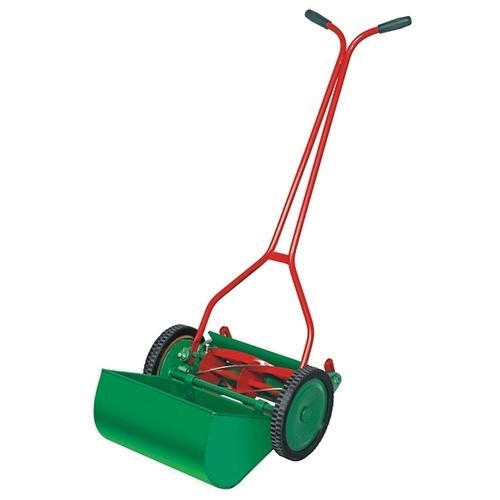
A grass cutting machine, which includes lawn mowers, brush cutters, and grass trimmers, is motorized equipment that cuts grass and plants to a specific height for lawns, parks, sports fields, roadside verges, and agricultural field boundaries. The category includes a diverse range of equipment, including push-type manual reel mowers, petrol/diesel engine-driven rotary mowers, electric and battery-powered mowers, and portable brush cutters with revolving blade or nylon line heads.
In terms of production, a grass cutting machine is largely a metal fabrication and engine integration product. The cutting deck (which houses the spinning blade) is made of sheet steel, the chassis and wheel assembly give mobility, and the power unit—either a tiny petrol engine (supplied from recognized engine manufacturers) or an electric motor—powers the cutting blade. Brush cutters typically feature a shaft-driven cutting head powered by a 2-stroke or 4-stroke engine mounted on a backpack or handheld frame.
Types of Grass Cutting Machines a Manufacturing Unit Can Produce
- Push-Type Rotary Lawn Mower – A petrol-powered mower suitable for household lawns, gardens, and small institutions.
- Self-Propelled Lawn Mower – An advanced mower with propelled wheels for easier use on larger lawns.
- Electric/Battery Lawn Mower – An environmentally friendly, low-noise mower ideal for home and urban use.
- Brush Cutter – A portable machine for trimming grass, maintaining roadways, and clearing agricultural fields.
- Ride-On Lawn Mower – A high-capacity mower ideal for golf courses, sports fields, and huge campuses.
- Hedge and Edge Trimmer – Landscaping device used to shape hedges and maintain lawn edges.
Market Demand — Why Grass Cutting Machines Is Bankable
Municipal and government green belt maintenance: Indian cities are extending park development, roadside median plantation, and highway green belts as part of Smart Cities and beautification initiatives.
Residential Townships and Gated Communities: India’s residential real estate growth includes significant landscaped common area development — every new gated community and township with lawns and gardens requires mowing equipment for ongoing maintenance, which can be purchased directly by the housing society or by the facility management company that serves it.
Golf Courses and Sports Facilities: The number of golf courses in India is increasing, as is the infrastructure for sports facilities (cricket grounds and football turfs), all of which necessitate specialist, regular mowing equipment, including ride-on mowers for vast turf expanses.
Highway and railway right-of-way: The NHAI and Indian Railways maintain vegetation removal along highway medians and rail corridors; brush cutters are typical equipment for this maintenance and are purchased in large quantities.
Project Cost for Grass Cutting Machine Manufacturing Unit
Cost Component | Small Unit (₹) | Medium Unit (₹) |
Sheet metal cutting and pressing machines (deck fabrication) | 2,00,000–4,00,000 | 5,00,000–10,00,000 |
Welding and assembly jigs | 1,00,000–2,00,000 | 2,00,000–4,00,000 |
Powder coating/painting setup | 80,000–1,50,000 | 1,50,000–3,00,000 |
Engine sourcing (Honda/Greaves/domestic) | — (per unit, outsourced) | — |
MS sheet, wheels, blades raw material (3 months) | 2,00,000–4,00,000 | 4,00,000–8,00,000 |
Assembly, testing + working capital | 1,50,000–2,50,000 | 2,50,000–5,00,000 |
Total Project Cost (excl. engine) | ₹7.30–14 lakh | ₹15–30 lakh |
Engine cost (sourced per unit): Petrol engine for lawn mower (3.5-5 HP): ₹4,500-8,000. Brush cutter 2-stroke engine: ₹3,000-5,500.
PMEGP: Up to ₹50 lakh → 15–35% capital subsidy.
Manufacturing Process
- Deck fabrication: The mower deck (the housing under which the blade revolves) is made from mild steel sheet with a press and brake, resulting in the distinctive dome shape that directs cut grass to the discharge chute or collection bag.
- Chassis and wheel assembly: The structure that supports the deck, handle assembly, and wheel mounts is welded from MS tube and flat bar. Wheels (plastic or rubber-tyred steel) equipped with axle assembly.
- Blade production: Cutting blades are stamped or laser-cut from hardened steel, with precision balancing to prevent vibration and premature engine bearing wear. Blade sharpening edges are ground to specification.
- Engine mounting: The blade is connected to the engine output shaft, and the sourced engine (a gasoline or electric motor) is installed on the deck using vibration-isolating mounts.
- Handle and control assembly: Folding handle assembly with throttle control cable, engine start mechanism (pull cord or electronic start), and height adjustment levers attached.
- Painting and finishing: The deck and chassis are powder-coated or spray-painted to prevent corrosion and branding.
- Testing: Each unit was tested for engine start, blade rotation, vibration level, and height adjustment functionality.
What Our Grass Cutting Machine Project Report Covers
- Products include brush cutters, ride-on mowers, electric mowers, push mowers, self-propelled mowers, and hedge trimmers.
- Deck construction, chassis welding, blade manufacturing, engine mounting, and assembly are all steps in the manufacturing process.
- List of machinery with references to supplier quotes
- Engine sourcing strategy: accurately incorporate the cost of the outsourced engine per unit
- Purchasing raw materials: MS sheets, hardened steel for wheels and blades
- 5-year utilization plan and installed capacity
- Market analysis: municipalGeM, golf courses, residential townships, agriculture, and e-commerce
- CMA statistics · DSCR greater than 1.25 · creation of PMEGP jobs Schedule of repayment
Why Choose Sharda Associates
- 45,500+ project reports with expertise in PMEGP projects, agricultural machinery, and equipment production.
- Accurately record engine sourcing costs to guarantee accurate project cost and profitability projections.
- Blade balance and safety procedures are incorporated to satisfy technical and quality requirements.
- GeM and institutional sales channels, such as government, railroad, and municipal procurement prospects, are covered.
- Lawn mowers, brush cutters, hedge trimmers, and similar products are included in the revenue model to provide a variety of sources of income.
- Before delivery, DSCR was confirmed to be above 1.25 to increase the likelihood of bank loan acceptance.
- Starting at ₹2,999 · 24–48 working hours
+91 89899 77769 | Documents on WhatsApp → Report by email → All India service
Frequently Asked Questions
Petrol or electric push-type rotary lawnmowers, self-propelled mowers, ride-on mowers for large areas, hedge/edge trimmers as a natural product range extension, and brush cutters (handheld/backpack for tough terrain and field borders). The entire range is supported by the same engine-sourcing connections and manufacturing configuration.
Indeed. Manufacturing of garden and agricultural equipment is eligible for a 15–35% PMEGP capital subsidy on projects up to ₹50 lakh. A project report in the CA-certified KVIC format that includes a section on employment generation is required. PMEGP project reports are prepared by Sharda Associates for ₹2,999.
Instead of being produced internally, compact gasoline engines (3.5–5 HP for mowers, smaller 2-stroke engines for brush cutters) are purchased from reputable engine manufacturers like Honda, Greaves Cotton, or domestic equivalents. The largest single cost component is the engine, which is not shown as a capital investment but rather as an outsourced cost per unit.
The purpose of a lawn mower, which is a wheeled device with a horizontal rotating blade beneath a deck, is to trim well-kept lawn grass to a uniform height on comparatively level, accessible terrain. A brush cutter is a portable or backpack-mounted device with a shaft-driven cutting head (metal blade or nylon line) that is intended to cut grass, weeds, and dense vegetation on uneven, sloping, or difficult terrain that is inaccessible to a wheeled mower. Brush cutters are mostly used in municipal roadside and field border maintenance.
Golf courses and sports facilities operators, agricultural equipment dealers (farmers for field border maintenance), municipal corporations and PWD departments (through the GeM portal—bulk procurement for parks and road medians), NHAI and Indian Railways (right-of-way vegetation management), residential township facility management companies, and e-commerce customers (homeowners with lawns).
3.5 HP push-type gasoline lawnmower: ₹4,500–8,000 at wholesale. ₹2,500–5,000 for an electric lawnmower. Mower with self-propulsion: ₹8,000–15,000. Handheld, two-stroke brush cutter: ₹3,500–7,000. Backpack brush cutter: ₹6,000–10,000. ₹1,50,000–4,50,000 for a ride-on mower.
stabilizing the blade. An imbalanced cutting blade vibrates during operation, increasing the risk of operator fatigue, early engine crankshaft bearing wear, and blade movement-related safety hazards. Before being assembled onto the engine shaft, each blade must be precisely balanced after stamping or laser cutting.
Yes, local corporations, NHAI, and Indian Railways purchase brush cutters and lawnmowers in large quantities via the GeM portal for park, roadside, and right-of-way maintenance. Participation in GeM requires MSME/Udyam registration, GST registration, and a product listing with technical requirements. Bulk orders are consistently available through this institutional channel.