
Project Report for Hand Sanitizer Manufacturing
Hand sanitizer is no longer a pandemic product; it is a lifestyle. Hospitals, schools, offices, and homes increasingly stock it year-round, implying a consistent, recurring demand for makers willing to get the formulation, packaging, and licensing right. It’s a low-skilled, quick-start business with genuine B2B stability. Sharda Associates generates CA-certified hand sanitizer project reports for bank loans. Starting at Rs. 2,999.
Get free Sample
What Does a Hand Sanitizer Manufacturing Business Actually Involve?
At its core, you’re combining alcohol (ethanol or isopropyl alcohol, often 60-70% concentration), water, a gelling agent, and skin-care additives like as aloe vera or glycerin before bottling, labeling, and selling it. That is the entire production process, and it does not require large machinery to begin.
Most tiny units operate out of a rented shed or a small commercial facility. You purchase raw alcohol from an authorized supplier (this part requires its own licensing; more on that below), mix it in batches, fill bottles with a semi-automatic filling line, cap and label them, and send to your customers.
The essential commercial decision is not the formulation, but who you’re selling to. Selling to a hospital chain on a yearly supply contract is very different from selling 100ml bottles on Amazon.
Another key consideration is quality control and regulatory compliance. Before entering the market, each batch should be tested to guarantee the correct alcohol concentration, pH, appearance, and microbial safety. Maintaining consistent quality not only helps to exceed consumer expectations, but it also facilitates approvals for institutional buyers such as hospitals, government departments, schools, and corporations.
How Does a Hand Sanitizer Business Make Money?
Institutional/B2B Contracts (the stable backbone)
Hospitals, schools, business offices, and government departments typically purchase in quantity, either by tender or direct contract. Pricing is lower here (Rs.25-60 per 100ml bottle wholesale, depending on volume and packaging), but it’s consistent. Win one good hospital chain contract, and you’ll have recurring monthly orders without spending a dime on marketing.
A unit generating 5,000 litres per month and selling at an average of Rs.350 per litre to institutional purchasers generates approximately Rs.17.5 lakh per month — and that figure barely changes month to month once the contract is signed.
Retail and E-commerce (the higher-margin side)
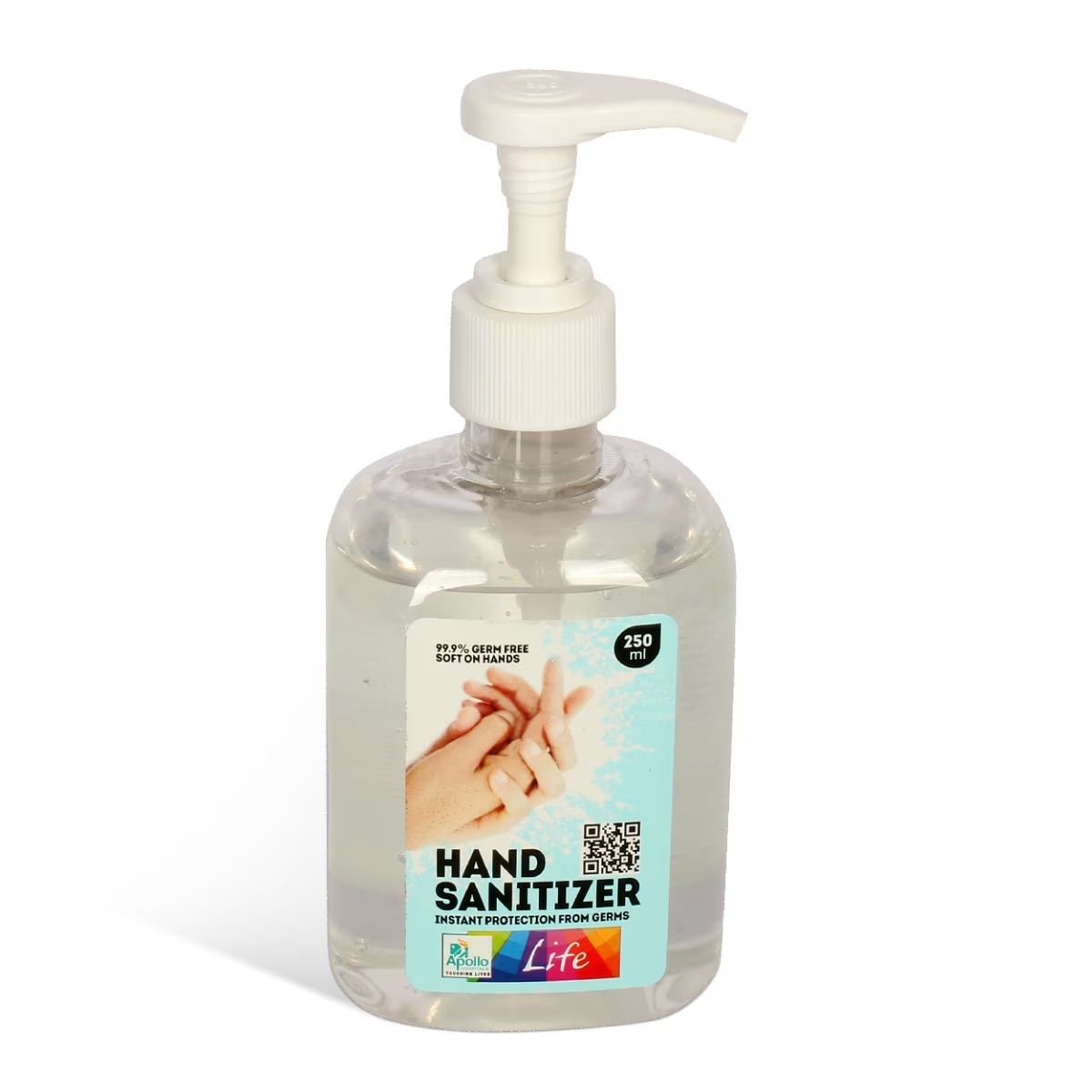
Retail bottles (50ml-500ml) supplied through pharmacies, kirana stores, or platforms such as Amazon and Flipkart sell for Rs.60-150 per 100ml, which is significantly costlier per unit than institutional supply, but you’re paying for packaging, branding, and platform fee (8-15%), and demand is unpredictable. The most successful small manufacturers use a combination of institutional contracts for stability and retail/e-commerce for margins.
Where Does the Money Actually Go? (P&L Breakdown)
Raw materials, mostly ethanol/IPA, are the single most expensive component, accounting for 40-55% of the selling price. Alcohol prices fluctuate due to excise duty adjustments and supply availability, thus this number is not constant; it is the line item that decides whether your month was profitable or break-even. Packaging (bottles, caps, pumps, and labels) costs between Rs. 3 and 15 per unit, depending on bottle size and if you’re going premium retail or basic institutional supply.
Labor is light in this industry; 3-5 people (mixing, filling, and packing) at Rs.8,000-15,000 per month are common for a small-to-medium facility.
Licensing and compliance aren’t large ongoing costs, but they’re also not free — excise/alcohol license renewal, BIS testing, and lab compliance checks can cost between Rs.30,000 and Rs.1,000,000 per year, depending on your state and scale.For a unit doing Rs.17.5 lakh/month (mainly institutional), raw material costs around Rs.8.75 lakh, packaging costs Rs.1.2 lakh, labor costs Rs.55,000, and overheads/compliance costs Rs.50,000, leaving a net margin of around Rs.6.5 lakh/month, or approximately 37%. Retail-heavy units can increase margins per unit but provide less predictable volume.
The One Thing That Decides Whether This Business Works: Alcohol Sourcing
Everything else about this business is manageable. Alcohol sourcing isn’t; it is the only issue that can make or break your profitability.
If you have a direct supply agreement with a registered ethanol/IPA distributor and a consistent monthly allocation, your raw material costs are predictable, even if prices fluctuate somewhat.
If you buy spot-market quantities from whoever has stock that week, you’re vulnerable to both price spikes and supply shortages—and when demand surges during a health scare or festival season, prices rise accordingly.
Banks also pay close attention to this section of a project report; they want to see that you have a sourcing plan as well as a production plan.
Licenses You Genuinely Need
Hand sanitizer differs from other small manufacturing enterprises in that it requires an additional layer of documentation because alcohol is involved.
To purchase and store denatured alcohol, you’ll need an excise department license (this varies by state; Madhya Pradesh, Maharashtra, and Gujarat all have their own excise requirements). If you’re making it as a cosmetic product, you’ll need a manufacturing license under the Drugs & Cosmetics Act; if it’s marketed as a “drug” (medicated, with particular antiseptic claims), CDSCO oversight will take effect.
BIS conformance (IS 16352 for the formulation) is not usually required but greatly beneficial when bidding on government/hospital tenders. Hand sanitizers, which are designated as disinfectants, normally attract GST of 18%. If you exceed the worker/power thresholds, you will need Udyam/MSME registration and a factory license, as with any other manufacturing unit.
None of this is difficult on its own, but failing to include even one of these is a common reason banks return project reports for revision – exactly the type of thing we ensure is addressed upfront.
What Will It Actually Cost You to Set Up?
Setup | Capital Cost (Rs.) |
Small batch unit (500-1,000 litres/month) | Rs.5-10 lakh |
Mid-scale unit (3,000-6,000 litres/month) | Rs.10-25 lakh |
Larger automated unit (10,000+ litres/month) | Rs.25-50 lakh+ |
This covers your mixing tanks, semi-automatic filling line, bottling/capping equipment, initial raw material and packaging stock, excise license deposit, and basic lab testing setup.
Smaller setups generally fit Mudra Kishore. Mid-scale units usually go for Mudra Tarun. Larger, automated units are better positioned for PMEGP under the manufacturing sector.
Why Choose Sharda Associates ?
We’ve completed over 45,500 project reports, and hand sanitizer is one of those categories where getting the details incorrect is easy—treating it as a generic FMCG product, neglecting alcohol sourcing risk, or failing to include a license that the bank expressly requests.
We estimate institutional and retail revenue separately since they act very differently. We incorporate raw material price sensitivity rather than believing that alcohol costs remain constant. And we ensure that every license required by your state — excise, drugs and cosmetics, BIS, GST — is accounted for, so your file does not get returned by the bank due to a missing compliance line.
We also identify seasonal patterns honestly: demand rises during flu season and around any health-related news cycle, but remains stable elsewhere from institutional buyers — we don’t exaggerate estimates with pandemic-era statistics that won’t be repeated.
Starting at Rs.2,999, with 24-48 hour
+91 89899 77769
Frequently Asked Questions
It's a manufacturing company that turns alcohol, water, and skin-friendly additives into a sanitizing gel/liquid before bottling and selling it to hospitals, merchants, and internet buyers. A mid-scale facility producing 5,000 litres per month at an average cost of Rs.350 per litre earns approximately Rs.17.5 lakh per month, with net margins typically ranging from 35-40%.
For alcohol procurement, you'll need an excise department license (rules vary by state), a manufacturing license under the Drugs and Cosmetics Act (or CDSCO registration if positioned as medicated), Udyam/MSME registration, and GST registration with a turnover of more than Rs.40 lakh. BIS adherence to IS 16352 is not always required, however it does help with government procurement.
Because ethanol/IPA accounts for 40-55% of your costs, and its price fluctuates based on excise policy and supply availability. A locked-in supply connection with a licensed distributor keeps your expenses consistent; depending on spot-market purchases exposes you to price spikes, which frequently occur when demand (and competition for stock) is strongest.
A business with a healthy balance of institutional contracts and retail sales should expect to earn a net margin of 35-40%. Pure institutional supply (lower per-unit pricing, big volume, and very steady) tends to be slightly cheaper; retail/e-commerce operations can push margins higher per unit but with less predictable monthly volume.
Yes, a small batch operation capable of producing 500-1,000 litres per month can be set up for Rs. 5-10 lakh, which includes basic mixing and filling equipment as well as initial stock. Most people start small, test a few institutional or retail contacts, and then expand the filling line as orders increase.
Generally, yes. Small setups are best suited for Mudra Kishore, mid-scale units (Rs.10-25 lakh) for Mudra Tarun, and larger automated units (Rs.25-50 lakh+) for PMEGP in the manufacturing sector — assuming your project report properly documents licensing and sourcing, which is where most applications fail.
Starts at Rs.2,999 and is delivered within 24-48 hours. It includes your institutional/retail revenue split, raw material cost modeling, and the complete licensing checklist for your state, and is formatted for the scheme you're applying under (Mudra or PMEGP). If the bank expresses a concern, correction is free. Call +91 89899 77769.
Yes, but it's a different kind of demand—more consistent, less dramatic. Institutional purchasers (hospitals, schools, and businesses) have simply incorporated it into their hygiene budget. Retail demand has returned to pre-pandemic levels, but it does not disappear entirely; it rises during flu season and remains stable throughout the year.
Selling to hospitals or corporate clients entails a lower price per unit but periodic, dependable bulk orders with almost little marketing expense — it's a relationship and tender-driven company. Selling on Amazon/Flipkart results in a greater price per bottle, but you pay for branding, packaging, and platform costs, and orders fluctuate according to seasonality and competition. Most viable enterprises operate both, relying on institutional contracts for stability.