
Project Report for Kitchen Appliance
Rising household incomes, urbanisation, nuclear family expansion, and the change from traditional cooking methods to electric appliances have all contributed to India’s kitchen appliance industry becoming one of the fastest-growing consumer durable categories. Kitchen appliance manufacture at the MSME level involves assembly and integration work, not component fabrication — and the appropriate project report reflects this. Sharda Associates has delivered over 45,500 project reports. and provides CA-certified kitchen appliance reports. Starting at ₹2,999.
Get free Sample
What Are Kitchen Appliance
Kitchen appliances are electrically powered food preparation, cooking, and beverage making gadgets that are intended to be used on a kitchen counter, tabletop, or cooktop surface. Unlike large white goods (refrigerators, washing machines, dishwashers), which require installation and significant capital per unit, kitchen appliances are often smaller, less expensive, portable, and acquired on their own as household requirements and incomes increase.
Kitchen appliances are assembly-and-integration businesses on an MSME scale; the core electrical and electronic components (motors, heating elements, thermostats, control circuits) are sourced from specialist component manufacturers, and the manufacturing process entails assembling these components with the product housing, wiring, and finishing into a fully functional appliance.
The structural growth drivers in India’s kitchen appliance industry are over 300 million households, a substantial and increasing middle class, and ongoing underpenetration of even basic equipment in semi-urban and rural families. E-commerce has dramatically expanded the addressable market for smaller appliance brands; a manufacturer without national retail distribution can now reach buyers across India via Amazon and Flipkart listings, making kitchen appliance manufacturing a more viable MSME category.
Kitchen Appliance Categories — Where MSME Manufacturers Play
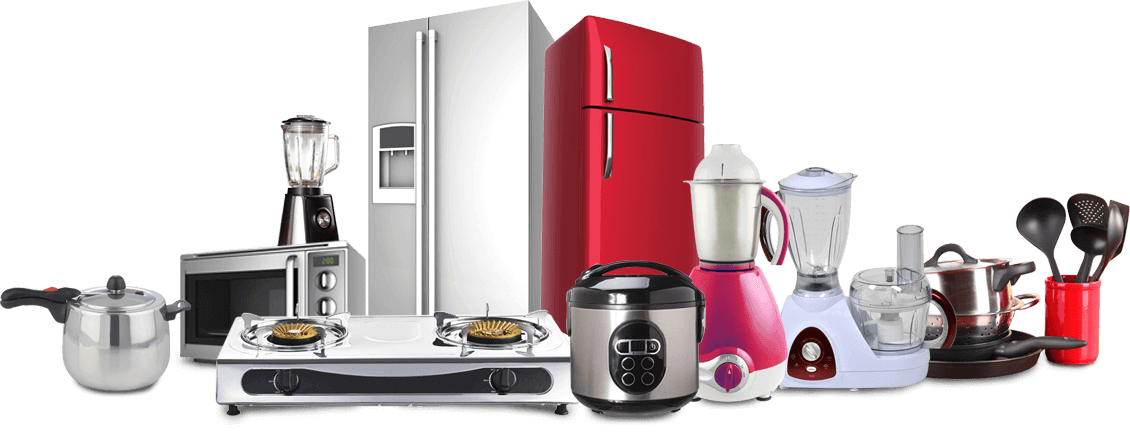
Wet grinder and mixer-grinder: appliances in high demand for batter preparation, chutneys, and spice grinding. extensively utilized in Indian homes, guaranteeing a robust market for new and replacement products.
Kettle with electricity: Demand for this easy-to-assemble product in homes, workplaces, hotels, and hostels is rising. has a simple manufacturing process and requires a comparatively small investment.
Cooktop with Induction: LPG-saving advantages and growing urban market demand for energy-efficient cooking appliances. Convenience, safety, and reduced operating expenses make it popular among contemporary households.
Sandwich maker and toaster: Low-cost kitchen appliances are widely available online and in physical places. High demand from small families, working professionals, and students.
Food processor: Higher-priced, multipurpose appliance with several food preparation attachments. Because of its superior positioning and adaptability, it offers higher profit margins.
Blender by hand: Modern homes are increasingly choosing small, user-friendly appliances for rapid cooking operations. Perfect for city dwellers looking for space-saving and convenient kitchen solutions.
What Makes Kitchen Appliance Manufacturing Viable at MSME Scale
Component sourcing is established: India has well-developed supply chains for kitchen appliance components, including motors from motor manufacturers, heating elements from heating element suppliers, thermostats and control boards from electronics component distributors, and plastic housings from injection moulders.
E-commerce levels the playing field: organized retail is dominated by India’s leading kitchen appliance brands, including Philips, Bajaj, Havells, Bosch, and Prestige. However, e-commerce has made it possible for smaller manufacturers to reach consumers across the country by listing products, gathering feedback, and increasing awareness without the need for a physical retail network.
The prerequisite for market access is BIS certification: Bureau of Indian Standards, or BIS Under the Compulsory Registration Scheme, the majority of kitchen equipment sold in India must have IS 302 (safety requirements for domestic electrical appliances) certification.
Demand for replacements: After years of usage, kitchen appliances deteriorate, control boards malfunction, and motors deteriorate. Unlike first-time purchase demand, India’s substantial installed appliance base generates a steady cycle of replacement needs.
What Makes Kitchen Appliance Manufacturing Viable at MSME Scale
Component sourcing is established: India has well-developed supply chains for kitchen appliance components, including motors from motor manufacturers, heating elements from heating element suppliers, thermostats and control boards from electronics component distributors, and plastic housings from injection moulders.
E-commerce levels the playing field: organized retail is dominated by India’s leading kitchen appliance brands, including Philips, Bajaj, Havells, Bosch, and Prestige. However, e-commerce has made it possible for smaller manufacturers to reach consumers across the country by listing products, gathering feedback, and increasing awareness without the need for a physical retail network.
The prerequisite for market access is BIS certification: Bureau of Indian Standards, or BIS Under the Compulsory Registration Scheme, the majority of kitchen equipment sold in India must have IS 302 (safety requirements for domestic electrical appliances) certification. Organized retail and large e-commerce platforms require BIS certification, which is both a market-access reality and a compliance necessity.
Demand for replacements: After years of usage, kitchen appliances deteriorate, control boards malfunction, and motors deteriorate. Unlike first-time purchase demand, India’s substantial installed appliance base generates a steady cycle of replacement needs.
Project Cost — Kitchen Appliance Assembly
Component | Small Unit (₹) | Medium Unit (₹) |
Assembly jigs, fixtures, and hand tools | 50,000–1,50,000 | 1,50,000–3,00,000 |
Electrical testing equipment (hipot, earth continuity, leakage) | 50,000–1,50,000 | 1,50,000–3,00,000 |
Plastic housing tooling (moulds — per product) | 1,00,000–5,00,000 | 5,00,000–15,00,000 |
Sourced components stock (motors, heating elements — 3 months) | 2,00,000–5,00,000 | 5,00,000–12,00,000 |
BIS certification (testing + fee per product) | 50,000–2,00,000 | 2,00,000–5,00,000 |
Packaging + working capital | 1,00,000–2,50,000 | 2,50,000–5,00,000 |
Total (approx.) | ₹5.50–17.50 lakh | ₹17.50–43 lakh |
Both ranges fit within PMEGP’s ₹50 lakh ceiling — 15-35% capital subsidy applicable. Housing mould tooling cost varies significantly by product complexity and size.
Why Choose Sharda Associates
- Delivered over 45,500 project reports; extensive experience in PMEGP/MSME manufacturing projects, appliance assembly, and consumer electronics.
- Correctly Structured Component Costs: The costs of motors, heating components, thermostats, and control boards are appropriately calculated as raw material costs per unit.
- BIS Compliance Included: Testing expenses, approval schedules, and BIS certification criteria are all appropriately recorded.
- Make vs. Buy Assessment: For the best investment planning, in-house plastic molding and outsourced housing manufacturing are compared.
- Amazon, Flipkart, and online marketplace distribution models with reasonable commission and pricing assumptions are covered in the section on e-commerce sales strategy.
- Product-Specific Financial Planning: Distinct estimates for electric kettles, juicers, grinders, mixers, induction cooktops, and other kitchen appliances.
- CA-Certified & Bank Ready: Ready for bank financing applications, MSME loans, PMEGP, and Mudra.
- Starting at ₹2,999 · 24–48 working hours ·
📞 +91 89899 77769 | All India service
Frequently Asked Questions
Small kitchen appliances such as mixer-grinders, electric kettles, induction cooktops, toasters, sandwich makers, food processors, rice cookers, hand blenders, and others are assembled and integrated utilizing sourced electrical components rather than being manufactured at the component level.
Indeed. With a 15–35% capital subsidy, small assembly units (₹5.50–17.50 lakh) and medium units (₹17.50–43 lakh) both fall within PMEGP's ₹50 lakh maximum. The project cost estimate includes the cost of BIS certification.
The Indian Standard BIS IS 302 addresses the safety criteria for home electrical appliances, including thermal safety, earth continuity, electrical insulation, and leakage current. Most kitchen equipment must have BIS certification under the Compulsory Registration Scheme in order to be marketed in India. BIS accreditation is a prerequisite for listing on major e-commerce platforms and organized shops.
integrating motors, heating components, thermostats, and control boards from specialized vendors and integrating them with a housing to create a final product is MSME-scale kitchen appliance manufacturing. The production of components, such as motors and heating elements, calls for specialized machinery and is usually carried out on a larger scale by specialized component manufacturers.
Organized retail is dominated by major brands (Croma, Reliance Digital, established distribution networks). Without a physical retail network, e-commerce (Amazon, Flipkart) enables a new MSME brand to list products, get verified consumer feedback, and develop national visibility, significantly reducing the barrier to market access for smaller producers.
starting at ₹2,999 and shipping within 24 to 48 hours. Sourced components include housing make-vs-buy analysis, e-commerce distribution economics, BIS certification cost and timeline, PMEGP format with employment generation, and per-unit variable cost. If the bank has any questions, the revision is free. Give +91 89899 77769 a call.
Indeed. When sales volumes increase, many MSMEs start with a single product, such as an electric kettle, mixer-grinder, or induction cooktop, and then branch out into other appliance categories.
Not always. In order to drastically lower the initial investment requirements, many firms start with an assembly unit that uses sourced components and outsourced plastic housings.
Cut-to-size marble and granite floor tiles/slabs (highest volume), granite countertops and kitchen tops, kerbstones (for infrastructure supply), and custom sizes for construction contractors—a small unit typically focuses on 2-3 product types where it can achieve consistent quality and competitive pricing rather than attempting to cover all stone products from the start.