
Project Report for Nebulizer Machine
Manufacturing a nebulizer without a CDSCO license is unlawful in India; nebulizers are categorized as Class B medical devices under the Medical Device Rules of 2017, and selling unregistered units carries serious legal consequences. This single regulatory fact, more than any market size figure, is what your project report must address first. Sharda Associates delivers 45,500+ CA-certified reports and develops nebulizer manufacturing project reports in 24-48 hours. Starting at Rs. 2,999.
Get free Sample
What Is Nebulizer Machine Manufacturing?
The most crucial truth to realize before proceeding with this business is that a nebulizer is not a general electronics product that can be freely manufactured and sold after a working unit has been developed. According to India’s Medical Device Rules, 2017, nebulizers are classified as Class B medical devices (“low to moderate risk,” along with syringes and blood glucose monitors), which means that manufacturing one for commercial sale without a valid licence from the Central Drugs Standard Control Organisation (CDSCO) is a legal violation, not a minor compliance gap to be resolved later.
The path to legal manufacturing follows a specific, sequential process that you should understand before committing capital: initially, you apply for a test licence (Form MD-12) to produce limited test batches. Once granted, you create three test batches and deliver them to the lab for testing. With the test reports in hand, you apply for the actual production licence (via Form MD-7 on the CDSCO Sugam portal), which is subject to drug inspector assessment and a facility audit. Only when this audit is completed satisfactorily is the manufacturing license awarded on Form MD-9. Currently, the entire MD-9 procedure takes around 3 months from application to award – and this timetable must be clearly incorporated into your project plan, as you cannot legally sell a single unit until it is completed.
Licensing Before Sales
Here’s something to be clear about: there is no legal path to first manufacture and sell nebulizers commercially and then obtain CDSCO licensing — this sequence is illegal, end of story, and a project report or business plan based on starting sales before licensing approval is based on an illegal premise that no bank will finance once a technical reviewer notices. The legal sequence is as follows: test license, test batch manufacture, lab testing, manufacturing license application, facility audit, MD-9 grant, and commercial manufacturing/sale. This roughly three-month procedure should be viewed as a mandatory pre-revenue phase in your project timetable and working capital plan, rather than an afterthought that will be addressed after the business is operational.
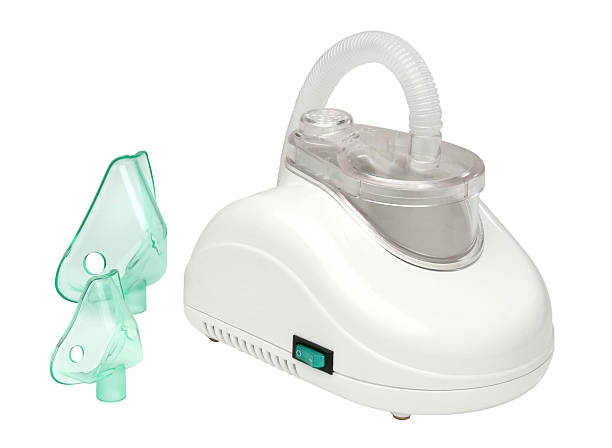
How Does This Business Actually Make Money?
The global nebulizer market was valued at approximately USD 1.07 billion in 2022 and is projected to grow at a CAGR of around 5.9% between 2023 and 2030, driven by rising respiratory disease prevalence, air pollution, an ageing population, and growing home-healthcare adoption. India’s domestic market reflects these same drivers strongly, given the country’s significant air pollution burden and large population managing chronic respiratory conditions like asthma and COPD.
Pricing varies according to nebulizer type. A basic jet/compressor nebulizer for home and clinical use is commonly sold wholesale for Rs.800-2,500 per unit, depending on construction quality and accessory kit (masks, mouthpieces, tubing). Mesh nebulizers, due to their more precise construction and battery-portable design, cost Rs.2,500-6,000 at wholesale. Ultrasonic nebulizers are normally priced between Rs.2,000 and Rs.5,000 at wholesale, depending on specifications.
Revenue calculation (small jet nebulizer manufacturing unit, post-licensing): 2,000 units/month at Rs.1,400 average wholesale × 12 months = Rs.3.36 crore/year. It’s important to note that this revenue only begins after the roughly 3-month CDSCO licensing process is completed. Therefore, your project report’s cash flow timeline should include a genuine pre-revenue phase rather than a Day 1 sales assumption.
The compressor/motor assembly and electronic components are your primary manufacturing costs (typically 35-45% of unit cost for jet nebulizers), with the remainder split between housing, tubing/mask accessories, packaging, and quality testing — the latter of which carries genuinely more weight in this business than in non-medical product manufacturing, given the ongoing CDSCO compliance and quality system obligations that extend well beyond initial licensing.
What Does a Nebulizer Manufacturing Unit Actually Need to Set Up?
- CDSCO-compliant manufacturing plant. Your facility must meet Good Manufacturing Practices (GMP) infrastructure criteria, which CDSCO inspects as part of the license audit – this isn’t just any factory space; it requires environmental controls and a layout suitable for medical device manufacturing. Budget Rs.8-18 lakh for a facility that was created specifically to pass this audit, rather than a modified general workshop.
- Assembly and testing equipment. Compressor/motor assembly stations, electronic component testing rigs, and aerosol particle size testing equipment (truly important because particle size directly determines how deep into the lungs medication reaches — a core performance specification valued by CDSCO and quality buyers) — Rs.6-15 lakh.
- Qualified technical personnel. CDSCO requires that personnel involved in manufacturing and testing have specific qualifications — a B.Tech, B.Sc, or B.Pharma degree with two years of relevant experience, or an equivalent diploma — this is not an optional staffing flexibility, but rather a licensing requirement that must be met with documented qualifications before your application can be processed.
- Quality management system (ISO 13485). Nebulizers must meet BIS and ISO 13485 quality and safety standards; this is a genuine, continuous quality system investment rather than a one-time certificate, as ISO 13485 needs documented processes throughout your entire manufacturing operation. Budget Rs.3-8 lakh for initial certification and system setup, with regular compliance expenses like as audits and renewals.
- Preparing the Device and Plant Master Files. Detailed technical documentation of your device design and manufacturing facility, both required as part of the CDSCO licensing application—this is truly specialised documentation work, and many manufacturers hire regulatory consultants for this specific step due to its technical complexity. Rs.1.5-4 lakh is frequently handled alongside expert licensing assistance.
Why Particle Size Matters
Here’s an important detail to understand for both manufacturing quality control and product positioning: a nebulizer’s clinical effectiveness is heavily dependent on producing aerosol droplets within a specific, consistent particle size range — droplets that are too large do not penetrate deep into the lungs and provide limited therapeutic benefit, whereas droplets that are too small may be exhaled before deposition.
This is precisely why mesh and ultrasonic nebulizers, which create more uniform droplet sizes than basic jet nebulizers, attract a higher market price — and why your quality testing process requires true, consistent particle-size verification, not just a functional “does it produce mist” check.
A producer that can provide consistent, verifiable particle size performance has a real, defensible quality differential when selling to hospitals and institutional purchasers who understand this specification.
Where Should You Set This Up, and Who Are Your Realistic Buyers?
Location is important for both component sourcing (electronic components, compressors, and medical-grade plastics for housing and accessories) and proximity to the skilled, qualified technical labor required by CDSCO licensing; established medical device and electronics manufacturing clusters in Maharashtra, Gujarat, and parts of South India provide better access to both than a region without this manufacturing tradition.
Hospitals and clinics (the largest-volume institutional buyer segment, requiring documented CDSCO compliance and frequently procurement-tender-based purchasing), pharmaceutical and medical equipment distributors (who supply both institutional and retail/pharmacy channels), home healthcare equipment retailers and pharmacies (a genuinely growing segment given rising adoption of home-based respiratory care), and—for manufacturers who have built export-grade quality systems—international markets, where India’s medical device industry is positioned to replace imports and even export thanks to government initiatives like the Production Linked Incentive (PLI) and MedTech parks.
Beyond the CDSCO production license itself, compliance requirements include standard Udyam/MSME registration, GST registration, ISO 13485 quality management certification (which is truly required by institutional customers, not optional), and BIS conformance for pertinent safety standards. Expect your bank’s technical due diligence to expressly confirm CDSCO licensing status as a condition of loan disbursement, rather than merely a documentation checkbox, given the medical device categorization.
What Will This Actually Cost You?
Setup | Capital Cost (Rs.) |
Small jet/compressor nebulizer manufacturing unit | Rs.25-45 lakh |
Medium unit (jet plus mesh nebulizer capability) | Rs.45-80 lakh |
Larger unit with export-grade quality systems and broader product range | Rs.85 lakh-1.5 crore |
Even a small unit sits at a higher realistic capital floor than many other manufacturing categories because to the CDSCO licensing need and the genuine quality infrastructure (GMP-compliant facility, ISO 13485 system, certified technical staff) this business demands. If properly organized, small units could fall under PMEGP under the manufacturing sector, and the 15–35% capital subsidies would significantly improve the project’s return profile. Due of the regulatory compliance and quality infrastructure investment needed, medium and larger units are more likely to require an MSME term loan, sometimes with CGTMSE collateral-free coverage for the eligible amount.
Why People Choose Sharda Associates?
- We’ve prepared over 45,500 CA-certified project reports, and medical device manufacturing files such as nebulizers have one detail that determines whether a bank’s credit officer takes the report seriously: whether CDSCO licensing is built into the plan as a mandatory, sequential first phase or treated as an afterthought.
- We incorporate the CDSCO licensing timeline into your project plan as a genuine pre-revenue phase, rather than an assumption that sales will begin immediately — your working capital plan reflects the actual three-month MD-9 process, test batch manufacturing, and facility audit before commercial revenue can legally begin.
- Quality infrastructure (ISO 13485, GMP facility, qualified staff) is costed as a legitimate, continuous investment, not as an artificially low project cost that would fail a real CDSCO audit.
- Particle-size performance and quality testing are incorporated in as true differentiators, not merely compliance checkboxes, indicating what institutional customers look for when selecting a nebulizer provider.
- We’re open about the true capital requirements for this firm. Given the mandatory license, qualified staffing, and quality system requirements, this is not a low-capital entry business, and we base your report on the realistic investment amount that is required.
- Before you even read the report, DSCR is certified to be greater than 1.25 and is compared to your realistic post-licensing production and sales timetable.
- Starting at Rs.2,999, we deliver in 24-48 hours Call +91 89899 77769.
Frequently Asked Questions
Yes, this is a legally binding duty. Nebulizers are classed as Class B medical devices under India's Medical Device Rules of 2017, and it is prohibited to manufacture or sell unregistered nebulizers. The required CDSCO manufacturing licence is awarded on Form MD-9 after a four-step process: a test licence (Form MD-12) for producing restricted test batches, lab testing of those batches, a full manufacturing licence application (Form MD-7) with facility audit, and finally the MD-9 grant.
The MD-9 manufacturing licence process currently takes around three months from application to grant, following the test licence and test batch manufacturing phases that came before it. This period must be included in your business plan as a legitimate pre-revenue phase, as commercial manufacture and sales cannot legally commence until the license is issued.
A small jet/compressor nebulizer production unit, incorporating a CDSCO-compliant GMP facility, typically costs between Rs. 25 and Rs. 45 lakh. A medium unit with mesh nebulizer manufacturing capability requires Rs. 45-80 lakh. A larger operation with export-grade quality processes and a broader product line costs Rs.85 lakh-1.5 crore. Due to CDSCO license requirements and mandated quality infrastructure, even small units have a higher capital floor than many other manufacturing categories.
It is possible, if properly built around the obligatory CDSCO license process. Small units may qualify for PMEGP's 15-35% capital subsidies in the manufacturing sector. Medium and larger units, given the true regulatory compliance and quality infrastructure investment required by this business, are more likely to require an MSME term loan, sometimes with CGTMSE collateral-free coverage for the eligible amount.
The three main types are jet/compressor nebulizers (which use compressed air and are the most established and accessible manufacturing process), mesh nebulizers (which use vibrating mesh technology for more uniform droplets and require more precise manufacturing), and ultrasonic nebulizers. Jet/compressor nebulizers are a good place to start for most new MSME producers because of their established, well-understood manufacturing process and large market.
Personnel participating in production and testing must have a B.Tech, B.Sc, or B.Pharma degree and at least two years of related experience, or an equivalent diploma certification, according to CDSCO. This is a license requirement, not an option for staffing flexibility, and must be met with verified qualifications as part of your CDSCO application.
ISO 13485 is an international quality management system standard for medical equipment, and nebulizers must meet both BIS and ISO 13485 quality and safety criteria in India. This is a genuine, continuous quality system investment that covers documented processes across your entire manufacturing operation, rather than a one-time certificate – and institutional customers, such as hospitals, often require it before purchasing from a manufacturer.
The therapeutic success of a nebulizer is determined by the production of aerosol droplets within a specified, constant particle size range – droplets that are too large do not penetrate deep into the lungs for effective treatment, whereas droplets that are too small may be expelled before deposition. This is precisely why mesh and ultrasonic nebulizers, which produce more uniform droplet sizes, attract a higher price, and why actual, consistent particle-size testing (rather than simply a simple functional check) is a vital quality control expenditure.
Hospitals and clinics are the major institutional buyers, frequently requiring verified CDSCO compliance and procurement-tender-based purchasing. Pharmaceutical and medical equipment distributors serve both the institutional and retail/pharmacy channels. Given expanding home-based respiratory care uptake, home healthcare equipment shops and pharmacies are a really developing industry, and export markets provide a real opportunity for manufacturers with export-grade quality systems, aided by government schemes such as the PLI scheme and MedTech parks.