
Project Report For Oxygen Cylinder Manufacturing
Introduction
The Oxygen Cylinder Manufacturing project report is as follows.
By 2026, the production of oxygen cylinders will have evolved from a simple metal-fabrication sector to a high-tech one with advanced materials science and digital connectivity. The storage and transportation of industrial and medicinal gases have been completely redesigned as a result of the lessons learned from the global supply chain vulnerabilities of the early 2020s. These days, a “cylinder” is more than simply a bulky steel tank; it’s an advanced, lightweight, and “smart” pressure vessel made to be as safe and portable as possible.
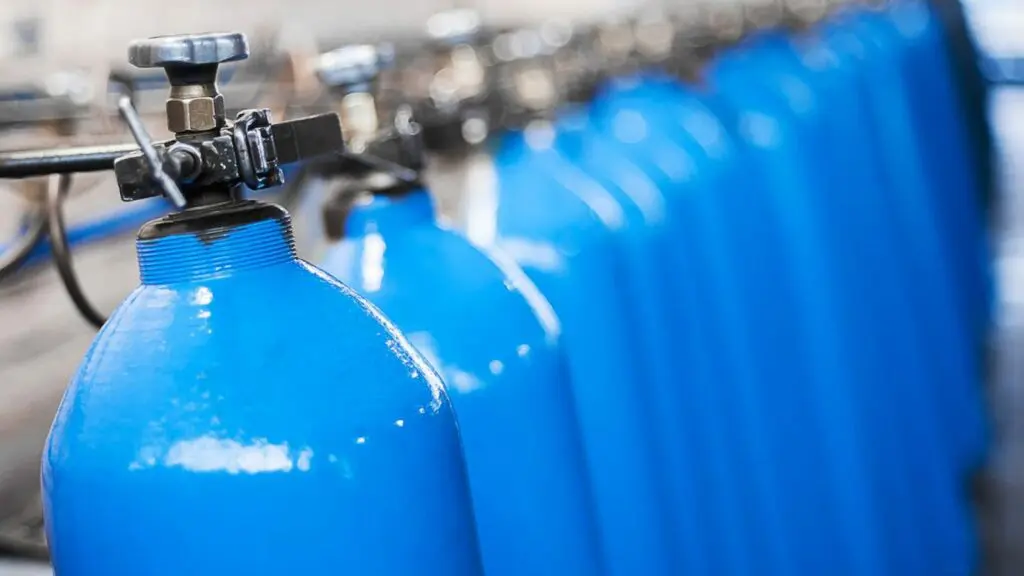
Type 3 and Type 4 composite cylinders will be the most popular in 2026. Although large industrial stationary storage still uses traditional seamless steel (Type 1), the rapidly expanding medical and emergency industries have shifted toward the following:
Get Completely Custom Project Report
Type 3 Cylinders: These have a full carbon fiber overwrap reinforcing the aluminum liner. They can withstand higher filling pressures (up to 300 bar) and are 60% lighter than steel.
Type 4 Cylinders: These use a carbon fiber-wrapped non-metallic plastic (HDPE) liner. These are the 2026 “ultra-light” standards, which are mostly utilized in upscale home care and aircraft environments.
In 2026, nearly all of the production process will be automated and robotic. The first metal or plastic shells are made with micron-level accuracy using deep-drawing machines. CNC-controlled “Filament Winding,” which provides multidirectional strength by spinning carbon fiber threads in predetermined patterns around the liner, comes next.
Before leaving the factory, every cylinder made in a 2026 facility is subjected to Non-Destructive Testing (NDT) employing ultrasonic sensors to find even the smallest microscopic fissure, guaranteeing a “zero-failure” rate.
The Integrated Smart Valve is arguably the biggest change in 2026. These days, modern cylinders are “digital.” Hospitals and suppliers can trace each liter of oxygen in real time because of these valves’ integrated GPS and pressure sensors, which communicate to the cloud via satellite or 5G.
Market Potential Of Oxygen Cylinder Manufacturing
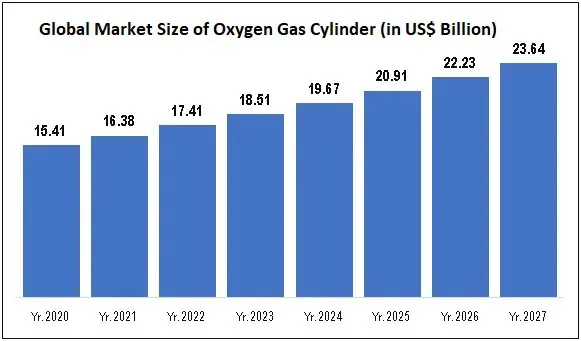
In 2026, the market potential for the production of oxygen cylinders is at an all-time high. The medical gas market is valued at more than $22 billion worldwide, with the fastest-growing category being portable and high-pressure storage systems. The need stems from a change in the global healthcare paradigm toward “Decentralized Care.”
-The Aging Population and Home Healthcare
The “Silver Economy” is a major market driver in 2026. The need for portable oxygen concentrators (POCs) and ultra-lightweight backup cylinders has increased dramatically due to the development in chronic respiratory disorders (COPD) and an older population that prefers to age in place. The best profit margins in the market are being experienced by manufacturers who specialize in “Ambulatory Oxygen”—cylinders that are compact enough to be carried like a purse yet powerful enough to last eight hours.
-Pandemic Resilience and Strategic National Reserves
By 2026, the majority of independent countries will have enacted legislation mandating a “Strategic Oxygen Reserve.” Liquid oxygen plants, which can malfunction during power outages or transport strikes, are no longer the only option available to governments. Millions of High-Pressure 10L and 47L cylinders are instead being accumulated. As a result, there is now a sizable, multi-year B2G (Business-to-Government) market that offers manufacturers guaranteed off-take agreements and long-term stability.
-The “Private Space” and Aerospace Niche
The Private Aerospace Sector is a high-value niche that has developed in 2026. “Mission-Critical” oxygen canisters are in great demand due to the growth of commercial space tourism and high-altitude aviation. These must pass stringent vacuum testing and temperature-swing certifications, and they need Type 4 technology. Although the volume is smaller than that of medical oxygen, the cost per unit is much greater, providing advanced manufacturing facilities with a profitable possibility.
-Business Models for “Oxygen-as-a-Service” (OaaS)
The most prosperous manufacturers in 2026 switched from “selling hardware” to “managing gas.” Manufacturers now provide subscription-based models using IoT-enabled Smart Valves. They automatically send out a replacement cylinder before the current one runs out and remotely check the oxygen levels of a hospital or a patient. The “empty cylinder” issue that afflicted the sector in earlier years is resolved by this strategy, which also generates a steady stream of income.
–Regional Development: Southeast Asia and India’s Advantage
India has become a worldwide center for medical device manufacturing in 2026. While retaining the same ISO 13485 quality requirements, manufacturing costs in India are 20–30% lower than in Europe thanks to “Production Linked Incentive” (PLI) programs and the creation of specialized Medical Device Parks. As a result, India is now the main supplier of composite cylinders to the Middle East, ASEAN, and Africa.