
Project Report For Plastic Injection Moulding
Introduction
Project report for Plastic Injection Moulding is as follows.
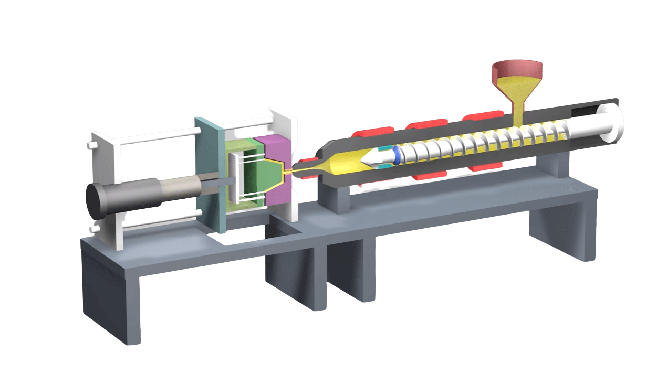
In 2026, plastic injection moulding will be a cornerstone of contemporary manufacturing, functioning as a highly sophisticated and adaptable method for mass-producing high-precision plastic components. At its core, the technology entails putting specific polymer resins into a heated barrel, where they are melted into a viscous fluid and then forced under great pressure into a custom-engineered metal mold.
Once the material has cooled and solidified within the perfectly carved chamber, the mold opens to release the final item, and the cycle begins again—often in as little as a few seconds. This extraordinary efficiency makes it the prime choice for businesses that require thousands or millions of identical parts with complicated geometries, such as the delicate diagnostic equipment in the medical industry and lightweight structural housings.
In the current industrial environment, injection moulding has evolved from a purely mechanical process to a digitally driven, “smart” production ecosystem based on Industry 4.0 concepts. Modern facilities use AI-powered predictive analytics to monitor over 400 distinct process variables in real time, including melt temperature, injection speed, and cavity pressure, allowing machines to automatically repair problems like warping or “short shots” before they occur.
This level of control is accompanied by a significant shift toward sustainability, with the industry aggressively implementing “circular moulding” processes. Manufacturers are increasingly using post-consumer recycled (PCR) resins and biodegradable bioplastics like PLA and PHA, which are powered by electric and hybrid injection machines that use up to 50% less energy than classic hydraulic versions.
Project Report Sample On Plastic
Injection Moulding

Get Completely Custom Bankable Project Report
As we approach 2026, the process’s adaptability expands thanks to advancements like multi-material (two-shot) moulding and the incorporation of 3D-printed mold inserts, which enable quick prototyping and unparalleled design freedom. Plastic injection moulding strikes a compromise between high-speed manufacturing and a thorough attention to material science and environmental responsibility. By merging innovative robots with environmentally responsible chemical engineering, the sector remains a critical pillar of global production, constantly changing to meet the exacting expectations of a performance-driven and planet-conscious society.
Market Potential Of Plastic Injection Moulding
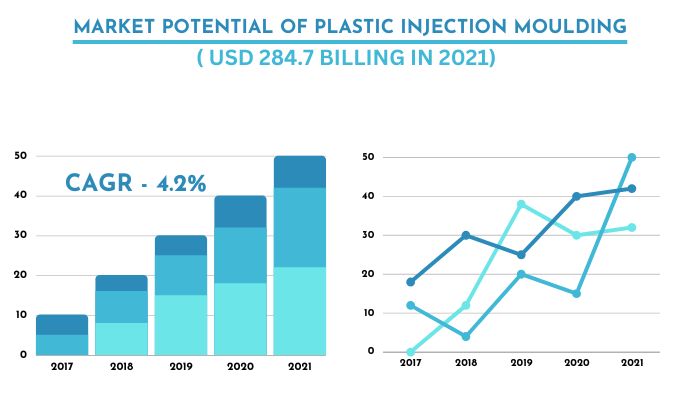
Plastic injection moulding has a strong market potential in 2026, with the worldwide sector now valued at over $361.80 billion and expected to reach $647 billion by 2034. This tremendous expansion, which has maintained a consistent compound annual growth rate (CAGR) of 7.5%, is principally driven by the confluence of high-volume production requirements and a dramatic change toward sustainable material science. In the present economic context, injection moulding has evolved from a classical mechanical process to a high-tech, “smart” manufacturing pillar that powers the global automotive, medical, and packaging industries.
The rapid growth of the electric vehicle (EV) sector is a key driver of this market’s potential. As manufacturers face great pressure to enhance battery range through “lightweighting,” conventional metal components are being replaced with high-performance injection-moulded polymers like polypropylene (PP) and ABS. Polypropylene, in particular, leads the raw material category with a market share of 37.73%, owing to its shock resistance and recycling. The medical industry is driving growth with a need for high-precision, sterile components and diagnostic kits. Maintaining tolerances of 0.01 mm is crucial for patient safety and regulatory compliance.
The rapid growth of the electric vehicle (EV) sector is a key driver of this market’s potential. As manufacturers face great pressure to enhance battery range through “lightweighting,” conventional metal components are being replaced with high-performance injection-moulded polymers like polypropylene (PP) and ABS. Polypropylene, in particular, leads the raw material category with a market share of 37.73%, owing to its shock resistance and recycling. The medical industry is driving growth with a need for high-precision, sterile components and diagnostic kits. Maintaining tolerances of 0.01 mm is crucial for patient safety and regulatory compliance.