
Project Report for Gas Burner Manufacturing
Every year, India sells about 6 crore LPG connections, and each new connection requires a gas stove with burners. Gas burner production is an important MSME industry in India, with a direct link to the country’s goal of universal household fuel access. Sharda Associates has completed more than 45,500 project reports, including CA-certified gas burner manufacturing reports for PMEGP and MSME bank financing. Starting at ₹2,999.
Get Your Report
What Are Gas Burner Manufacturing
A gas burner, specifically the LPG cooking burner found in Indian households and commercial kitchens, is the main functional component of a gas stove or cooking range. It is the assembly that mixes LPG gas and air in the right proportions, distributes the mixture through flame ports in a circular pattern, and keeps the flame constant and controllable when cooking.
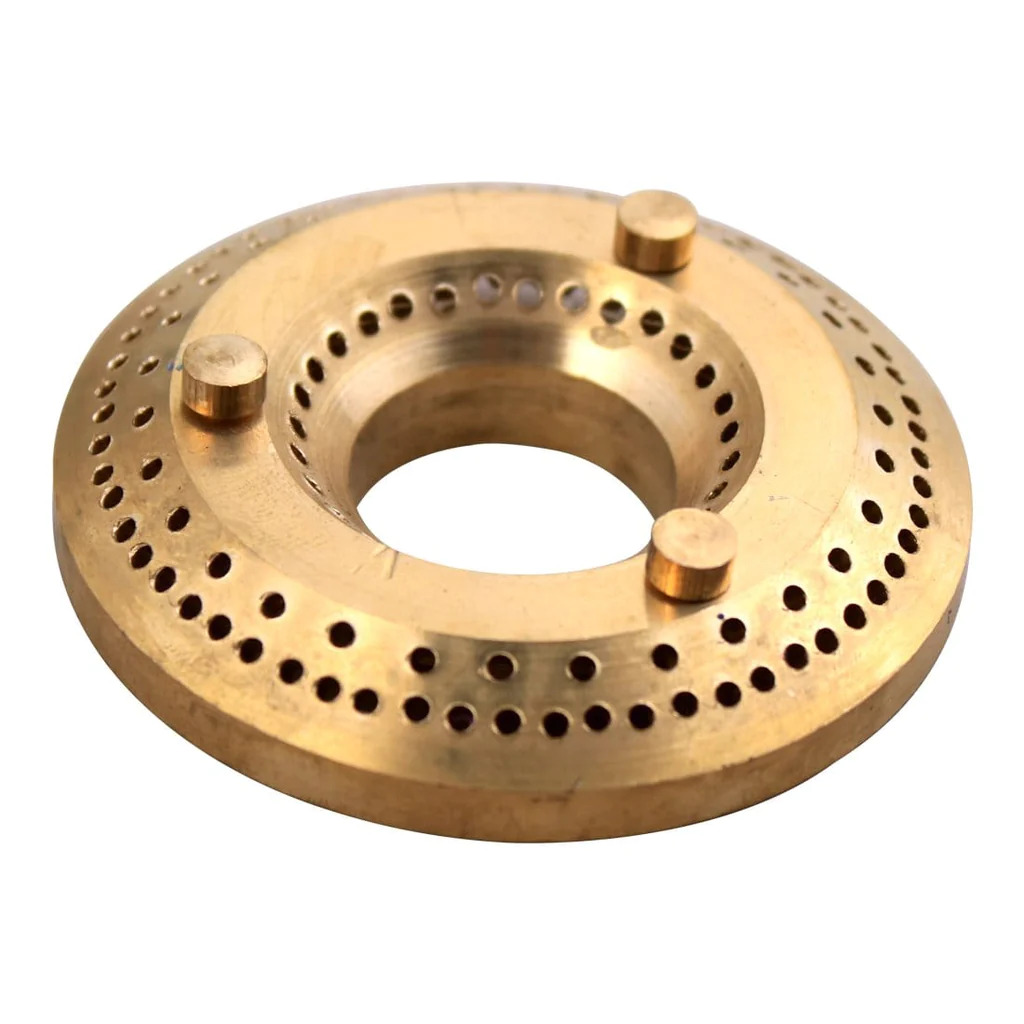
The burner assembly consists of three major components: the burner body (a cast iron or aluminum alloy base that sits on the stove pan support), the burner cap (a brass or aluminum cap that covers the burner body and distributes gas through precisely drilled flame ports), and the burner head (the intermediate ring in multi-part designs). These three components, when properly manufactured with enough thermal and corrosion resistance, determine whether a gas stove is safe and effective.
The Pradhan Mantri Ujjwala Yojana (PMUY) scheme has raised LPG cooking gas penetration in India to 99% of households, suggesting that nearly every Indian home now has an LPG connection. This provides a large and consistent base market for gas burners, which can be utilized as original equipment in new stoves or as replacement parts in existing ones.
Market Demand — Why Gas Burner Manufacturing Is Bankable
- Standard Domestic Burner – The most often used burner for domestic gas stoves is cast iron with a brass top.
- Brass Burner – Premium all-brass construction provides superior corrosion resistance and a longer service life.
- High-Efficiency Burner – A dual-flame design that improves fuel efficiency and produces more heat; utilized in modern energy-efficient stoves.
- Commercial/Restaurant Burners – These are heavy-duty burners designed for use in hotels, restaurants, canteens, and institutional kitchens.
- Wok Burner – A powerful burner for Chinese cuisine, commercial kitchens, and food service applications.
- Replacement Burner Cap – The spare parts market provides replacement caps to consumers, hardware stores, and gas appliance dealers.
Market Demand — Why Gas Burner Manufacturing Is Bankable
PMUY Ujjwala Connections: The Pradhan Mantri Ujjwala Yojana has connected over 10 crore families to LPG, with the bulk of them being first-time gas stove consumers. Each new connection symbolizes a gas stove purchase, and each gas stove requires replacement burners during its 5-8 year service life. The replacement market for PMUY connections alone accounts for millions of burner sets each year.
New Housing Construction: Every year, India creates 60-80 lakh new housing units. Every new kitchen needs a gas stove. The demand for incorporated gas burners in new homes is significant and consistent.
Commercial Kitchen Expansion: India’s HORECA (hotel, restaurant, and catering) sector is growing at 10-12% each year. Commercial burners are necessary for any new restaurant openings, cloud kitchen launches, or hotel expansions. Commercial burners are valued 5-8 times more per unit than residential burners, making this a profitable market for MSME makers.
Replacement Market: Gas burner caps, particularly brass caps, have a service life of 2 to 5 years, depending on usage and cleaning techniques. With over 30 crore gas stove installations in India, tens of millions of burner caps are required on a constant annual basis. The distribution channels include hardware stores, gas appliance service centers, and e-commerce platforms.
Manufacturing Process — From Raw Material to Finished Burner
Sand mold casting is utilized to produce the burner body in grey cast iron. To achieve gas-tight contact, the body’s seating surfaces for the burner cap must be machined precisely. Casting is typically outsourced to a foundry for smaller businesses, and the cast bodies are subsequently machined inside.
Brass cap production: The burner cap is the most significant component because it distributes gas via the flame ports and regulates the flame pattern and heat output. There are two methods: (a) die-cast brass, which includes pouring molten brass into a die to produce a near-net shape with minimal machining, and (b) stamped brass, which involves pressing brass sheet into a cap shape and then drilling it. Flame ports are drilled at exact angles using a multi-spindle drilling machine.
Flame port drilling: This is the most exact method in gas burner manufacturing. Flame ports must be drilled at the appropriate diameter, angle, and spacing to create a uniform, steady flame with no flashback or flame lift. A multi-spindle drill configuration with hardened steel guide bushings ensures consistent port geometry throughout production batches.
Machining: The burner body seating and cap locating surfaces are machined on a lathe or CNC machining center to ensure a tight fit and prevent gas leaks between the body and cap.
Testing: Each built burner was assessed for gas tightness, flame pattern consistency, and heat output. BIS-sampled units were tested in accredited laboratories to ensure they met IS 4246 criteria.
Finishing and packaging: The burner bodies are shot-blasted or wire brushed. Brass caps are polished. Assembled sets are packed to meet domestic stove OEM requirements, replacement market packs, and export cartons.
Project Cost for Gas Burner Manufacturing Unit
Cost Component | Small Unit (₹) | Medium Unit (₹) |
Casting arrangement / foundry setup | 2,00,000–4,00,000 | 5,00,000–10,00,000 |
CNC lathe or turning centre | 3,00,000–6,00,000 | 7,00,000–14,00,000 |
Multi-spindle drilling machine (flame ports) | 1,50,000–3,00,000 | 3,00,000–6,00,000 |
Die-casting setup (for brass caps) | 2,00,000–4,00,000 | 5,00,000–10,00,000 |
Raw material — brass rod, CI castings (3 months) | 2,00,000–4,00,000 | 4,00,000–8,00,000 |
BIS IS 4246 testing + working capital | 1,50,000–2,50,000 | 2,50,000–5,00,000 |
Total Project Cost | ₹12.50–23.50 lakh | ₹27–53 lakh |
PMEGP: Up to ₹50 lakh → 15–35% capital subsidy.
What Our Gas Burner Project Report Covers
- Product categories include domestic standard, brass premium, high-efficiency, commercial, wok, and replacement caps.
- Casting, die-casting of the brass cap, flame port drilling, machining, and testing are all steps in the manufacturing process.
- Machine list, specifications, and supplier references
- Making or buying CI castings: foundry outsourcing vs. in-house (correctly measured by scale)
- Flame port drilling multi-spindle fixture—a critical quality operation.
- BIS IS 4246 certification cost and timeline—needed for domestic supply
- Raw material sourcing: brass rod (Jamnagar, Mumbai), CI castings (Rajkot, Coimbatore).
- Installed capacity with a 5-year use plan
- Market analysis for stove OEM supply, replacement market, commercial HORECA, and export
- Revenue predictions vary from ₹18-350 per burner set, depending on kind.
- CMA data: DSCR greater than 1.25, PMEGP employment generation. · Repayment schedule
Why Choose Sharda Associates
- More than 45,500 project reports were delivered, including gas burner manufacturing, metal components, foundry-linked products, and PMEGP applications.
- The flame port drilling process is thoroughly documented, with critical equipment, fixtures, and machining requirements accurately factored into project costs.
- BIS IS 4246 certification costs are included, and essential compliance fees are properly accounted for in the project budget.
- The option of creating or acquiring cast iron casting is examined, with outsourcing versus in-house foundry operations being weighed against project size and budget.
- OEM and replacement market revenue models were built independently, with stove manufacturers, distributors, hardware stores, and aftermarket sales forecasted separately.
- Accurate raw material costs for cast iron bodies, burner caps, brass components, machining, testing, and finishing procedures.
- The report includes profitability analysis, CMA data, DSCR, break-even analysis, cash flow forecasts, and bankable financial statements.
- Prior to delivery, the DSCR was certified as greater than 1.25 in order to boost PMEGP, MSME, and bank loan approval.
- Starting at ₹2,999 · 24–48 hours
📞 +91 89899 77769 | All India service
Frequently Asked Questions
A household LPG gas burner is a gas stove component that combines LPG gas and air, distributes it through flame ports, and produces a regulated cooking flame. The three primary components are the burner body (cast iron or aluminum alloy base), the burner cap (brass or aluminum with drilled flame apertures that distribute gas into a circular flame pattern), and the gas inlet nozzle, which measures gas flow from the stove body to the burner assembly.
Yes. PMEGP offers a 15-35% capital subsidy for metal component and kitchen equipment manufacturing projects up to ₹50 lakh. A CA-certified KVIC-format project report with employment generation section is necessary. Sharda Associates offers PMEGP gas burner manufacturing project reports from at ₹2,999. Call +91 89899 77769.
BIS IS 4246 specifies the safety and performance parameters for domestic LPG burners in India, such as flame port geometry, gas flow rates, flame stability, and heat output. BIS certification under IS 4246 is required for all domestic LPG burners. Every gas stove manufacturer that buys burners from MSME suppliers needs BIS-certified components. Non-certified burners cannot be sold in organized retail or to OEM manufacturers. Testing, factory audits, and annual BIS licence renewal payments must all be included in the project report's pre-operative costs.
Grey cast iron (standard domestic grade) and aluminum alloy (lower weight) are both used to make burner bodies. Burner cap: brass (the standard material, with good heat conductivity, corrosion resistance, and machinability for flame port drilling), or aluminum alloy for a lower cost. Gas input nozzles are meticulously crafted from brass or stainless steel. Some premium models have all-brass bodies and caps for enhanced aesthetics and corrosion resistance.
Flame ports are small holes drilled in the burner cap through which the gas-air mixture escapes and ignites, creating the cooking flame. Their diameter, angle, and spacing affect the flame pattern, heat distribution, and safety. Too big means flame lift and gas waste. Too little means sooty, incomplete combustion. The incorrect angle causes an uneven flame. The multi-spindle drilling fixture, complete with strengthened guide bushings, guarantees that port geometry is consistent throughout production. This is the most precise operation in gas burner manufacturing.
A domestic LPG burner produces 700-2,800 kcal/hour of heat for household cooking in a standard 2-3 burner gas range. A commercial burner produces 5,000-15,000 kcal/hour in hotel kitchens, restaurants, and institutional canteens, demanding a thicker cast iron construction, a larger gas inlet valve, and a distinct nozzle specification. Commercial burners are 5-10 times more expensive than household burners, necessitating a separate B2B buyer channel.
Gas stove OEMs include domestic stove manufacturers who source burner assemblies from MSME component suppliers (the most common channel), hardware and gas appliance dealers who stock replacement burner caps, gas stove service centers (replacement parts), commercial kitchen equipment manufacturers (commercial burners), export buyers in Africa, the Middle East, and Southeast Asia, and organized retail platforms that stock replacement burner sets.
Standard residential CI + brass burner sets (body + cap) are priced between ₹18-45 at wholesale. A premium burner set composed of all-brass costs between ₹55 and 120. The double-ring burner has a high efficiency range of 80 to 180. Replace the brass cap for ₹12-35. Commercial restaurant burners cost between ₹180-600. High-power wok burners typically cost between ₹300 and 800. Prices vary depending on the material grade, finish quality, and order quantity.