
Introduction
The project report for Stone Crusher Plant is as follows.
A Stone Crusher Plant is an essential industrial facility designed to break down large, raw rock boulders into smaller, manageable sizes such as stone chips, gravel, and “manufactured sand” (M-Sand). In the construction world, these processed materials are collectively known as aggregates. They are the fundamental building blocks of modern civilization, forming the literal foundation of almost every physical structure, from small residential homes to massive hydroelectric dams and multi-lane expressways.
The primary function of the plant is to take raw stones typically sourced from nearby licensed quarries and put them through a multi-stage mechanical crushing process. This usually begins with a Jaw Crusher, which handles the primary heavy breaking of large rocks. This is followed by a Cone Crusher or an Impact Crusher for secondary and tertiary stages to achieve a specific cubical shape and precise size. Finally, a series of high-frequency vibrating screens sort the crushed stones into standard commercial sizes, such as 10mm, 20mm, and 40mm, depending on the specific requirements of the construction project.
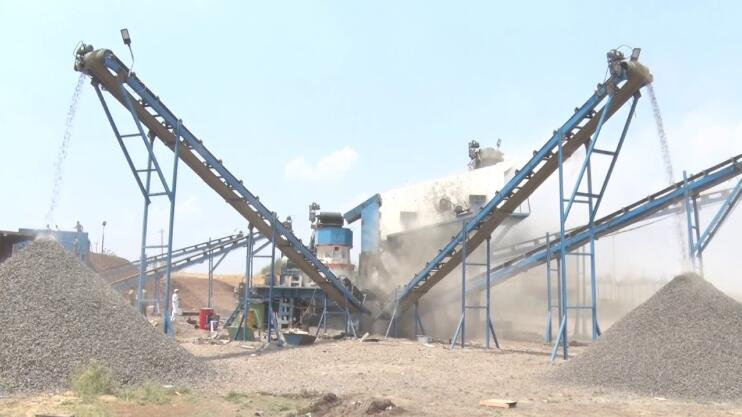
As of 2026, the industry has shifted toward Smart Crushing. Modern plants are no longer just heavy mechanical sites; they now incorporate advanced dust suppression systems to meet strict environmental regulations and automated sensors that monitor machinery health in real-time. By converting raw mountain rocks or river boulders into uniform, high-quality construction materials, a stone crusher plant serves as the indispensable primary supplier for real estate developers, road contractors, and government public works departments. It is a business that turns raw natural resources into high-value industrial assets.
Market Potential Of Stone Crusher Plant
The market potential for stone crushing in 2026 is at an all-time high, driven by a global and local surge in infrastructure spending and rapid urbanization. As populations grow and move toward cities, the demand for high-quality aggregates has transitioned from a steady stream to a massive, unstoppable wave.
The Global Infrastructure Boom: Governments worldwide, and particularly in developing economies, are investing heavily in Mega Projects to modernize their nations. The expansion of eight-lane expressways, the construction of high-speed rail networks, and the development of “Smart Cities” require millions of tons of crushed stone every month. Unlike many other retail or service-based businesses, the stone crushing industry is directly tied to a country’s GDP growth; as long as roads are being paved and bridges are being built, the demand for stone chips remains non-negotiable and urgent.
The “M-Sand” Revolution: One of the most significant market drivers in 2026 is the global crackdown on illegal river sand mining to protect delicate river ecosystems. This has created a massive supply gap in the construction industry, which is being filled by Manufactured Sand produced directly within stone crusher plants. Entrepreneurs who equip their plants with Vertical Shaft Impactors to produce high-quality, silt-free sand are seeing significantly higher profit margins. M-Sand has now become the preferred choice for high-strength concrete in skyscraper construction, making it a gold mine for crusher owners.
Consistent and Localized Demand: Because crushed stone is heavy and expensive to transport over long distances due to rising fuel costs, the market is inherently localized. This gives a massive competitive advantage to a plant located near developing suburbs, upcoming highway interchanges, or industrial corridors. With the construction sector projected to grow at a Compound Annual Growth Rate of over 7% to 9% through the end of the decade, a well-managed stone crusher plant is considered a recession-proof asset. Even during economic fluctuations, basic maintenance of public infrastructure ensures a baseline level of demand.
Sustainability and Value Addition: In 2026, the market is also rewarding Green Crushers. Plants that implement solar power, use electric-drive crushers, and recycle 90% of their water for dust control are finding it much easier to secure long-term government contracts and environmental clearances. Furthermore, a rising trend in the industry is the processing of Construction and Demolition Waste. Modern plants can now crush old concrete and bricks to create recycled aggregates, opening up a second, highly profitable, and eco-friendly revenue stream that appeals to modern, sustainability-conscious developers.
Project Report Sample On Stone Crusher Plant

Need Help?
Create 100% Bankable Project Report