
Project Report for Locking Pliers Manufacturing
Quick explanation first: “Vise-Grip” is a registered trademark (Irwin Industrial Tools) — the generic product is called locking pliers, and that’s the company an MSME may genuinely produce and sell under its own brand. Locking pliers are a consistent, established category within India’s hand tools market, which is expected to be worth USD 825 million Sharda Associates, which has delivered over 45,500 CA-certified studies, creates locking pliers manufacturing project reports in 24-48 hours. Starting at Rs. 2,999.
Get Your Report
A Quick Word on Naming, Before We Go Further
If you’ve been calling this company “Vise-Grip manufacturing,” it’s worth pausing for a moment since the name is more important than it appears. “Vise-Grip” is a registered trademark of Irwin Industrial Tools, which is now owned by Stanley Black & Decker; it is not the generic name for the product, just as “Sellotape” is a brand but the actual product category is cellophane tape, or “Thermos” is a brand but the category is vacuum flask.
What you’ll actually be producing and selling under your own brand name is a locking plier, which is a hand tool with serrated jaws and an over-center cam-locking mechanism that clamps onto a workpiece and remains locked without constant hand pressure. This is a valid, well-established, generic tool category that dozens of Indian manufacturers, including significant established businesses, already create and sell successfully under their own brands. Using the correct generic name isn’t simply a legal precaution against trademark difficulties; it’s also clearer for your own company planning, your bank’s grasp of your market, and your branding strategy moving forward.
The market for locking pliers remains strong due to its widespread use in vehicle repair shops, fabrication units, welding shops, construction projects, maintenance departments, electrical installations, and general engineering industries.
Why This Naming Detail Actually Protects Your Loan Application
A bank’s technical and legal evaluation, especially for a manufacturing loan, will eventually look into how you intend to market and sell your goods. A business plan developed around “Vise-Grip” as if it were a generic phrase raises a true intellectual property risk that a careful bank reviewer — or, later, a competitor’s legal team — may detect. Framing your firm appropriately as locking pliers manufacture with your own brand name eliminates this danger totally and makes it fundable and legally sound from the start.
In a project report or loan application, using the appropriate product language indicates professionalism and market expertise. Financial banks favor proposals that clearly define the product category, target market, and branding strategy without relying on another company’s trademark. By characterizing the company as a locking plier manufacturing unit, the entrepreneur demonstrates a thorough awareness of industry norms, intellectual property considerations, and long-term business strategy. This method increases the project’s credibility, avoids future trademark conflicts, and ensures financiers that the enterprise is being built on a legally sound and financially viable base.
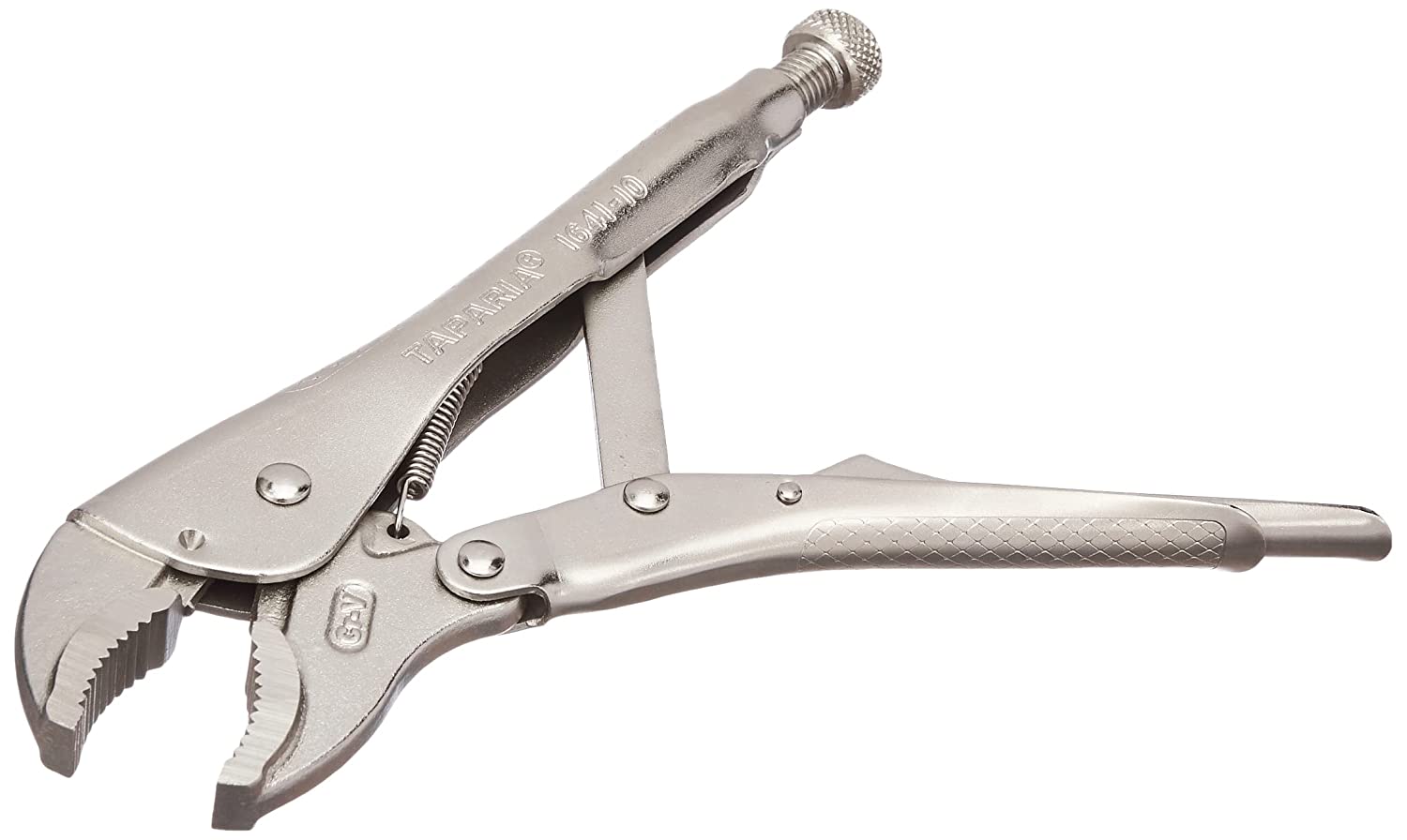
What Does a Locking Pliers Manufacturing Business Actually Involve?
Locking pliers are part of India’s larger gripping tools category, which includes regular pliers, wrenches, and clamps and is one of the largest and most established parts of the country’s hand tool business. At the MSME level, this business usually takes one of two forms:
Forged manufacture. Steel is heated and hammer/press forged into the jaw and handle shapes before being heat-treated for hardness and machined to final specification. This results in a stronger, more durable tool that fetches higher prices in the professional and export markets, and it is the process used by most well-known Indian hand tool manufacturers (Taparia, Jhalani, and others).
Stamped or cast production. Stamped sheet steel or cast components are used in place of forging to save production costs. This is aimed at the budget and DIY retail segments, where price is more important than the tool’s ability to withstand years of intensive professional use.
Most new MSME entrants should start with forged production for a specific size range (one or two common jaw sizes) rather than launching with a full product line; Indian hand tool clusters in Punjab (Jalandhar and Ludhiana in particular account for roughly 80% of India’s hand tool exports) built their reputation this way, establishing quality and reliability in a specific range before expanding.
How Does This Business Actually Make Money?
A simple forged locking plier (standard jaw size, curved or straight jaw) sells wholesale for approximately Rs.60-150 per piece, depending on size and finish quality. Larger or specialist jaw configurations (long-nose, welding clamp, and C-clamp types) cost Rs.120-300 per piece. Premium finishes (chrome plating, ergonomic handle grips) and export-grade quality control can raise prices to Rs.200-450+ per piece in the professional and international markets.
For a small forged production operation with a focused size range, the monthly gross income is Rs.27.4 lakh based on 1,200 pieces/day at Rs.95 average wholesale and 24 working days.
India’s domestic hand tools industry is actually competitive and fragmented – there are plenty of established companies, and this is something you should be open about in your strategy rather than ignore. The more realistic, sustainable growth path for a new entrant, much like the established Punjab clusters, is building export capability over time: India already exports roughly USD 600 million in hand tools annually, with Punjab-based manufacturers accounting for the large majority of this, driven by a meaningful labor cost advantage (roughly Rs.85/hour in India versus Rs.296/hour in China) that makes Indian-manufactured hand tools genuinely price-competitive internationally.
Raw material, primarily medium-carbon or alloy steel bar/billet, accounts for 40-50% of manufacturing costs, with forging energy, heat treatment, and machining accounting for the majority of the rest. Steel price volatility should be factored into working capital planning because forged steel costs have climbed 15-18% in recent years, which has a direct impact on margin if not anticipated.
What Equipment Does a Locking Pliers Manufacturing Unit Need?
- Power hammer or forging press. The cost of shaping hot steel billets into rough jaw and handle shape ranges from Rs.6-15 lakh, depending on capacity, and this is the key equipment investment that defines daily output capacity.
- Heat treatment furnace and quenching system. Hardening the jaw and tempering the complete tool to the correct hardness/toughness balance costs between Rs.4 and 9 lakh, and this step is important to product quality, not a trivial finishing step.
- CNC stands for computer numerical control, or precision machining center. The cost of machining the locking mechanism components (the cam, the adjustment screw, and the release lever) to the tight tolerance required for the tool to lock and release smoothly ranges between Rs.8 and 20 lakh, and this is where much of the genuine engineering accuracy in this product is found.
- Grinding and finishing equipment. Rs.2-5 lakh is required to shape the jaw serrations and smooth down the edges.
- Electroplating and finishing line. For corrosion-resistant chrome or nickel plating, budget between Rs.4 to 10 lakh, or outsource to an established plating firm to save money upfront.
- Quality testing equipment. For checking clamping force, locking mechanism dependability, and jaw hardness before a batch ships — Rs.1.5-3.5 lakh, which is increasingly demanded by both domestic institutional purchasers and export clients.
Why the Locking Mechanism Is the One Component That Decides Everything
Here’s the difference between a locking pliers manufacturer buyers trust and one they don’t: the entire value of this tool is in its over-center cam-locking mechanism, which works reliably — clamping firmly when locked, releasing smoothly when needed, and maintaining that performance over years of repeated use. A tool with an imprecisely machined cam or an inconsistently heat-treated jaw either fails to lock securely (thus defeating the tool’s entire purpose) or becomes difficult to release, and either failure mode generates the type of buyer complaint that quickly terminates a wholesale or export relationship, because this product’s reputation is entirely dependent on this one mechanism working every time.
This is precisely why machining precision and heat treatment uniformity require actual, continuing investment in your quality process, rather than a cost to be cut in order to reduce the overall project cost. Established Indian brands have earned decades-long reputations by repeatedly getting this mechanism right, batch after batch.
A typical unit’s staffing structure includes a production/quality supervisor with forging and heat-treatment experience (Rs.16,000-25,000/month), forging and machining operators (Rs.10,000-16,000/month), and finishing/quality-check helpers (Rs.8,000-11,000/month).
Where Should You Set This Up, and Who Buys This Product?
Punjab, notably Jalandhar and Ludhiana, is India’s established hand tool manufacturing center, accounting for around 80% of the country’s hand tool exports and home to 12 of the top 15 manufacturers in the category. Setting up in or near this cluster provides direct access to experienced forging workers, established steel supply chains, and closeness to export logistical infrastructure that has been constructed around this industry for decades. Rajkot in Gujarat is another significant hand tool cluster to examine.
On the selling side, your realistic buyer base includes hardware and tool retailers and distributors (the core domestic channel), automotive workshops and welding/fabrication shops (a steady B2B segment, because locking pliers are routinely used for welding setup and clamping), industrial and institutional procurement, and — as your quality and capacity mature — export buyers, particularly in markets where Indian hand tools have an established reputation for durability.
Compliance requirements include BIS certification, if applicable for hand tool categories, standard Udyam/MSME registration, and GST registration. Most serious international buyers expect ISO 9001 certification before placing orders if they intend to export.
What Will This Actually Cost You?
Setup | Capital Cost (Rs.) |
Small forged production unit (focused size range) | Rs.18-35 lakh |
Medium unit (wider size/style range, in-house plating) | Rs.35-65 lakh |
Larger unit with export-grade quality systems and certification | Rs.70 lakh-1.3 crore |
Mudra Tarun or PMEGP is primarily used by small and medium-sized businesses in the manufacturing sector, with PMEGP’s 15-35% capital subsidy enhancing the project’s return profile for first-time entrepreneurs. A larger unit investing in export-grade quality certification and capacity typically enters MSME term loan area, frequently with CGTMSE collateral-free coverage for the qualified portion.
Why Choose Sharda Associates ?
- We’ve generated over 45,500 CA-certified project reports, and one element determines whether a bank takes the report seriously: whether it starts with the correct, legally sound product category.
- We get the branding and naming correct from the beginning. A report built around a registered trademark as if it were a generic product category creates real legal exposure — we ensure that your report and business plan are built around locking pliers as the generic category, with your own brand identity, which is both legally correct and effective in protecting your loan application.
- We are honest about domestic market competition and point to a realistic growth path. We don’t pretend otherwise: India’s hand tool market is dominated by established, well-funded competitors. Instead, we base your study on the actually viable strategy that Punjab’s established clusters have demonstrated to be effective: targeted quality in a defined range, with export capabilities serving as the true development lever, backed up by India’s significant labor cost advantage.
- The precision of the locking mechanism is recognized as a major quality investment. Machining tolerance and heat treatment consistency are listed as true, ongoing costs in your project report, not reduced to create an artificially low investment amount.
- Before you even receive the report, DSCR is certified to be greater than 1.25 and is calculated using your realistic production volume and pricing. Starting at Rs.2,999, we deliver in 24-48 hours. Call +91 89899 77769.
Frequently Asked Questions
No, "Vise-Grip" is a registered brand of Irwin Industrial Tools (part of Stanley Black & Decker). What you can create and sell under your own brand is the generic product category of locking pliers, sometimes known as locking grip pliers or mole grips in some regions. This is the same differential as making cellophane tape (generic) against labeling it "Sellotape" (a specific trademark), or a vacuum flask (generic) versus "Thermos" (a trademark).
It manufactures forged or stamped hand tools, specifically pliers with serrated jaws and an over-center cam-locking mechanism that clamps and holds without the need for continual hand pressure. Revenue is generated by per-piece wholesale sales of basic forged pliers at Rs.60-150, specialist jaw configurations at Rs.120-300, and premium export-grade quality at Rs.200-450+. A small forged production unit can make approximately Rs.27 lakh in gross income per month at typical volume and pricing.
A small forged production machine with a limited size range normally requires Rs. 18-35 lakh. A midsize unit with a greater size/style variety and in-house electroplating costs Rs. 35-65 lakh. A larger plant with export-grade quality systems and certification costs Rs.70 lakh to 1.3 crore.
Yes, small and medium-sized locking pliers production operations often fall nicely into PMEGP's manufacturing sector category, with loans up to Rs.50 lakh and a 15-35% capital subsidy. Larger units investing in export-grade certification and capacity sometimes exceed the PMEGP's limit and migrate into MSME term loan region instead.
Punjab, notably Jalandhar and Ludhiana, is India's established hand tool manufacturing center, accounting for around 80% of the country's hand tool exports and home to 12 of the top 15 manufacturers in this category nationally. Rajkot in Gujarat is another noteworthy cluster. Setting up near these established hubs provides direct access to skilled forging labor and proven export logistical infrastructure.
The principal raw material is medium-carbon or alloy steel bar/billet, which accounts for 40-50% of total manufacturing costs. Core equipment consists of a forging press or power hammer (Rs.6-15 lakh), a heat treatment furnace (Rs.4-9 lakh), a CNC or precision machining center for the locking mechanism components (Rs.8-20 lakh), grinding/finishing equipment (Rs.2-5 lakh), and an electroplating finishing line (Rs.4-10 lakh).
A locking plier's whole worth is dependent on its over-center cam-locking mechanism working consistently over years of use, clamping hard while locked and releasing smoothly when required. An imprecisely machined cam or inconsistent heat treatment causes the tool to either fail to lock securely or become difficult to release - either failure swiftly terminates a buyer relationship, as this product's entire reputation is dependent on this one mechanism working every time.
India's hand tools market is very competitive, with established, well-resourced businesses such as Taparia, Akar Tools, Jhalani, and others with large distribution networks. The more realistic growth strategy for a new entrant, as established Punjab clusters have demonstrated, is to build focused quality in a specific product range domestically while gradually developing export capability, leveraging India's significant labour cost advantage (roughly Rs.85/hour versus Rs.296/hour in China) for international competitiveness.
BIS certification is required when applicable for hand tool categories. Standard Udyam/MSME registration and GST registration apply to any manufacturing firm. Most serious foreign purchasers want ISO 9001 certification before placing orders, even if it is not a legal necessity.