
Project Report for Spa Clinic
Massage therapy, body wraps, skin treatments, steam, and hydrotherapy are examples of therapeutic treatments offered at a spa facility. It falls in between a beauty salon and a medical clinic: more therapeutic than a parlor, more accessible than a hospital. The company receives money every therapy session and through memberships. Sharda Associates creates CA-certified spa clinic project reports. Starting at Rs. 2,999.
Get Your Report
What Is a Spa Clinic and How Is It Different from a Day Spa?
A spa clinic focuses on healing, relaxation therapy, and body wellbeing rather than just cosmetic treatments. The clinical setting (white interiors, professional uniforms, treatment protocols) sets it apart from a typical salon or beauty parlor.
In contrast to a day spa (which is more beauty-focused — facials, manicures, hair treatments, and massage), a spa clinic often offers:
Enhanced therapeutic procedures (Swedish massage, deep tissue, hot stone, Ayurvedic Abhyanga, reflexology) Body composition and wellbeing assessments hydrotherapy (jacuzzi, steam, sauna, cold plunge). Skin treatment programs (anti-aging, detox, and whitening) Slimming and inch-loss programs (combination therapies) Corporate wellness partnerships for stress reduction and staff health
The spa clinic structure justifies greater prices than a traditional day spa by emphasizing professional therapeutic value above cosmetic beauty services.
Services and Revenue by Treatment Type
Per-Session Treatment Revenue
Massage therapy: Swedish full-body massage (60 minutes): Rs.1,500–4,000 Deep tissue massage costs Rs.2,000-5,000. Hot stone therapy costs Rs.2,500-6,000. Ayurvedic Abhyanga: Rs.2,000–5,000. Couple’s spa package (2 hours): Rs.5000-15,000
Body Treatments: Body scrub and wrap: Rs.2,000–6,000. Detox mud wrap: Rs. 2,500–6,000. Slimming treatment session: Rs. 1,500–4,000.
Hydrotherapy: Jacuzzi or steam session (30 minutes): Rs. 500-1,500 Sauna (30 minutes): Rs. 400–1,200.
Skin Treatments: Anti-aging face (clinical grade): Rs.2,000–8,000. Chemical peel: Rs. 2,500–8,000. Dermafrac/HydraFacial: Rs.4,000–12,000.
Membership and Package Revenue
Monthly wellness membership: Rs.5,000-15,000 — includes a certain number of massage treatments and unrestricted steam/sauna use.
Treatment packages: A pre-paid package of ten sessions with a 10-20% savings compared to the single-session pricing. Increases cash flow (advance collection) and retention.
Corporate Wellness Contracts: Monthly or quarterly agreements with businesses for staff relaxation sessions – group prices, fixed monthly invoicing. B2B channel is independent of walk-in volume.
Revenue Model and Room Utilisation
The primary revenue statistic for a spa is treatment room utilization:
income is calculated by multiplying the number of rooms by the number of sessions per day, the average treatment income, and working days.
For a spa clinic with five treatment rooms: Gross revenue for 5 rooms x 5 sessions/room/day x Rs.2,500 average = Rs.62,500/day x 26 working days = Rs.16.25 lakh/month.
At 60% use (typical for a new spa in year 1): Rs.16.25 lakh × 0.60 = Rs.9.75 lakh per month.
Operational costs: Therapist salary (5-8 therapists at Rs.15,000-25,000/month): Rs.75,000-2,00,000/month Products and consumables (oils, scrubs, sheets — 8-12% of revenue): Rs.78,000-1,177,000/month Rent: Rs.50,000-1,50,000/month. Electricity (AC, steam, sauna): Rs.20,000-40,000/month. Loan EMI: Varies.
Net margin at 60% utilization: Rs.3-5 lakh per month for a well-managed 5-room spa.
Location — The Most Important Business Decision
A spa clinic must be located where its target clients already go.
- Hotel and resort co-location: The best site for luxury spa clinics – hotel guests with spending power, already in a relaxed state, captive audience. Hotel spa operators pay rent/revenue sharing while benefiting from assured footfall.
- Premium residential: areas are upper-middle-class residential neighborhoods in metro and Tier-1 cities. Walking distance from the target demographic.
- Commercial/office area: Close to IT parks and business offices, ideal for corporate wellness contracts and clients seeking after-work stress relief.
- Mall location: High footfall, exposure, and premium positioning—but high rent. Works for mid-market spa clinics that target impulse and weekend customers.
- Standalone: Ground or first level on a prominent road with own branded signage and dedicated parking.
Spa clinics rarely benefit from lower rent in a hidden or low-traffic location because the experience-driven nature of the business requires a pleasant, approachable approach.
Therapist — The Business's Core Asset
A spa clinic’s fundamental product is the therapist, similar to a yoga instructor in a yoga center or a stylist in a salon.
Therapist qualification: A certified massage therapist with accredited training (VLCC, Enrich, CIDESCO-affiliated colleges, state polytechnic courses, foreign certifications) commands greater customer trust and justifies higher prices.
Therapist salaries range from Rs.15,000 to Rs.35,000 per month, based on qualification, experience, and city. Senior therapists with foreign certificates can earn Rs.40,000-60,000 per month at elite spas.
Staff retention is the most significant operational concern. A therapist who leaves takes their usual clients with her. Long-term employee retention through a positive work environment, fair compensation, and opportunity for advancement is vital to corporate stability.
Compliance and Licences
- Shop and Establishment Act: Commercial establishments must register with the local government.
- AYUSH wellness centre registration: For spas that provide Ayurvedic therapies, AYUSH Ministry recognition is possible, which adds legitimacy. Some states require a particular Ayurvedic practice license to use Ayurvedic medicines.
- FSSAI: If selling packaged wellness goods, herbal supplements, or providing herbal beverages, an FSSAI licence is required.
- GST: Spa and salon services are subject to 18% GST. Registration is required for businesses with a turnover above Rs 20 lakh.
- Fire NOC is required for commercial establishments.
- Phonographic Performance Limited’s PPL licence is required if music is played in the background.
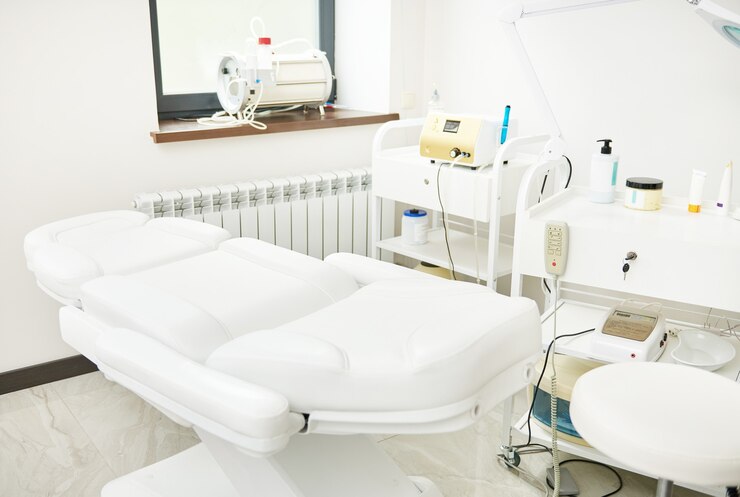
Project Cost For Spa Clinic
Configuration | Capital Cost (Rs.) |
Small spa clinic (3 treatment rooms, basic) | Rs.10-22 lakh |
Medium spa (5-6 rooms + hydrotherapy) | Rs.22-50 lakh |
Premium spa (7+ rooms, full equipment, premium interiors) | Rs.50 lakh-1.50 crore |
Key costs: Interior fit-out (the largest cost — spa environment requires quality ambience: Rs.3,000-8,000/sq ft), treatment beds (Rs.15,000-50,000 each), steam/sauna unit (Rs.1-3 lakh), Jacuzzi (Rs.3-8 lakh), skincare equipment (HydraFacial, LED therapy — Rs.2-10 lakh for equipment), HVAC and lighting, product stock (oils, scrubs, essentials).
Small 3-room spa clinics fit PMEGP service sector or Mudra Tarun. Medium spas suit MSME term loans.
Why Choose Sharda Associates ?
- 45,500+ Project Reports: Business Experience in Wellness and Healthcare Services We accurately forecast treatment room utilization as the main income metric, therapist costs as the main fixed cost, and location as a major revenue driver for spa clinics.
- Treatment Room Utilization Accurately Modelled Rooms × sessions × average revenue × working days—staged from 40–60% in year 1 to 70–80% in year 2, rather than a flat high utilization from the start.
- Membership Revenue Modelled Alongside Variable Per-Session Walk-in Revenue Monthly memberships, corporate contracts, and pre-paid packages are all modeled as distinct steady revenue bases.
- Correctly sized therapists cost between Rs. 15,000 and Rs. 25,000 per month; this is the main fixed operational cost. “Underpaying therapists creates retention problems; overstating staff cost inflates costs.” appropriately proportioned.
- Location Rationale: The business plan part documents the location selection and its revenue consequences, including hotel co-location, residential premium area, and corporate district.
- The business plan mentions AYUSH Registration and GST 18% Correctly Noted Compliance that is pertinent to the spa clinic without exaggerating the regulatory burden.
- Starting at ₹2,999 · 24–48 working hours ·
+91 89899 77769 | All India service
Frequently Asked Questions
Offering massage therapy, body treatments, hydrotherapy, and skin treatments, this therapeutic wellness center makes money from pre-paid treatment packages, corporate wellness contracts, monthly wellness memberships (Rs. 5,000–15,000/month), and per-session treatment costs (Rs. 1,500–12,000/session). At 60% utilization, a five-room spa clinic generates about Rs. 9.75 lakh in gross revenue every month.
A spa clinic's views on medical and therapeutic wellbeing include wellness evaluations, corporate stress management, Ayurvedic and therapeutic modalities, clinical settings, and structured treatment procedures. A day spa focuses mainly on beauty, offering relaxing massages along with facials, manicures, and hair treatments. Day spas charge between Rs. 1,000 and Rs. 3,000 each session, whereas spa clinics charge between Rs. 2,500 and Rs. 8,000.
Utilization of treatment rooms: rooms × daily sessions per room × average treatment revenue × working days. At 100% utilization, a five-room spa with five sessions per room per day × Rs. 2,500 makes Rs. 16.25 lakh per month; at 60% (realistic year 1), it makes Rs. 9.75 lakh per month. A realistic ramp-up from 40% in month 1 to 70%+ by months 8–10 must be shown in the project report.
Accredited institutions that offer certified massage therapist training (VLCC, Enrich, CIDESCO-affiliated courses, state polytechnic massage therapy programs, foreign certifications like ITEC/CIDESCO). Ayurvedic training credentials are required for those who provide Ayurvedic treatments. Higher client trust and premium pricing are justified by more qualified therapists, who are also simpler to keep on staff.
Membership fees range from Rs. 5,000 to Rs. 15,000 per month and include unlimited use to amenities like the sauna and steam room. Benefits include: members are less price-sensitive than walk-in customers; dedicated recurrent visits result in sustained utilization; and advance collection enhances cash flow. Regardless of walk-in volume, a spa with 50 active members at Rs. 8,000 per month produces recurring base revenue of Rs. 4 lakh per month.
Foot bath stations, Jacuzzi or hydrotherapy bath (Rs. 3-8 lakh), cold plunge pool (Rs. 1-4 lakh for integrated setup), steam room or steam capsule (Rs. 80,000-2,50,000), and dry sauna (Rs. 1-3 lakh). A simple steam room and treatment rooms is a good MSME starting point; saunas and jacuzzis can be added as the firm expands and cash flow permits.
Premium residential area (upper-middle-class target audience), hotel co-location (captive high-spending guests, premium positioning), proximity to corporate headquarters (stress alleviation + wellness contracts), and mall (high visibility, foot traffic). Because spa services are experience-driven, low-rent hidden sites don't work well for them. Instead, customers develop their first impressions based on visibility and approach.
Indeed. Small three-room spa clinics (Rs. 10–22 lakh): Mudra Tarun or PMEGP service sector (15–35% subsidy). MSME term loans for medium-sized spas with five to six rooms (Rs. 22–50 lakh). MSME project financing for upscale spas (above Rs. 50 lakh). A CA-certified project report that includes the therapist's cost, membership income, and treatment room use model is necessary.