
Project Report for Stone Cutting Machine
Cut and finished stone, such as marble flooring, granite countertops, sandstone facades, and kerbstones, is essential to India’s construction boom in housing, commercial real estate, and infrastructure. At the supply end of one of India’s most steadily expanding end markets is the stone cutting machine unit that turns this raw stone into useful products. Sharda Associates creates CA-certified stone cutting project reports and has supplied over 45,500 project reports. beginning at ₹2,999.
Get Your Report
What Is Stone Cutting Machine
The equipment used to cut, shape, and finish natural stone—marble, granite, sandstone, limestone, slate, and similar materials—into products used in infrastructure, interior design, and construction—such as flooring slabs, countertops, wall cladding panels, kerbstones, steps, and decorative elements—is produced by a company that manufactures stone cutting machines.
This page discusses two different but related business models that are both relevant to the topic of “stone cutting machine”:
Model A: Stone Cutting/Processing Unit: This type of business uses stone cutting equipment to transform raw stone into semi-finished or finished stone products. It purchases blocks or slabs of rough stone and shapes, cuts, and finishes them for sale to builders, architects, retailers, and construction contractors. The machine serves as the production equipment in this processing and manufacturing company.
Model B: Stone Cutting Machine Manufacturing: A company that creates the saws, cutters, and other equipment needed to cut stone, usually for sale to stone processing facilities around India. This is the production of equipment.
Stone Processing Business — What the Unit Does
Using cutting machinery, polishing machines, and finishing equipment, a stone cutting and processing plant purchases rough stone (blocks, big slabs, or quarry pieces) and transforms them into:
- Polished floor tiles and slabs (granite, marble—the largest volume segment, driven by demand for flooring in homes and businesses)
- Kitchen and countertops (granite, quartz surface—high-value market with significant urban demand)
- Sandstone and slate wall cladding panels for both indoor and external facades
- Kerbstones and paving stones (basalt, granite) used in road building and infrastructure
- Steps and stairwells (residential and commercial; granite and marble)
- Products related to monuments and memorials (granite, cemetery markers, commemorative installations)
- Arches, pillars, and ornamental carvings are examples of custom architectural elements that take more skill and are more expensive.
Retail stone yards and building material dealers, interior designers and architects (specification-led premium segment), construction contractors (the biggest bulk buyers), and direct customers for renovation work make up the end customer base.
Key Machinery and Process
Primary cutting equipment:
- Gang Saw / Multi-Blade Saw: Used to cut big stone blocks into slabs by cutting through them with numerous parallel blades at the same time. Core equipment for producing slabs from quarry blocks.
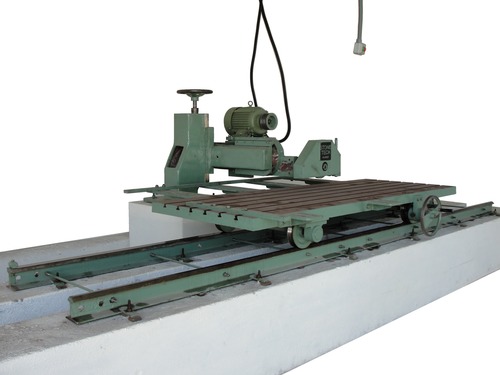
- Bridge Saw (Disc Saw): The mainstay tool for cutting tiles and countertops, it has a revolving diamond disc blade on a bridge-style frame that cuts slabs to precise proportions.
- Wire Saw: Cuts through big blocks using a wire inlaid with a diamond, especially for curved or uneven cuts and softer stones.
- Edge Profiling Machine: Shapes and profiles slab edges for countertops and decorative purposes.
- Polishing Line: Belt and disc polishers provide a range of surface finishes, from high-gloss polished to rough-cut.
The key consumables are diamond blades and tools, which serve as the cutting element in disc saws and the abrasive element in polishing tools. Diamond blade quality and proper selection for the specific stone type (harder stones require different blade specifications than softer ones) have a substantial impact on cutting quality as well as blade life and cost.
Project Cost for Stone Cutting/Processing Unit
Cost Component | Small Unit (₹) | Medium Unit (₹) |
Bridge saw / disc cutting machine | 5,00,000–10,00,000 | 12,00,000–25,00,000 |
Gang saw (if processing from blocks) | — | 15,00,000–30,00,000 |
Edge profiling machine | 2,00,000–4,00,000 | 4,00,000–8,00,000 |
Polishing machine/line | 3,00,000–6,00,000 | 8,00,000–15,00,000 |
Material handling (forklift/crane for stone blocks) | 2,00,000–5,00,000 | 5,00,000–10,00,000 |
Shed and civil (water supply for wet cutting) | 3,00,000–6,00,000 | 7,00,000–15,00,000 |
Raw stone inventory (3 months) | 3,00,000–6,00,000 | 6,00,000–12,00,000 |
Working capital | 2,00,000–4,00,000 | 4,00,000–8,00,000 |
Total (approx.) | ₹20–41 lakh | ₹61–1.23 crore |
Smaller units often fit within PMEGP’s ₹50 lakh ceiling. Medium and larger units require MSME term loan financing. Water supply is a critical infrastructure requirement — diamond blade cutting is a wet process (water cools the blade and suppresses stone dust), so adequate water supply and slurry/sludge handling is a real project cost item.
Market Demand For Stone Cutting Machine
The primary driver is India’s residential construction (the world’s largest housing program — PM Awas Yojana and private residential) and commercial construction, which generate massive, consistent demand for processed stone — marble and granite flooring, granite countertops, and sandstone/limestone cladding are common specifications across segments.
Infrastructure — Kerbstones and Paving: Large volumes of granite kerbstones and paving are used in road and urban infrastructure projects — an institutional/government procurement channel that rewards consistent quality and supply capability, which is frequently procured through GeM.
Interior Design and Premium Renovation: India’s growing affluent and upper-middle-class population is driving demand for premium stone in renovations, including custom countertop profiles, designer wall cladding, and luxury flooring, which are typically specified by architects/interior designers who wield significant influence.
Quarry-Proximate Location Advantage: A stone processing unit located near stone quarries (Rajasthan for marble/sandstone, Tamil Nadu/Andhra Pradesh for granite, Madhya Pradesh for sandstone and kota stone) has a significant raw material cost and logistics advantage — the most important location decision for this business, which the project report should explicitly address.
Export Potential: India is a global exporter of processed stone, including granite tiles, marble slabs, and sandstone goods. A unit with consistent quality and sufficient scale can gain access to export channels via stone export associations and trading companies.
What Our Stone Cutting Project Report Covers
- Clarification of the business model (stone processing unit vs. machine manufacturing—the appropriate model for your proposal)
- Machinery list with specifications (bridge saw, gang saw when applicable, polishing line, edge profiler)
- Diamond blade as primary consumable — consumption rate and cost accurately modelled.
- Water supply and sludge handling — infrastructure costs included.
- Raw stone sourcing: quarry location advantage noticed and reflected in raw material logistics cost.
- Product portfolio and end-market channels (construction contractors, infrastructure/GeM, retail stone yards, export)
- Revenue predictions by product type (tiles and slabs, countertops, and kerbstones)
- CMA data: DSCR over 1.25, PMEGP (smaller units), or MSME term loan. · Repayment schedule
Why Choose Sharda Associates
- 45,500+ Project Reports Delivered — Proven expertise in stone processing, construction materials, and PMEGP/MSME manufacturing projects.
- Correct Business Model Assessment — We determine if your project involves stone processing or stone cutting equipment production and create the report accordingly.
- Accurate Diamond Blade Costing – Recurring consumable expenditures, such as diamond blades, are accurately factored into profitability calculations.
- Water and Slurry Management Planning – The project report includes details on water supply requirements and slurry disposal expenses.
- Raw Material Sourcing Analysis – To increase project profitability, quarry location, shipping costs, and stone sourcing economics are assessed.
- B2B Market and GeM Opportunities – Revenue estimates include construction contractors, infrastructure projects, government procurement, and GeM marketplace opportunities.
- Starting at ₹2,999 · 24–48 working hours ·
📞 +91 89899 77769 | All India service
Frequently Asked Questions
Most inquiries are for a stone cutting/processing firm, which uses cutting and polishing machines to convert raw stone (marble, granite, sandstone) into finished goods (floor tiles, countertops, kerbstones) for sale to construction and infrastructure buyers. Sharda Associates creates reports for both - please call to determine which pertains to your plan, as the report formats differ greatly.
Smaller units (₹20-41 lakh project cost) often fit under PMEGP's ₹50 lakh ceiling and qualify for 15-35% capital subsidy. Medium to large units (₹61 lakh-1.23 crore+) require MSME term loan financing instead of PMEGP. We select the best strategy based on your specific investment scale.
Marble, granite, sandstone, limestone, slate, kota stone, and similar natural stones all require special blade/abrasive requirements. A unit's stone kinds are typically decided by the availability of nearby quarries.
Raw stone (blocks or slabs) is heavy and expensive to transport over long distances; the closer a processing plant is to the quarry, the cheaper the raw material logistics cost, which has a direct impact on margins and price competitiveness. A unit in a stone-producing region also has better access to high-quality raw materials and faster replenishment times. This is usually the most crucial site decision for this firm.
Disc/bridge saws use diamond blades, which are abrasive blades with industrial diamond particles implanted in the cutting edge. They wear out with use and must be changed on a regular basis, the rate of which is determined by the hardness of the stone being cut (granite wears blades faster than sandstone) and output volume. Diamond blade replacement is a substantial recurrent operating cost that must be accurately estimated in financial planning.
Diamond blade cutting generates heat and fine stone dust; constant water application cools the blade (increasing blade life) and reduces stone dust (health/safety requirement). The resulting mixture of water and tiny stone particles is called stone slurry, and it must be collected and handled — either allowed to settle and dry before disposal, or (in some situations) sold for use in construction applications. Water supply infrastructure and slurry handling are actual project costs.
Construction contractors (the largest volume buyers — bulk purchases for residential and commercial projects), interior designers/architects (specified for premium residential and commercial projects), retail stone yards and building material dealers (supplying the renovation/retail market), government infrastructure projects through GeM procurement (kerbstones, paving), and export buyers for granite tiles and slabs.
Yes, India is a global exporter of processed natural stone, specifically granite tiles and slabs, marble goods, and sandstone. Stone export associations, trading corporations, and trade fairs provide direct relationships with overseas buyers. The key access needs are unit size, quality consistency, and documentation capabilities (to meet phytosanitary and export standards).
Cut-to-size marble and granite floor tiles/slabs (highest volume), granite countertops and kitchen tops, kerbstones (for infrastructure supply), and custom sizes for construction contractors—a small unit typically focuses on 2-3 product types where it can achieve consistent quality and competitive pricing rather than attempting to cover all stone products from the start.