
Project Report for 5MW Solar Power Plant
A 5MW solar power plant is not a rooftop installation; it is a utility-scale project that necessitates significant land, a grid connection agreement with the state DISCOM, a Power Purchase Agreement or open access arrangement, and project financing from a bank or NBFC that is familiar with long-term infrastructure lending. Sharda Associates creates extensive project reports and feasibility assessments for solar power projects. Starting at ₹2,999.
Get Your Report
Let's Start With What 5MW Actually Means
5 megawatts represents a unique and significant level in India’s solar energy sector. To provide some context:
- In India, a normal home consumes 200-400 kWh of power per month. In average solar irradiance conditions, 1 MW of solar capacity may generate 1.2-1.5 million MWh per year.
- 5MW generates roughly 6-7.5 million units yearly, which is enough to power 1,500-3,000 ordinary Indian households or provide considerable captive power for a major industrial or commercial complex.
At this magnitude, you are no longer eligible for rooftop solar subsidy options. A 5MW project is utility/industrial in scale, necessitating land acquisition, high-tension grid connectivity, and a business plan based on either selling electricity to the grid or consuming it at a large industrial facility.
A 5MW solar power plant is also classified as a project-finance asset, rather than a typical MSME investment. Banks and investors assess it based on long-term power generation, Power Purchase Agreements (PPAs), land ownership or lease arrangements, grid connectivity approvals, and the project’s capacity to provide consistent cash flows over the next 20-25 years. Because of the considerable capital expenditure, lenders want a full DPR that includes technical design, generation estimates, financial projections, DSCR, IRR, and regulatory compliance prior to funding approval.
The Three Business Models for a 5MW Solar Plant
Model 1 — Grid-Connected Power Sale (IPP Model): You build the plant on your own or leased land, connect it to the state grid at a 33kV or 66kV substation, and sell power to the state DISCOM for 25 years at a fixed tariff under a Power Purchase Agreement (PPA). This is the basic Independent Power Producer (IPP) model: predictable, long-term contracted revenue, but you must acquire a PPA through a state bidding procedure or bilateral negotiations with the DISCOM.
Model 2 — Captive Power Generation: Set up the plant to power your own industrial or commercial facility, substituting grid power (which costs ₹6-12/unit for industrial consumers in most states) with cheaper solar energy. The economics here are determined by the tariff you now pay to DISCOM, not the solar PPA rate. At ₹7/unit industrial tariff, 7 million units of solar generation saves ₹4.90 crore annually, significantly outperforming the IPP model.
Model 3 — Open Access and Third-Party Sale: Under open access regulations, a solar generator can sell power to any consumer (not just the DISCOM) in the same or neighboring states — a third-party buyer who agrees to pay more than the DISCOM PPA rate but less than the grid tariff, which benefits both the seller and buyer. This is a commercially interesting approach, but it requires navigating state-specific open access legislation, wheeling and transmission taxes, and cross-subsidy surcharges, all of which have a substantial impact on net economics.
Land and Grid — The Two Questions That Determine Everything Else
Before the project report, before the bank loan, before the panels are ordered—two questions decide whether a 5MW solar project is feasible:
Area: A 5MW ground-mounted solar plant needs about 10-12 acres of flat, unshaded area with adequate sun irradiation. The land must be clearly titled (owned or long-term leased — often 25-30 years to match the PPA tenure), free of encumbrances, and ideally located in a location with abundant solar radiation (states with excellent solar resources include Rajasthan, Gujarat, MP, Maharashtra, Karnataka, and Andhra Pradesh).
Grid connectivity: The plant must link to the state grid, often at a 33kV substation at a reasonable distance. Most project finance lenders require state DISCOM clearance for grid connectivity (the technical feasibility study and connectivity agreement), which cannot be changed once the loan has been approved.
Both of these must be substantially resolved before a serious DPR can be prepared. A project report based on assumed land and theoretical grid connectivity will not pass through a project financing lender’s technical due diligence.
Why This Needs Project Finance, Not a Simple Term Loan
A 5MW solar plant costs around ₹4.5-6 crore per MW, totaling ₹22.50-30 crore. This is definitely in project finance territory—a specialised form of infrastructure loans in which:
- The loan is secured against the project’s future cash flows (the PPA revenue stream), rather than just the promoter’s assets.
- Lender due diligence consists of technical assessments (equipment specifications, EPC contractor quality, grid connectivity), legal assessments (land title, PPA validity), and financial modeling of 25-year cash flows.
- The debt-to-equity ratio is commonly 70:30 or 75:25, requiring the promoter to bring ₹6-7.50 crore as equity and bank financing of ₹16-22 crore.
- Solar projects often have loan tenures of 12-15 years, which are longer than ordinary MSME term loans.
The DPR (Detailed Project Report) for a 5MW solar plant is thus a significantly more complex document than a standard MSME project report; it includes 25-year financial modeling (corresponding to the PPA tenure), technical specifications approved by the project finance team, legal due diligence on land and PPA, and detailed generation modeling using solar irradiance data for the specific location.
Key Technical Specifications in a 5MW Solar DPR
Plant capacity: 5MW DC peak/AC output (the DC-to-AC ratio depends on the inverter configuration—typically 1.1-1.3 DC:AC for best generation).
Solar panels: Type (monocrystalline, polycrystalline, or bifacial), watts per panel, quantity of panels, and degradation rate (usually 0.5% per year for monocrystalline, which influences 25-year generation modeling).
Inverters: String inverters vs central inverters – capacity, efficiency at varied loads, and warranty terms
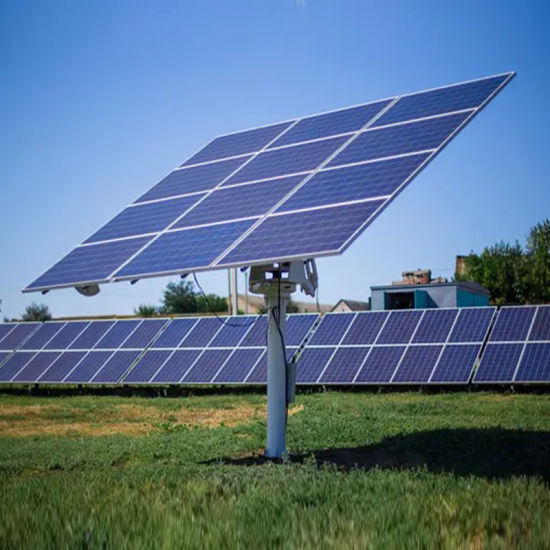
Mounting structure: fixed-tilt vs single-axis tracking (tracking systems enhance generation by 15-20% but add capital expense and maintenance complexity).
Transformer and grid interface equipment: Step-up transformer (plant generates low voltage, grid connects at 33kV+), metering, and protection systems.
Annual generation is estimated by using CUF (Capacity Utilization Factor: usually 18–22% for flat ground-mount in central India) to install capacity based on PVGIS or solar irradiation data for the particular location.
Land and civil: Fencing, security cabin, internal access roads, and drainage.
Project Cost (Approximate)
Component | Cost Range (₹ crore) |
Solar panels (5MW capacity) | 8 – 12 |
Inverters | 2 – 3.50 |
Mounting structures | 2.50 – 4 |
Electrical balance of system (cables, transformers, switchgear) | 3 – 5 |
Civil and structural works | 1.50 – 3 |
Grid connectivity and transmission line | 1 – 4 (location-dependent) |
Land (purchase or lease capitalised) | 0.50 – 3 |
EPC contractor margin and project management | 2 – 4 |
Total (approx.) | ₹21 – 38.50 crore |
Panel prices have fallen significantly and continue to fluctuate — current market pricing should be obtained from EPC contractors or panel suppliers before finalising the DPR numbers.
MNRE and State-Level Scheme Support
The central ministry that establishes solar policy is called MNRE (Ministry of New and Renewable Energy). It offers PM Surya Ghar (rooftop, not applicable at 5MW scale), Central Financial Assistance (CFA), and Viability Gap Funding for specific types of solar projects. Instead of providing direct scheme subsidies at the project level, MNRE’s main function for utility-scale projects is policy framework.
State DISCOM PPAs: Open access fees, state-specific solar prices, and net metering rules (for captive). There are active solar parks and DISCOM PPA frameworks in MP, Rajasthan, Gujarat, and a number of other states; the project report should identify the relevant state framework.
The Green Energy Open Access (GEOA) requirements 2022 are essential regulations that simplify open access for renewable energy. They are pertinent to the third-party sale model and set the requirements for direct sales to industrial users.
Why Choose Sharda Associates
- Over 45,500 Project Reports Completed – extensive background in large-scale project finance DPRs, infrastructure, renewable energy, and solar energy.
- Finish the 25-Year Financial Modeling — Long-term analysis is necessary for solar installations. We create thorough 25-year forecasts for cash flow, profitability, and repayment.
- Precise CUF and Generation Estimates — Estimates of power generation are based on panel technology, project configuration, and solar irradiation particular to a given area.
- Evaluation of Land and Grid Connectivity — Important prerequisites including grid connectivity, evacuation infrastructure, and land availability are adequately recorded.
- Financial Structuring Particular to Models — With appropriate revenue assumptions, DPRs are tailored for IPP, Captive Consumption, Open Access, or DISCOM PPA models.
- Project Finance Ready Documentation — Lender-specific project financial metrics, DSCR, IRR, NPV, payback period, and DSRA requirements are all included.
- Reports That Are Bankable and Investor-Ready — prepared for funding organizations for renewable energy, banks, NBFCs, investors, and EPC partners.
- Starting at ₹2,999 · 24–48 working hours ·
📞 +91 89899 77769 | All India service
Frequently Asked Questions
That was a content error from a general article about solar energy that mentioned solar marketplaces in Africa, so it shouldn't. This page is dedicated to project reports for 5MW solar power plants in India. The meta has been updated.
₹21–38.50 crore, depending on the cost of the land, the distance to the grid, the type of equipment (tracked vs. fixed), and the cost of the EPC contractor. The final DPR values should be based on current market quotes from EPC contractors, as panel costs are subject to change.
An electricity Purchase Agreement is a long-term contract (usually 25 years) that specifies the tariff at which the generated electricity will be acquired between the operator of the solar plant and the power buyer (DISCOM or third-party industrial customer). A plant without a PPA is usually not eligible for project finance loans; the PPA is the revenue security that project finance lenders assess.
In essence, CUF is the efficiency factor for a solar plant that takes into account nighttime hours, cloud cover, soiling, and equipment efficiency losses. It is calculated as the ratio of actual energy generated to the maximum energy attainable if the plant ran at full capacity 24/7. A central Indian 5MW plant with 20% CUF produces 8.76 million units a year (5MW × 8760 hours × 20%). All income estimates rely on this figure, so getting it correctly is crucial.
A ground-mounted fixed-tilt system at standard panel spacing would take about 10–12 acres. A little more area is needed for single-axis tracking (wider east-west spacing for tracker movement). In order to match PPA tenure, the land must be level, unshaded, and have a clear title or long-term lease (minimum of 25–30 years).
Instead of capital subsidies (which are concentrated on smaller rooftop solar), the PPA tariff (DISCOM purchases at regulated rates) and open access frameworks are the main sources of government support at the 5MW utility scale. In solar parks, some state governments provide land at discounted prices. Certain types of utility-scale projects are eligible for MNRE's VGF (Viability Gap Funding). The relevant state framework should be identified in the project report.
All generated power is sold to the DISCOM under the IPP (Independent Power Producer) model at a PPA tariff (₹2-3.50/unit), which is comparatively low yet predictable. The captive approach uses solar energy at your own industrial plant, replacing grid power at an industrial cost of ₹6–12 per unit. If your usage is commensurate, the economics are significantly better. Whether you have a large enough industrial load to absorb 5MW of generation is the only factor that determines the decision.
A step-up transformer, a dedicated transmission line from the plant to the substation (preferably within 5-7 km), and a connectivity agreement with the state DISCOM or transmission utility are necessary for a 5MW facility to connect to the state grid at a 33kV substation. Project financing release is usually contingent upon DISCOM connection approval (feasibility study and agreement).
Land acquisition and permissions take three to six months, DPR and project finance sanction take three to six months, and EPC procurement and construction take four to six months from project conception to commissioning. Total: 12–18 months for a well-run project from inception to commissioning. Land title and grid connectivity are often the critical step; both should be significantly settled before project funding is explored.