
Project Report For Bench Press Machine
Introduction
The project report for the bench press machine is as follows.
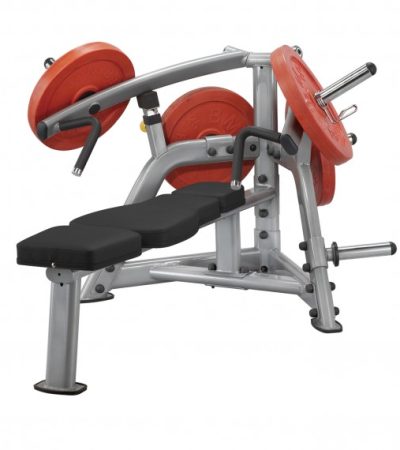
The bench press machine is one of the most essential and widely used pieces of strength-training pieces of equipment in commercial gyms, fitness centers, rehabilitation clinics, sports academies, and home workout setups. It is specifically designed to strengthen and develop the upper body muscles, particularly the pectoralis major (chest muscles), deltoids (shoulders), and triceps brachii (upper arms). The bench press exercise involves a controlled pushing movement where the user lowers the weight to chest level and presses it upward until the arms are fully extended. This compound movement engages multiple joints and muscle groups simultaneously, making it highly effective for building muscle mass, increasing upper body strength, and improving muscular endurance.
The bench press machine provides greater safety and stability compared to free-weight bench pressing. Because the movement path is controlled and supported by the machine’s structure, it reduces the risk of injury, especially for beginners or individuals recovering from shoulder or elbow strain. The equipment is suitable for both low-repetition heavy training to build maximum strength and high-repetition moderate training to improve muscle tone and endurance. By adjusting handgrip width and bench angle, users can shift the focus between chest, shoulders, and triceps, making it a versatile piece of strength-training equipment.
The bench press machine is also beneficial for athletes participating in sports such as football, hockey, wrestling, sprinting, and martial arts, where upper-body pushing strength is important. Additionally, it plays a key role in general fitness programs aimed at improving posture, stability, and functional strength. Due to its versatility, safety features, and effectiveness, the bench press machine remains a core component of most strength-training environments.
Types of Bench Press Machines
- Flat Bench Press Machine: The most common version is designed for overall chest development. It primarily targets the middle portion of the chest, along with the shoulders and triceps. Suitable for beginners and advanced users.
- Incline Bench Press Machine: Performed on an inclined bench angle, this variation emphasizes the upper chest and anterior deltoid muscles. It is useful for developing balanced chest proportions.
- Decline Bench Press Machine: Designed with a downward bench angle to target the lower chest muscles. It reduces shoulder strain while focusing more on the lower pectoral region.
- Smith Machine Bench Press: Features a guided barbell system that moves vertically along fixed rails. It provides enhanced safety and is ideal for heavy lifting with controlled motion.
- Plate-Loaded Bench Press Machine: Uses weight plates to provide adjustable resistance. It offers a natural pressing movement and is common in commercial gyms.
Selectorized Bench Press Machine: Uses a weight stack with pin-based selection for easy resistance adjustment. Commonly found in beginner-friendly gym setups.

Get Completely Custom Bankable Project Report
Market Potential of Bench Press Machine
The global fitness equipment market has shown consistent growth due to rising health awareness, increasing gym memberships, and growing adoption of structured workout programs. The market was valued at approximately USD 13.2 billion and is projected to expand steadily in the coming years. Strength-training equipment, including bench press machines, forms a significant segment of this industry. With increasing obesity rates, sedentary lifestyles, and rising awareness about preventive healthcare, individuals are investing more in fitness solutions.
In India, the market potential for bench press machines is particularly promising. Rapid urbanization, higher disposable income, and expansion of commercial gyms and fitness franchises have contributed to growing demand. The rise of organized fitness chains, corporate wellness programs, and residential gym setups in housing societies has further boosted equipment sales. Additionally, the trend of home gyms has gained momentum, increasing demand for compact and multifunctional strength machines.
Government initiatives promoting physical fitness and sports participation also support industry growth. Schools, colleges, sports academies, and defense training centers regularly procure strength-training equipment, including bench press machines. Furthermore, the increasing popularity of bodybuilding competitions, fitness influencers, and digital workout programs has encouraged youth participation in strength training.
The market is segmented into commercial buyers (gyms and fitness centers), institutional buyers (schools and sports facilities), and residential consumers (home gym users). Commercial gyms account for a large share of equipment purchases, often preferring heavy-duty and plate-loaded machines. Home users generally opt for compact or multifunctional models due to space constraints.
Technological advancements such as ergonomic design improvements, adjustable seat settings, durable steel frames, and enhanced safety locking systems have improved product appeal. Manufacturers offering durable equipment at competitive pricing with after-sales service support are likely to gain strong market positioning.
Overall, the bench press machine market is expected to witness stable growth in 2026 and beyond, driven by increasing health consciousness, rising gym culture, expansion of home fitness infrastructure, and growing participation in strength-training programs. This makes the manufacturing and distribution of bench press machines a commercially viable and scalable business opportunity.
The global fitness equipment market is experiencing steady expansion and is projected to grow at a CAGR of over 4% from 2023 to 2032, surpassing USD 15 billion in value. Strength-training equipment, including cable crossover machines, represents a significant portion of this market due to increasing demand for muscle-specific and functional training solutions.