
Project Report for Dish Wash Manufacturing
A CA-certified Dish Wash Manufacturing Project Report is required to secure bank loans through PMEGP, MUDRA, CGTMSE, NABARD, and other government programs. It covers manufacturing data, machinery, investment estimates, and financial projections. The study is completely tailored to your product type, production capability, and financial needs. Sharda Associates offers bank-approved project reports beginning at ₹2,999, delivered within 24-48 hours.
Get Your Report
What Is a Project Report for Dish Wash Manufacturing
A dish wash manufacturing project report describes to a bank what your production unit will produce, how much investment is required in machinery and raw materials, how revenue will be made through retail, institutional, and private label channels, and how the loan will be repaid.
For a dish wash unit, it covers your product mix (liquid, gel, powder, or bar), your raw material formulation plan for surfactants and additives, your target market (retail distribution versus B2B private label supply), and detailed 5-year financial projections at various capacity utilization levels.
Banks require this document before processing any MSME chemical or FMCG manufacturing loan, and a correctly structured CA-certified report will expedite your application.
A complete project report includes information on production capacity, machinery specifications, utility requirements, labor planning, working capital assessment, and monthly operating expenses. It includes extensive financial data such as predicted profit and loss, cash flow, balance sheet, break-even analysis, and DSCR to show the project’s commercial feasibility and payback capacity.
Dish Wash Manufacturing Business in India
India’s home and cleaning products business has evolved into one of the most constantly expanding FMCG categories in the country, with dishwashing products at the forefront of that expansion as a truly important, repeat-purchase household item. India’s chemicals market, which includes cleaning product categories, was valued at approximately USD 2.998 billion in 2019 and is expected to grow at a CAGR of around 15% to USD 9.655 billion by 2026, reflecting the structural strength of demand for hygiene and cleaning products in Indian households, commercial kitchens, and institutional facilities. Growing urbanization, rising hygiene awareness, higher disposable incomes, and the transition from traditional cleaning methods to branded dishwashing solutions all contribute to increased demand in both urban and rural markets.
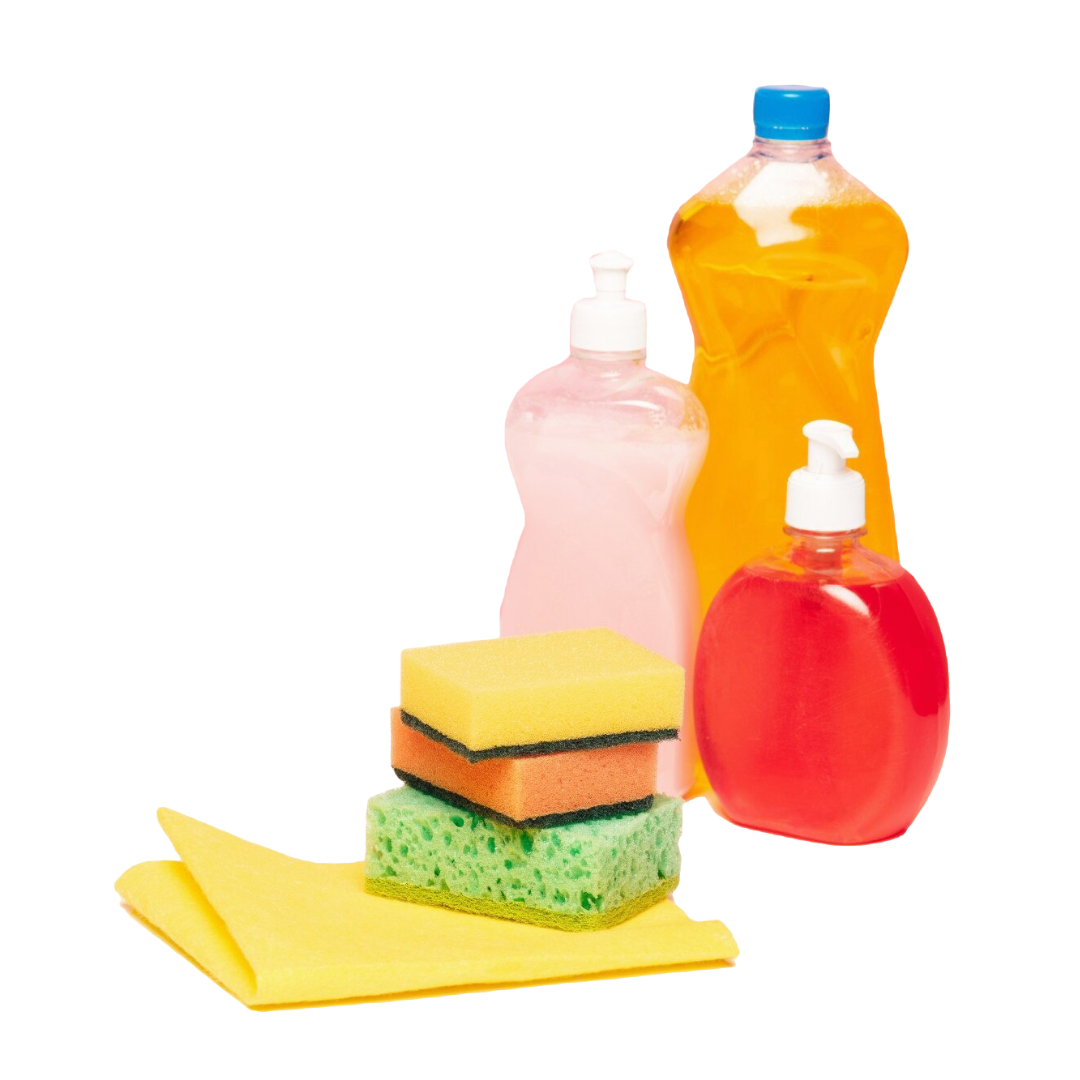
Why Dish Wash Demand Keeps Growing Every Year
Dishwasher manufacture is particularly appealing as an MSME investment because it benefits from multiple long-term demand drivers rather than a single ephemeral trend. Rising urbanization and nuclear family formation in India mean that more individual families are acquiring their own cleaning supplies rather than pooling resources within joint family formations. Rising disposable income is gradually shifting consumers away from low-cost unbranded bar soap and toward branded liquid and gel formulations that provide better grease-cutting performance and skin-friendly formulations — a shift that significantly boosts per-unit revenue for manufacturers who position themselves correctly in the branded segment.
Increased hygiene awareness following the COVID-19 pandemic has had a long-term structural effect on consumer behavior — households that previously used dishwashing products only occasionally now treat thorough dishwashing as a daily hygiene necessity, increasing per-household consumption volume across the category. The spread of organized retail and online food delivery into Tier 2 and Tier 3 cities is also bringing branded dish soap items to a much bigger customer base that was previously reliant solely on unbranded local goods
The Institutional and Private Label Opportunity
Aside from direct retail, the institutional segment is a particularly accessible and reliable revenue source for a new MSME manufacturer. Hotels, restaurants, hospital kitchens, catering services, and corporate cafeterias all require bulk dishwashing supplies on a contract basis — a category that promotes consistent quality and competitive bulk price rather than developing consumer brand recognition.
Private label manufacturing, which produces dishwashing products under the brand names of retail chains, distributors, or e-commerce sellers, is another growing channel that provides consistent order volumes without requiring the manufacturer to invest in their own marketing and brand building.
Types of Dish Wash Products Your Manufacturing Unit Can Produce
A dishwashing production unit can create numerous product types utilizing overlapping basic equipment, allowing for significant product diversification across a wide range of consumer preferences and applications.
- Dishwashing liquid is the most popular and commercially dominant format in the Indian market. It is preferred for its ease of use, powerful grease-cutting effectiveness, and attractive fragrance options, and it continues to be the fundamental, highest-volume product for any new dishwashing production unit entering the marketplace.
- Dishwashing powder is a classic, low-cost format that is still frequently used, particularly in price-sensitive and rural markets. It is packed in bulk quantities and used in smaller metered amounts based on the dish load. It provides manufacturers with a lower-cost starting point and simpler formulation requirements compared to liquid or gel goods.
- Dishwasher gel is a newer, increasingly popular format because to its concentrated formulation, which provides better grease removal efficacy with fewer applications each wash. It costs more than ordinary liquid and is especially popular in metropolitan markets because consumers are ready to pay extra for demonstrably improved cleaning performance.
- Dishwasher tablets are small, carefully dosed units made exclusively for use in automatic dishwashing machines. While automatic dishwasher usage in India is still low when compared to developed markets, it is rapidly increasing in metropolitan metro areas and represents a premium, higher-margin niche potential for manufacturers willing to invest in the additional tableting equipment required.
- Dishwasher bars remain popular in price-sensitive rural and semi-urban areas, where households choose the classic bar format due to its low cost and long usage life per unit, providing producers with continuous access to a large, steady, lower-margin but high-volume customer base.
Dish Wash Manufacturing Process
- In comparison to many other chemical manufacturing categories, the dish wash manufacturing process is more accessible to an MSME entrepreneur, as it relies mostly on blending and mixing activities rather than sophisticated reaction chemistry. Every dish wash project report written by Sharda Associates includes a detailed process flow.
- Raw material preparation entails measuring and staging the core formulation ingredients, which include surfactants (typically Sodium Lauryl Ether Sulfate or SLES as the primary cleaning agent), thickening agents, foam boosters, preservatives, fragrance, and color, in accordance with a precise formulation recipe that determines the final product’s cleaning power, viscosity, and consumer appeal.
- Mixing and blending combine water and the surfactant base in a stainless steel mixing tank with an agitator, with other ingredients added gradually in the precise sequence and at controlled temperatures to achieve a stable, homogeneous formulation with no separation or clouding.
- At intermediate phases of manufacture, quality testing examines viscosity, pH balance, foam height and stability, and aroma consistency, as any variation in the surfactant ratio or mixing procedure has a direct impact on the product’s cleaning efficacy and shelf stability.
- Filling and packaging involves transferring the completed liquid or gel product into bottles or pouches using a semi-automatic or automatic liquid filling equipment, followed by capping, labelling, and date tagging before the finished units are cartoned for shipping. Instead, powder items are dried, sieved for constant particle size, and filled into pouches or cartons.
- Before finished goods are given to distributors, retailers, or institutional buyers, they must undergo final quality control and dispatch, which includes batch sampling, label accuracy verification, and leak testing.
Investment Cost and Financial Overview
A small-scale dish wash liquid manufacturing unit producing 500-1,500 liters per day requires a total project investment of ₹15 lakh to ₹50 lakh, covering a mixing and blending tank (₹2-6 lakh), liquid filling and capping machine (₹3-8 lakh), labelling equipment, raw material stock for 2 months, factory space, and working capital. A medium-scale unit producing 3,000-8,000 litres per day with different product lines (liquid, gel, and powder) costs ₹60 lakh to ₹1.5 crore.
The gross profit margins in dishwashing manufacture range from 25-40%, depending on the product format and distribution channel. Bulk private label and institutional supply generates 20-28% margins at high volumes. Branded retail distribution under your own label generates 30-40% margins. Raw material costs, particularly SLES and other surfactants, account for 50-60% of total production costs, making surfactant procurement strategy and pricing control the most important aspect in financial performance.
Bank loans cover 70-75% of the project costs. PMEGP offers 15-35% government subsidies for manufacturing units with project costs up to ₹50 lakh. MUDRA Tarun provides coverage of up to ₹50 lakh without collateral. CGTMSE offers collateral-free guarantees up to ₹2 crore for big multi-product units.
Government Loan Schemes for Dish Wash Manufacturing Business
PMEGP offers a 15-35% non-repayable subsidy on project costs up to ₹50 lakh, making it the most beneficial scheme for new dish wash manufacturing units. General urban applicants get 15%, whereas SC/ST, women, and rural applicants get 25-35%. MUDRA Loan Tarun offers ₹10-50 lakh sans collateral for small manufacturing installations. CGTMSE offers a collateral-free guarantee of up to ₹2 crore for mid-scale multi-product units. Stand-Up India provides preferential loans to SC/ST and women entrepreneurs ranging from ₹10 lakh to ₹1 crore. All nationalized banks offer MSME chemical and FMCG manufacturing credit packages, including dishwashing and household cleaning units.
Licences Required for Dish Wash Manufacturing
A dish wash manufacturing unit must have a factory licence under the Factories Act, Udyam/MSME registration for loan scheme access, GST registration, State Pollution Control Board NOC (typically Orange category due to chemical processing), BIS certification if supplying to government procurement channels, and legal metrology registration for retail packaged products specifying quantity and MRP. Before you begin retail sales, you should strongly consider registering your brand’s trade name or trademark. Your Sharda Associates project report includes a comprehensive compliance checklist, as well as a schedule and cost estimates.
Why Choose Sharda Associates ?
- CA-Certified, Bank-approved Reports — All reports are signed by experienced Chartered Accountants and approved by SBI, PNB, Bank of Baroda, Canara Bank, and all other nationalized and private banks in India.
- 45,500+ Reports Delivered — We have generated project reports for thousands of FMCG and chemical manufacturers in India, including dishwashing and home cleaning product units.
- 24-48 Hour Delivery — Your comprehensive, submission-ready project report is supplied within 24-48 hours, ensuring that your loan application proceeds forward without delay.
- Scheme-Specific Formatting – Each report is tailored to the PMEGP, MUDRA, CGTMSE, or NABARD regulations, and includes any annexures that your bank wants.
- We do not employ generic templates; instead, we provide realistic and customized financial projections. Your report is based on your real product mix, formulation costs, production capacity, and desired sales channels.
- Starting at ₹2,999, our CA-certified manufacturing project report is the most cheap on the market. Pricing is transparent and there are no hidden charges.
Frequently Asked Questions
A project report for dishwashing manufacturing is a CA-certified document that includes the manufacturing process, raw material formulation, machinery, investment cost, 5-year financial projections, and all loan documentation required by banks and schemes such as PMEGP, MUDRA, and CGTMSE to approve business loans for dishwashing liquid, gel, powder, or bar manufacturing units.
A small-scale operation producing 500-1,500 litres per day requires a total investment of ₹15-50 lakh, which includes the mixing tank, filling and capping machine, labeling equipment, raw material stock, and operating capital. A medium-scale plant with numerous product lines producing 3,000-8,000 litres per day costs between ₹60 lakh and ₹1.5 crore.
Dish wash production is eligible for PMEGP as a manufacturing unit with a project cost of up to ₹50 lakh and government subsidies ranging from 15-35%. A CA-certified PMEGP project report from Sharda Associates is required for approval.
SLES (Sodium Lauryl Ether Sulphate) is the principal surfactant and cleaning agent, followed by thickening agents, foam boosters, preservatives, fragrance, dye, and packaging materials. SLES and other surfactants are often responsible for 50-60% of overall raw material costs.
The core machinery consists of a stainless steel mixing and blending tank with agitator, a semi-automatic or automatic liquid filling machine, a capping machine, a labeling machine, and packaging equipment. For powder materials, drying and sifting equipment is also necessary. The machinery cost for a small unit ranges from ₹6-18 lakh.
Gross margins range between 25 and 40%, depending on product format and sales channel. Bulk private label and institutional supplies generate 20-28% margins at higher volumes. Branded retail distribution under your own label generates 30-40% margins. A well-run unit typically generates a net profit of 10-18% after operating expenses.
Private label manufacturing refers to creating dishwashing items under the brand names of retail chains, wholesalers, or e-commerce merchants rather than your own. This delivers predictable order quantities and revenue from the start without requiring investment in marketing, advertising, or consumer brand identification, making it a lower-risk entrance approach for a new manufacturer before investing in their own retail brand.
A factory license, Udyam/MSME registration, GST registration, State Pollution Control Board NOC (Orange category), BIS certification for government supply channels, and legal metrology registration for retail packed items are all required. Trade name registration is suggested for brand protection.
Sharda Associates will offer your entire, bank-ready project report within 24-48 hours of receiving your production data, including product format, capacity, location, investment strategy, and target financing scheme. Urgent same-day delivery is available.