
Project Report for Foam Roller Manufacturing
A Foam Roller Manufacturing Project Report provides a detailed plan for setting up a foam roller production unit. The report covers raw materials, foam processing, product design, manufacturing process, machinery, production capacity, project cost, manpower requirements and financial projections. Sharda Associates prepares project-specific reports based on the proposed capacity, investment and business model to help entrepreneurs evaluate the technical and financial feasibility of the project.
Get Your Report
What Is a Foam Roller?
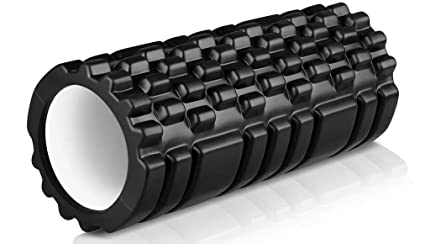
A foam roller is a cylindrical fitness and rehabilitation product used for muscle relaxation, stretching, mobility exercises and recovery activities. Foam rollers are commonly used by athletes, fitness centres, physiotherapists and individuals for exercise and recovery purposes.
A foam roller is a simple product to manufacture: a cylinder of polyethylene (PE) or EVA foam, solid or hollow, with a textured surface pattern. The simplicity is advantageous: the production method is accessible, capital expenditure is minimal, and the product can be scaled across price points ranging from basic to premium.
Market Demand
India’s gym and fitness business is increasing at a rate of 18-22% per year, and foam rollers are standard equipment in every new commercial gym. Physiotherapy clinics, sports academies, yoga studios, and corporate wellness rooms all make regular purchases of foam rollers. The home fitness segment, fueled by post-COVID wellbeing consciousness, has established a major consumer retail channel via Amazon, Flipkart, and health product retailers.
Export demand is increasing: foam rollers made from Indian EVA foam are competitively priced in the Middle East, Africa, and Southeast Asian markets.
Types of Foam Rollers Manufactured
- Standard PE foam roller: medium density, smooth surface, 30-90 cm. Most widely sold
- EVA high-density roller — firmer, longer-lasting, gym-grade
- Grid/textured roller: a raised surface pattern for targeted muscle relaxation. Premium section.
- Vibrating foam roller with a battery-powered vibration motor within. Premium consumer product.
- Half-round foam roller with flat base for balance training and yoga.
- Foam roller set consists of a roller, massage ball, and resistance bands bundled together. E-commerce Bestseller
Project Cost for Foam Roller Manufacturing
Component | Small Unit (₹) | Medium Unit (₹) |
Foam extrusion / moulding machine | 2,00,000–4,00,000 | 5,00,000–10,00,000 |
Cutting and finishing tools | 50,000–1,00,000 | 1,00,000–2,00,000 |
PE/EVA foam raw material (3 months) | 1,00,000–2,00,000 | 2,00,000–4,00,000 |
Packaging + working capital | 80,000–1,50,000 | 1,50,000–3,00,000 |
Total | ₹4.30–8.50 lakh | ₹9.50–19 lakh |
PMEGP: 15–35% subsidy. Mudra Tarun covers a small unit.
Manufacturing Process of Foam Rollers
1. Foam Material Preparation
Selected foam material is prepared according to required density and hardness.
2. Moulding or Cutting
Foam blocks are molded or cut into cylindrical shapes.
3. Surface Finishing
Textures or patterns are added according to product design.
4. Size and Quality Checking
Dimensions, density and surface quality are inspected.
5. Packaging
Finished products are packed for retail or bulk supply.
Factors Affecting Foam Roller Manufacturing Cost
Component | Small Unit (₹) | Medium Unit (₹) |
Foam extrusion / moulding machine | 2,00,000–4,00,000 | 5,00,000–10,00,000 |
Cutting and finishing tools | 50,000–1,00,000 | 1,00,000–2,00,000 |
PE/EVA foam raw material (3 months) | 1,00,000–2,00,000 | 2,00,000–4,00,000 |
Packaging + working capital | 80,000–1,50,000 | 1,50,000–3,00,000 |
Total | ₹4.30–8.50 lakh | ₹9.50–19 lakh |
PMEGP: 15–35% subsidy. Mudra Tarun covers a small unit.
Why Choose Sharda Associates
- 45,500+ project reports delivered — sports equipment, fitness products, PMEGP applications
- Density grade and market segment correctly matched — budget PE vs premium EVA priced separately
- 100% bankable project reports for PMEGP, MSME, Mudra Loan, and fitness product manufacturing units.
- Detailed production process, including foam extrusion, molding, cutting, shape, texturing, branding, and packing.
- Accurate raw material costs for EVA foam, PE foam, EPP materials, packaging supplies, and branding materials.
- Revenue predictions are separate for gyms, physiotherapy clinics, sports academies, e-commerce sales, and fitness merchants.
- Profitability analysis includes ROI, DSCR, break-even point, and cash flow estimates.
- Market demand analysis for fitness centers, rehabilitation clinics, sports training facilities, wellness brands, and online marketplaces.
- Plan working capital for raw materials, inventory management, packaging, shipping, and marketing expenses.
- Starting at ₹2,999 · 24–48 hours
Frequently Asked Questions
A Foam Roller Manufacturing Project Report is a detailed document explaining the setup of a foam roller production unit, including raw materials, machinery, manufacturing process, project cost, production capacity and financial projections.
Sharda Associates prepares project-specific reports according to the proposed manufacturing capacity and investment plan.
Foam rollers are manufactured by preparing foam material, cutting or moulding it into required shapes, finishing the surface, checking quality and packaging the final product.
Sharda Associates includes manufacturing process and machinery details according to the proposed unit setup.
Foam rollers are commonly made using EVA, EPE, PU or other suitable foam materials depending on density and application.
The main raw materials include EVA foam, PE foam, EPP foam, adhesives, printing materials, labels, and packaging supplies. These materials are processed to produce finished foam rollers for use in fitness training, rehabilitation, and physiotherapy.
Gym and physiotherapy customers have varied product needs, purchasing habits, and pricing expectations. Separate revenue predictions create a more accurate business model, allowing banks to better assess market prospects and growth potential.
Gym and physiotherapy customers have varied product needs, purchasing habits, and pricing expectations. Separate revenue predictions create a more accurate business model, allowing banks to better assess market prospects and growth potential.
A properly written project report indicates market demand, financial viability, machinery planning, profit projections, and repayment capacity. It enables lenders to appropriately analyze project risk and considerably increases approval chances under the PMEGP and MSME schemes.
Sharda Associates helps prepare project-specific reports covering raw materials, machinery, production process, project cost, manpower, operating expenses and financial projections for evaluating the proposed manufacturing unit.