
Project Report For App Development
Introduction
Introduction to App Development Project Report
The Project Report for App Development provides a comprehensive framework for starting a mobile application development business in 2026. In today’s digital-first economy, mobile applications are no longer optional marketing tools—they are essential growth engines for businesses across industries. From e-commerce and fintech to healthcare, education, logistics, and entertainment, mobile apps have become the primary interface between companies and customers.
Mobile app development refers to the process of designing, building, testing, and deploying applications for smartphones, tablets, and other smart devices. These applications can be native apps (Android or iOS), hybrid apps, cross-platform apps, or progressive web apps (PWAs). In 2026, businesses increasingly demand AI-integrated apps, cloud-connected systems, real-time analytics dashboards, and enhanced cybersecurity features.
Custom mobile applications are especially valuable for organizations seeking tailored solutions. Studies indicate that businesses adopting customized mobile apps improve operational efficiency significantly, with many reporting productivity gains of 6–8 hours per employee per week. Furthermore, over 80% of business owners confirm that custom apps positively impact revenue and customer engagement.
This project report outlines the technical infrastructure, operational model, financial feasibility, and market potential of establishing an app development company, making it suitable for bank loans, investor funding, or MSME registration.

Development Process, Infrastructure & Revenue Model
Launching an app development company in 2026 requires a structured development process and modern technological infrastructure. The first step is identifying the target audience and defining the app’s purpose. A clear user base increases the success rate and market acceptance of the application.
The development process generally includes requirement analysis, UI/UX design, coding, testing, deployment, and post-launch maintenance. In 2026, technologies such as Flutter, React Native, Swift, Kotlin, and AI-based development tools dominate the industry. Cloud integration through AWS, Microsoft Azure, and Google Cloud ensures scalability and performance optimization.
Infrastructure requirements include high-performance computers, licensed development software, cloud hosting services, testing devices (multiple smartphones and tablets), cybersecurity systems, and collaboration tools. The estimated initial investment for a mid-scale app development company in India ranges between ₹20 lakhs to ₹50 lakhs depending on team size, office setup, and marketing expenditure.
Monetization strategies vary depending on the business model. Revenue can be generated through client-based app development projects, subscription-based app services, in-app purchases, advertising, freemium models, SaaS platforms, and enterprise app solutions. Businesses increasingly prefer comprehensive mobile solutions that integrate CRM systems, payment gateways, analytics dashboards, and AI chatbots.
The app market continues to expand rapidly. Global mobile app downloads crossed 300 billion annually in recent years, and the demand is projected to grow further due to increasing smartphone penetration and 5G expansion. A professionally structured project report for app development clearly outlines cost structures, staffing requirements, pricing models, and scalability plans to ensure sustainable growth.
Project Report Sample On
App Development

Get Completely Custom Bankable Project Report
Market Potential & Financial
The global mobile app development market is expected to reach approximately USD 366 billion by 2030, growing at a CAGR of around 23–24%. As of 2026, the industry is experiencing accelerated growth driven by digital payments, online shopping, telemedicine, mobile gaming, and AI-powered applications.
North America continues to hold a dominant share of the market due to strong technology infrastructure and the presence of major companies such as Apple, Google, Microsoft, and other tech leaders. However, Asia-Pacific, particularly India, is emerging as one of the fastest-growing markets due to a large user base, affordable internet access, and increasing startup activity.
Market Potential Of App Development
Smartphone manufacturers are continuously releasing advanced models with better processing speed, higher storage capacity, improved battery life, and enhanced display technology. These advancements encourage users to download more feature-rich applications. In-app consumer spending, especially in gaming, OTT streaming, fintech, and subscription-based platforms, continues to grow significantly.
Expenses
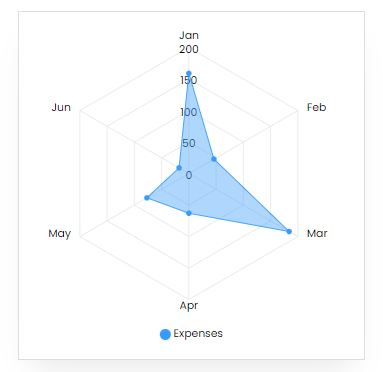
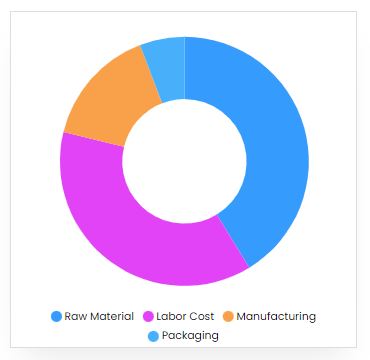
Product Cost Breakup
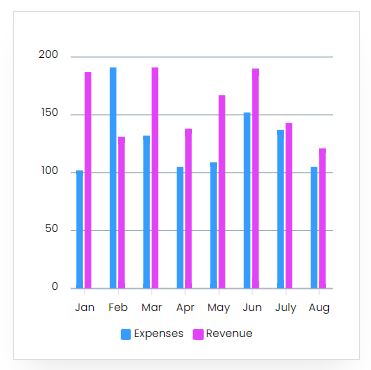
Reveneue Vs Expenses
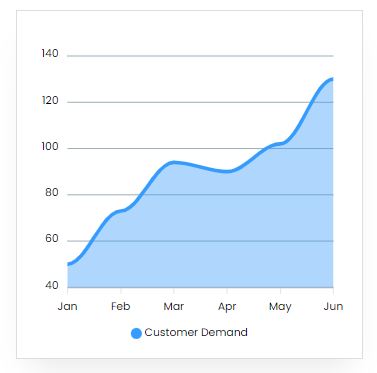
Market Trend
From a financial perspective, app development companies offer strong profit margins, typically ranging between 25% to 45%, depending on project scale and specialization. Break-even can generally be achieved within 1.5 to 3 years if the company secures consistent development contracts or launches successful proprietary apps. Enterprise app solutions and SaaS-based platforms generate recurring revenue, improving long-term financial stability.
This Project Report concludes that app development will remain one of the most dynamic and high-growth sectors in 2026. With increasing digital adoption, growing smartphone usage, and rising demand for customized business applications, the sector offers significant investment opportunities. Proper planning, skilled development teams, strong cybersecurity measures, and innovative monetization strategies are critical for success.
If required, detailed 5-year financial projections, break-even analysis, cost of project statements, and means of finance sections can be added to strengthen this Project Report for App Development for bank or investor presentations.