
Project Report for Can Opener Manufacturing
India’s food processing business, which includes tinned fruits and vegetables, seafood, condensed milk, and canned beverages, relies on cans that must be opened. Can openers are a dependable, repeat-purchase kitchen equipment in constant demand. Sharda Associates has delivered over 45,500 project studies, including CA-certified can opener manufacturing project reports for PMEGP and MSME bank financing. Starting at ₹2,999.
Get Your Report
What Is a Can Opener and Why Manufacture It?
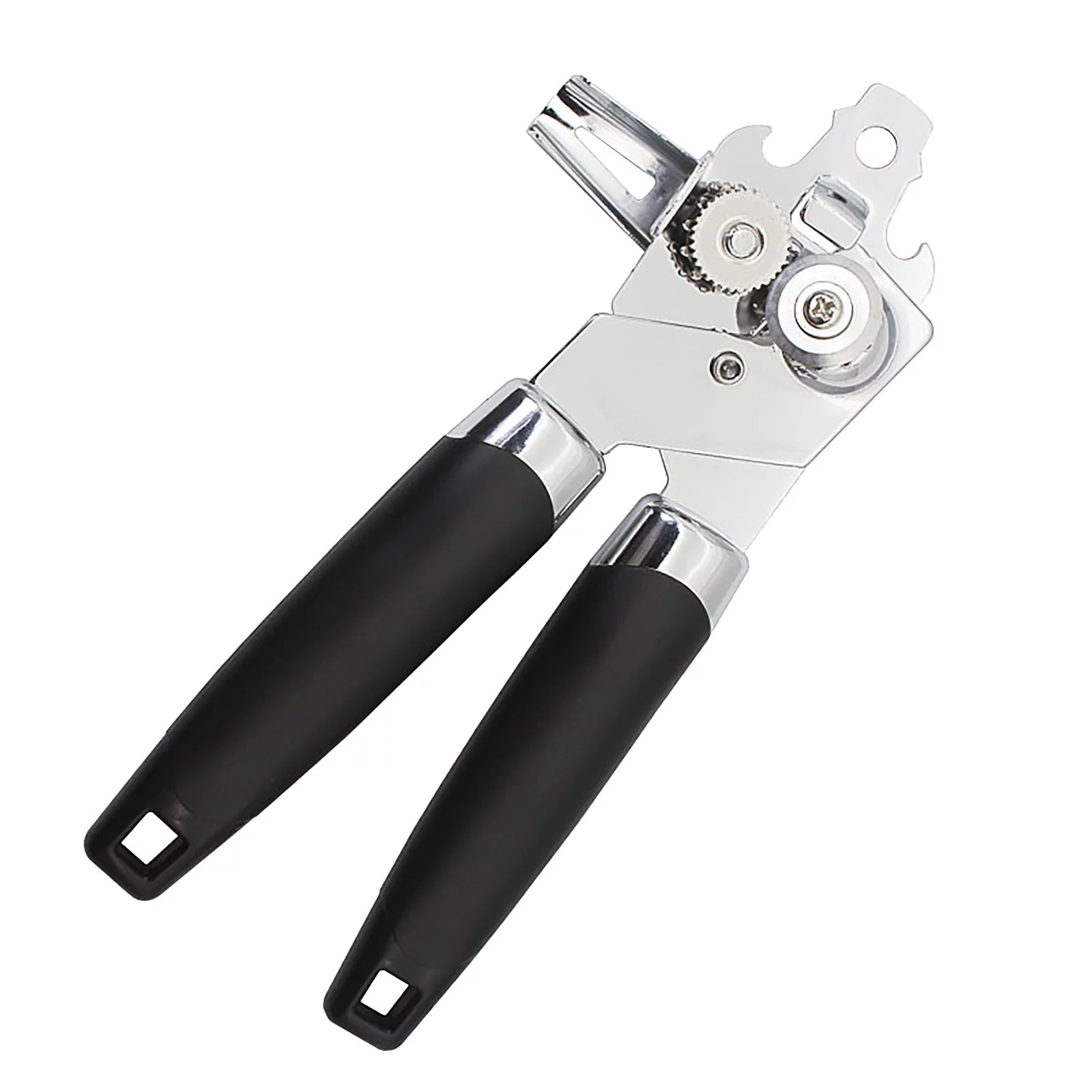
A can opener, sometimes known as a tin opener, is a mechanical or electromechanical device that slices through the sealed metal lid of a food tin or beverage can to get access to its contents. Every household, restaurant, canteen, and food processing enterprise that employs canned products maintains one.
A can opener is manufactured as a precise sheet metal and gear assembly product. The primary mechanism consists of a cutting wheel (hardened steel), a feed wheel (serrated driving wheel that grips and turns the can rim), a gear-and-crank drive, and a handle, all enclosed in a stamped metal or injection-molded plastic shell. The precision required for cutting wheel and gear meshing is the fundamental quality difference between a decent can opener and one that slips, jams, or leaves jagged edges.
India’s canned food consumption is continuously increasing, mainly to organized retail expansion, growth in the food processing industry, and shifting urban consumption patterns. Can openers are a consumable tool; most homeowners replace them every 2-4 years, whereas food service organizations replace them more regularly. This generates both constant replacement demand and first-purchase demand from newly formed households.
Types of Can Openers a Manufacturing Unit Can Produce
- Standard Rotary Can Opener – The most popular domestic type, with a crank handle and a cutting wheel; the highest-volume product class.
- Butterfly/Wing Can Opener – A simple lever-operated style that is commonly used in homes and budget markets.
- Safety/Smooth-Edge Can Opener – Provides burr-free edges for increased safety; popular in the premium cookware segment.
- Electric Can Opener – A motorized model for easy operation; utilized in hotels, commercial kitchens, and luxury homes.
- Heavy-Duty Industrial Can Opener – Designed to open large food cans in caterers, restaurants, and institutional kitchens.
- Multitool Can Opener – A tool that combines a bottle opener, a corkscrew, and other utility features; popular in the camping and outdoor markets.
Market Demand For Can Opener Manufacturing
India’s canned food sector is expanding as organized food retail moves into Tier 2 and Tier 3 cities. Every new home that purchases canned tomatoes, sardines, condensed milk, or fruit need a can opener. India’s food processing industry exports, which include tinned seafood, processed fruits, and vegetables, drive industrial need for commercial-grade openers in food facilities.
The institutional and food service channels are expanding particularly quickly. India’s hotel, restaurant, and catering (HORECA) industry is growing, and each new commercial kitchen represents a can opener buyer. School midday meal facilities, hospital kitchens, and military catering all employ industrial-grade can openers in bulk.
Export to the Middle East, Africa, and Southeast Asia, where Indian kitchen tool makers provide competitive pricing, is a growing revenue source for established producers.
Project Cost for Can Opener Manufacturing Unit
Cost Component | Small Unit (₹) | Medium Unit (₹) |
Stamping press + progressive dies | 3,00,000–6,00,000 | 7,00,000–14,00,000 |
CNC turning (cutting wheel, feed wheel) | 2,00,000–4,00,000 | 5,00,000–10,00,000 |
Heat treatment oven (wheel hardening) | 80,000–1,50,000 | 1,50,000–3,00,000 |
Injection moulding (handle/body) | 2,00,000–4,00,000 | 5,00,000–10,00,000 |
SS + zinc alloy + raw material (3 months) | 1,50,000–3,00,000 | 3,00,000–6,00,000 |
Assembly, testing, working capital | 1,50,000–2,50,000 | 2,50,000–5,00,000 |
Total Project Cost | ₹11–21 lakh | ₹25–48 lakh |
PMEGP: Up to ₹50 lakh → 15–35% capital subsidy.
Manufacturing Process
Body stamping: On a press equipped with a progressive die, the can opener frame is stamped from zinc alloy die casting or stainless steel sheet. The frame keeps the cutting wheel, feed wheel, and gear assembly precisely aligned.
Production of cutting wheels: A CNC lathe is used to precisely shape the diameter and edge geometry of high carbon steel or stainless steel. For cutting durability, it is further heat-treated (hardened and tempered) to 55–60 HRC. This is the most critical component — cutting wheel quality determines whether the opener cuts cleanly or slips.
Production of feed wheels: A lathe is used to turn and knurl a serrated feed wheel that rotates by grasping the rim of the can.
Gear cutting: Cut on a gear hobbing machine or purchased from gear manufacturers, the gear set (usually two to three gears) that joins the crank handle to the cutting mechanism.
Assembly: Every part is put together on the stamped frame. Gears and wheels are screwed or riveted into place. The handle is attached. The smooth working of the mechanism was examined.
Plating and finishing: To prevent corrosion, zinc alloy components are electroplated with nickel or chrome. SS parts are polished. A rubber or plastic grip insert is attached to the handle.
Quality testing: Every unit was tested for clean cut, no jamming, and exposure to sharp edges using a test can.
What Our Project Report Covers
- Products include heavy-duty, electric, safety edge, butterfly, manual rotary, and multitool.
- Production of cutting wheels, stamping, heat treatment, gear assembly, and plating
- List of machinery with supplier references and specifications
- Cutting wheel heat treatment: accurate hardness criteria and oven specifications
- Purchasing raw materials: plastic granules, zinc alloy (foundries in Delhi and Mumbai), and high carbon steel for wheels
- Sourcing from gear manufacturers versus in-house hobbing: make vs. buy
- 5-year utilization plan and installed capacity
- Household retail, HORECA, food processing, and export market study
- Estimates of revenue (₹35–350 per unit by kind)
- CMA statistics · DSCR greater than 1.25 · creation of PMEGP jobs Schedule of repayment
Why Choose Sharda Associates
- More than 45,500 project reports were delivered, covering PMEGP manufacturing applications, metal tools, kitchen hardware, and stamped components.
- Cutting wheel heat treatment expenses are appropriately covered, and the project investment appropriately reflects the crucial hardening process.
- Tooling costs for rotary, butterfly, and safety-edge can opener variants are included in the accurate assessment of progressive die investment.
- Gear manufacturing versus outsourcing is assessed depending on project scale and cost, and the decision is documented.
- The household, HORECA, and export groups are predicted with distinct price structures in the institutional and export revenue model that was constructed independently.
- Included are break-even analysis, CMA Data, DSCR, profitability analysis, accurate raw material costs, and bank-ready financial predictions.
- To increase the likelihood of loan acceptance, DSCR was confirmed to be over 1.25 prior to report delivery.
- Starting at ₹2,999 · 24–48 hours
📞 +91 89899 77769 | All India service
Frequently Asked Questions
A can opener uses a hardened steel cutting wheel pressed against a food tin's metal lid, powered by a crank mechanism via a set of gears. Stamping the body frame, CNC turning the feed and cutting wheels, heat-treating the cutting wheel to 55–60 HRC, cutting gears, assembling the mechanism, and plating for corrosion protection are all steps in the manufacturing process.
Indeed. Manufacturing of kitchenware and metal tools is eligible for a 15–35% PMEGP capital subsidy on projects up to ₹50 lakh. A project report in the CA-certified KVIC format that includes a section on employment generation is required.
Tool steel or high-carbon stainless steel that has been turned to final dimensions, hardened, and tempered to 55–60 HRC. The wheel's hardness is crucial; if it is too soft, it will wear out quickly or roll over the can lid; if it is the right hardness, it will cut thousands of cans cleanly and consistently before needing to be replaced.
Cleaner cut and more user-friendly, a rotary (wheel-type) can opener employs a cutting wheel powered by a gear-and-crank mechanism that moves around the can's lid perimeter. Butterfly (wing-type) openers have a simpler mechanism, cheaper production costs, and economy segment pricing since they pierce and revolve around the lid using lever action.
Household hardware and utensil dealers (highest volume—replacement and first-purchase demand), suppliers of kitchen equipment for hotels and restaurants, institutional kitchen procurement (hospital, school, military canteen), industrial-grade food processing companies, and Middle Eastern, African, and Southeast Asian export buyers.
Butterfly (wing) can opener: ₹35–70 in bulk. ₹80–180 for a standard rotary can opener (SS body). ₹200–450 for a high-end smooth-edge can opener. ₹600–1,500 for an electric can opener. ₹350–800 for a heavy-duty commercial opener.
A muffle furnace for heat treatment, a CNC lathe for cutting and feed wheels, a stamping press with progressive dies for body frames, an injection molding machine for handles and grips, an electroplating setup for zinc alloy components, and assembly jigs. For a small unit, the total investment is between ₹11 and ₹21 lakh.
Due to demand from homes, lodging facilities, eateries, caterers, and export markets, the company delivers strong profitability. Product quality, production efficiency, tooling usage, and the strength of the distribution network all affect profitability.