
Project Report for Coffee Grinder Manufacturing
India’s specialty coffee industry has made a significant shift from café-only to home brewing, and any home brewer who switches to freshly ground coffee needs a grinder. The market for coffee grinders in India is expanding at a rate of more than 20% each year. Sharda Associates provides CA-certified coffee grinder manufacturing project reports for PMEGP and MSME bank loans, delivering more than 45,500 project reports. beginning at ₹2,999.
Get Your Report
What Is a Coffee Grinder and Why Is Manufacturing One a Business?
A coffee grinder is a kitchen tool that grinds entire roasted coffee beans into coffee with the chosen particle size: coarse (French press, cold brew), medium (drip filter), or fine (espresso). The grind size strongly impacts extraction rate and consequently the quality of the brewed coffee — which is why serious coffee consumers prefer freshly ground beans over pre-ground.
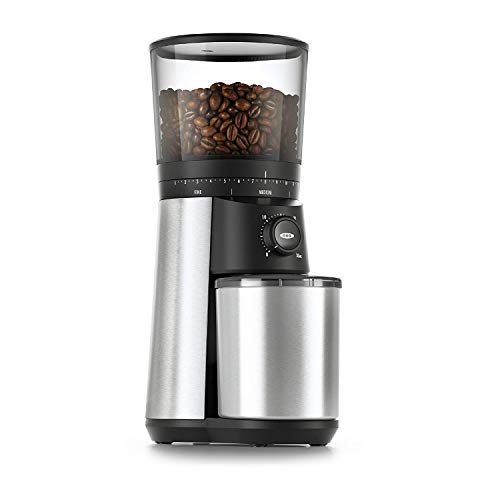
From a manufacturing perspective, a coffee grinder is an electromechanical device that consists of a food-grade plastic or stainless steel body with a ground coffee collection container and an electric motor that powers a blade (in low-cost blade grinders) or two grinding burrs (in precision burr grinders). The three main cost components are the motor, body, and burr set.
Growing through cafés, social media, and shifting palates, urban specialty coffee culture has produced a sizable number of home brewers that recognize the superiority of freshly ground coffee. At the same time, customers in Tier 2 and Tier 3 cities who had no retail access before may now purchase high-end coffee grinders thanks to e-commerce. All of these combine to create a sizable, expanding market that is neglected by domestic producers.
Types of Coffee Grinders a Manufacturing Unit Can Produce
- Conical Burr Grinder – A premium coffee grinder with exceptional grind uniformity, reduced heat generation, and increasing popularity among specialty coffee enthusiasts.
- Manual Hand Grinder – A hand-operated grinder with ceramic or stainless-steel burrs, popular among coffee connoisseurs and internet shoppers.
- Commercial Coffee Grinder – A large-capacity grinder for cafés, coffee roasters, restaurants, and hospitality organizations.
- Combination Grinder-Spice Mixer – A multi-purpose gadget for coffee, spices, and dry ingredients; popular in Indian households.
- Specialty Coffee Grinder Range – Includes models for espresso, pour-over, filter coffee, and gourmet coffee.
- Export & Premium Segment Products: Higher-value grinders aimed at specialty coffee markets and international buyers.
Market Demand — India's Coffee Grinder Opportunity
The coffee market in India is undergoing a structural change. Although filter coffee has long been popular in South India, specialty coffee, espresso, and home brewing have rapidly expanded to North India and Tier 2 cities within the past ten years. A generation of urban customers has learned about coffee quality via Starbucks, Blue Tokai, Third Wave Coffee, and hundreds of independent cafés; many of them wish to duplicate the experience at home.
Urban premiumization: Customers willing to pay ₹4,000–8,000 for a home burr grinder that allows them to replicate the quality at home are willing to spend ₹200 on a café flat white. The fastest-growing segment is this luxury one.
Base market in South India: Filter coffee has long been popular in Tamil Nadu, Karnataka, Kerala, and Andhra Pradesh. Fresh coffee powder electric grinders are a common household item in many South Indian homes, resulting in a yearly demand for millions of replacement units.
E-commerce reach: In cities without specialty kitchen appliance retailers, consumers can now purchase high-quality coffee grinders through online channels. The coffee grinder categories on Amazon and Flipkart are expanding at a rate of 25–30% every year.
Import substitution: India imports high-end burr grinders at a retail price of ₹10,000–50,000 from Germany, Japan, and Korea. There is a clear market for domestic producers that can create mid-range burr grinders with equal quality for ₹4,000–8,000 retail.
Manufacturing Process
Motor sourcing and testing: The appliance’s central component is the electric motor, which is either a DC brushless motor for high-end burr grinders or a universal AC motor for blade grinders. sourced from motor manufacturers (usually in Gujarat, Maharashtra, or elsewhere), and tested for operating temperature and speed-torque curve prior to assembly.
Production of burr sets (for burr grinders): Sintered carbide or hardened steel are used to precisely produce flat or conical burr sets. The grind quality is determined by the burr geometry, making this the most technically challenging part. Instead of producing burr sets internally, smaller manufacturers purchase them from specialized vendors.
Production of housing: injection-molded in PC (polycarbonate) or food-grade ABS. The ground collecting container, hopper (bean container), and housing are all injection-molded parts. Each house design costs between ₹2 and ₹5 lakh.
Assembly: The motor is installed in the housing, and the blade or burr set is attached to the motor shaft. An on/off switch and speed control (for variable grind variants) are wired. For burr grinders, the grind size adjusting mechanism is constructed and calibrated.
Testing: Each machine is checked for motor function, blade/burr functioning, lid interlock (a safety mechanism that prevents operation without the lid), and electrical safety (earth continuity and insulation resistance). BIS-sampled items were evaluated to meet IS 302 and appliance safety criteria.
Packaging: A single retail carton with a cleaning brush, warranty card, and instruction manual.
Project Cost for Coffee Grinder Manufacturing Unit
Cost Component | Small Unit (₹) | Medium Unit (₹) |
Injection moulding machine (housing, hopper) | 3,00,000–6,00,000 | 7,00,000–14,00,000 |
Motor assembly and testing setup | 80,000–1,50,000 | 1,50,000–3,00,000 |
Blade/burr set procurement or machining | 1,00,000–2,00,000 | 2,00,000–4,00,000 |
Electrical safety testing equipment | 60,000–1,20,000 | 1,20,000–2,50,000 |
Motors, blades, housing raw material (3 months) | 2,00,000–4,00,000 | 4,00,000–8,00,000 |
BIS certification + working capital | 1,50,000–2,50,000 | 2,50,000–5,00,000 |
Total Project Cost | ₹8.90–17.20 lakh | ₹18.20–36.50 lakh |
PMEGP: Up to ₹50 lakh → 15–35% capital subsidy.
What Our Coffee Grinder Project Report Covers
- Product range: blade grinder, flat burr, conical burr, manual, commercial, combination.
- Manufacturing process: motor sourcing, burr set, housing moulding, assembly, safety testing.
- Burr set make vs buy decision — in-house machining vs. specialized supplier
- BIS IS 302 certification costs are included in pre-operative expenses.
- Housing injection mould cost per design—correctly assessed.
- Market analysis: urban home brewing, South India filter coffee, e-commerce, export.
- Revenue projections: ₹300-5,000 per unit by kind.
- CMA data: DSCR above 1.25, PMEGP employment generation. · Repayment schedule
Why Choose Sharda Associates
- 45,500+ project reports were delivered, covering consumer electrical appliances, culinary equipment, and electromechanical production units.
- Burr set make-vs-buy decision accurately assessed—sourcing versus in-house CNC machining evaluated based on project size and investment needs.
- Injection mould tooling costs are properly included, with distinct moulds evaluated for each coffee grinder housing design and product version.
- The revenue model is accurately split, with the South Indian filter coffee market, specialty coffee segment, and export potential forecast separately.
- BIS IS 302 certification costs are incorporated — necessary compliance fees are appropriately accounted for in project investment and implementation planning.
- Accurate raw material costing, profitability analysis, CMA Data, DSCR, break-even analysis, and bank-ready financial predictions are included.
- Before delivery, the DSCR was validated to be greater than 1.25 in order to increase PMEGP, MSME, and bank loan approval.
- Starting at ₹2,999 · 24–48 hours
📞 +91 89899 77769 | All India service
Frequently Asked Questions
A blade grinder employs a high-speed spinning blade to chop coffee beans by impact, resulting in irregular particle sizes, variable extraction, and a cup with a combination of under-extracted (bitter) and over-extracted (sour) flavour. A burr grinder employs two abrasive surfaces (burrs) to crush and shear beans into homogenous particles, resulting in consistent grind size, even extraction, and improved flavor. Although burr grinders are more expensive, serious coffee consumers prefer them.
Yes. PMEGP offers capital subsidies of 15-35% for projects up to ₹50 lakh in the manufacturing of electrical kitchen appliances. CA-certified KVIC format project report with employment generating section required. Sharda Associates offers PMEGP project reports beginning from ₹2,999.
Coffee grinders must comply with BIS IS 302 (Household Electrical Appliances) and IS 13252 (Safety of Household and Similar Electrical Appliances). BIS marking is required for organised retail, e-commerce listing of certified products, and institutional supply. Testing at a BIS-accredited laboratory, factory audit, and annual licence renewal fees must all be included in the project report's pre-operative expenses.
Electric motor (universal AC or DC brushless), steel or carbide burr set (sourced or machined), food-grade ABS or polycarbonate housing and hoppers, stainless steel blade (for blade grinders), switch, electrical cable, and packing material. Motor and burr sets typically account for 45-60% of raw material costs.
E-commerce platforms (Amazon, Flipkart—the dominant channel for premium grinders), consumer electronics retail chains (Croma, Reliance Digital), kitchen appliance distributors (for Tier 2 and 3 city distribution), café and coffee roastery supply companies (commercial grinders), and export buyers in the Middle East and Southeast Asia.
Wholesale prices for a blade grinder (150W) range from ₹300-600. Price range for a combination grinder-mixer is ₹600-1,200. An entry-level flat burr grinder costs between ₹1,500 and ₹3,000. Mid-range conical burr grinder costs between ₹3,000-7,000. Premium household burr grinders range from ₹7,000 to ₹15,000. Commercial café grinder costs between ₹12,000-35,000.
Yes, in the mid-range retail market (₹2,000–8,000). Imported German and Japanese burr grinders cost ₹10,000-50,000, while cheap Chinese blade grinders range from ₹500-1,500. The mid-range – dependable burr grinding at an affordable price — is the space where a well-made domestic product might gain considerable market share via e-commerce.
India's specialty coffee business, which includes cafés, third-wave coffee chains, and home brewing hobbyists, is increasing at a rate of 15-20% per year. Blue Tokai, Third Wave Coffee, Subko, and hundreds of independent roasters have cultivated a sizable consumer base of knowledgeable coffee purchasers. This group seeks high-quality home grinders, espresso machines, and specialty brewing equipment priced between ₹4,000-15,000, which domestic producers may cater to.
South India's conventional wet grinder and mixer-grinder market is one of the country's largest consumer appliance categories. Many households utilize a combined appliance, which is a mixer-grinder with a separate dry grinding blade for coffee and spices. This combo product has persistent high volume demand in Tamil Nadu, Karnataka, Kerala, and Andhra Pradesh, making it an ideal product expansion for any grinder producer.