
Project Report for Doorbell Manufacturing
India’s video doorbell industry is expected to reach USD 56.2 million and increase at a CAGR of 15.2% — yet the traditional electric doorbell market that it is gradually displacing remains very much alive in Tier 2 and Tier 3 India. Knowing which side of the line your company is on affects everything about the project strategy. Sharda Associates delivers 45,500+ CA-certified reports and develops doorbell manufacturing project reports in 24-48 hours. Starting at Rs. 2,999.
Get Your Report
What Does a Doorbell Manufacturing Business Actually Involve?
Here’s a planning truth that should be understood right away: “doorbell manufacturing” now refers to two distinct goods, and combining them in a single project report is one of the quickest ways to mislead a bank credit officer who has seen this category before.
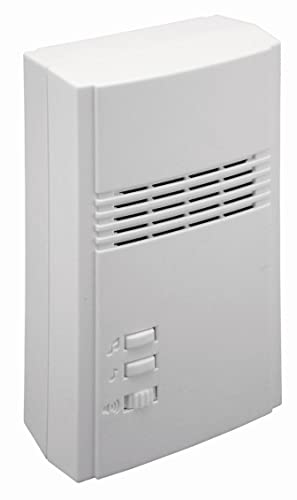
Traditional and electric doorbells. A pushbutton switch completes the circuit by activating an electromagnet, which pulls an armature and hammer against a gong or chime. Simple, low-cost electronics, a well-understood production process, and the leading product in price-sensitive sectors (Tier 2/3 cities, budget housing, and replacement sales for existing wired systems). Low component cost, quick assembly, and low capital entry point.
Smart/video doorbells. A camera module, Wi-Fi or Bluetooth connectivity, a motion sensor, and frequently a small rechargeable battery or PoE (power-over-ethernet) wiring are all linked to a companion smartphone app. This is truly a linked electronics product, not a basic electromechanical one, with a vastly different production complexity, component sourcing issue, and after-sales service demand. The honest, bankable approach for most new MSME entrants is to focus on one side of the divide and create significant depth there. The honest, bankable approach for most new MSME entrants is to focus on one side of the divide and create significant depth there.
Why the Smart Doorbell Segment Isn't a Simple Manufacturing Play
This is worth mentioning in a project report: the core electronics of a smart/video doorbell — the camera sensor (CMOS), Wi-Fi/Bluetooth modules, and the processor chip — are primarily sourced from established electronics manufacturing hubs, and the majority of genuine MSME entrants into this category are doing assembly and quality testing of purchased modules rather than designing and fabricating semiconductor-level components from the ground up.
That is a totally realistic and fundable business model, but it must be portrayed honestly as an assembly operation using purchased electronic modules, rather than as if the unit is independently engineering camera sensors. A bank’s technical officer who has previously seen electronics assembly project reports will immediately recognize an overblown assertion, which weakens credibility in the rest of the report.
Another factor that reinforces the business case is that product integration, software configuration, testing, quality assurance, packaging, branding, and after-sales support offer more value to an MSME smart doorbell unit than semiconductor fabrication. The entrepreneur obtains authorized electronic modules, assembles them into a finished device, installs firmware, does functional testing (camera quality, motion detection, Wi-Fi connectivity, mobile app integration, and power management), and then offers the product under their own brand.
How Does This Business Actually Make Money?
A simple traditional electric doorbell (pushbutton, electromagnet, single-tone chime) retails for Rs.150-400, with wholesale/distributor price for an MSME producer typically ranging from Rs.60-150 per unit. A musical/multi-tone wired chime is slightly more expensive at Rs.120-280 wholesale.
income calculation for typical doorbell assembly units: 600 units/day x Rs.95 average wholesale x 24 working days = Rs.13.7 lakh/month gross income.
Smart/video doorbells have an entirely different price point. A basic Wi-Fi video doorbell costs between Rs.2,500 and Rs.6,000, with wholesale/distributor pricing for an MSME assembler typically ranging from Rs.1,400 to Rs.3,200, depending on camera resolution, battery vs wired power, and app features.
Revenue calculation for smart doorbell assembly unit (reduced volume due to necessity): 60 units/day x Rs.2,100 average wholesale x 22 working days = Rs.27.7 lakh gross revenue per month.
The smart segment generates significantly more revenue per unit but has a lower achievable daily volume for a new entrant because component sourcing lead times, quality testing complexity, and buyer trust-building (smart doorbell buyers are notably brand-conscious due to security and privacy concerns) all move slower than in the traditional segment.
For classic doorbells, the electromagnet coil, armature assembly, and chime/gong mechanism typically account for 40-50% of the manufacturing cost, with the pushbutton switch, wiring, and housing accounting for the majority of the difference. For smart doorbells, the camera module and connectivity chipset alone can account for 45-60% of the bill-of-materials cost, which is why component sourcing reliability is so important in this category as opposed to the traditional one.
What Equipment Does a Doorbell Manufacturing Unit Need?
For traditional/electric doorbells:
A coil winding machine. The cost of creating the electromagnet coils that power the armature mechanism ranges between Rs.1-2.5 lakh for a basic automated or semi-automatic winder.
Plastic injection molding (or bought-out housing). For the doorbell body and pushbutton housing, the cost ranges between Rs.8 and 20 lakh if moulded in-house, or a per-unit bought-out cost if housings are sourced from an existing moulder, which is the more usual entry point for smaller units.
Assembly and wiring stations. Connecting the coil, armature, chime mechanism, and pushbutton switch costs Rs.1-2 lakh for a simple multi-station arrangement.
Test rig. Every batch requires functional testing (sound production, switch response, electrical safety) ranging from Rs.40,000 to Rs.80,000.
For smart/video doorbells:
SMT assembly line, also known as a job-work system. Most MSME entrants do not initially invest in their own SMT line; instead, PCB assembly is often outsourced to an experienced electronics manufacturing services (EMS) provider, with the MSME unit handling final assembly, housing, testing, and packing. This greatly reduces the initial investment compared to in-house PCB manufacture.
Final assembly and housing installation station. Mounting the camera module, PCB, battery (if wireless), and networking components into the weatherproof enclosure costs between Rs.1.5 and 3 lakh.
Functional and connection testing stations. Before shipping, each item requires Wi-Fi/Bluetooth pairing verification, camera image quality check, and motion sensor calibration – all for Rs.1.5-3.5 lakh, which is a significantly more extensive testing process than a standard doorbell.
Waterproofing and IP rating compliance testing. Because these machines are installed outdoors, IP65 or comparable water and dust resistance testing is a reasonable buyer expectation – Rs.50,000-1.5 lakh for basic in-house testing capacity, or third-party certification costs if outsourced.
What Actually Separates a Reliable Doorbell Manufacturer From One With Field Failures
For traditional doorbells, the gap between a reliable unit and a problem-prone one almost always comes down to the electromagnet coil winding consistency and the armature spring tension — a coil wound slightly off-spec either fails to pull the armature with enough force (weak, inaudible chime) or draws excess current (overheating, premature failure). This is a quality-control discipline issue, not a complex engineering one, but it’s exactly the kind of detail that determines whether a distributor reorders or switches suppliers after a batch of complaints.
For smart doorbells, the equivalent risk is almost entirely about connectivity reliability and weatherproofing — a unit that drops Wi-Fi connection intermittently or fails after monsoon exposure generates the kind of negative reviews that are genuinely difficult to recover from in a security-product category, where buyers are unusually sensitive to reliability concerns precisely because the product’s whole value proposition is “you can trust this to alert you.” A credible project report for this segment should account for real testing rigor here, not treat it as an afterthought.
Staff structure for a traditional doorbell assembly unit: a production supervisor (Rs.13,000-20,000/month), assembly workers (Rs.8,000-12,000/month each), and a testing/packaging helper (Rs.7,000-9,000/month). A smart doorbell assembly unit typically needs a slightly more skilled technician for connectivity testing (Rs.16,000-25,000/month) alongside assembly staff.
Where Should You Set This Up, and Who Buys This Product?
For traditional doorbell manufacture, closeness to electrical/electronic component suppliers and plastic moulding capability is critical; Delhi NCR and parts of Gujarat have established small-electronics component supply chains that cut cost and lead time. Electrical/hardware merchants, builders, and electrical contractors (who specify doorbells during building) are the primary sales channels, with e-commerce becoming increasingly popular for the budget sector.
Because most MSME entrants do not manufacture their own PCBs, proximity to an electronics manufacturing services (EMS) provider for PCB assembly jobs is the more important geographical aspect for smart doorbell manufacturing. This segment is primarily sold through e-commerce and specialty electronics/smart-home retailers, where buyers conduct extensive research, compare camera resolution and app features, and lean toward established or visibly well-reviewed brands, making it a genuinely difficult market for a new entrant to break into solely on price.
BIS compliance for electrical safety applies to both segments. Smart doorbells must also address wireless equipment certification (for Wi-Fi/Bluetooth modules) and, depending on cloud storage options, data privacy concerns, which customers are increasingly taking into account when making purchasing decisions.
What Will This Actually Cost You?
Setup | Capital Cost (Rs.) |
Small traditional/electric doorbell assembly unit | Rs.8-18 lakh |
Medium traditional unit with in-house coil winding and moulding | Rs.18-35 lakh |
Small smart/video doorbell assembly unit (job-worked PCB) | Rs.20-40 lakh |
Smart doorbell unit with in-house testing and certification capability | Rs.40-75 lakh |
Traditional doorbell units are often classified as Mudra Tarun or PMEGP in the manufacturing sector, with PMEGP’s 15-35% capital subsidies boosting the project’s return profile. Given the higher component costs and testing infrastructure required, smart doorbell assembly units are more likely to fall into the MSME term loan category, which is commonly structured with CGTMSE collateral-free coverage for the qualified amount.
Why Choose Sharda Associates for This Specific Business
- We’ve generated over 45,500 CA-certified project reports, and doorbell manufacturing files contain one aspect that determines credibility quickly: whether the report honestly distinguishes between the traditional and smart sectors or combines them into one false pitch.
- We start by identifying your actual segment and then create the report around its genuine economics. Traditional and smart doorbells have distinct component costs, buyer profiles, and production complexity. We don’t let a report make imprecise claims about both sectors; instead, we anchor it in the one that corresponds to your actual capital and competence.
- Component sourcing is disclosed honestly, particularly in the smart category. If you’re assembling bought-in camera modules and connectivity chipsets rather than fabricating electronics from scratch, make it clear in your report — an overstated manufacturing claim is immediately recognized by a bank’s technical reviewer and costs you credibility on everything else in the file.
- Quality and testing costs are itemized rather than glossed over. Coil winding consistency for traditional doorbells, connectivity and weatherproofing testing for smart doorbells—these are genuine cost lines that effect your DSCR, and we include them rather than giving an excessively small testing budget.
- Before you even receive the report, DSCR is validated to be greater than 1.25, computed against your actual segment’s realistic volume and price point — not an optimistic blend that would fail to pass a bank’s own recalculation.
- Starting at Rs.2,999 and delivered within 24-48 hours,
Frequently Asked Questions
It includes two distinct products: standard electric doorbells (pushbutton, electromagnet, chime mechanism) and smart/video doorbells (camera, Wi-Fi connectivity, app integration). Traditional units sell at a wholesale price of Rs.60-150 per unit, whereas smart units retail for Rs.1,400-3,200. A typical doorbell assembly unit that produces 600 units per day can yield approximately Rs.13.7 lakh per month, but a smart doorbell unit with a lower volume but higher unit value can generate a comparable or higher amount.
Traditional doorbells are basic electromechanical devices with an electromagnet, armature, and chime mechanism activated by a pushbutton switch. Smart doorbells are connected electrical devices that include a camera module, Wi-Fi/Bluetooth connectivity, motion sensors, and app integration. The manufacturing complexity, component sourcing, testing requirements, and buyer profile are all distinct enough that most successful MSME firms concentrate on one area rather than attempting both.
A modest conventional doorbell assembly unit typically costs Rs. 8-18 lakh. A midsize conventional unit with in-house coil winding and plastic molding costs Rs. 18-35 lakh. A tiny smart doorbell assembly unit, job-working out PCB assembly, costs between Rs.20-40 lakh. A smart doorbell device with in-house testing and certification capabilities costs between Rs. 40 and 75 lakh.
Yes. Traditional doorbell manufacturing units normally fall under PMEGP's manufacturing sector category, with loans of up to Rs.50 lakh and a 15-35% capital subsidy. Smart doorbell assembly units, due to their greater capital requirements, sometimes require MSME term loans or CGTMSE-backed finance, depending on the exact investment level.
In reality, most MSME entrants into smart doorbell manufacturing assemble purchased components — the camera sensor module, Wi-Fi/Bluetooth chipset, and often the PCB itself — through job-work arrangements with an established electronics manufacturing services provider rather than fabricating semiconductor-level components in-house. This is a legitimate and fundable company strategy, however a project report should clearly describe it as an assembly operation rather than exaggerating in-house electronics design expertise.
Traditional doorbell components include electromagnet coil wire, armature and spring mechanism, chime/gong component, pushbutton switch, plastic or metal case, and wiring. Smart doorbell components include a camera sensor module, a Wi-Fi/Bluetooth communication chipset, a PCB (typically job-worked), battery or PoE power components, a waterproof casing, and mounting hardware.
Traditional doorbells require electromagnet coil winding uniformity; an off-spec coil produces a feeble sound or overheats, resulting in field failures and reorder loss. For smart doorbells, connectivity dependability and weatherproofing are critical – intermittent Wi-Fi failures or water damage after monsoon exposure generate particularly negative feedback in a security product category where consumers anticipate great reliability.
BIS compliance for electrical safety applies to both segments. Smart doorbells must also account for wireless equipment certification applicable to their Wi-Fi/Bluetooth modules. Standard Udyam/MSME registration and GST registration apply to both sectors, just like any other manufacturing unit.
Traditional doorbell users include electrical and hardware merchants, builders and electrical contractors who specify fittings during construction, and budget-conscious e-commerce customers. Smart doorbells are primarily sold through e-commerce and specialty smart-home/electronics merchants, where customers conduct extensive research and prefer established or well-reviewed companies, making this a significantly more difficult market to penetrate based only on pricing.