
Project Report for Earth Rammer Manufacturing
An Earth Rammer Manufacturing Project Report provides a detailed plan for setting up a construction equipment manufacturing unit. The report covers earth rammer applications, raw materials, components, manufacturing process, machinery, production capacity, project cost, manpower requirements and financial projections. Sharda Associates prepares project-specific reports based on the proposed capacity, investment and business model to help entrepreneurs evaluate the technical and financial feasibility of the project. Sharda Associates creates CA-certified earth rammer project reports and has delivered over 45,500 of them. Starting at ₹2,999.
Get Your Report
What Is an Earth Rammer?
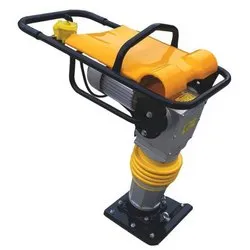
An earth rammer is a construction equipment machine used for compacting soil, gravel and other materials during road construction, foundation work and civil engineering projects. It improves soil density and stability by applying repeated impact force.
Earth rammers are required for road repair and maintenance (compacting backfill following utility trench cuts), building foundation work, retaining wall backfill, pipe and cable trench backfill, and paving base preparation. Every municipal corporation, road contractor, civil construction firm, and landscaping contractor employs earth rammers.
Components Used in Earth Rammer Manufacturing
- Engine/electric motor
- Base plate
- Rammer shoe
- Spring system
- Handle assembly
- Fuel tank (for petrol models)
- Control mechanism
- Fasteners and fabricated parts
Manufacturing Process of Earth Rammer
Steps:
- Metal cutting and fabrication
- Base plate manufacturing
- Frame and handle fabrication
- Mechanical assembly
- Engine/motor installation
- Surface finishing and painting
- Performance testing
- Packaging
Market Demand
India’s infrastructure expenditure (PMGSY rural roads, Smart Cities, urban water and sewerage, metro rail, NHAI highway construction) generates significant, ongoing demand for soil compaction equipment. Every trench created for a water pipe, gas line, or cable requires backfill compaction equipment. The major institutional customers include municipal companies, public works contractors, and NHAI road contractors.
The rental market is equally large. Construction equipment rental businesses, who rent earth rammers to small contractors on a daily basis, have a fleet of 10-50 rammers and replace them as older machines wear out.
Types of Earth Compaction Equipment
- Earth rammer (jumping jack): For cohesive soils and narrow trenches, use a 4-stroke petrol engine. Core product: Plate compactor (vibrating plate) for granular soils and vast areas, with bigger plates and a vibratory mechanism.
- Walk-behind roller: For road base and wide area compaction.
- Trench roller: Remotely controlled for deep trench compaction.
Starting with earth rammers and plate compactors, the two most popular compact compaction devices, is the recommended manufacturing starting point.
Project Cost for Earth Rammer Manufacturing
Component | Small Unit (₹) | Medium Unit (₹) |
Welding + fabrication machines | 1,50,000–3,00,000 | 3,00,000–6,00,000 |
Machining (lathe + drill press) | 1,50,000–3,00,000 | 3,00,000–6,00,000 |
Engine sourcing (Honda/Kirloskar/Greaves) | — (outsourced per unit) | — |
MS frame + foot plate raw material (3 months) | 1,50,000–3,00,000 | 3,00,000–6,00,000 |
Assembly tools + testing + working capital | 1,50,000–2,50,000 | 2,50,000–5,00,000 |
Total (excl. engine cost) | ₹6–11.50 lakh | ₹11.50–23 lakh |
Engine (Honda GX120 or equivalent): ₹8,000–15,000 per unit — typically sourced per order and included in unit cost.
What Our Report Covers Product range
- Our product line includes petrol earth rammers, diesel earth rammers, hydraulic rammers, trench compactors, soil compaction equipment, and construction site compaction machines.
- Manufacturing Process – Steel Fabrication, CNC Machining, Base Plate Manufacturing, Engine Mounting, Assembly, Vibration Mechanism Installation, Testing, Painting, and Packaging
- Raw Material Analysis: Mild Steel, Cast Iron Components, Engines, Bearings, Springs, Fasteners, Hydraulic Parts, and Consumables
- Machinery and equipment planning includes CNC machines, welding equipment, drilling machines, cutting machines, fabrication tools, testing equipment, and material handling systems.
- Market analysis for construction contractors, road projects, infrastructure development, municipal works, rental equipment providers, and government tenders.
- Revenue Projections – Product-specific price and sales projections for various earth rammer capacities and engine configurations
- Compliance and Registration: Udyam Registration, GST Registration, Factory Licence, and Industrial Safety Requirements.
Why Choose Sharda Associates
- 45,500+ reports — construction equipment, engineering fabrication, PMEGP
- Engine sourcing is correctly recorded, with outsourced petrol and diesel engine costs accurately incorporated in unit economics and profit calculations.
- Infrastructure market demand is validated through construction sector growth and government infrastructure investment trends.
- To prevent making unreasonable revenue projections, manufacturing capacity should be appropriately matched to fabrication and assembly capabilities.
- Raw material costs are calculated using current prices for steel, cast iron components, vibration systems, bearings, engines, and fabrication materials.
- Market analysis for road contractors, infrastructure developers, construction businesses, rental equipment providers, and government project suppliers.
- Profitability analysis includes ROI, DSCR, break-even point, and cash flow estimates.
- CMA Data and bank-ready financial statements are created for PMEGP, MSME, Mudra Loan, and manufacturing finance applications.
- Starting at ₹2,999 · 24–48 hours
📞 +91 89899 77769 | All India service
Frequently Asked Questions
An Earth Rammer Manufacturing Project Report explains the setup of a construction equipment manufacturing unit, including product details, components, machinery, manufacturing process, project cost and financial projections.
Sharda Associates prepares project-specific reports according to the proposed capacity and investment plan.
Earth rammers are used for soil compaction in construction activities such as foundations, roads, pavements and civil engineering projects.
Earth rammers are manufactured through the fabrication of metal parts, assembly of mechanical components, installation of motor/engine systems and performance testing.
Machinery depends on production scale and may include fabrication machines, welding equipment, machining tools and testing equipment.
Investment depends on production capacity, machinery, factory setup, components and working capital requirements.
Infrastructure spending has a direct impact on demand for construction equipment like earth rammers. Banks prefer project studies with realistic demand estimates based on government investment, road projects, urban development initiatives, and construction sector growth trends.
A properly created project report illustrates financial viability, machinery planning, market demand, profit projections, and repayment capacity. It enables lenders to precisely assess project risk and considerably increases approval chances under the PMEGP, MSME, and Mudra Loan schemes.
Banks may reject applications based on unrealistic production predictions, improper engine costs, inadequate market analysis, inaccurate working capital calculations, or insufficient financial documentation. A detailed project report addresses these problems and significantly improves the overall loan application.