
Project Report for Kettle Manufacturing
India’s market for electric kettles is expanding at a rate of 15–18% per year due to changes in urban lifestyles, the growing popularity of tea and coffee, and the expansion of organized retail in Tier 2 and Tier 3 cities. Sharda Associates creates CA-certified electric kettle manufacturing project reports for PMEGP and MSME bank loans, delivering more than 45,500 project reports throughout India. beginning at ₹2,999.
Get Your Report
What Are Kettle Manufacturing
An electric kettle, also known as an electric water boiler or cordless kettle, is a countertop cooking device that uses a submerged electric heating element to quickly boil water. It is more energy-efficient (the heating element is submerged directly in the water), quicker than boiling water on a gas stove (a 1.5-liter kettle boils in 2–3 minutes as opposed to 5–8 minutes on gas), and automatically turns off when the water reaches the boiling point thanks to a bimetallic thermostat.
The electric kettle market in India is a mass-market household product rather than a specialty market. India’s most popular beverage is tea, and in urban and semi-urban households, the switch from stovetop boiling to electric kettles has increased dramatically. With an estimated 2 crore+ electric kettles sold in India each year, kettle manufacturing is a volume industry with a steady and expanding market.
A stainless steel or food-grade plastic body, a submerged stainless steel heating element, a bimetallic thermostat (auto-shutoff mechanism), a 360-degree swivel base with a hidden cord, and an outer housing with a handle comprise the electromechanical assembly of an electric kettle. This is an accessible MSME manufacturing enterprise because all components can be purchased domestically.
Types of Kettles a Manufacturing Unit Can Produce
- Standard Electric Kettle (1-1.8 Litre): Stainless steel body, automatic shut-off thermostat, 1500W heating element; the most popular domestic kettle segment.
- Glass Electric Kettle – Borosilicate glass body with LED lighting and a stainless steel heating base; aimed at upscale urban consumers.
- Temperature Control Kettle – Multiple temperature settings for tea, coffee, and other beverages; a popular premium appliance category.
- Electric Gooseneck Kettle – Precise pouring design for pour-over coffee and specialty tea preparation; popular with home baristas.
- Stovetop Kettle – A non-electric stainless steel or aluminum kettle used on gas stoves; a simple and inexpensive product category.
- Commercial Hot Water Urn – An electric boiler with a large capacity (5-20 litres) suitable for hotels, offices, canteens, and institutional buyers.
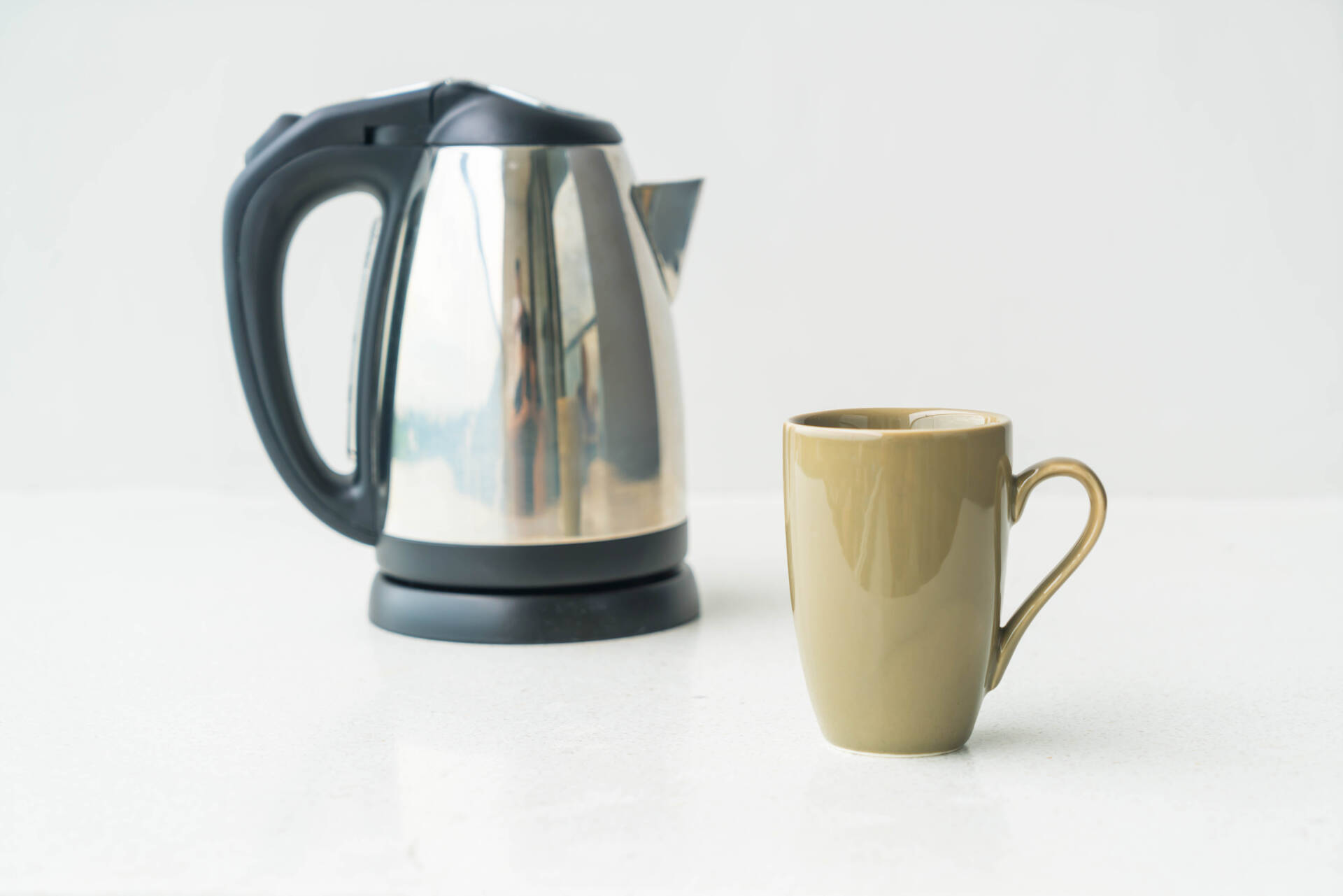
Market Demand — Why Kettle Manufacturing Is Bankable
India’s electric kettle market is growing for reasons that are structural — not cyclical:
Urban household penetration: It is anticipated that 30-35% of urban Indian homes own an electric kettle, leaving 65-70% as prospective first-time consumers. As electricity penetration deepens and urban incomes rise, it grows at a rate of 15-18% every year.
Organized retail and e-commerce growth: Electric kettles routinely rank in the top 10 appliance searches on Amazon and Flipkart, making them one of the best-selling kitchen appliance categories. Households in Tier 2 and Tier 3 cities that previously had convenient access to retail consumer electronics now have electric kettles thanks to the internet commerce channel.
Premiumization: People who purchased their first ₹500 kettle five years ago are switching to a glass or temperature-control type that costs between ₹1,500 and ₹2,500. Replacement plus premiumization equals steady demand for repeat purchases.
Tea and coffee culture: Thanks to cafés, home brewing culture, and food content on social media, India’s consumption of specialty tea and coffee is expanding quickly. In particular, gooseneck and temperature-control kettles are expanding as a result of this trend.
Import substitution: Chinese-made items account for a sizable share of India’s luxury kettle market. There is a clear possibility for domestic producers to replace imports if they can match design and quality at competitive prices.
Manufacturing Process — How Electric Kettles Are Made
Body construction: Using a hydraulic press equipped with a deep-draw die, stainless steel sheet (SS 304, food grade) is deep-drawn into the shape of a kettle. The body is buffed, polished, and pickled. The outer body of kettles with plastic bodies is injection-molded from food-grade ABS or polypropylene.
Heating element assembly: The stainless steel sheath heating element is fitted through the bottom grommet with a silicone seal after being shaped to the proper shape. The base plate of the heating element is either crimped or welded to the kettle body.
Thermostat assembly: When water boils, the bimetallic thermostat, which is installed in the lid or on the steam duct, trips the switch. An NTC thermistor and control PCB take the role of a basic bimetallic thermostat in temperature-control versions.
Handle and lid fitting: The injection-molded plastic handle is screwed or riveted to the body. Fitted lid assembly.
Base assembly: a 360-degree rotating base with a hidden cord wrapped around the base column. The kettle body has a connector socket installed.
Testing: Each kettle was evaluated for electrical safety, including earth continuity, insulation resistance (hi-pot test), thermostat trip temperature, and no-load power consumption. BIS-sampled units were examined according to IS 302 Part 2 Section 2.
Packaging: A single carton with a warranty card and instruction manual.
Project Cost for Electric Kettle Manufacturing Unit
Cost Component | Small Unit (₹) | Medium Unit (₹) |
Deep-draw hydraulic press + dies | 4,00,000–8,00,000 | 9,00,000–18,00,000 |
Injection moulding machine (handle/base) | 3,00,000–6,00,000 | 6,00,000–12,00,000 |
Polishing and buffing machines | 80,000–1,50,000 | 1,50,000–3,00,000 |
Electrical safety testing equipment | 60,000–1,20,000 | 1,20,000–2,50,000 |
SS 304 sheet, heating elements, thermostats (3 months) | 2,00,000–4,00,000 | 4,00,000–8,00,000 |
BIS IS 302 testing + certification | 1,50,000–2,50,000 | 1,50,000–2,50,000 |
Work shed + working capital | 2,00,000–3,50,000 | 3,50,000–6,00,000 |
Total Project Cost | ₹14.90–27.70 lakh | ₹28.20–52 lakh |
PMEGP: Up to ₹50 lakh → 15–35% capital subsidy.
What Our Electric Kettle Project Report Covers
- Product range: regular stainless steel kettle, glass kettle, temperature control, gooseneck, cooktop, commercial urn.
- Manufacturing process: deep drawing, heating element assembly, thermostat fitting, testing, and packing.
- Machinery list with supplier quotation references
- Raw material sourcing: SS 304 sheet (SAIL/Tata Steel wholesalers), heating elements (Mumbai, Delhi suppliers), thermostats, ABS granules.
- Deep-draw dies and injection moulds: make or buy (one-time investment versus outsourcing)
- BIS IS 302 certification cost and timeline—correctly included in pre-operative fees.
- Installed capacity: units per shift by product category.
- 5-year capacity utilization schedule, commencing at 55-60%.
- Market analysis for e-commerce, consumer electronics retail, institutional (hotels, offices), and export
- Revenue forecasts based on current wholesale pricing (₹250-800 per unit depending on kind).
- CMA data: all 7 RBI-prescribed statements.
- DSCR certified over 1.25 in each repayment year.
- PMEGP employment generating section—properly prepared.
- Break-even analysis and payback plan
Why Choose Sharda Associates
- 45,500+ project reports have been delivered across India, covering consumer appliance manufacturing, kitchen equipment, MSME, Mudra Loan, and PMEGP applications.
- BIS IS 302 Certification Cost Correctly Included – Mandatory certification prices, testing charges, and compliance timelines are correctly incorporated in project investment calculations.
- Channel-Wise Revenue Model Built Correctly – E-commerce, retail, distributor, and institutional sales channels are predicted independently with varying pricing and margins.
- Raw material costs, including stainless steel sheets, heating elements, thermostats, plastic components, power wires, and packaging materials, are accurately calculated.
- DSCR Verified Above 1.25 Prior to Delivery – Financial estimates reviewed to ensure strong loan payback capability and increased bank approval prospects.
- CMA data and bank-ready financials are included: profit and loss account, cash flow statement, balance sheet, working capital assessment, and ratio analysis.
- Starting at ₹2,999 · 24–48 hours
📞 +91 89899 77769 | All India service
Frequently Asked Questions
An electric kettle is a countertop gadget that boils water using a submerged stainless steel heating element powered by a mains outlet. The element heats water immediately, boiling 1.5 liters in 2-3 minutes. A bimetallic thermostat detects steam temperature and automatically turns off the element when it reaches boiling point. The cordless design incorporates a 360-degree rotating base and a concealed power cord.
Yes. PMEGP offers a 15-35% capital subsidy for consumer electrical appliance manufacturing projects up to ₹50 lakh. CA-certified KVIC-format project report with employment generating section required. Sharda Associates offers PMEGP project reports for kettle manufacturing beginning from ₹2,999. Call +91 89899 77769.
BIS IS 302 Part 2 Section 2 is the Indian standard for domestic electric appliances, including electric kettles and other hot liquid equipment. BIS certification and labeling are required for all electric kettles marketed in India. Required for e-commerce listing as approved products on Amazon and Flipkart, as well as retail and institutional supply. The project report's pre-operative expenses must include BIS testing at a certified laboratory, a factory audit, and annual license renewal fees.
The kettle body is made of stainless steel 304 sheet (food-grade, 0.5-0.8mm) that has been deep-drawn to the kettle shape. Heating element with a stainless steel cover and a set wattage (usually 1500-2200W). For temperature sensing, use a bimetallic thermostat or an NTC thermistor. The handle, lid, and base are all made of food-grade ABS or polypropylene. Silicone gasket for the heating element's base seal. Electrical components include connector sockets, switches, and indication lamps.
Hydraulic deep-draw press (for SS body forming—the primary capital investment), deep-draw die set for the kettle body profile, polishing and buffing machine (for SS surface finish), injection moulding machine (for handle, lid, and base), welding equipment (TIG welding for heating element base), hi-pot (high-potential) tester and insulation resistance tester for electrical safety testing, and power consumption tester.
Wholesale prices for a 1.5-liter stainless steel electric kettle (1500W, auto-shutoff) range from ₹250-400. Mid-range stainless steel kettle with LED indicator: ₹350-550. Glass electric kettle (1.5L) costs ₹600-900. Kettle with temperature control ranges from ₹900 to 1,800. Gooseneck pour-over kettle ranges from ₹1,200 to ₹2,500. Commercial hot water urn (5L) costs ₹2,500-5,000.
E-commerce platforms (Amazon, Flipkart — the dominant channel for kettle sales in India), consumer electronics and home appliances retail chains (Croma, Vijay Sales, Reliance Digital), general merchandise stores and supermarkets, hotels and resorts (in-room kettle procurement — institutional channel), corporate offices and canteens, and export buyers in Middle East, Africa, and Southeast Asia through appliance distributors.
E-commerce platforms (Amazon and Flipkart, the dominant channels for kettle sales in India), consumer electronics and home appliances retail chains (Croma, Vijay Sales, Reliance Digital), general merchandise stores and supermarkets, hotels and resorts (in-room kettle procurement — institutional channel), corporate offices and canteens, and export buyers in the Middle East, Africa, and Southeast Asia via appliance distributors.