
Project Report For kitchen tongs
A project report for kitchen tongs manufacturing is the CA-certified financial document your bank requires before it will process any MSME loan for a stainless steel or silicone kitchen tongs production unit. It covers your raw material, stamping and forming process, assembly, machinery investment, financial projections, and everything
At Sharda Associates, our CA-certified team has delivered 45,500+ project reports across India, including metal kitchenware, stainless steel utensils, and kitchen tool manufacturing units. Kitchen tongs project reports start at ₹2,999 and are delivered in 24–48 hours.
Get Your Report
What Types of Kitchen Tongs Your Unit Can Manufacture
Kitchen tongs as a product category is broader than most entrepreneurs initially appreciate—and the choice of which type to manufacture determines your machinery, your raw material, and your target customer.
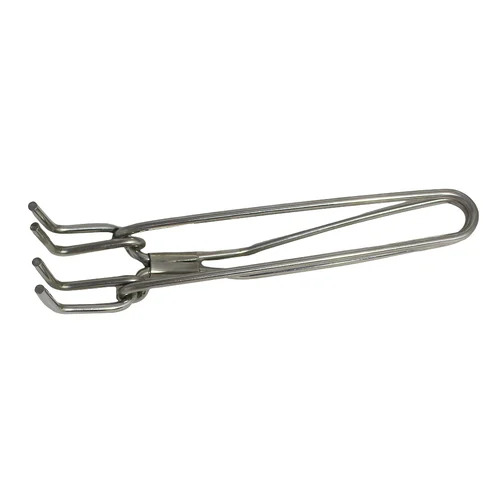
Standard stainless steel kitchen tongs with a spring mechanism and scalloped gripping ends are the highest-volume product. Made from SS304 grade sheet metal, these are the workhorses of every professional kitchen—used daily for turning, flipping, serving, and plating. They are manufactured by stamping, forming, and assembling two identical arms with a coil spring at the hinge end. This is the right starting product for a new MSME manufacturer because the forming process is straightforward, the raw material is widely available, and the buyer universe—from local restaurants to institutional canteens to export buying houses—is accessible.
Silicone-tipped stainless steel tongs add food-safe silicone tips on the gripping ends, protecting non-stick cookware from scratching and providing better grip on certain food types. These require an additional silicone tip moulding or purchasing operation, adding process complexity but delivering better margins in the retail and modern trade channel where non-stick cookware is predominant.
Specialty and Commercial Categories
- Locking tongs incorporate a slide-lock mechanism on the spring that allows the tongs to be locked in the closed position for storage—a significant convenience feature for commercial kitchens and a strong selling point in retail. The lock mechanism requires additional component fabrication or procurement, but locking tongs consistently command 20–35% price premium over non-locking equivalents.
- Heavy-duty commercial tongs in larger lengths (40–60 cm) with heavier gauge material serve the restaurant grilling, BBQ catering, and industrial kitchen segment. Commercial tongs are a higher per-unit revenue product purchased by professional kitchens rather than households, with institutional supply contracts providing the most reliable revenue channel.
- Salad tongs with spoon-shaped ends serve the food service and catering buffet segment — restaurants, hotels, and caterers who serve salads, pasta, or buffet items use salad tongs in large quantities. The forming tooling for spoon-ended tongs is different from scalloped-end standard tongs but uses the same basic stamping and assembly process.
How Kitchen Tongs Are Actually Manufactured
The kitchen tongs manufacturing process is a precision sheet metal fabrication and assembly operation. What follows is the actual production sequence — not a generic metals description.
Raw material procurement starts with sourcing stainless steel sheet or coil in SS304 (or SS202 for economy grade) in the appropriate gauge — typically 0.8mm to 1.5mm depending on the tong’s intended strength class. Sheet surface quality — finish grade (mirror, brushed, or matte) — directly affects the aesthetic quality of the finished product and the amount of polishing labour required in finishing.
Blanking and stamping cuts the raw SS sheet into the tong arm blanks using a progressive die in a mechanical or hydraulic press, simultaneously stamping the scalloped or shaped profile of the gripping end in one or multiple press strokes. Progressive die tooling is the most efficient approach for high-volume production — the strip of steel advances through multiple die stages, with each stage adding one forming operation, until the finished tong arm profile exits the die.
Forming and bending shapes the stamped blank into the three-dimensional profile of the tong arm — the slight curvature along the arm length, the angle of the grip end relative to the arm body, and the loop or pivot end that connects the two arms. Forming dies in the press impart these shapes in controlled bending operations.
Spring selection and assembly positions the connecting spring between the two formed arms at the pivot end. The spring is the most critical functional component of the tong — it must provide enough return force to keep the tong open in the neutral position for easy one-hand operation, while not being so stiff that it tires the operator’s hand during extended use. Spring specifications — wire diameter, coil diameter, free length, and spring constant — must be matched to the tong arm geometry and intended use.
Riveting or spot welding permanently joins the two tong arms with the spring at the pivot point. Rivet quality — seating, tightness, and smooth finish on both faces — is a quality checkpoint that affects both function and appearance. For export-grade products, every rivet is inspected and any that show uneven seating or surface irregularity are rejected.
Grinding, polishing, and deburring removes sharp edges from the stamped and formed parts, smooths the arm surfaces to the target finish (mirror polish for premium products, brushed finish for commercial, matte for economy), and deburrs all punched holes and cut edges to eliminate any sharp points that would be a safety hazard in kitchen use.
Silicone tip fitting (for silicone-tipped models) presses or adhesive-bonds the silicone tips onto the grip ends. Silicone tip material must be food-safe certified — this documentation is required by FSSAI for food-contact products and by import compliance standards for export.
Quality inspection and packaging checks each completed tong pair for spring tension, arm symmetry, finish quality, rivet security, and correct opening width before packaging in individual polybags for institutional sup
What Your Sharda Associates Project Report Will Cover
Every kitchen tongs manufacturing project report from Sharda Associates is built around your specific product range, target market, and manufacturing scale. Here is what it covers.
The executive summary establishes your tong types — standard SS, silicone-tipped, locking, or commercial — production capacity in pairs per day, target customer segments (institutional direct supply, wholesale distribution, export), and loan requirement. The promoter profile covers your background and any sheet metal, fabrication, or kitchenware experience.
The product description covers your tong specifications, size range, material grade, finish standard, and packaging format for retail versus institutional versus export supply. The market analysis covers India’s kitchen tools market, the institutional and export opportunity, and regional competitive landscape near your manufacturing location
Financial Sections That Determine Your Loan
The manufacturing process covers your complete production flow — blanking, stamping, forming, assembly, polishing, and packing — with machinery requirements and quality control. The machinery section covers the mechanical or hydraulic press with progressive die, forming tools, deburring equipment, polishing machinery, spring loading equipment, and inspection tools — with specifications, output capacity in pairs per shift, and cost.
The raw material section covers SS sheet or coil (the primary cost input at typically 40–55% of production cost), springs, rivets, silicone tips if applicable, and packaging — with quantities, costs, and suppliers. The project cost statement covers all investment. Financial projections model your output per shift, selling price by product type and channel, gross margin across domestic wholesale and export, and net profit over 5 years. Break-even analysis, loan repayment schedule with DSCR, and compliance checklist complete the document.
Why Choose Sharda Associates
- Progressive Die Tooling Cost Modelled Correctly — Die tooling is the single largest capital decision in tongs manufacturing. We include it correctly in the project cost, not as a generic “tooling” line that banks question.
- Institutional and Export Revenue Both Documented — We model both the domestic institutional supply channel and the export channel with realistic pricing and volume assumptions — giving your bank a complete revenue picture.
- CA-Certified, Bank-Accepted — Signed by Chartered Accountants, accepted by SBI, PNB, Bank of Baroda, and all major banks.
- 45,500+ Reports Delivered — Including stainless steel, kitchenware, and metal fabrication units across India.
- 24–48 Hour Delivery — Starting at ₹2,999; revision if your bank requests any changes.
- SS Price Sensitivity Addressed — Stainless steel price volatility is the main raw material risk. We model it in the projections so your bank’s risk assessment is satisfied.
Frequently Asked Questions
A CA-certified document covering your manufacturing process, stamping and forming machinery, raw material plan, investment cost, 5-year financial projections, and complete loan documentation required by banks and schemes like PMEGP, MUDRA, and CGTMSE for stainless steel or silicone kitchen tongs manufacturing units.
A unit producing 500–1,500 pairs per day requires ₹20–55 lakh covering press and die tooling, deburring and polishing equipment, spring assembly jigs, packing machinery, SS sheet stock, and working capital. The press with tooling is typically the largest single cost item.
The progressive die design and quality. A well-designed progressive die produces accurate, burr-free tong arm blanks at high speed — directly determining your per-pair production cost and output quality. Cutting corners on die quality results in higher rejection rates and more polishing labour, both of which erode your margin.
Stainless steel sheet or coil — typically SS304 for food-grade quality or SS202 for economy grade — in 0.8mm to 1.5mm gauge. Springs (SS spring wire), rivets, and silicone tips for silicone-tipped models are secondary components. SS sheet is typically 40–55% of total production cost.
Yes, for units with project cost up to ₹50 lakh with 15–35% non-repayable subsidy. Larger units are better structured under CGTMSE or bank MSME term loans.
25–30% gross for wholesale distribution of standard SS tongs. 32–40% for silicone-tipped and locking models through retail and e-commerce. 30–38% for export supply at 50–80% premium over domestic wholesale pricing.
Hotels, restaurants, hospital canteens, railway and airline catering contractors, industrial canteens, and catering companies for institutional supply. Kitchenware wholesalers and distributors for retail supply. Export buying houses in Mumbai, Rajkot, and Chennai for international markets.
Yes, actively. Indian stainless steel kitchen tools are exported to Europe, the US, Australia, and the Middle East. Export requires Import Export Code, food-contact material compliance documentation for the destination market, and consistent quality to pass buyer inspection.