
Project Report for Mono Pump Sets
Sharda Associates prepared project studies for hundreds of pump and irrigation equipment manufacturers in India, and mono pump sets continue to be one of the most popular items due to its use in agricultural irrigation, home water delivery, and industrial water transfer. With over 45,500 completed project reports, we create CA-certified mono pump set manufacturing project reports for PMEGP and MSME bank financing. Beginning at ₹2,999.
Get free Sample
What Is an Mono Pump Sets
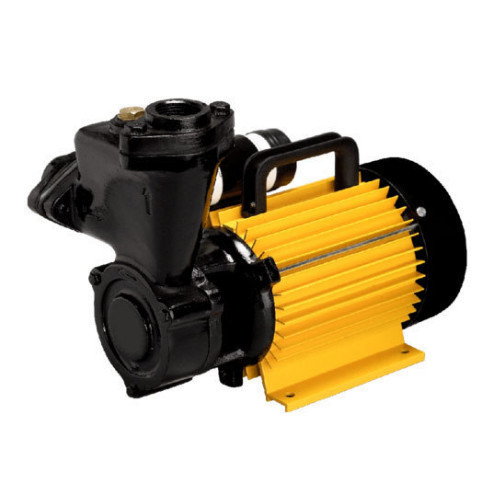
A mono pump set, also known as a monoblock pump, is a centrifugal pump in which the pump impeller is directly mounted on an extended motor shaft, with the pump and motor housed as a single integrated unit (as opposed to a coupled pump set, in which the pump and motor are separate units connected by a coupling and mounted on the same base). This integrated design makes monoblock pumps more compact, easier to install, and less expensive than coupled alternatives for small-to-medium capacity applications, which is why they dominate India’s agricultural irrigation pump industry.
Mono pump sets are critical to India’s agricultural economy; the great bulk of the country’s groundwater-irrigated agriculture is irrigated using electric or diesel-powered pump sets that lift water from borewells, open wells, and surface water sources to fields. Aside from agriculture, mono pump sets are utilized for domestic water delivery (overhead tank filling, borewell water lifting for homes), minor industrial water transfer applications, and building site dewatering.
Types of Mono Pump Sets a Manufacturing Unit Can Produce
Agricultural Monoblock Pump Sets (0.5 HP–10 HP): Single-phase and three-phase electric monoblock pumps in the typical horsepower range used for open-well and borewell irrigation are the main product for India’s irrigation market. the product category with the biggest volume, whose demand is closely linked to India’s cycle of new connections and agricultural pump replacement.
Self-Priming Monoblock Pumps: Specifically beneficial for surface water sources (open wells, ponds, and canals) when the water level varies, these pumps are made to pull water from a source below the pump level without requiring manual priming every time. A typical variation for home and agricultural use.
Openwell Submersible Monoblock Pumps: This hybrid design, which suspends the pump-motor unit in the well water (submersible) while maintaining the monoblock (integrated) construction, is ideal for open wells with variable water levels. This category is becoming more and more popular as groundwater levels in many areas necessitate deeper or more adaptable pumping arrangements.
Domestic/Pressure Booster Monoblock Pumps: Smaller capacity pumps (usually less than 1 HP) for domestic water delivery, including pressure boosting for upper-floor water supply in multi-story residential structures and filling overhead tanks. an expanding market due to the rise in residential construction in India.
Industrial/Dewatering Monoblock Pumps: Generally more powerful and resilient than agricultural-grade pumps, these larger capacity devices are used for dewatering construction sites, minor industrial water transfers, and similar purposes.
Bronze/Gunmetal Impeller Variants: Although they are more expensive than cast iron, bronze/gunmetal impellers are a quality differentiator for premium product lines in applications involving corrosive water (high mineral content, brackish water) or where a longer impeller life is necessary.
Market Demand — Why Mono Pump Sets Manufacturing Is Bankable
Agricultural Irrigation — The Primary Market: Groundwater irrigation via pump sets is heavily used in India’s agricultural sector, accounting for a sizable portion of the overall irrigated land area. This generates massive base demand: new agricultural connections (as electrification and groundwater access expand), and a large and continuous replacement market.
Government Agricultural Subsidy Schemes: Many states’ electricity boards and agriculture departments run subsidy programs for agricultural pump sets, particularly energy-efficient pump models (as part of larger agricultural energy efficiency initiatives), resulting in policy-linked demand pulses that pump manufacturers supplying to dealer networks benefit from.
PM-KUSUM and Solar Pump Linkage: India’s solar agricultural pump programme (PM-KUSUM) is driving a shift toward solar-powered pump sets. While this primarily affects pump-motor combination specifications (DC motors for solar vs AC for grid), the underlying pump (hydraulic end) design principles overlap with conventional monoblock pumps. Manufacturers with pump casting/machining capability can expand into solar pump end manufacturing as a growth segment.
Residential Construction Growth: India’s residential construction, particularly multi-story buildings that require pressure boosting and overhead tank systems, creates consistent demand for smaller domestic monoblock pumps, which have different demand dynamics than agricultural pumps (less seasonal, less subsidy-dependent).
Replacement and Dealer Network Demand: Pump sets are primarily sold through agricultural equipment dealers, electrical/hardware stores, and, for domestic-segment products, e-commerce — the primary distribution model is a manufacturer’s relationship with dealer networks.
Project Cost for Mono Pump Set Manufacturing Unit
Cost Component | Small Unit (₹) | Medium Unit (₹) |
Casting arrangement (foundry/outsourced) | 1,50,000–3,00,000 | 4,00,000–8,00,000 |
CNC/precision machining centre | 4,00,000–8,00,000 | 9,00,000–18,00,000 |
Impeller balancing equipment | 80,000–1,50,000 | 1,50,000–3,00,000 |
Testing rig (performance/pressure testing) | 1,00,000–2,00,000 | 2,00,000–4,00,000 |
Motor sourcing (per unit, outsourced) | — | — |
Cast iron/bronze raw material + assembly (3 months) | 2,00,000–4,00,000 | 4,00,000–8,00,000 |
Working capital | 1,50,000–2,50,000 | 2,50,000–5,00,000 |
Total Project Cost (excl. motor) | ₹10.80–21 lakh | ₹23–46 lakh |
PMEGP: Up to ₹50 lakh → 15–35% capital subsidy.
Manufacturing Process
Casting: The pump casing (volute) and impeller are made of cast iron for ordinary agricultural pumps, bronze/gunmetal for corrosion-resistant impeller versions. For MSME-scale enterprises, casting is often outsourced to a foundry, while machining is completed in-house.
Precision machining: Cast components are machined on lathes or machining centres to provide the precise internal clearances between impeller and casing that influence pump efficiency — too much clearance reduces efficiency (water recirculation losses), while too little clearance causes contact/wear.
Impeller balancing: The impeller, which rotates at motor speed (usually 2,800-3,000 RPM for normal motors), must be dynamically balanced; an unbalanced impeller results in vibration, bearing wear, and noise.
Shaft and bearing assembly: The pump shaft (which extends from the motor in the monoblock design) and bearing arrangement are fitted with proper seals to prevent water from entering the motor.
Motor integration: The supplied electric motor (single-phase or three-phase, depending on the pump rating) is integrated with the pump end; the monoblock design necessitates careful alignment of the motor shaft extension and pump impeller mounting.
Performance testing: Each unit (or batch-sampled units) is tested on a test rig for flow rate vs head performance, ensuring that it matches the rated performance curve — this is the core quality verification for a pump product, as buyers (and subsidy schemes) specify performance by flow rate (LPM/LPH) at specified head.
Painting and packaging: Units are painted to preserve the cast iron components from corrosion and packed for distribution to dealers.
What Our Mono Pump Set Project Report Covers
- Product line: agricultural monoblock (different HP), self-priming, openwell submersible monoblock, domestic/booster, industrial dewatering, bronze impeller variations.
- Casting (in-house or outsourced), precise machining, impeller balancing, motor integration, and performance testing.
- Motor sourcing is accurately considered as a per-unit outsourced cost, not capital investment.
- Source raw materials, including cast iron and bronze/gunmetal casting supplies.
- Machinery list with supplier quotation references
- Performance testing rig: specification and IS 8034 compliance notice.
- Installed capacity and a 5-year utilization plan
- Market analysis: agriculture dealer network, subsidy-linked demand, residential/domestic, and PM-KUSUM solar pump extension.
- Revenue forecasts based on HP rating and variant, including CMA data, DSCR over 1.25, and PMEGP employment generation. · Repayment schedule
Why Choose Sharda Associates
- 45,500+ Project Reports Delivered – Significant experience with pump, motor, agricultural equipment, and PMEGP project reports.
- Motor Sourcing Properly Cost – Electric motors are regarded as per-unit raw material expenses, resulting in realistic financial estimates.
- Impeller Material Selection Covered: Cast iron and bronze impeller options are recorded based on target market and pricing strategy.
- Pump testing standards and IS 8034 compliance considerations are adequately covered.
- Casting Strategy Evaluated – Advice on outsourcing castings versus developing an in-house foundry for cost savings.
- PM-KUSUM Growth Opportunity Identified – A potential expansion into solar pump production has been identified as a source of future business growth.
- DSCR Verified Above 1.25 – Financial estimates evaluated before delivery to facilitate bank loan and subsidy approvals.
- Starting at ₹2,999 · 24–48 hours
📞 +91 89899 77769 | All India service
Frequently Asked Questions
A mono pump set (monoblock pump) is a centrifugal pump in which the impeller is directly mounted on an extended motor shaft, with the pump and motor forming a single integrated unit, as opposed to a coupled pump set, in which the pump and motor are distinct units connected by a coupling on a shared base. The monoblock design is more compact, easier to install, and less expensive for small-to-medium capacity applications, therefore it dominates India's agricultural irrigation pump market.
Yes. Pump and agricultural equipment manufacture is eligible for PMEGP capital subsidies of 15-35% for projects up to ₹50 lakh. CA-certified KVIC format project report with employment generating section required. Sharda Associates provides PMEGP project reports for mono pump set production, starting at ₹2,999.
The electric motor (single-phase or three-phase, suited to the pump's HP rating) is acquired from known motor manufacturers rather than being built in-house, much like engines in other equipment categories. The motor is the largest single per-unit cost component, and the financial model accurately reflects it as a sourced raw material cost rather than a capital investment.
Cast iron impellers are the most common and cost-effective alternative for ordinary agricultural water (clean groundwater). Bronze/gunmetal impellers are more expensive but have substantially superior corrosion resistance, which is crucial for brackish water, mineral-rich water, or situations where impeller longevity is critical. The choice is based on product positioning: cast iron for standard/economy agricultural pumps and bronze for premium/corrosive-water applications.
IS 8034 is the Indian Standard for rotodynamic pumps (centrifugal pumps), and it specifies performance testing methods and acceptance criteria. Pump performance is defined as flow rate (LPM/LPH) at a specified head (metres), and IS 8034 provides a standard testing methodology for determining whether a pump meets its rated performance curve. Compliance with relevant IS standards increases a manufacturer's credibility with dealers, agricultural agencies, and subsidy programs that need performance criteria.
Cast iron for the pump casing (volute) and standard impellers is commonly acquired from foundries as cast components that require precision machining. Corrosion-resistant impellers are made of bronze or gunmetal. Stainless steel shafts. Mechanical seals and bearings are sourced components. The electric motor is purchased individually as a per-unit input.
Agricultural equipment dealers (the primary distribution channel, providing farmers with irrigation pump sets, both new and replacement), electrical and hardware stores (domestic/booster pump segment), construction equipment suppliers (dewatering pump segment), and, increasingly, e-commerce for smaller domestic pumps. Direct-to-farmer sales are unusual, and dealer network partnerships are the primary distribution model.
PM-KUSUM is India's initiative to promote solar-powered agricultural pumps, with incentives for solar pump installations to minimize reliance on grid electricity and fuel for irrigation. Solar pumps have different motor types (usually DC or solar-compatible AC motors) than ordinary grid-connected monoblock pumps, but the pump (hydraulic) end design is very similar. Manufacturers who have casting and precise machining capabilities for pump ends can expand into solar pump end manufacturing as a growing segment as the scheme grows.
Agricultural monoblock pumps for borewell and open-well irrigation typically vary from 0.5 to 10 horsepower, with 1 HP, 2 HP, 3 HP, and 5 HP being the most popular ratings for small and medium agricultural holdings. Domestic/booster pumps are typically under 1 horsepower. Higher horsepower units (over 10 HP) enter industrial/larger agricultural applications, frequently using linked rather than monoblock designs.