
Project Report for Oil Filter Machine
The global waste oil market is expected to increase from USD 15.22 billion, and every plant, transformer station, and hydraulic system in India requires oil purifying equipment to function properly. It is not a single product line, but rather the manufacturing of industrial machinery. Sharda Associates, which has delivered over 45,500 CA-certified project reports, provides oil filter machine manufacturing project reports in 24-48 hours. Starting at Rs. 2,999.
Get Your Report
What Does an Oil Filter Machine Manufacturing Business Actually Involve?
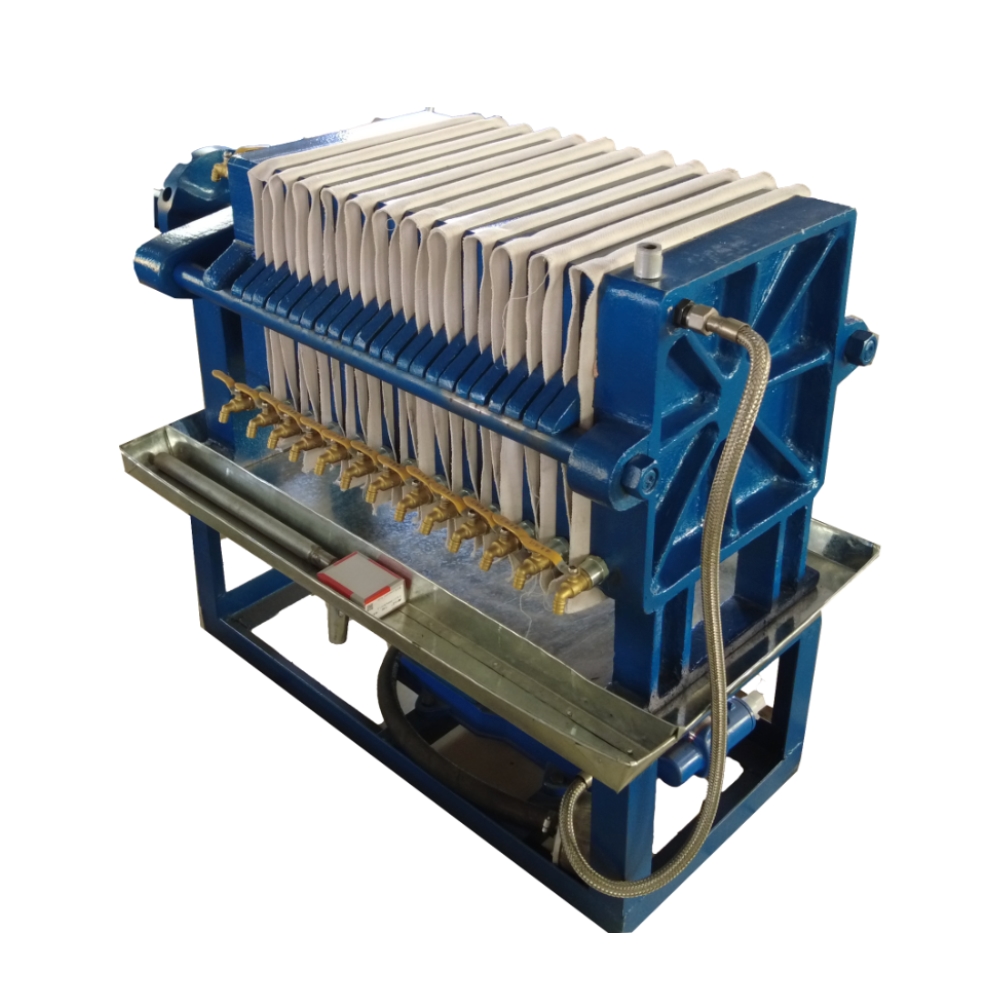
An oil filter machine, also known as an oil purifier or oil filtration plant, is a piece of industrial equipment that removes water, dirt, sludge, and particulate contamination from previously used oils such as hydraulic oil, lubricating oil, transformer/insulating oil, turbine oil, gear oil, and similar industrial fluids.
At the MSME scale, this business often produces equipment throughout a capacity range, because buyers from small workshops to major industrial plants:
Portable/compact units (5-25 LPM; liters per minute). Smaller single-stage purifiers, either cart-mounted or hand-held, are used in smaller factories, workshops, and laboratories for routine hydraulic and lubricating oil filtration.
Mid-capacity multistage plants (50-100 LPM). Two- or three-stage filtration systems for higher viscosity fluids and heavier contaminant loads are sold to mid-sized manufacturing units, workshops, and smaller power plants.
Heavy industrial systems (more than 200 LPM) and specialist purifiers. Transformer oil purification (which requires vacuum dehydration to remove dissolved moisture and gas, in addition to particulate filtering), turbine oil cleaning systems for power plants, and large-scale used oil recycling/distillation operations.
How Does This Business Actually Make Money?
Pricing varies greatly by capacity and capabilities, thus a realistic project report should anchor revenue in your actual planned product range rather than a single average price. A modest portable device (5-25 LPM, particle filtering only) typically costs Rs. 1.5-4 lakh. A mid-capacity multi-stage plant (50-100 LPM) sells for Rs. 4-12 lakh. A heavy industrial system or transformer oil purifier with vacuum dehydration (200+ LPM or specialized transformer/turbine application) costs between Rs.15-50 lakh and more, depending on capacity and customization.
income calculation (small manufacturer focusing on portable and mid-capacity units): 4 portable units/month at Rs.2.8 lakh average + 2 mid-capacity plants/month at Rs.7.5 lakh average = Rs.26.2 lakh/month total income.
This is significantly different from a high-volume consumer product business; oil filter machines are low-volume, higher-value capital equipment sales, frequently built to order or with moderate customization per buyer (specific viscosity range, flow rate, or contamination type), which alters both your working capital cycle and your revenue recognition pattern when compared to a standardised mass-manufactured product.
The motor and pump assembly (usually 25-35% of manufacturing cost), the filtration vessel and filter elements/cartridges (15-25%), and — for vacuum-capable systems — the vacuum pump and heating system (an additional 20-30% on top of the base filtration components) are the three most expensive components. The majority of the remaining budget is spent on steel fabrication for housing and plumbing.
What Equipment Does an Oil Filter Machine Manufacturing Unit Need?
- Metal fabrication setup includes cutting, welding, and bending. For the machine housing, oil tank/vessel, and structural frame, a basic fabrication setup that includes shearing, welding, and forming costs between Rs. 3 and 7 lakh.
- Pump and motor assembly station. Mounting and connecting the drive motor to the oil circulation pump costs between Rs. 1.5 and 3 lakh, with the motor and pump being purchased from established suppliers rather than being made in-house.
- Sourcing filter elements and cartridges, or producing them in-house. Most MSME manufacturers purchase filter cartridges and elements from specialist filtering media providers rather than creating the filter media themselves, which necessitates specialized non-woven and pleating capabilities. Budget for bought-out cartridge costs per machine rather than separate tooling investments, unless scaling into high volume justifies in-house filter media production in the future.
- Pressure and flow test rig. Before delivery, each machine must be tested at its rated flow rate and pressure—Rs.1.5-3 lakh for a simple testing equipment, ramping up for higher-capacity machine testing.
- Vacuum pump and heating system integration (only for transformer/turbine oil-capable models). This is the single most significant capital increase between a basic filtration machine manufacturer and one capable of serving the transformer oil market – an additional Rs.8-20 lakh in component and integration costs, depending on capacity range.
- Powder coating and painting line. For corrosion protection on the machine casing, the cost is Rs.1.5-3 lakh, which can be worked out on a job basis for lesser production volumes.
What Actually Separates a Manufacturer Buyers Trust From One They Don't
Two oil filter machine manufacturers using similar-spec motors and pumps can have quite different reputations among industrial buyers, and the difference is almost always based on actual filtering performance under real-world contamination loads rather than headline specs. A machine rated for a specific flow rate and pollution removal percentage that actually performs to that specification — preferably with real test results that the maker can show a buyer — establishes the kind of credibility that leads to repeat institutional orders. A machine that appears identical on paper but underperforms when dirty, viscous oil is pumped through it causes the type of buyer complaint that quickly kills a relationship with a factory’s maintenance department, because they are relying on your equipment to protect expensive machinery.
Dehydration efficiency — how much dissolved moisture the vacuum system really removes every pass — is the single parameter most thoroughly scrutinized by utility buyers in the transformer oil segment, because moisture content has a direct impact on a transformer’s insulation life and failure risk. A manufacturer that can provide consistent, validated dehydration performance has a significant competitive advantage in a market where buyers are extremely risk-averse.
A typical unit’s staff structure includes a production/quality supervisor (Rs.18,000-28,000/month), fabrication and assembly technicians (Rs.11,000-17,000/month), and a testing/dispatch helper (Rs.8,000-11,000/month).
Where Should You Set This Up, and Who Buys This Product?
Proximity to a steel fabrication supply chain and component suppliers (motors, pumps, vacuum systems) is important for cost and lead time; industrial clusters in Maharashtra (particularly Pune, which has several established oil purifier manufacturers), Gujarat, and parts of Tamil Nadu have relevant component and fabrication ecosystems.
This is primarily a B2B, direct-engagement sales business, not a retail or e-commerce offering. Buyers include manufacturing plants and workshops needing routine hydraulic and lubricant oil maintenance (the largest, most repeatable buyer segment), power utilities and substations for transformer oil purification (a smaller but higher-value segment requiring real technical credibility to win), and increasingly, used oil recycling operators as environmental regulation around used oil disposal tightens — a genuinely growing segment given the broader push toward circulation.
Compliance requirements include BIS and relevant industrial equipment safety standards, Udyam/MSME registration, GST registration, and, if entering the transformer oil purification segment, familiarity with the testing standards utilities expect (such as moisture content and dielectric strength benchmarks), as buyers will expect your equipment’s output to meet these standards consistently.
Where Should You Set This Up, and Who Buys This Product?
Proximity to a steel fabrication supply chain and component suppliers (motors, pumps, vacuum systems) is important for cost and lead time; industrial clusters in Maharashtra (particularly Pune, which has several established oil purifier manufacturers), Gujarat, and parts of Tamil Nadu have relevant component and fabrication ecosystems.
This is primarily a B2B, direct-engagement sales business, not a retail or e-commerce offering. Buyers include manufacturing plants and workshops needing routine hydraulic and lubricant oil maintenance (the largest, most repeatable buyer segment), power utilities and substations for transformer oil purification (a smaller but higher-value segment requiring real technical credibility to win), and increasingly, used oil recycling operators as environmental regulation around used oil disposal tightens — a genuinely growing segment given the broader push toward circulation.
Compliance requirements include BIS and relevant industrial equipment safety standards, Udyam/MSME registration, GST registration, and, if entering the transformer oil purification segment, familiarity with the testing standards utilities expect (such as moisture content and dielectric strength benchmarks), as buyers will expect your equipment’s output to meet these standards consistently.
What Will This Actually Cost You?
Setup | Capital Cost (Rs.) |
Small unit (portable and basic multi-stage filtration machines) | Rs.18-35 lakh |
Medium unit (mid-to-high capacity filtration plants) | Rs.35-65 lakh |
Unit with vacuum dehydration capability (transformer/turbine oil segment) | Rs.65 lakh-1.5 crore |
Mudra Tarun or PMEGP is primarily used by small and medium-sized businesses in the manufacturing sector, with PMEGP’s 15-35% capital subsidy enhancing the project’s return profile for first-time entrepreneurs. Given the higher capital requirements, a unit investing in vacuum dehydration capability for the transformer oil segment will most likely require an MSME term loan, which is frequently structured with CGTMSE collateral-free coverage for the eligible portion, or a Detailed Project Report for financing above the PMEGP ceiling.
Why Choose Sharda Associates for This Specific Business
- We’ve prepared over 45,500 CA-certified project reports, and oil filter machine manufacturing files have a specific credibility test that determines whether a bank takes the report seriously — whether it accurately reflects low-volume, higher-value capital equipment sales rather than mass-market product manufacturing.
- We base your revenue model on your actual product range and realistic monthly unit count, rather than a high-volume assumption that does not reflect how industrial capital equipment is sold. A handful of machines per month at meaningful unit value is the true pattern in this business, and we model it accordingly.
- If your plan contains the transformer oil part, the vacuum dehydration capability is accurately priced. This is a distinctly different and more expensive engineering capability than basic particulate filtering; a report that implies you can service transformer oil consumers without this component investment misrepresents your product capabilities to the bank.
- Component costs are itemised each manufacturing stage – fabrication, motor/pump assembly, filter elements, testing — rather than being rounded to a single figure, as a bank’s technical reviewer expects to see industrial equipment costed.
- Your B2B sales cycle and working capital requirements are properly calculated, taking into consideration the longer sales cycle and order-to-delivery lead time characteristic of built-to-spec industrial equipment, rather than assuming a fast-turnover retail cash cycle that is not applicable to this business.
- Before you even receive the report, DSCR is certified to be greater than 1.25, based on your true product mix and monthly unit volume — not an optimistic blend that might fail a bank’s own recalculation.
- Starting at Rs.2,999, we deliver in 24-48 hours.
Frequently Asked Questions
It manufactures industrial equipment, specifically oil purification/filtration devices that remove pollution from hydraulic, lubricating, transformer, and other industrial oils, as opposed to disposable vehicle oil filter cartridges. Revenue is generated by selling machines of various capacities, including portable units (Rs.1.5-4 lakh), mid-capacity plants (Rs.4-12 lakh), and heavy industrial or transformer-oil-capable systems (Rs.15-50 lakh+). A small producer selling a mix of portable and mid-capacity units can earn approximately Rs.26 lakh per month from a small number of built-to-order devices.
An oil filter machine (also known as an oil purifier) is industrial capital equipment that a factory or power plant purchases once and then uses frequently to clean and extend the life of oil that is already in service. An automotive oil filter is a small, disposable cartridge that is installed into a vehicle's engine and replaced at regular service intervals. These are genuinely separate products, production methods, and businesses; a project report for one cannot be applied to the other.
A modest unit producing portable and basic multi-stage filtration devices normally requires Rs. 18-35 lakh. A midsize operation generating higher-capacity plants costs between Rs. 35 and 65 lakh. A vacuum dehydration unit required to serve the transformer and turbine oil purification segment costs between Rs.65 lakh and Rs.1.5 crore due to additional engineering and component expenditure.
Yes, small and medium-sized businesses often fit comfortably into PMEGP's manufacturing sector category, with loans of up to Rs.50 lakh and a 15-35% capital subsidy. Units investing in vacuum dehydration capability for the transformer oil segment frequently surpass the PMEGP limit and into MSME term loan or Detailed Project Report territory instead.
Basic filtering machines remove solid particle pollution (dirt, metal shavings, sludge) but do not remove dissolved moisture or gas from oil. Transformer oil purification necessitates vacuum dehydration, as dissolved moisture is the key quality concern for insulating oil and has a direct impact on a transformer's failure risk. A company whose machines only do particulate filtration cannot really serve transformer oil utility buyers, regardless of how the equipment is promoted – this must be clearly stated in any project report and business strategy.
Core components include the drive motor and oil circulation pump (typically purchased, accounting for 25-35% of manufacturing costs), the filtration vessel and steel housing (fabricated in-house), filter elements/cartridges (typically obtained from specialist filtration media suppliers), and, for vacuum-capable units, a vacuum pump and heating system. The remaining components include steel sheet and tubing for fabrication, as well as electrical components for motor control.
The largest buyer category consists of manufacturing plants and workshops that require routine maintenance filtration for hydraulic and lubricating oil. Power utilities and substations purchase specialised transformer oil purification equipment, a smaller but more profitable industry that requires good technical reputation to succeed. As environmental regulations surrounding used oil disposal tighten globally, used oil recycling operators are becoming a more important buyer category.
Actual filtration and dehydration performance under realistic contamination loads, not headline standards. A machine that underperforms when really unclean or moisture-laden oil passes through it raises major buyer trust concerns, as industrial customers rely on the equipment to protect expensive machinery or, in the case of transformer oil, prevent costly equipment failure. Verified, provable performance data provides a significant competitive edge in this industry.