
Project Report for Rubber Boot Manufacturing
Paddy farmers wade over flooded fields. Workers at chemical plants use them to protect themselves from acids. Construction workers utilize them on damp projects. Rubber boots – gumboots — have a steady, unglamorous, and massive market in India’s agriculture, industries, and construction sectors. Sharda Associates creates CA-certified rubber boot project reports and has delivered over 45,500 of them. Starting at ₹2,999.
Get free Sample
What Is a Rubber Boot?
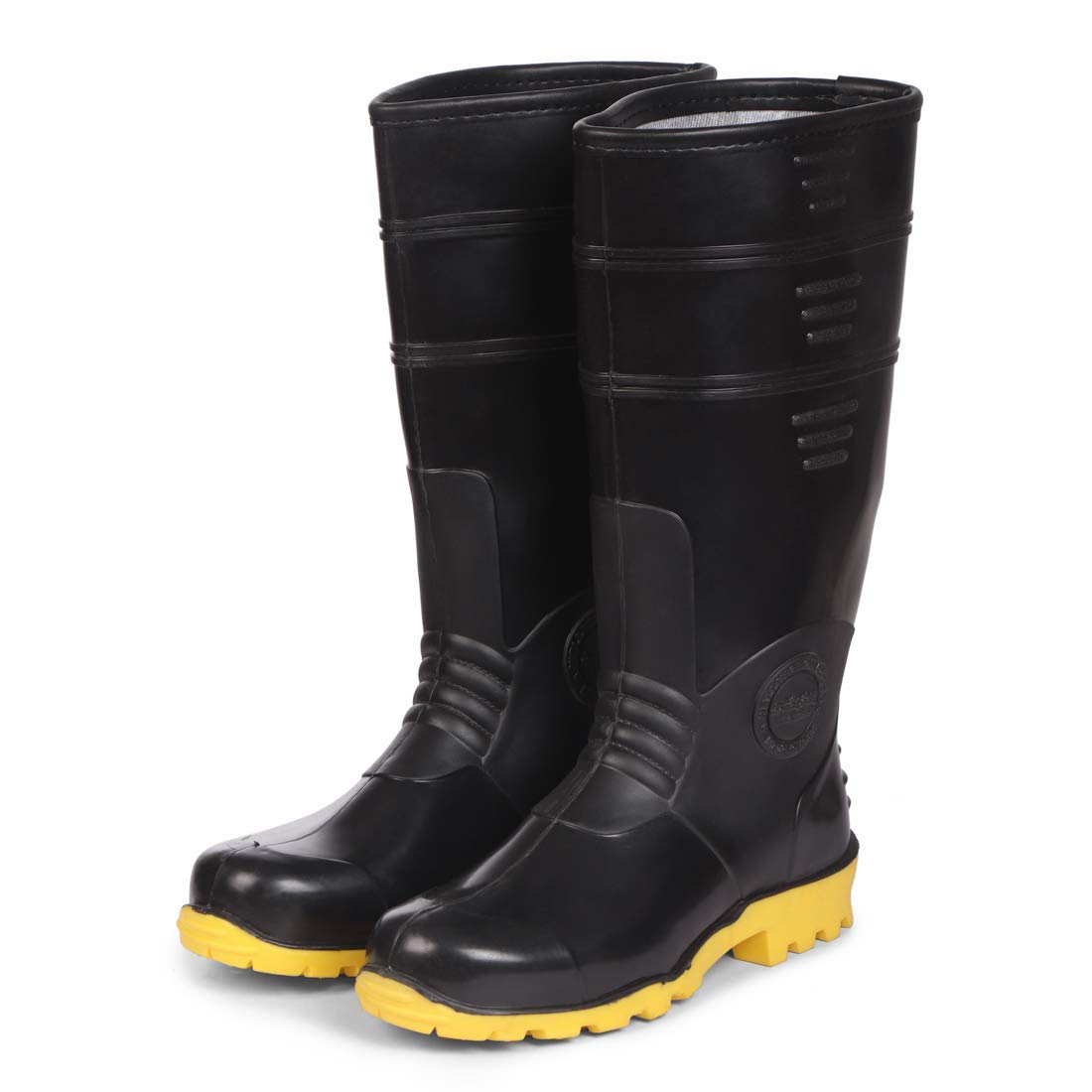
A rubber boot, also known as a gumboot, Wellington boot, or safety boot, is a waterproof boot made of natural or synthetic rubber (PVC/NBR) that extends to the mid-calf or knee height and is worn to protect against water, mud, chemicals, and slippery surfaces. In India, rubber boots are largely used as safety footwear for workers in chemical plants, food processing, agricultural irrigation, construction, and mining.
Rubber boots are widely utilized in various industries in India, including agriculture, construction, mining, food processing, fisheries, dairy plants, chemical manufacture, pharmaceuticals, and municipal sanitation. Workers rely on rubber boots to be safe and clean while working in damp, muddy, or hazardous conditions. To increase protection, many industrial-grade models include steel toe caps, anti-skid soles, puncture-resistant midsoles, and chemical-resistant linings.
Market Demand
India’s agriculture sector—15 crore+ farm holdings with paddy production requiring wading in flooded fields—is the single largest purchaser of rubber boots. Chemical facilities, food processing factories, fishing villages, municipal sanitation personnel, and building sites all increase industrial volume. Rubber boots are required as personal protective equipment in chemical and wet-process settings under government factory safety requirements. Export to the Middle East, Africa, and Southeast Asia is a significant market for Indian manufacturers.
Types of Rubber Boots
- Agricultural gumboot: mid-calf, natural rubber, basic protection—high volume, low price.
- BIS IS 5557 requires– Industrial safety boots to have a steel toe cap, a chemical-resistant sole, and midsole puncture protection.
- Premium acid-resistant– footwear made of NBR or neoprene for use in chemical plants.
- PVC boot: Synthetic PVC compound—lower cost than natural rubber, increasing economic segment.
- Knee-length fishing boot: For fishermen and paddy farmers—longer shaft.
- White food-grade boot: Natural rubber or PVC in white, required in food processing clean rooms.
Project Cost for Rubber Boot Manufacturing
Component | Small Unit (₹) | Medium Unit (₹) |
Boot vulcanisation moulds (steel moulds per size) | 3,00,000–6,00,000 | 7,00,000–14,00,000 |
Rubber mixing mill | 1,50,000–3,00,000 | 3,00,000–6,00,000 |
Vulcanisation press | 2,00,000–4,00,000 | 5,00,000–10,00,000 |
Natural rubber / PVC compound (3 months) | 1,50,000–3,00,000 | 3,00,000–6,00,000 |
BIS IS 5557 testing + working capital | 1,50,000–2,50,000 | 2,50,000–5,00,000 |
Total | ₹9.50–18.50 lakh | ₹20.50–41 lakh |
PMEGP: 15–35% capital subsidy.
What Our Report Covers Product range,
- Our product line includes industrial safety rubber boots, PVC gumboots, agricultural rubber boots, mining boots, chemical-resistant boots, construction safety boots, waterproof work boots, and rain boots.
- Machinery and Equipment: Banbury Mixer, Rubber Mixing Mill, Injection Moulding Machine, Vulcanization Press, Trimming Equipment, Testing Instruments, Packaging Setup
- Compliance & Quality Standards – BIS standards, Industrial Safety Requirements, PPE Product Specifications, and Factory Compliance Requirements
- Revenue Projections – Product-specific pricing and sales projections for industrial, agricultural, construction, and consumer boot categories
- Financial projections include the profit and loss account, cash flow statement, balance sheet, and working capital assessment.
- CMA Data: Bank-format CMA Report for PMEGP, MSME, and Mudra Loan Applications.
- DSCR and Break-Even Analysis: Detailed assessment of project viability and loan repayment potential.
- Loan Repayment Schedule: EMI Calculations, Interest Projections, and Repayment Planning
Why Choose Sharda Associates
- 45,500+ reports — rubber products, safety equipment, PMEGP manufacturing
- BIS IS 5557 safety footwear certification was correctly incorporated, which is a vital compliance requirement for suppliers of industrial PPE, construction, mining, and manufacturing safety products.
- Natural rubber vs. PVC compound accurately cost – material selection has a substantial impact on manufacturing cost, durability, target market, and pricing.
- The product line is correctly split, with industrial safety boots, agricultural gumboots, mining boots, chemical-resistant boots, waterproof work boots, and rain boots projected separately.
- Manufacturing capacity was precisely matched with moulding and vulcanization output to avoid exaggerated revenue projections.
- Raw material costs are based on current pricing for natural rubber, synthetic rubber, PVC resin, plasticizers, chemicals, and packaging materials.
- Market research focuses on building businesses, industrial plants, mining operations, agriculture, government procurement, distributors, and export potential.
- Profitability analysis includes ROI, DSCR, break-even point, and cash flow estimates.
- Starting at ₹2,999 · 24–48 hours
📞 +91 89899 77769 | All India service
Frequently Asked Questions
A rubber boot manufacturing project report assists banks in evaluating company feasibility, machinery requirements, raw material costs, profitability, market demand, and payback capability. It is frequently required for PMEGP, MSME, Mudra Loan, and manufacturing finance applications prior to loan acceptance.
BIS IS 5557 certification is vital for industrial safety footwear used in construction, mining, industries, and infrastructure projects. Many institutional buyers require certified products, thus compliance is critical for market access, credibility, and long-term business success.
A rubber boot manufacturing facility normally requires rubber mixing mills, Banbury mixers, injection moulding machines, vulcanization presses, trimming equipment, testing devices, and packaging machinery. Proper equipment planning contributes to realistic production capacity and budgetary estimates.
Natural rubber and PVC compounds differ greatly in terms of cost, durability, flexibility, chemical resistance, and intended market applications. Accurate material selection and costing enhance product positioning, profitability estimates, and the overall trustworthiness of project financial projections.
The key raw materials include natural rubber, synthetic rubber, PVC resin, plasticizers, fillers, pigments, chemicals, reinforcement materials, and packaging supplies. Before they are final goods, these materials are mixed, moulded, vulcanized, finished, and tested.
Rubber boot production can be extremely profitable due to demand from agriculture, construction, mining, industrial safety, and consumer markets. Product quality, manufacturing efficiency, certification compliance, distribution channels, and effective raw material cost management are all critical for profitability.
A properly written project report indicates market demand, financial viability, machinery planning, profit projections, and repayment capacity. It enables lenders to precisely assess project risk and considerably increases approval chances under the PMEGP, MSME, and Mudra Loan schemes.
Banks may reject applications based on unrealistic sales estimates, wrong machinery costs, missing compliance expenses, inadequate market analysis, inaccurate working capital calculations, or insufficient financial documents. A detailed project report addresses these concerns while strengthening the financing application.