
Project Report for Safety Goggle Manufacturing
A Safety Goggle Manufacturing Project Report provides a detailed plan for setting up a personal protective equipment (PPE) manufacturing unit. The report covers safety goggle materials, moulding process, assembly, machinery, production capacity, quality requirements, project cost and financial projections. Sharda Associates prepares project-specific reports based on the proposed product design, capacity and investment plan.CA-certified safety goggle manufacturing project reports for PMEGP and MSME bank financing. Starting at ₹2,999.
Get Your Report
What Is a Safety Goggle?
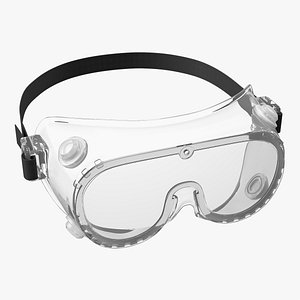
Safety goggles are protective eyewear designed to protect eyes from dust, chemical splashes, flying particles and workplace hazards. They are used in industries, laboratories, construction sites and manufacturing facilities.
A safety goggle is a type of personal protection equipment (PPE) that is worn over the eyes to guard against flying particles, chemical splashes, dust, bright light, and UV or infrared radiation in industrial, laboratory, and construction settings. Safety goggles differ from spectacle-style safety glasses in that they seal against the face, preventing particles or liquids from penetrating around the frame.
The Factories Act of India and its accompanying Rules require workers to wear proper eye protection when grinding, cutting, welding, handling chemicals, or doing other dangerous eye-exposure procedures. Compliance enforcement has improved dramatically, with mandated institutional procurement from all registered manufacturing facilities.
Raw Materials Used in Safety Goggle Manufacturing
- Polycarbonate lenses
- Plastic frames
- Rubber seals
- Elastic straps
- Anti-fog coating materials
- Packaging materials
Manufacturing Process of Safety Goggles
Steps:
- Plastic material preparation
- Injection moulding of frame
- Lens manufacturing/coating
- Assembly
- Quality inspection
- Packaging
Types of Safety Goggles a Unit Can Produce
- Indirect vent goggles: Hooded vents prevent chemical splash penetration in chemical labs and plants.
- Direct Vent Goggles: Open vents for air circulation in dusty situations and grinding.
- Anti-fog polycarbonate goggle: The treated lens avoids fogging in cold storage and food preparation.
- Welding goggle: Dark filter lens (shade 3-5)—for arc welding and gas welding.
- Chemical splash goggles: Fully sealed, flexible PVC frame, clear lens—lab and chemical sector.
- Over-spectacle goggle (OTG): Fits over prescription glasses; increasingly required.
- UV safety goggles: For UV lamp operators, cleanrooms, and outdoor industrial applications.
Project Cost for Safety Goggle Manufacturing
Component | Small Unit (₹) | Medium Unit (₹) |
Injection moulding machine (frame + lens) | 3,00,000–6,00,000 | 7,00,000–14,00,000 |
Lens coating setup (anti-fog, anti-scratch) | 80,000–1,50,000 | 1,50,000–3,00,000 |
Assembly fixtures + packaging | 30,000–60,000 | 60,000–1,20,000 |
Polycarbonate + PVC raw material (3 months) | 80,000–1,50,000 | 1,50,000–3,00,000 |
BIS + CDSCO/PPE testing + working capital | 1,50,000–2,50,000 | 2,50,000–5,00,000 |
Total | ₹6.40–11.60 lakh | ₹13.10–26.20 lakh |
PMEGP: 15–35% subsidy.
What Our Report Covers Product range,
- Product Range – Industrial Safety Goggles, Anti-Fog Safety Goggles, Chemical Splash Goggles, Welding Safety Goggles, UV Protection Goggles, Laboratory Goggles, Construction Safety Eyewear, and Medical Protective Goggles
- The manufacturing process includes polycarbonate lens molding, lens coating (anti-fog/anti-scratch), frame injection molding, elastic strap manufacturing, assembly, optical inspection, impact resistance testing, and packaging.
- Raw material analysis includes polycarbonate granules, PVC/TPR frame materials, elastic straps, lens coatings, packaging materials, and consumables.
- Machinery and equipment include injection molding machines, lens molding equipment, coating systems, assembly stations, testing instruments, and packaging machinery.
- Compliance and quality standards include BIS standards, PPE safety requirements, industrial safety specifications, impact resistance testing, and quality control procedures.
- Market Analysis for Construction Companies, Manufacturing Plants, Chemical Industries, Laboratories, Hospitals, Mining Operations, Government Procurement, and Export Opportunities
Why Choose Sharda Associates
- 45,500+ reports — PPE manufacturing, plastics, safety equipment PMEGP
- BIS IS 5983 compliance is accurately included—the most usually missing PPE certification.
- Export compliance (ANSI Z87.1, EN 166) is documented for export-oriented units.
- Profitability analysis includes ROI, DSCR, break-even point, and cash flow estimates.
- CMA Data and bank-ready financial statements are created for PMEGP, MSME, Mudra Loan, and manufacturing finance applications.
- Working capital assessment includes raw material inventory, production cycles, dealer credit periods, and operating expenses.
- Starting at ₹2,999 · 24–48 hours
📞 +91 89899 77769 | All India service
Frequently Asked Questions
A Safety Goggle Manufacturing Project Report explains the setup of a protective eyewear manufacturing unit, including raw materials, machinery, production process, investment and financial feasibility.
Safety goggles are manufactured through plastic moulding, lens processing, assembly, testing and packaging.
Polycarbonate lenses, plastic frames, rubber components and straps are commonly used.
Injection moulding machines, lens processing equipment, assembly tools and testing equipment may be required.
Safety equipment requirements depend on product type, application and applicable safety standards.
Manufacturing safety goggles can be very profitable due to increased worker safety awareness, industrial expansion, healthcare demand, and government procurement. Product quality, certification compliance, production efficiency, distribution channels, and effective raw material cost management are all critical for profitability.
A properly written project report indicates market demand, financial viability, machinery planning, profit projections, and repayment capacity. It enables lenders to precisely assess project risk and considerably increases approval chances under the PMEGP, MSME, and Mudra Loan schemes.
Banks may reject applications based on unrealistic sales estimates, wrong machinery costs, missing compliance expenses, inadequate market analysis, inaccurate working capital calculations, or insufficient financial documents. A detailed project report addresses these concerns while strengthening the overall loan application.