
Project Report for Spirit Level Manufacturing
Every bricklayer, carpenter, plumber, and tiler utilizes a spirit level on a regular basis, making them the most widely used measurement equipment in the construction industry. Demand is steadily rising due to India’s development boom. Sharda Associates develops CA-certified spirit level manufacturing project reports for PMEGP and MSME bank loans; the company has delivered over 45,500 project reports. beginning at ₹2,999.
Get Your Report
What Is a Spirit Level?
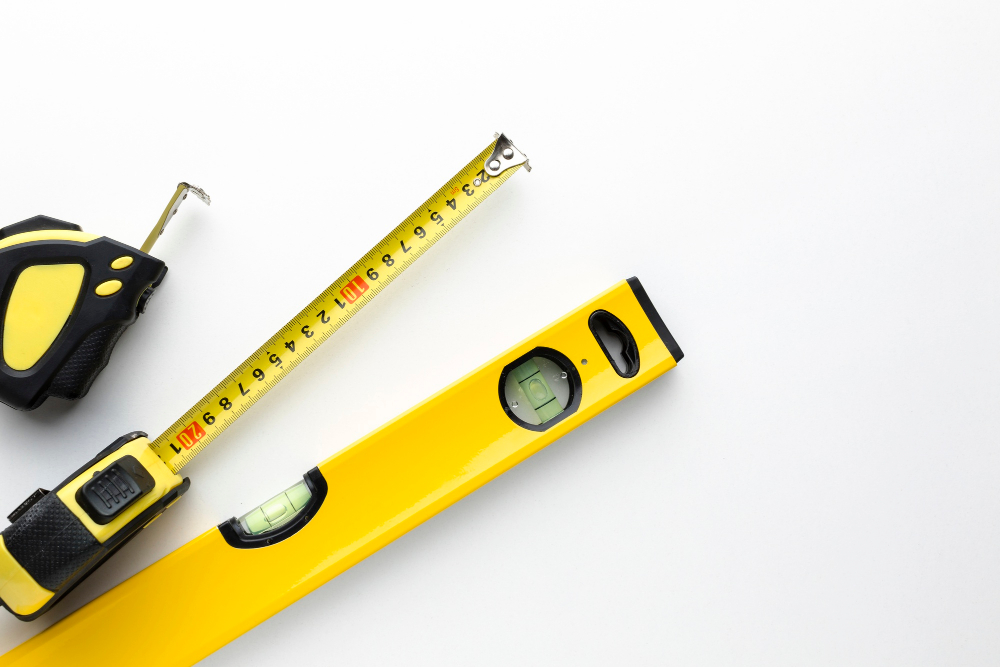
A spirit level, sometimes known as a bubble level or carpenter’s level, is a measurement tool used to ascertain if a surface or structure is actually vertical (plumb) or truly horizontal (level). It is made up of a clear vial that is slightly curved and half filled with a colored liquid (typically ethanol or a similar spirit, thus the name), leaving an air bubble. The surface is level or plumb when the bubble is centered between the two designated lines.
Every stage of building and installation uses spirit levels: bricklaying (checking course level), carpentry (checking door and window frames are plumb), flooring (checking tile and floor level), plumbing (checking pipe slopes are correct), electrical conduit installation (checking panel alignment), and furniture assembly. The device is a truly universal building tool because it is easy to use, doesn’t require batteries, is quickly readable, and is practically indestructible if made of aluminum.
A spirit level is an aluminum extrusion and assembly product from a manufacturing perspective. The vials are precisely molded from acrylic or polycarbonate, filled with colored liquid, then installed in machined pockets within the aluminum body, which has an extruded aluminum profile (I-beam or rectangular shape). The product is finished with rubber grip inserts and end caps.
Market Demand—Spirit Level Is a Construction Staple
Because development is ongoing in India, spirit levels are consumed continuously rather than in a boom-and-bust cycle. Important factors influencing demand:
Construction of homes and businesses: India adds 60–80 lakh new homes a year. Spirit levels are used at every stage of a project, including foundation preparation, bricklaying, flooring, painting, and carpentry. Usually, a site foreman has three to five different-length spirit levels.
Tiles and flooring industry: Spirit levels are continuously used in India’s organized tile laying and flooring installation sector, which is expanding with high-end residential buildings. Aluminum frame levels between 40 and 120 cm in length are preferred by professional tilers.
Plumbing and mechanical trades: Spirit levels are required for pipe slope checking, equipment installation levelling, and mechanical alignment. Industrial and commercial plumbing contractors utilize durable aluminum levels on a daily basis.
Electricians and panel installers: Level and plumb checks are necessary for the installation of cable trays, conduit lines, and electrical distribution boards.
Import substitution: China is a major source of spirit levels for India. Clear market access is available to domestic producers who can create aluminum-body levels that meet imported quality at competitive pricing, especially for the institutional and export channels.
Types of Spirit Levels a Unit Can Manufacture
Standard aluminum box level (30-120 cm): Body made of extruded aluminum I-section or box section, with 2-3 vials (horizontal, 45°, vertical). The most generally sold construction level. Various sizes range from 30 cm (little) to 120 cm (normal bricklayer) to 180-200 cm (long level for floors and walls).
Torpedo level (23-25 cm): A short, compact level that fits in a tool belt and is used by electricians, plumbers, and HVAC workers to perform fast checks in limited places. Magnetic variants (magnetic bases that stick to steel conduit and pipes) are a growing premium niche.
Digital level (inclinometer): LCD display that shows angle in degrees; utilized for precise slope adjustment in drainage, mechanical, and engineering applications. Premium category, expanding with infrastructural projects.
I-beam aluminium level: A stronger I-section profile for professional and contractor use, providing more rigidity over longer lengths.
Line level (string level): A small vial on a hook that clips into a string line, used by bricklayers to ensure horizontal alignment over long distances.
Project Cost for Spirit Level Manufacturing Unit
Cost Component | Small Unit (₹) | Medium Unit (₹) |
Aluminium extrusion press or outsourcing setup | 3,00,000–6,00,000 | 7,00,000–14,00,000 |
CNC machining centre (vial pocket machining) | 3,00,000–6,00,000 | 7,00,000–14,00,000 |
Vial filling and sealing setup | 50,000–1,00,000 | 1,00,000–2,00,000 |
Aluminium section raw material (3 months) | 1,00,000–2,00,000 | 2,00,000–4,00,000 |
Vials, end caps, labels, packaging | 50,000–1,00,000 | 1,00,000–2,00,000 |
BIS + quality testing + working capital | 1,50,000–2,50,000 | 2,50,000–5,00,000 |
Total Project Cost | ₹9.50–18.50 lakh | ₹21.50–41 lakh |
Note: Aluminium extrusion of the body profile can be outsourced from aluminium extruders in Ahmedabad, Pune, or Delhi for smaller units — significantly reducing the investment required and making smaller operations more viable.
PMEGP: Up to ₹50 lakh → 15–35% capital subsidy.
Manufacturing Process
Aluminium profile extrusion (or procurement): The spirit level body profile is Aluminium profile extrusion (or procurement): The spirit level body profile is made of 6063-T5 aluminum alloy, the typical construction-grade aluminum for extrusions. Profiles can be extruded in-house (which involves a considerable investment in an extrusion press) or acquired as cut-to-length parts from an extrusion supplier.
Cutting to length: Extruded profiles are trimmed to the appropriate level length using a precision cold-cut circular saw. Both ends must be square as specified.
Vial pocket machining: The precision pocket that holds the vial is milled using a CNC. The crucial quality operation is vial precision, which is determined by pocket angle and depth. The level’s reference faces must be precisely perpendicular to the horizontal vial pocket.
Production and filling of vials: Injection-molded acrylic or polycarbonate vials are filled with a calibrated amount of colored ethanol solution (leaving the proper bubble size) and sealed. Vials were examined for reference-level bubble centering accuracy.
Vial mounting: Vials are adhered or pressed into CNC-machined pockets in the proper orientation.
Grip assembly and end cap: Rubber or plastic end caps installed. Rubber or plastic side grips are installed to manage placements.
Marking and calibration check: Size and brand marking on the end face. Every level is verified on a precise reference flat; the bubble’s center must be within tolerance.
Painting, anodizing, and printing: The body surface is painted or anodized (natural or colored), and the brand and specs are printed.
What Our Spirit Level Project Report Covers
- Product selection: line levels, torpedo, digital, I-beam, and standard aluminum
- Profile sourcing and extrusion, CNC vial pocket machining, vial manufacture, assembly, and calibration comprise the manufacturing process.
- Evaluation of aluminum profiles: in-house versus outsourcing to Ahmedabad/Pune extruders
- Purchasing raw materials: 6063-T5 aluminum (aluminum wholesalers, Hindalco/Nalco agents)
- Choosing in-house molding or vial sourcing
- Installed capacity: daily units by size
- 5-year usage plan with a 60% start rate
- Market analysis: export, plumbing, electricians, tile manufacturing, construction hardware wholesale
- Estimates of revenue based on current wholesale prices (₹80–650 per unit per kind and length)
- CMA statistics · DSCR greater than 1.25 · creation of PMEGP jobs Schedule of repayment
Why Choose Sharda Associates
- Over 45,500 project reports, including those on PMEGP applications, aluminum manufacturing, and precision instruments, were delivered.
- The most important initial investment choice for spirit level producers is whether to outsource to Ahmedabad extruders or employ an internal press for aluminum extrusion.
- The level’s quality grade is determined by how well CNC vial pocket machining is described.
- Documented import substitution angle: pricing comparison between Chinese imports and domestic manufacturers
- ROI, DSCR, break-even point, cash flow forecasts, and working capital evaluation are all included in the profitability study.
- For PMEGP, MSME, Mudra Loan, and manufacturing finance applications, CMA data and bank-ready financial statements were created.
- Working capital planning includes dealer credit durations, production cycles, raw material inventories, and operating costs.
- Starting at ₹2,999 · 24–48 hours
📞 +91 89899 77769 | All India service
Frequently Asked Questions
The 6063-T5 aluminum alloy used to extrude the body offers the strength, light weight, corrosion resistance, and machinability required for precision construction tools. The vials are filled with colored ethanol solution after being injection-molded in acrylic or polycarbonate. Rubber or ABS are used for grip inserts and end caps.
Indeed. Manufacturing of construction equipment and precision tools is eligible for a 15–35% PMEGP capital subsidy on projects up to ₹50 lakh. Project reports in the CA-certified KVIC format are required.
The precision of the vial pocket CNC machining process. For horizontal levels, the pocket needs to be precisely perpendicular to the reference sides of the level; for plumb vials, it needs to be parallel. The level will read wrongly if the pocket angle is even 0.1° off, making the device useless and damaging the brand's reputation. The calibration of each unit needs to be confirmed.
25 cm small torpedo level: ₹80–150 at wholesale. ₹180–320 is the standard aluminum level (60 cm). Professional level: ₹350–550 (120 cm). ₹500–800 at the long level (180 cm). Digital inclinometer/level: ₹800–2,500. ₹250–450 magnetic torpedo.
Tile and flooring material dealers, distributors of hardware and construction tools (wholesale distribution to builders' merchants and shops), distributors of electrical and plumbing equipment, e-commerce sites (Amazon, Flipkart—consistently high-volume category), and export buyers in the Middle East, Africa, and Southeast Asia through tool export houses.
Indeed. Government agencies, railroads, military facilities, and public sector construction firms purchase spirit levels and construction measuring equipment via the GeM portal. The two main prerequisites for GeM listing are MSME registration and affordable pricing.
Applications with unrealistic sales expectations, faulty working capital calculations, poor market analysis, inaccurate machinery costing, or insufficient financial paperwork may be rejected by banks. A thorough project report resolves these issues and improves the loan application as a whole.
starting at ₹2,999 and shipping within 24 to 48 hours. PMEGP format, CNC machining specifications, and a make-versus-buy analysis of aluminum extrusion are all included. Give +91 89899 77769 a call.