
Project Report for Vernier Caliper Manufacturing
A Vernier Caliper Manufacturing Project Report provides a detailed plan for establishing a precision measuring instrument manufacturing unit. The report covers raw materials, component manufacturing, machining process, calibration, machinery, production capacity, project cost and financial projections. Sharda Associates prepares project-specific reports based on the proposed product range and manufacturing requirements. Sharda Associates creates CA-certified vernier caliper manufacturing project reports and has delivered over 45,500 of them. Starting at ₹2,999.
Get Your Report
What Is a Vernier Caliper?
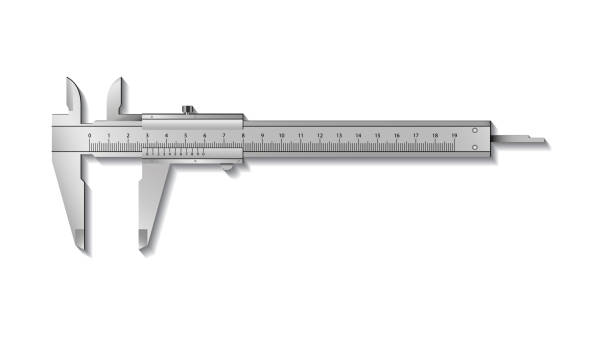
A vernier caliper is a precision measuring instrument used to measure internal dimensions, external dimensions and depth with higher accuracy than ordinary measuring tools. It is commonly used in engineering workshops, manufacturing industries, laboratories and mechanical applications.The tool is made up of a primary scale and a sliding jaw assembly, which includes a vernier scale (or digital display) for fractional measurements.
Vernier calipers are utilized in all production environments, including machine shops (to check turned/milled dimensions), quality inspection (to measure incoming and outgoing parts), tool rooms, ITI training workshops, and laboratories. Digital vernier calipers with LCD displays have mostly supplanted traditional vernier scale reading in production situations, but both types are still marketed.
Raw Materials Used in Vernier Caliper Manufacturing
- Stainless steel
- Carbon steel
- Aluminum alloys
- Measurement scale components
- Sliding mechanism parts
- Screws and fasteners
Manufacturing Process of Vernier Caliper
Steps:
- Metal cutting
- Machining of jaws and body
- Scale marking/graduation
- Surface finishing
- Assembly of sliding mechanism
- Calibration testing
- Packaging
Types of Vernier Calipers
- Vernier caliper (traditional): Vernier scale reading, stainless steel, 150mm/200mm/300mm range—the most widely made.
- Digital vernier caliper: LCD digital display, battery powered—growing majority of the market.
- Dial caliper: Dial gauge display instead of vernier—preferred for quick reading in production.
- Digital depth gauge: Depth measurement only; used in machining.
- Inside and outside: Calipers are traditional curved-leg measurement tools.
- Height gauge: Precision height measurement on the surface plate.
Project Cost for Vernier Caliper Manufacturing
Component | Small Unit (₹) | Medium Unit (₹) |
Precision grinding machine (surface + jig) | 5,00,000–10,00,000 | 12,00,000–25,00,000 |
CNC milling machine (jaw machining) | 8,00,000–15,00,000 | 18,00,000–35,00,000 |
Measuring and calibration equipment | 2,00,000–4,00,000 | 4,00,000–8,00,000 |
SS 440C stainless steel bar stock (3 months) | 1,00,000–2,00,000 | 2,00,000–4,00,000 |
Assembly room + working capital | 2,00,000–3,50,000 | 3,50,000–6,00,000 |
Total | ₹18–34.50 lakh | ₹39.50–78 lakh |
PMEGP: Small unit within ₹50 lakh — 15–35% subsidy.
What Our Report Covers Product range
- Our product line includes standard vernier calipers, digital vernier calipers, dial vernier calipers, stainless steel calipers, depth vernier calipers, precision measuring instruments, and industrial inspection calipers.
- Manufacturing process: Stainless steel procurement, CNC machining, precision grinding, scale engraving, heat treatment, surface finishing, assembly of jaws and sliding mechanism, calibration, accuracy testing, and packaging.
- Raw material analysis includes stainless steel, tool steel, digital display components, electronic circuits, fasteners, calibration standards, and packaging materials.
- Market Analysis for Engineering Workshops, Automobile Manufacturers, Tool Rooms, Educational Institutions, Quality Inspection Labs, Industrial Plants, and Export Opportunities
- Revenue Projections – Product-specific pricing and sales predictions for manual, digital, and precision measurement instruments
- Financial projections include the profit and loss account, cash flow statement, balance sheet, working capital assessment, ROI, and break-even analysis.
- CMA Data: Bank-format CMA Report for PMEGP, MSME, and Manufacturing Finance Applications
- DSCR Analysis: Detailed examination of debt servicing and loan repayment potential.
Why Choose Sharda Associates
- 45,500+ reports—precision engineering, metrology instruments, PMEGP
- Revenue Projections – Product-specific pricing and sales predictions for manual, digital, and precision measurement instruments
- Financial projections include the profit and loss account, cash flow statement, balance sheet, working capital assessment, ROI, and break-even analysis.
- CMA Data: Bank-format CMA Report for PMEGP, MSME, and Manufacturing Finance Applications
- DSCR Analysis: Detailed examination of debt servicing and loan repayment potential.
- Loan Repayment Schedule: EMI Calculations, Interest Projections, Moratorium Analysis, and Repayment Planning
- Bank-Ready Documentation: Ideal for PMEGP, MSME, Mudra Loan, and Precision Instrument Manufacturing Finance Applications.
- Starting at ₹2,999 · 24–48 hours
📞 +91 89899 77769 | All India service
Frequently Asked Questions
A Vernier Caliper Manufacturing Project Report is a complete business document that includes market analysis, machinery specifications, production processes, raw material requirements, financial projections, profitability analysis, and loan feasibility for bank financing and government subsidies.
A project report assists banks, investors, and government agencies in determining the technical feasibility, market demand, investment requirements, and repayment capability of a planned manufacturing enterprise.
Yes. A properly written DPR (Detailed Project Report) can be presented to banks for MSME loans, term loans, working capital constraints, and government-sponsored programs like PMEGP and Mudra.
Vernier calipers are frequently used in automobile production, aerospace, machine shops, metal fabrication units, educational institutions, and quality inspection laboratories to take exact dimensional measurements.
The main raw materials include stainless steel, alloy steel, engraving materials, calibrating components, packing materials, and finishing consumables.
Common machinery comprises CNC machines, grinding machines, milling machines, engraving equipment, polishing units, calibration instruments, and assembly tools.
The investment is based on production capacity, automation level, machinery choices, and working capital requirements. A complete project report includes accurate cost estimates and financial planning.
Yes. The manufacturing, quality control, engineering education, industrial automation, and precision machining industries are all expanding, driving up demand.