
Project Report for Voltage Tester Manufacturing
Every electrician in India has one. Every electrical panel installation, wiring job, and socket test needs one. Voltage testers are the most basic safety instrument in the electrical industry, and India’s development and electrification growth is fueling steady demand. Sharda Associates creates CA-certified voltage tester manufacturing project reports and has delivered over 45,500 of them. Starting at ₹2,999.
Get Your Report
What Is a Voltage Tester?
A voltage tester is a safety and diagnostic tool used by electricians, maintenance technicians, and electrical inspectors to determine the presence, absence, or approximate magnitude of electrical voltage in a circuit, socket, cable, or equipment without opening the circuit or coming into direct contact with live conductors.
Voltage testers function as both personal safety devices and diagnostic tools. An electrician who approaches an unknown circuit without first testing for live voltage faces a high risk of electrical shock. The voltage tester eliminates this risk by informing the operator in seconds whether a conductor is active or dead, allowing safe work to occur.
A voltage tester is a tiny electromechanical or electronic device that includes detection circuitry (resistive divider or capacitive sensor), indicator output (LED, buzzer, neon lamp, or LCD), a probe tip, and a casing. Professional-grade digital testers cost ₹500-3,000 to create and sell for ₹2,000-8,000. Simpler versions cost less than ₹100 to produce.
Types of Voltage Testers a Unit Can Manufacture
- Neon Screwdriver Tester (Mains Tester): The most basic form is a screwdriver handle with a neon bulb and a high resistance current-limiting resistor. When the user touches the probe to a conductor and their thumb to the cap, the neon illuminates indicating the presence of voltage.
- Noncontact Voltage Tester (NCVT): The most common professional-grade tester uses capacitive coupling to detect AC voltage fields without touching conductors. When introduced in close proximity to a live wire, socket, or switch without making direct contact, it emits beeps and lights. Much safer than probe-type testing. Growing quickly as professional electricians transition to non-contact detection. Battery-powered. Increasing e-commerce demand.
- Pen-Type Digital Voltage Indicator: A slim pen form factor with LED indicator of voltage range. Used for industrial panels and electrical inspections. Compact, clip-on pocket design.
- Plug-In Socket Tester: Inserts straight into a 3-pin socket and displays the wiring state – correct wiring, open ground, open neutral, or reversed polarity. Used by electrical inspectors and building commissioning teams. Large-scale institutional buy.
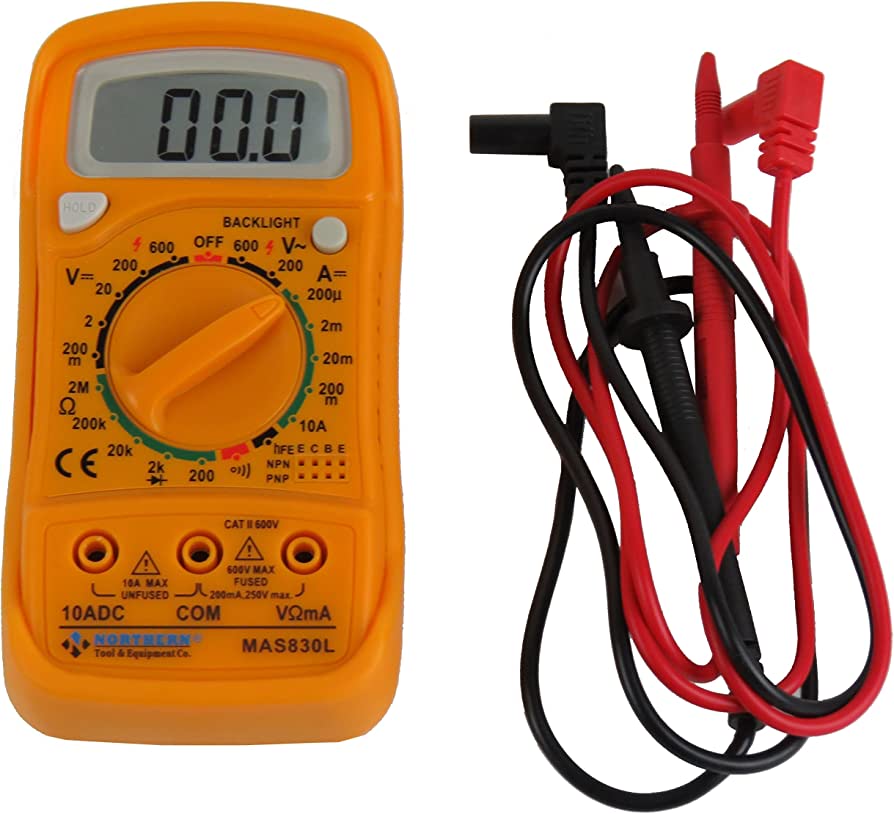
- Digital multimeter (combined): Measures voltage, current, and resistance simultaneously. greater-complexity products have greater unit values. Growing as a unified tool, replacing individual instruments.
Market Demand — Why Voltage Tester Manufacturing Is Bankable
The primary demand comes from the Indian electrical installation business. India installs around 80 lakh new residential units each year; each wiring installation necessitates voltage testing at several stages. The government’s PM Surya Ghar Muft Bijli Yojana is linking millions of households to solar rooftop systems, and solar installers include NCVTs as standard equipment.
India has almost 30 lakh licensed electricians. Each one utilizes a voltage tester on a daily basis and changes it every 1-2 years due to regular use. Non-contact voltage testers priced at ₹400-1,200 retail are one of the highest-reviewed electrical instrument categories on Amazon and Flipkart, indicating consistent strong consumer demand.
The import substitution opportunity is enormous. Imported Chinese and European brands serve a substantial percentage of India’s high-quality NCVT and digital tester markets. Domestic manufacturers who can match detection reliability and ergonomics at competitive prices have direct market access via electrical wholesale distribution.
Project Cost for Voltage Tester Manufacturing Unit
Cost Component | Small Unit (₹) | Medium Unit (₹) |
PCB assembly line + soldering station | 1,50,000–3,00,000 | 3,00,000–6,00,000 |
Housing injection moulding machine | 3,00,000–6,00,000 | 6,00,000–12,00,000 |
Component testing equipment | 60,000–1,20,000 | 1,20,000–2,50,000 |
Electronic components — ICs, LEDs, buzzers (3 months) | 1,00,000–2,00,000 | 2,00,000–4,00,000 |
BIS IS 15652 testing + certification | 1,00,000–1,50,000 | 1,00,000–1,50,000 |
Work shed + working capital | 1,00,000–2,00,000 | 2,00,000–4,00,000 |
Total Project Cost | ₹7.60–15.70 lakh | ₹15.20–30 lakh |
PMEGP: Up to ₹50 lakh → 15–35% capital subsidy.
Manufacturing Process
Voltage tester manufacture is basically a PCB assembly and injection molding activity.
PCB design and production: A compact PCB houses the detection circuit, which is a capacitive sensor front-end with an amplifier and comparator for NCVTs and a simple resistive divider with a neon or LED indicator for probe testers. SMD components are assembled and soldered (wave soldering for large quantities, hand soldering for small batches).
Housing molding: ABS or polycarbonate are injected into the testing body. The cylindrical pen-style housing for NCVTs is molded with a clip and probe tip hole. The handle body of screwdriver testers is molded around the resistor and neon light assembly.
Assembly: The probe tip and LED window are aligned, and the PCB and battery holder are installed within the housing. The housing screwed or snapped shut.
Every unit underwent testing: including battery drain measurement, false-trigger rejection testing (no activation without voltage field), and live voltage detection verification at a 230V AC test bench. BIS-sampled units that underwent IS 15652 testing.
Packaging: BIS-marked individual retail box with instruction leaflet.
What Our Voltage Tester Project Report Covers
- Product line: multimeter, pen tester, socket tester, NCVT, and neon tester
- PCB assembly, housing molding, assembly, and testing are steps in the manufacturing process.
- Pre-operative costs include the cost of BIS IS 15652 certification.
- ICs, LEDs, and buzzers are sourced from Delhi Lajpat Rai, Mumbai Lamington Road, and internet wholesalers.
- Housing injection molding: accurately evaluating the make vs. buy decision
- Monthly units installed and a five-year usage schedule
- Analysis of the market for electricians, electrical wholesale, e-commerce, and exports
- Estimates of revenue (₹80–3,500 per unit by product type)
- CMA statistics · DSCR greater than 1.25 · creation of PMEGP jobs Schedule of repayment
Why Choose Sharda Associates
- More than 45,500 project reports were completed, covering
- PMEGP applications, electrical instruments, and electronics assembly.
- Correct inclusion of the BIS IS 15652 certification cost is required for NCVT and commercial sales of digital testers.
- The NCVT and neon tester markets are appropriately divided; there are differences in compliance, purchasers, and margins.
- Appropriate evaluation of housing injection molding manufacture vs. purchase
- Starting at ₹2,999 · 24–48 hours
📞 +91 89899 77769 | All India service
Frequently Asked Questions
A tiny safe current passes through the neon bulb to show live voltage when a neon tester (mains tester screwdriver) makes direct probe contact with the conductor and the user's skin to complete the circuit. Non-contact voltage testers (NCVTs) are much safer and can be used on insulated cables since they use capacitive coupling to detect the electric field of live conductors without making direct contact. These days, NCVTs are the norm for professionals.
Indeed. PMEGP 15–35% capital subsidies are available for projects up to ₹50 lakh in the manufacturing of electrical instruments and measuring tools. Project reports in the CA-certified KVIC format are required.
The specifications for non-contact voltage detectors used in low-voltage electrical systems are outlined in BIS IS 15652. In India, NCVTs sold for consumer and professional use must have BIS certification. Testing includes drop resistance, housing insulation, false-trigger immunity, and detection sensitivity.
Building management and facility maintenance teams, solar EPC companies (NCVTs for solar panel installation teams), licensed electricians and electrical contractors (primary professional buyers), electrical wholesale distributors (for retail distribution to electricians and shops), and e-commerce platforms (growing consumer direct channel).
Neon screwdriver tester: ₹15–40 in bulk. Basic NCVT pen tester: ₹120–280 at wholesale. Expert NCVT with LCD: ₹350–800. ₹250–550 for a socket tester. Digital pen-style indicator: ₹180–500.
The company's increasing demand from electricians, building firms, industrial maintenance teams, power utilities, and electronic repair centers makes it profitable. Distribution networks, production efficiency, and quality all affect profitability.
Financial viability, market demand, machinery planning, profitability forecasts, and payback capability are all demonstrated in a well-written project report. It increases the likelihood of clearance under PMEGP and MSME programs and aids lenders in appropriately assessing project risk.
Unrealistic sales predictions, inaccurate machinery costing, poor market analysis, insufficient working capital planning, or missing financial documentation are all reasons why banks might reject applications. The loan proposal is strengthened and these issues are addressed with the aid of a thorough project report.