
Project Report for Wheelbarrow Manufacturing
In India, no building site can operate without a wheelbarrow. The wheelbarrow transports everything a labor team needs to move on a job site, including concrete, sand, bricks, dirt, and rubbish. Every year, hundreds of thousands of additional sites are added due to India’s construction boom. Sharda Associates creates CA-certified wheelbarrow manufacturing project reports and has completed over 45,500 project reports. beginning at ₹2,999.
Get Your Report
What Is a Wheelbarrow?
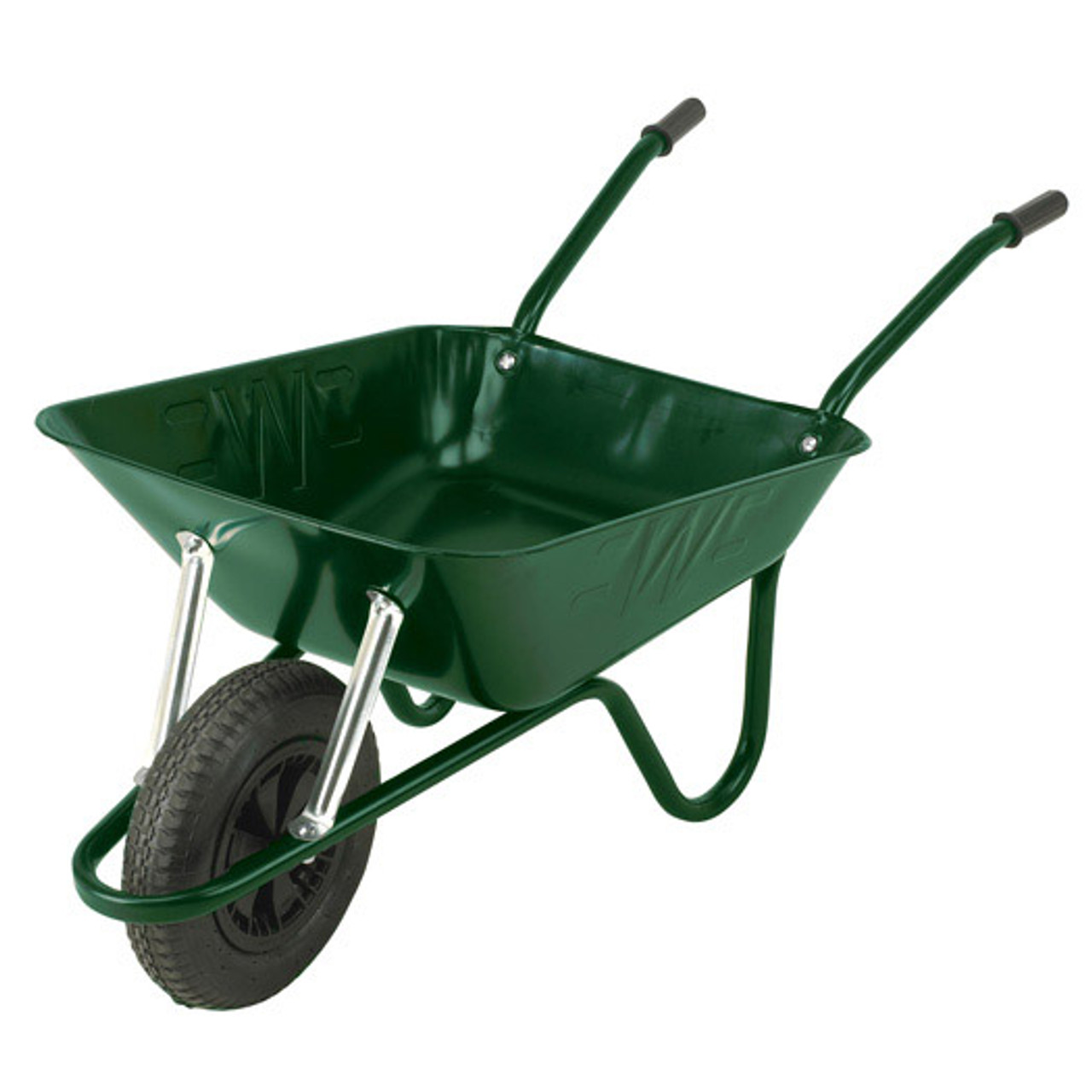
With a flat or bowl-shaped tray (pan), two handles for the operator, two rear legs for balance when stationary, and a front pneumatic or solid rubber tire that supports the weight and offers the mechanical benefit of a wheel-and-axle system, a wheelbarrow is a one-wheeled manually operated hand cart. The wheelbarrow increases labor productivity on building sites, farms, gardens, and material handling activities by reducing the need for two people to transport anything to only one person pushing it.
A wheelbarrow is a sheet metal fabrication and assembly product in terms of manufacturing. The wheel is either pneumatic (inner tube tire on steel rim) or solid rubber on a pressed steel rim; the frame is welded from MS tube and flat bar; the axle is machined from mild steel rod; and the tray is either pressed or welded from mild steel sheet (1.2–2.0 mm gauge depending on capacity). The entire product is manufactured, put together, painted, and marketed.
Market Demand — Where Wheelbarrows Are Used and Sold
Construction industry: The main wheelbarrow market in India is the construction sector, which includes residential housing, commercial real estate, and infrastructure (roads, bridges, dams). Depending on size, four to twenty wheelbarrows are used on every busy building site. The construction wheelbarrow market is sizable and expanding due to India’s yearly addition of 60–80 lakh housing units as well as ongoing infrastructure initiatives like PMGSY, Smart Cities, and NHAI.
Agriculture: Wheelbarrows are used by farmers to carry harvested crops, transport farm inputs (seeds, fertilizer bags), and perform farm maintenance. Agricultural districts in MP, Rajasthan, UP, and Punjab are major customers of wheelbarrows through distributors of agricultural inputs.
Sanitation and municipalities: Wheelbarrows are used by municipal corporations for road cleaning, park garden upkeep, and solid refuse collection. The GeM portal serves as a reliable institutional conduit for government bulk buying.
Nurseries and landscaping: Heavy-duty wheelbarrows are used by garden centers, horticultural nurseries, and landscaping companies to move soil and plants. an expanding market as urban landscaping grows.
Export: One of India’s metal exports is wheelbarrows, which are sold in Southeast Asia, Africa, and the Middle East building markets. The prices of Indian producers are competitive.
Types of Wheelbarrows a Unit Can Manufacture
Standard construction wheelbarrow (60–90 liters): painted MS frame, deep bowl tray, single pneumatic tire. The most popular product is the standard builder’s wheelbarrow. utilized on every building site.
Heavy-duty pneumatic tires: strengthened handles, and a thicker gauge tray characterize this 100–120-liter contractor wheelbarrow. for huge infrastructure, construction, and demolition projects.
Garden wheelbarrow (40–60 liters): Usually equipped with a steel or plastic tray, it is lighter and has a lesser capacity. For light outdoor use, nurseries, and home gardens. section of retail consumers.
Concrete blocks, stone: And other heavy materials are carried using two-wheel ballast wheelbarrows, which have two wheels for stability under large loads. specialized area.
Concrete barrow (poly-drum): A steel-framed polyethylene drum used for mixing and transporting concrete. Small contractors and private masons use it.
Project Cost for Wheelbarrow Manufacturing Unit
Cost Component | Small Unit (₹) | Medium Unit (₹) |
Hydraulic press (tray pressing) | 2,00,000–4,00,000 | 5,00,000–10,00,000 |
Welding machines + jigs (frame welding) | 1,50,000–3,00,000 | 3,00,000–6,00,000 |
Cutting and bending machines | 80,000–1,50,000 | 1,50,000–3,00,000 |
Paint spray booth + primer | 80,000–1,50,000 | 1,50,000–3,00,000 |
MS sheet, MS tube, wheels (3 months raw material) | 2,00,000–4,00,000 | 4,00,000–8,00,000 |
Work shed + working capital | 1,50,000–2,50,000 | 2,50,000–5,00,000 |
Total Project Cost | ₹8.60–16.50 lakh | ₹17.50–35 lakh |
PMEGP: Up to ₹50 lakh → 15–35% capital subsidy.
Manufacturing Process
Wheelbarrow manufacturing is a sheet metal pressing and welding operation:
Tray pressing: The wheelbarrow tray is formed by cutting MS sheet to blank size and pressing it in a hydraulic press using a bowl-shaped die. The same pressing procedure is used to punch the lip and drainage holes. The capacity rating is determined by the thickness of the tray, which is 1.2 mm for garden models and 1.6–2.0 mm for construction grade.
Frame construction: To guarantee uniform geometry, MS square or round tubes are cut to length, bent, and welded on a jig fixture. Rubber or plastic grips are attached to handle ends. Axle brackets and leg brackets are welded in the proper locations.
Axle assembly: MS solid rod that has been machined to the axle diameter, pressed into the wheel hub bearing, and installed in the frame’s axle bracket.
Wheel assembly: options include press-fitting solid rubber tires on steel rims or mounting pneumatic tires on steel rims. The wheel is attached to the axle using a split pin and washer.
Tray-to-frame assembly: This type of installation allows for the replacement of damaged trays and is either bolted or welded to the frame.
Painting: The frame and tray can be wire-brushed or shot-blasted, primed with zinc phosphate, powder-coated, or spray-painted in common colors (orange, red, and green).
Packaging and quality control: assembled for domestic supply, flat-packed for export.
What Our Wheelbarrow Project Report Covers
- Construction, heavy-duty, garden, two-wheel, and concrete barrows are among the product categories.
- Tray pressing, frame welding, axle assembly, and painting are steps in the manufacturing process.
- List of machinery with references to supplier quotes
- Purchasing raw materials: MS sheet (SAIL/Tata Steel wholesalers), MS tube, and pneumatic tires (Ludhiana/Chennai tire manufacturers)
- Installed capacity in units per day with a five-year usage plan
- Construction, agricultural, municipal procurement, and export market analysis
- Estimates of revenue based on current wholesale prices (₹1,200–4,500 per unit by kind)
- CMA statistics · DSCR greater than 1.25 · creation of PMEGP jobs Schedule of repayment
Why Choose Sharda Associates
- Over 45,500 project reports, covering PMEGP applications, metal fabrication, and construction equipment, were delivered.
- The main capital investment and production bottleneck is accurately priced hydraulic press tray pressing.
- Correctly documented pneumatic tire sourcing: tire merchants in Chennai and Ludhiana
- Documented institutional supply channel for municipal corporations through the GeM portal
- ROI, DSCR, break-even point, and cash flow estimates are included in the profitability study.
- For PMEGP, MSME, Mudra Loan, and manufacturing finance applications
- CMA data and bank-ready financial statements were created.
- Starting at ₹2,999 · 24–48 hours
📞 +91 89899 77769 | All India service
Frequently Asked Questions
Mild steel (MS) sheet: 2.0 mm for heavy-duty contractor wheelbarrows, 1.6 mm for normal construction, and 1.2 mm for garden-grade models. A hydraulic press with a bowl die is used to press the tray from a flat sheet blank. The main factors influencing load capacity and service life are tray thickness and pressing quality.
Indeed. PMEGP 15–35% capital subsidies are available for construction equipment and metal product production projects up to ₹50 lakh. A project report in the CA-certified KVIC format that includes a section on employment generation is required.
Agricultural input dealers (farm use segment), nurseries and garden centers, construction contractors and site managers (bulk buyers for active sites), hardware and building material dealers (retail channel), municipal corporations through the GeM portal (bulk institutional purchase), and Middle Eastern and African export buyers via distributors of construction equipment.
50-liter garden wheelbarrow: ₹1,200–1,800 at wholesale. 90-liter standard construction wheelbarrow: ₹2,000–3,200. 120-liter heavy-duty contractor: ₹3,500–4,500. ₹2,500–4,000 for a concrete barrow. Tray gauge, tire type, and paint finish all affect prices.
Indeed, government agencies and municipal companies purchase wheelbarrows via the Government e-Marketplace (GeM). Participation in government tenders is contingent upon having products listed on GeM and acquiring MSME/Udyam registration. Institutional volume orders and guaranteed payment are offered by GeM Supply.
Due to demand from infrastructure projects, warehouses, construction, agriculture, and municipalities, the industry has a lot of potential. Production efficiency, raw material costs, product quality, and the strength of the distribution network all affect profitability.
A well-written project report shows market demand, profitability projections, machinery planning, financial viability, and payback capacity. It increases the likelihood of clearance under PMEGP and MSME programs and aids lenders in appropriately assessing project risk
Unrealistic sales projections, imprecise working capital estimates, poor market analysis, improper machinery costs, and insufficient financial projections are some of the reasons why banks could reject applications. These issues are addressed and the loan application is strengthened with a thorough project report.