Goat farming is one of the fastest-growing livestock businesses in India. With rising demand for goat meat, milk, and organic manure, many farmers and entrepreneurs are exploring goat farming as a profitable rural business model. To support this sector, the Government of India offers various goat farming loan schemes and subsidy programs to reduce financial burden and promote livestock entrepreneurship.
In this detailed guide, we will explain goat farming government schemes, loan options, subsidy structure, eligibility criteria, and the application process in 2026.
Why Goat Farming is a Profitable Business in 2026
Goat farming requires relatively low investment compared to dairy or poultry farming. It offers quick breeding cycles, strong market demand, and multiple revenue streams. Government support through subsidy schemes makes this business even more attractive for rural youth and small farmers.
Key advantages include
- Low startup cost
- High meat demand
- Easy maintenance
- Suitable for small land areas
- Recurring income potential
With proper financial planning and subsidy assistance, goat farming can generate sustainable long-term income.
Major Government Schemes for Goat Farming Loan & Subsidy
NLM Scheme – National Livestock Mission
The National Livestock Mission (NLM) provides capital subsidy support for goat farming projects. Under this scheme:
- Up to 50% subsidy for eligible projects
- Support for shed construction, breeding stock, and infrastructure
- Credit-linked subsidy through banks
This scheme is ideal for commercial goat farming units.
NABARD Goat Farming Loan Scheme
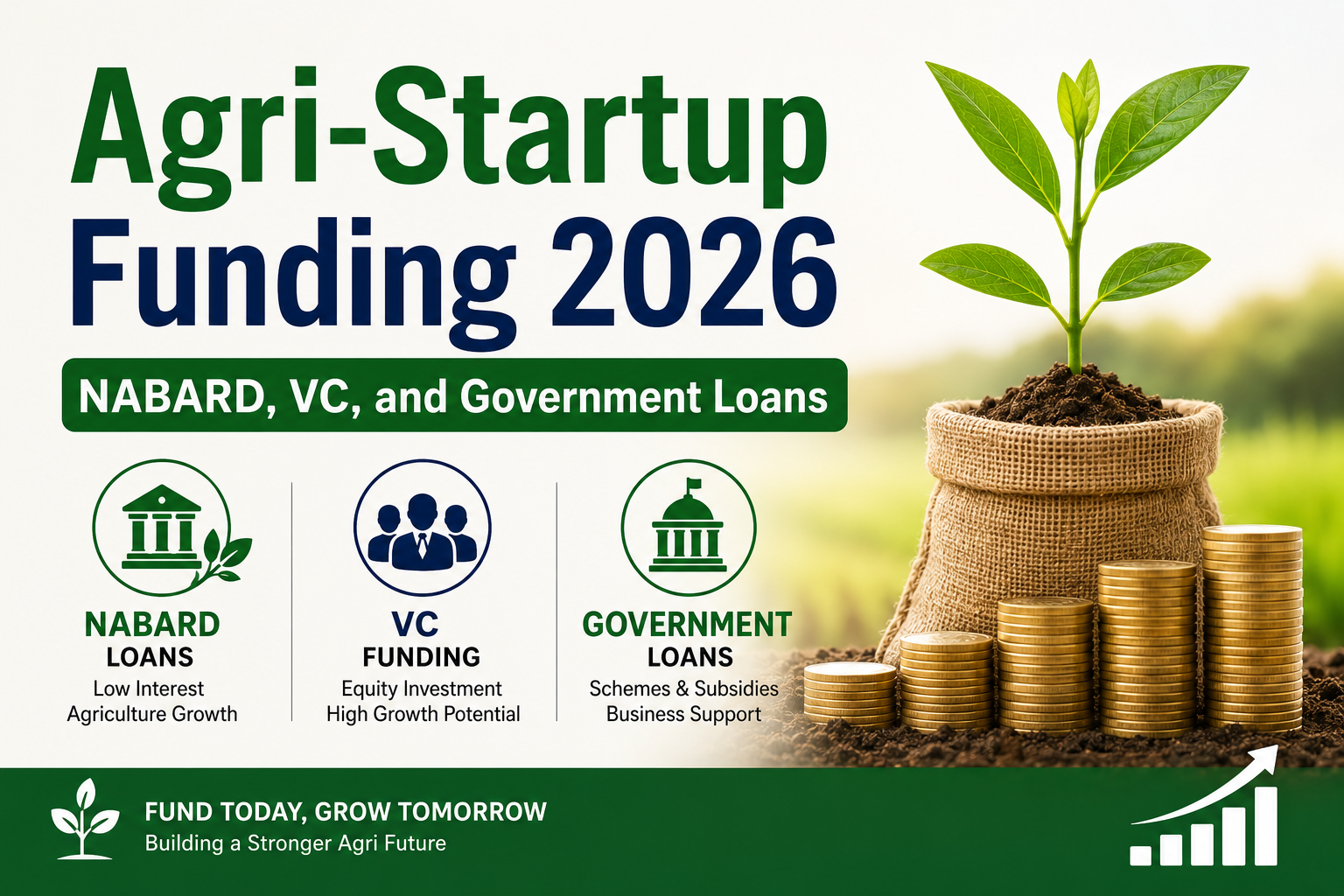
NABARD supports livestock financing through various bank-linked programs. Banks offer term loans and working capital loans for goat farming projects under NABARD guidelines.
Benefits include:
- Low interest rates
- Flexible repayment tenure
- Technical guidance
PMEGP Scheme
Under the Prime Minister Employment Generation Programme (PMEGP):
- Subsidy ranges from 15% to 35%
- The maximum project cost limit applies
- Available for rural entrepreneurs
PMEGP is suitable for small-scale goat farming units.
Mudra Loan for Goat Farming
Mudra loans are provided for micro-enterprises under three categories:
- Shishu (up to ₹50,000)
- Kishore (₹50,000 – ₹5 lakh)
- Tarun (₹5 lakh – ₹10 lakh)
This loan is ideal for small goat farming startups.
Goat Farming Subsidy Structure
Subsidy percentage depends on project size and category.
Micro-Level Goat Farming
Up to 50% capital subsidy under the NLM scheme.
Small Commercial Unit
Subsidy between 30% and 45%, depending on state policy.
State-Level Subsidy Programs
Many states offer additional subsidies for livestock entrepreneurs. These vary from 25% to 40%.
Subsidy is usually back-ended and released after project verification.
Goat Farming Loan Eligibility Criteria
To apply for goat farming loan or subsidy:
- The applicant must be an Indian citizen
- Must have a land or lease agreement for the goat shed
- Should submit a detailed project report
- Must contribute promoter share
- Good credit history preferred
- Basic livestock training may be required
SHGs, FPOs, individual farmers, and cooperatives can apply.
Documents Required for Goat Farming Loan Application
Applicants generally need:
- Aadhaar card and PAN card
- Address proof
- Bank statements
- Land documents or a lease agreement
- Detailed goat farming project report
- Quotation for equipment and goats
- Passport-size photographs
Banks may request additional documents depending on the loan amount.
Step-by-Step Application Process for Goat Farming Loan & Subsidy
Step 1: Prepare a Detailed Project Report
A professional project report should include:
- Number of goats
- Breed selection
- Shed design and cost
- Feed and Fodder Plan
- Financial projections
- Profitability analysis
This report is mandatory for bank and subsidy approval.
Step 2: Approach Bank or Financial Institution
Submit your loan application with DPR and required documents. The bank evaluates project feasibility and repayment capacity.
Step 3: Technical Inspection
The Animal Husbandry Department may conduct a site inspection before subsidy approval.
Step 4: Loan Sanction
After approval, the bank sanctions the loan and disburses funds as per project requirements.
Step 5: Subsidy Release
Subsidy is credited as per the scheme guidelines after project implementation and verification.
Financial Projection Example for Goat Farming
For a 25–30 goat unit:
- Total project cost: ₹5–6 lakh
- Annual revenue potential: ₹4–6 lakh
- Net profit margin: 20–30%
- Break-even period: 2–3 years
Proper management increases profitability and ensures smooth loan repayment.
Importance of a Bankable Project Report
A well-prepared project report improves:
- Loan approval chances
- Subsidy eligibility
- Financial planning accuracy
- Risk management
It should contain 5-year projections, cash flow analysis, and break-even calculation.
Common Mistakes to Avoid
- Applying without proper project planning
- Incorrect financial projections
- Ignoring livestock training
- Poor breed selection
- Incomplete documentation
Professional guidance helps avoid delays and rejection.
Conclusion
Goat farming loan, government schemes, and subsidy programs in 2026 provide excellent financial support for rural entrepreneurs and livestock farmers. With options like NLM subsidy up to 50%, NABARD-backed loans, PMEGP subsidy, and Mudra loan assistance, starting a goat farming business has become more accessible and financially viable.
However, successful approval depends on proper documentation, a bankable project report, financial planning, and compliance with government guidelines. By leveraging available schemes and managing the farm efficiently, entrepreneurs can build a profitable and sustainable goat farming business in India. You can contact us at +91 8989977769 for any query or if you require our services to prepare aproject report or a bank loan.
Frequently Asked Questions
1. What is the maximum subsidy available for goat farming in India?
Under the National Livestock Mission, eligible entrepreneurs can receive up to 50% capital subsidy for goat farming projects. The exact subsidy percentage depends on project size, category, and state-level implementation guidelines.
2. Can I get a bank loan for goat farming without collateral?
Yes, certain schemes like Mudra Loan and CGTMSE-backed loans allow collateral-free financing for small goat farming projects, provided the project report is viable and repayment capacity is satisfactory.
3. Is a project report mandatory for a goat farming loan?
Yes, banks require a detailed goat farming project report to assess feasibility, financial projections, repayment ability, and subsidy eligibility before sanctioning the loan.
4. How long does it take to get a goat farming loan approval?
Loan approval typically takes 2 to 6 weeks, depending on documentation, project verification, bank processing time, and inspection by the livestock department.
5. Which government scheme is best for goat farming subsidy?
The National Livestock Mission (NLM) is considered one of the best schemes, as it offers up to 50% capital subsidy and supports infrastructure, breeding stock, and livestock entrepreneurship development.