
Project Report For Nebulizer Machine
Introduction
Project Report For Nebulizer Machine follow
A nebulizer machine is a medical device used to deliver liquid medication directly into the lungs in the form of a fine mist or aerosol. It is widely used in the treatment of respiratory conditions such as asthma, chronic obstructive pulmonary disease (COPD), bronchitis, cystic fibrosis, and other breathing disorders. By converting liquid medicine into inhalable particles, the nebulizer allows medication to reach the deeper parts of the lungs, providing faster and more effective relief compared to oral medicines.
Nebulizers work by forcing compressed air or vibrations through liquid medication to create a fine mist that can be inhaled by the patient through a mouthpiece or face mask. This process ensures that the medication is delivered directly to the respiratory system, which improves absorption and treatment efficiency. Because the medicine is inhaled rather than swallowed, the drug acts more quickly and often requires a lower dosage.
During treatment, the patient breathes slowly and deeply through a mask or mouthpiece for approximately 5 to 10 minutes until the medication is fully administered. While masks are convenient and commonly used for children or elderly patients, mouthpieces are generally recommended because they allow better delivery of medication directly into the lungs while reducing contact with the eyes and skin.
Nebulizers are widely used in hospitals, clinics, and home healthcare environments. They are especially helpful for patients who have difficulty using inhalers, such as young children, elderly individuals, and people experiencing severe breathing problems. Unlike inhalers, nebulizers do not require precise coordination between inhalation and medication release, making them easier to use.
Modern nebulizers are available in portable designs and may be powered through electricity, batteries, or rechargeable systems. These compact devices can easily be carried during travel and are suitable for regular use at home. As respiratory diseases become more common due to pollution, lifestyle changes, and environmental factors, the importance of nebulizer machines in healthcare continues to grow.
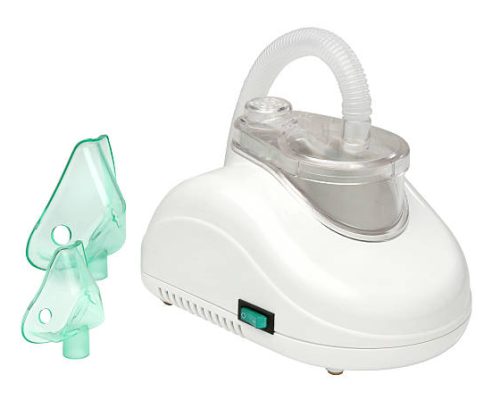
Types Of Nebulizer Machine
Ultrasonic nebulizers operate using high-frequency ultrasonic sound waves that convert liquid medication into a fine aerosol mist. The sound waves vibrate at very high frequencies and are transmitted directly into the liquid medicine. This process produces extremely small droplets that can easily be inhaled through a mask or mouthpiece.
Because the droplets generated are very fine, they can penetrate deep into the lungs and improve medication delivery efficiency. Ultrasonic nebulizers do not require compressed air or bulky compressors, which makes them quieter and more comfortable for patients. Their low noise operation makes them especially suitable for children and elderly patients who may be sensitive to loud sounds.
Jet Nebulizer
Jet nebulizers, also known as compressor nebulizers, are the most commonly used type of nebulizer. They operate by using compressed air to convert liquid medication into a fine mist. The compressed air passes through the medication at high speed and breaks it into tiny aerosol particles that are inhaled by the patient.
These nebulizers require an electrical power source to operate the compressor and are widely used in hospitals, clinics, and home treatment. Jet nebulizers are considered reliable and cost-effective, and they are capable of delivering a wide range of respiratory medications. Some modern models are equipped with rechargeable batteries or car adapters, which increases portability and convenience.
Mesh Nebulizer
Mesh nebulizers are one of the most advanced types of nebulizer machines. They use vibrating mesh technology to push liquid medication through a fine mesh membrane containing thousands of microscopic holes. This process produces extremely uniform aerosol droplets that can be easily inhaled by the patient.
Mesh nebulizers are compact, lightweight, and highly portable, making them ideal for home use and travel. They operate quietly and cause minimal medication wastage compared to traditional nebulizers. Because of their convenience and efficiency, mesh nebulizers are increasingly preferred for children, elderly patients, and individuals who require frequent respiratory therapy.

Get Completely Custom Bankable Project Report
Market Potential Of Nebulizer Machine
The global nebulizer market has been experiencing steady growth due to the rising prevalence of respiratory diseases across the world. The market was valued at approximately USD 1.07 billion in 2022 and is expected to grow at a compound annual growth rate (CAGR) of around 5.9% between 2023 and 2030.
One of the major drivers of this growth is the increasing incidence of chronic respiratory diseases such as asthma, COPD, bronchitis, and cystic fibrosis. Rising air pollution levels, smoking habits, occupational exposure to harmful particles, and changing lifestyles have significantly contributed to the growing number of respiratory patients globally.
The increasing demand for home healthcare equipment is another major factor supporting the growth of the nebulizer market. With the development of portable and battery-operated nebulizers, patients can now manage respiratory treatments conveniently at home without the need for frequent hospital visits. This has significantly improved patient comfort and reduced healthcare costs.
The growing geriatric population also contributes to the expansion of the nebulizer market. Elderly individuals are more prone to respiratory illnesses and often require long-term respiratory therapy. As life expectancy increases worldwide, the demand for respiratory treatment devices like nebulizers is expected to rise.
Technological advancements in medical devices are also creating new opportunities for the nebulizer industry. Innovations such as smart nebulizers, mesh technology, portable devices, and digital monitoring systems are improving treatment efficiency and patient convenience. These innovations are attracting both healthcare providers and patients toward modern nebulizer systems.
However, the market remains competitive, particularly in regions where traditional jet nebulizers dominate due to their affordability and reliability. Additionally, regulatory requirements, quality standards, and reimbursement policies can influence market growth in some regions.
Despite these challenges, the long-term outlook for the nebulizer machine industry remains highly positive. With increasing respiratory health awareness, improving healthcare infrastructure, and the continuous development of innovative medical technologies, the demand for nebulizer machines is expected to grow steadily in the coming years.