
Project Report For Electrical Engineering
Introduction
The Project Report for Electrical Engineering provides a detailed framework for establishing an electrical engineering services company, manufacturing unit, contracting business, or technical training institute in 2026. Electrical engineering, one of the most dynamic and evolving branches of engineering, focuses on the design, development, testing, and maintenance of electrical systems and electronic equipment. From microchips and embedded systems to power plants and national power grids, electrical engineering plays a critical role in modern infrastructure.
In 2026, the scope of electrical engineering has expanded significantly due to renewable energy integration, smart grid technology, electric vehicles (EVs), automation systems, and industrial IoT applications. Electrical engineers are responsible for designing efficient power distribution systems, developing automation controls, implementing energy-efficient solutions, and ensuring safety compliance in industrial and commercial installations.

Electrical engineering is not limited to heavy power systems; it also contributes to consumer electronics, telecommunications, robotics, defense equipment, and data centers. With increasing urbanization and digital transformation, demand for reliable electrical infrastructure continues to grow globally. This Project Report outlines the operational structure, infrastructure requirements, investment planning, and market potential of starting or expanding an electrical engineering venture in 2026.
Project Report Sample On
Electrical Engineering

Get Completely Custom Project Report
Infrastructure, Services & Operational Model
Setting up an electrical engineering business requires technical expertise, modern equipment, and compliance with regulatory standards. The nature of the venture may vary—ranging from electrical contracting services and industrial automation projects to renewable energy installations and maintenance services.
Essential infrastructure includes testing instruments, electrical tools, transformers, control panels, safety equipment, CAD design software, and workshop facilities. For companies involved in renewable energy projects, additional equipment such as solar panel testing kits, inverters, battery storage systems, and grid synchronization tools are required. Skilled manpower, including electrical engineers, technicians, safety officers, and project managers, is critical for smooth operations.
The estimated initial investment for a small- to mid-scale electrical engineering firm in India ranges between ₹20 lakhs to ₹75 lakhs, depending on project size, equipment procurement, licensing, and staffing requirements. Major expenses include machinery, office setup, technical software, workforce salaries, transportation, and working capital.
Revenue streams may include industrial electrical installations, power plant maintenance contracts, renewable energy projects (solar and wind), automation system integration, smart building solutions, and annual maintenance contracts (AMC). In 2026, there is strong demand for EV charging station installations, smart grid upgrades, and energy efficiency audits.
Compliance with electrical safety regulations, environmental norms, and government licensing requirements is mandatory. A well-prepared project report for electrical engineering clearly outlines the cost structure, project feasibility, operational strategy, and projected financial returns, making it suitable for bank loan approvals or investor funding.
Market Potential Of Electrical Engineering
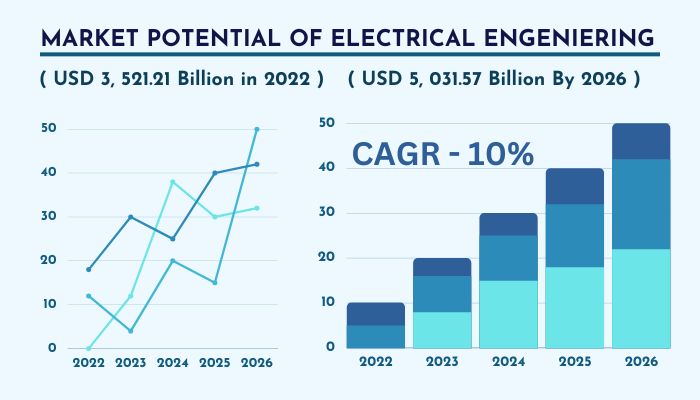
The global electrical and electronics market has experienced significant growth over recent years. From a valuation of over $3 trillion in 2021, the industry has continued expanding and is projected to surpass $5 trillion by 2026, growing at a steady CAGR of around 9–10%. This growth is fueled by rapid technological innovation, infrastructure development, renewable energy adoption, and smart technology integration.
The rise of 5G communication networks, IoT-enabled devices, and smart home automation systems is increasing demand for advanced electrical components and systems. Governments worldwide are investing heavily in renewable energy infrastructure to reduce carbon emissions. The global push toward net-zero targets has significantly boosted demand for solar, wind, and battery storage solutions.
Electric vehicles represent another major growth driver in 2026. The installation of EV charging infrastructure requires specialized electrical engineering expertise. Additionally, industries are modernizing production facilities with automation and robotics, further increasing demand for electrical system design and maintenance services.
Financially, electrical engineering ventures offer stable and scalable revenue opportunities. Profit margins typically range between 15% to 30% depending on specialization, project size, and operational efficiency. Large infrastructure and renewable energy projects may yield higher margins. Break-even is generally achievable within 2–4 years with consistent project acquisition and effective cost management.
This project report concludes that electrical engineering remains a highly promising and future-oriented sector in 2026. The combination of renewable energy expansion, smart infrastructure, digital communication technologies, and industrial automation ensures sustained demand. Entrepreneurs entering this field must focus on technological upgrades, skilled workforce development, and compliance with safety standards to achieve long-term success.
If required, detailed 5-year financial projections, break-even analysis, cost of project statements, and means of finance sections can be included to further strengthen this Project Report for Electrical Engineering for bank or investor presentations.