
Project Report for Stepladder Manufacturing
Every painter, electrician, plumber, warehouse worker, and building contractor utilizes a stepladder, which they replace when it fails. Every year, millions of ladders are used in India’s building and maintenance industries. Sharda Associates has delivered over 45,500 project studies, including CA-certified stepladder manufacturing project reports for PMEGP and MSME bank loans. Starting at ₹2,999, delivered within 24-48 working hours.
Get Your Report
What Are Stepladder Manufacturing
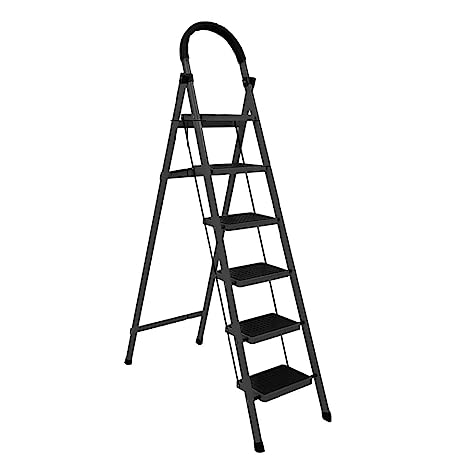
A stepladder is a self-supporting, A-frame portable ladder that stands alone without leaning against a wall, making it the preferable ladder type for inside maintenance, painting, electrical work, and warehousing operations when a wall-lean is either unavailable or impractical. Unlike extension ladders, which rest on a surface, a stepladder has two sets of rails joined at the top by a hinge: the front rail holds flat steps for climbing, while the rear rail (spreader) provides the self-supporting base.
A stepladder is a structural fabrication product, which means it is manufactured using the same methods as industrial shelves, trolleys, and material handling equipment. Rails and steps are made by cutting, drilling, riveting, or welding aluminum hollow section extrusions. The hinge mechanism at the top and the spreader rod or bracing at the base are the key structural components that define the ladder’s stability and load rating.
The stepladder market in India is vast and rising, thanks to the rise of the construction, retail, and warehouse industries, as well as increased workplace safety awareness. A market that predominantly consumed unbranded bamboo and wooden ladders a decade ago is transitioning toward certified aluminum and fibreglass stepladders, presenting a clear opportunity for MSME manufacturers that can meet quality and regulatory requirements.
Types of Stepladders a Manufacturing Unit Can Produce
- Domestic Aluminium Stepladder (3-6 steps): Light-gauge aluminum with a basic hinge and rubber feet. For home purposes, such as changing light bulbs, painting walls, and reaching high shelves. Retail section; e-commerce channel. Maximum unit volume.
- Industrial Aluminium Stepladder (4-10 Steps): Heavy gauge aluminum, non-slip ribbed steps, locking spreader mechanism, and safety feet. Load rating: 120-150 kg. For warehouse, manufacturing, and maintenance applications. The product is mid-range, with a significant B2B institutional channel.
- Fibreglass Stepladder: Electrical work requires non-conductive fibreglass rails. Steps may be made of aluminum or fiberglass. Premium segment with much higher unit values. Increasing as India’s electricity infrastructure expands.
- Platform Stepladder: Wide top platform with railing for prolonged work at height in warehouses, retail stores, and industries. The heavier construction results in a much higher unit value (₹3,000-8,000 wholesale). Strong institutional business-to-business demand.
- Rolling Library Ladder: An aluminium stepladder on rolling wheels with a rail track system designed for bookshops, libraries, and retail outlets with high shelves. Niche premium segment.
- Combination Ladder (Step + Extension): Converts between an A-frame stepladder and an extension ladder. Maximal versatility. Premium section.
Market Demand For Stepladder Manufacturing
The building sector in India is the key driver; painting contractors, electrical contractors, plumbing teams, and civil maintenance personnel all utilize stepladders on a daily basis. India’s organized retail and e-commerce warehousing expansion – Dmart, Reliance Retail, Amazon, and Flipkart fulfilment centers — is driving constant institutional ladder demand. Every new warehouse, delivery center, and huge retail outlet is a ladder purchaser.
Workplace safety regulatory enforcement is a significant trend, with OSHA-equivalent safety standards being increasingly necessary at construction sites and manufacturers for government contracts and insurance compliance. This pulls purchasers away from unbranded bamboo/wood ladders and toward approved aluminum or fibreglass ladders, hence boosting the formal market.
Export to the Middle East, Africa, and Southeast Asia, where Indian aluminium ladder producers offer low pricing, is a rising market.
Project Cost for Stepladder Manufacturing Unit
Cost Component | Small Unit (₹) | Medium Unit (₹) |
Aluminium extrusion / profile sourcing | 50,000–1,00,000 (outsourced profiles) | Extrusion press: 15,00,000–30,00,000 |
Cutting, drilling, riveting machines | 1,50,000–3,00,000 | 3,00,000–6,00,000 |
Welding setup (MIG/TIG) | 80,000–1,50,000 | 1,50,000–3,00,000 |
Hinge and spreader fabrication tooling | 80,000–1,50,000 | 1,50,000–3,00,000 |
Aluminium profile raw material (3 months) | 2,00,000–4,00,000 | 4,00,000–8,00,000 |
BIS IS 1875 testing + working capital | 1,50,000–2,50,000 | 2,50,000–5,00,000 |
Total Project Cost | ₹7.10–13.50 lakh | ₹15–33 lakh |
Note: Aluminium extrusion profiles for ladder rails are typically sourced from extruders in Ahmedabad, Pune, or Bengaluru for smaller units — avoiding the ₹15–30 lakh extrusion press investment.
PMEGP: Up to ₹50 lakh → 15–35% capital subsidy.
Manufacturing Process
Profile cutting: Using a cold-cut saw, aluminum hollow section profiles are cut to length for the front rail, back rail, and steps. Cut ends are deburred.
Step forming: Ribbed flat sections, or step profiles, are cut to width. Anti-slip ribbing can be created using a press die or extruded into the profile.
Drilling: Use a drill jig to drill rivet or bolt holes in the right positions in rails and steps, guaranteeing uniform hole spacing throughout all ladder sizes.
Assembly: Steps riveted or bolted into the front rail at the proper spacing. The rear spreader rails have been installed. The top hinge cover has been installed – this is a vital structural component.
Hinge and spreader mechanism: When the ladder is open, the hinge cap at the top of the A-frame must lock firmly, and when it is closed, it must permit folding.
Load testing: Every ladder is tested to its rated capacity × safety factor, which is usually 4:1 for industrial ladders. For certified ladders, BIS IS 1875 testing is required.
Finishing: Safety feet made of rubber or plastic are installed. labels bearing the BIS logo, load rating, and usage guidelines.
Why Choose Sharda Associates
- More than 45,500 project reports were delivered, covering PMEGP applications, ladder manufacture, safety equipment, and aluminum fabrication.
- Accurately evaluating aluminum profile sourcing versus in-house extrusion can help optimize project costs and investment needs.
- Cost of BIS IS 1875 certification is included; required load-rating compliance costs are appropriately represented.
- The premium non-conductive ladder segment is assessed for higher-margin growth, and the fibreglass ladder prospect has been reported.
- Factories, warehouses, contractors, and government purchasers are predicted separately from retail sales in an institutional B2B sales model.
- Included are break-even analysis, CMA Data, DSCR, profitability analysis, accurate raw material costs, and bank-ready financial predictions.
- Before delivery, DSCR was confirmed to be above 1.25 to enhance the chances of PMEGP, MSME, and bank loan acceptance.
- Beginning at ₹2,999 24 to 48 hours
📞 +91 89899 77769 | All India service
Frequently Asked Questions
Platform stepladder (wide top platform with handrail, retail and warehouse), fiberglass stepladder (non-conductive, for electrical work), industrial aluminum stepladder (4–10 steps, 120–150 kg rated, warehouse and factory), and combination step-extension ladder. Each type has a distinct unit value and buyer segment.
Indeed. PMEGP 15–35% capital subsidies are available for projects up to ₹50 lakh in aluminum fabrication and safety equipment production. project report in the CA-certified KVIC format, with employment creation required. Sharda Associates' starting price is ₹2,999.
Stepladders and other portable aluminum ladders must meet the structural and safety standards outlined in BIS IS 1875. It covers criteria for hinge locking mechanisms, anti-slip steps, safety factor (minimum 4:1), and load capacity rating. Institutional supplies, government procurement, and workplaces subject to safety regulations all require BIS certification.
Because aluminum conducts electricity, an electrician who climbs an aluminum ladder close to a live circuit runs a significant danger of being shocked. The ladder offers electrical isolation between the user and any energized surfaces because fiberglass is non-conductive. For electrical work, fiberglass stepladders are required for safety gear. This market sector is expanding due to India's developing electrical infrastructure.
6063-T5 aluminum alloy hollow section profiles: flat ribbed sections for steps, rectangular and oval sections for rails. purchased from aluminum extruders in Bengaluru, Pune, or Ahmedabad. Die-cast steel or aluminum hinge caps and spreader hardware. safety feet made of rubber. fasteners and rivets.
Painting contractors and building maintenance companies (highest volume), telecom installation teams and electrical contractors (fibreglass type), warehouse and logistics operators (industrial and platform type), organized retail stores (for daily in-store use), construction project procurement, domestic e-commerce customers, and export buyers.
Domestic 4-step aluminum stepladder: ₹650–1,100 at wholesale. ₹1,500–2,500 for industrial 6-step aluminum (120 kg rated). Six-step fiberglass: ₹2,500–4,500. Six-step platform stepladder: ₹3,000–6,000. ₹2,000–4,500 is the combination ladder.
Indeed. Lightweight domestic aluminum stepladders for home usage are a powerful e-commerce product, and stepladders are a continuously popular category on Amazon and Flipkart. Consistent product quality, appropriate packaging, and manufacturer/seller registration are essential conditions for an e-commerce listing. Institutional procurement listings give preference to BIS-certified ladders.