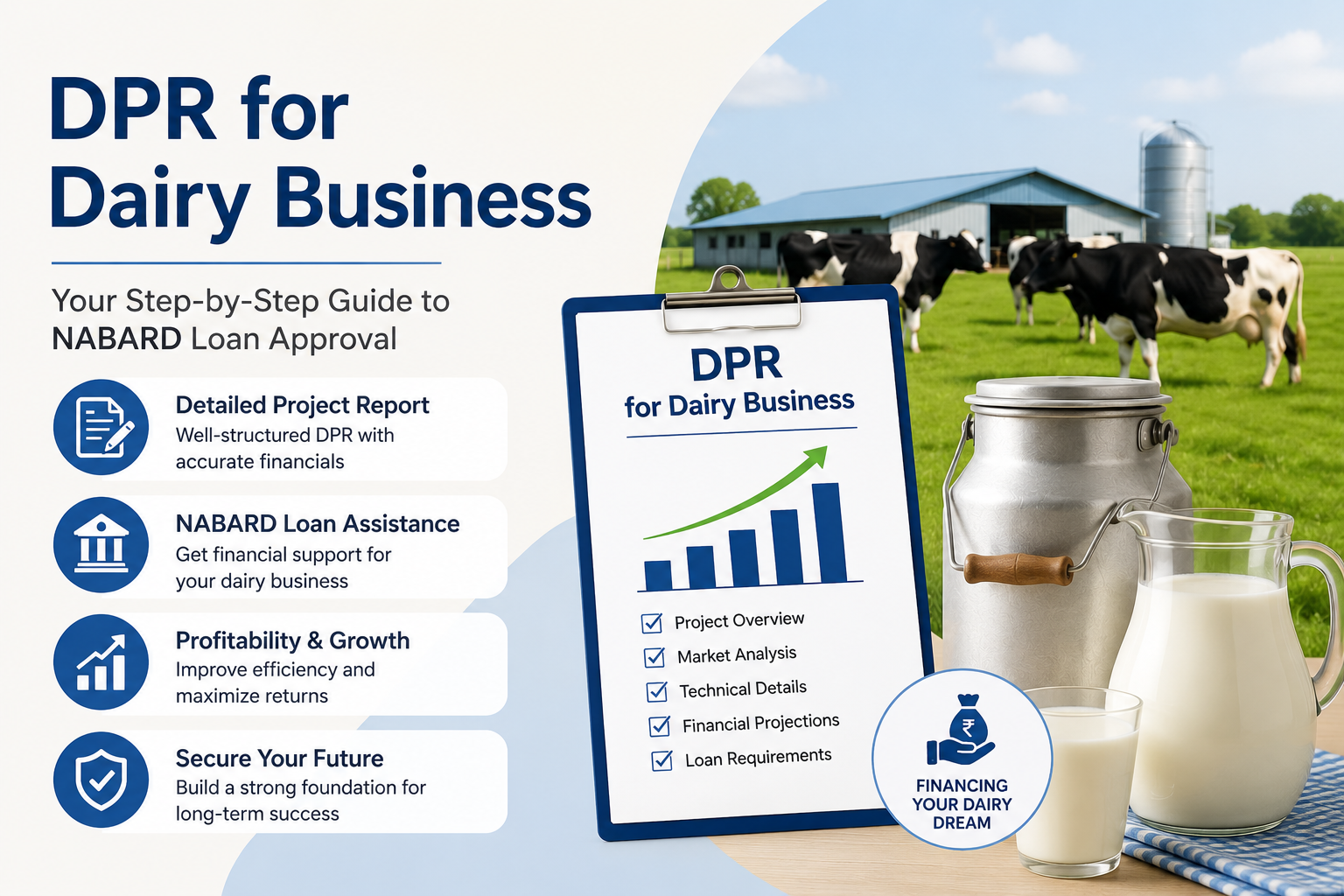
Starting a new business requires capital investment, and obtaining a bank loan can be a crucial source of funding. To secure a bank loan, businesses are typically required to submit a project report that outlines the business’s financial requirements, operations, and loan repayment capacity. A well-prepared project report increases the chances of loan approval and helps the bank assess the viability and risk of the loan.
In this blog, we will walk you through the key components of a project report for a bank loan to start a new business, why it is important, and how you can prepare one effectively.
What is a Project Report for a Bank Loan?
A project report for a bank loan is a comprehensive document that provides detailed information about your new business. It serves as a proposal to the bank and helps them evaluate your loan application. The primary objective of the project report is to present the financial feasibility of the business, how the loan will be utilized, and how the business will generate enough revenue to repay the loan.
The project report includes details such as:
- Business Overview: A brief description of the business, its products or services, market potential, and objectives.
- Loan Requirement: The amount of loan requested and the purpose for which it will be used (e.g., infrastructure, equipment, working capital).
- Market Analysis: An in-depth analysis of the target market, competitors, and industry trends.
- Financial Projections: Detailed financial statements, including profit and loss, balance sheet, and cash flow forecasts.
- Repayment Plan: A clear schedule for how the loan will be repaid, with timelines and cash flow estimates.
Why is a Project Report Important for a Bank Loan?
A project report serves as a blueprint for both the bank and the business owner. For the bank, it is a tool to assess the financial viability of the business, evaluate its repayment capacity, and ensure that the business can generate enough revenue to meet loan obligations. Without a comprehensive project report, it would be difficult for the bank to determine whether the business is creditworthy.
For the entrepreneur, the project report forces you to carefully consider all aspects of your business, from financial projections to market analysis, which can help clarify your goals and improve your business strategy. It also makes the loan application process smoother by presenting all required information in a structured and professional manner.
Key Sections of a Project Report for a New Business Loan
1. Business Overview
This section introduces your business to the bank. It includes:
- Business name and structure (sole proprietorship, partnership, private limited, etc.)
- Mission and vision statement
- Products or services offered
- Target market and customer base
- Business goals and objectives
2. Loan Requirement and Utilization
Here, you specify the exact amount of loan required and explain how the funds will be utilized. Common loan uses include:
- Infrastructure: Building or leasing a business premises
- Equipment: Purchase of machinery, technology, or vehicles
- Working Capital: Day-to-day operations, inventory, and supplies
3. Market and Competitive Analysis
A comprehensive market analysis helps the bank understand the business’s potential for success. This section should include:
- Target market: Size, demographics, and growth potential
- Competitors: Direct and indirect competition
- SWOT Analysis: Strengths, weaknesses, opportunities, and threats
4. Financial Projections
This is the most critical part of the project report. It provides detailed estimates of the business’s financial performance and its ability to repay the loan. Include:
- Profit and Loss Statement: Forecasting the income, costs, and profits over 3-5 years
- Balance Sheet: A snapshot of the business’s assets, liabilities, and equity
- Cash Flow Statement: A projection of cash inflows and outflows, ensuring that the business can cover its obligations
5. Repayment Plan
The repayment plan outlines how the business intends to repay the loan. Include:
- Loan tenure (e.g., 5 years)
- Repayment frequency (e.g., monthly, quarterly)
- Interest rate and EMI calculations
- Cash flow availability to cover monthly repayments
How to Prepare a Project Report for a Bank Loan
Preparing a detailed and accurate project report for a bank loan involves several steps:
- Define Your Loan Requirements: Identify how much money you need and break down how it will be used. A well-defined purpose helps banks understand your business needs.
- Gather Financial Information: Prepare financial statements like the profit and loss account, balance sheet, and cash flow forecasts. These numbers should be realistic and aligned with industry standards.
- Conduct Market Research: Study the market, potential competitors, and demand for your product or service. This will help you craft a compelling market analysis section.
- Develop a Repayment Strategy: Show the bank how you plan to repay the loan by projecting monthly revenue and cash flow. This demonstrates that you will be able to meet your financial obligations.
- Professional Assistance: If you’re unsure about preparing the report, consider hiring professionals. Experts like Sharda Associates can create customized project reports that meet bank requirements and increase the chances of loan approval.
Conclusion
A project report for a bank loan is an essential document for securing funding to start a new business. It allows the bank to evaluate the financial stability, market potential, and repayment capacity of the business. By providing detailed financial projections, a clear loan utilization plan, and a well-structured business strategy, entrepreneurs can increase their chances of loan approval. Whether you’re a new startup or an established MSME, preparing a comprehensive project report is a crucial first step towards securing the necessary capital for your business.
For expert help with preparing bank-compliant project reports, visit Sharda Associates and get started today!