
Sharda Associates provides professional support with GST registration, E-Way Bill creation, GST return filing, tax compliance, logistics documentation, accounting services, MSME registration, project reports, financial planning, and legal business consulting services throughout India. Our expert personnel assist firms in managing GST compliance efficiently while assuring the smooth transit of goods without regulatory difficulties.
We also offer experienced assistance with business incorporation, ROC compliance, audit services, taxation consultation, feasibility reports, CMA reports, and financial documentation for transport companies, manufacturers, traders, wholesalers, retailers, and e-commerce vendors. Our advisors simplify complex GST procedures and assist firms in maintaining proper legal compliance while focusing on operational growth and profitability.
Introduction
An E-Way Bill is a crucial electronic document necessary for goods movement in India’s Goods and Services Tax system. It was established to increase transportation transparency, prevent tax evasion, and facilitate the movement of commodities between and among states. Businesses transporting products with a value greater than a defined limit are required by GST requirements to generate an E-Way Bill before transportation begins.
In 2026, the Goods Transportation Slip system will be more advanced, totally digital, and constantly monitored via integrated GST portals and transport verification systems. Businesses must now keep precise documentation, invoicing records, transporter information, and compliance procedures in order to prevent penalties and shipment delays.
The government has strengthened digital compliance technologies to better monitor interstate and intrastate traffic. Businesses involved in manufacturing, trade, wholesale distribution, retail supply, logistics, and e-commerce operations must grasp Goods Transportation Slip regulations in order to maintain uninterrupted business operations and lawful transportation of goods.
This article explains everything about the Goods Transportation Slip system in India, including its meaning, registration process, validity regulations, compliance requirements, penalties, exclusions, documentation, transportation protocols, and the most recent GST revisions in 2026.
What is an e-way bill?
An E-Way Bill is an electronically generated document required for shipping goods priced above the GST threshold. It includes information on the supplier, recipient, products being delivered, transporter information, invoice data, and delivery address.
The Goods Transportation Slip technology enables tax authorities to follow the movement of products and prevent tax fraud during transportation. It is created using the official GST Goods Transportation Slip portal before items are transported from one location to another.
Depending on the transaction type and transportation arrangement, the supplier, recipient, carrier, or authorized logistics operator may create this document. Once generated, the Goods Transportation Slip is assigned a unique EBN number that may be electronically confirmed by authorities during transportation.
Importance of E-Way Bills Under GST
The Goods Transportation Slip system has a significant impact on tax transparency and transportation monitoring in India. Before the introduction of GST, firms faced various state-level checkpoints and transit documentation requirements, producing delays and operational inefficiencies.
The implementation of the Goods Transportation Slip system has streamlined logistics operations while allowing authorities to trace products digitally. Businesses can now transport goods across India using uniform documentation and a unified tax system.
In 2026, digital compliance and real-time verification tools will make Goods Transportation Slip management even more critical for enterprises involved in supply chain activities and interstate commerce. Proper compliance avoids transportation delays, fines, and operational disruptions.
When is an E-Way Bill required?
A Goods Transportation Slip is normally necessary when the value of the products being transported exceeds the GST threshold limit. It may apply to interstate transportation, intrastate transportation, stock transfers, branch transfers, sales refunds, job work transactions, and the supply of goods.
To prevent legal difficulties while in transit, businesses must generate the Goods Transportation Slip before transportation begins. The criterion applies whether conveyance is by road, rail, air, or water.
The Goods Transportation Slip system applies to suppliers, beneficiaries, transporters, registered taxpayers, and certain unregistered individuals, depending on the nature of the transactions and goods transportation.
E-Way Billing Registration Process
To create E-Way Bills, firms must first register on the official Goods Transportation Slip portal with their GST credentials. The registration process is completely online and connected with GST systems.
After registering, businesses can use the platform to generate a Goods Transportation Slip by adding invoice data, transporter information, product descriptions, quantity, value, and delivery information. For each shipment, the gateway creates a unique EBN number.
In 2026, most businesses will use automated accounting software and ERP systems that are directly integrated with GST portals to generate E-Way Bills and handle compliance faster.
Documents Needed for E-Way Bill Generation
Proper documentation is required to generate and maintain a valid Goods Transportation Slip under GST laws. Before sending out a shipment, businesses must confirm that all invoicing and transportation data are correct.
Common documents requested are:
- Tax invoice or bill of supply.
- Transporter identification or vehicle details
- GSTIN data of the supplier and the recipient
- Delivery challan in certain instances.
- Product Description and Quantity
- Transportation document number
- Address and destination details
During transit verification, incorrect or insufficient documentation might lead to penalties, goods detention, or compliance notices.
Validity of E-Way Bills
The validity period of a Goods Transportation Slip is determined by the distance traveled during transportation. To be in conformity with GST law, products must be carried within the appropriate validity time after generation.
If transportation is delayed due to unforeseen events such as vehicle breakdown, natural catastrophes, or operational challenges, firms may be required to update or extend the Goods Transportation Slip in accordance with GST regulations.
Avoiding expiry-related issues and transit disruptions requires timely transportation and accurate route planning.
E-Way Bill: Interstate and Intrastate Movement
The Goods Transportation Slip system applies to both interstate and intrastate transportation, depending on state-specific legislation and GST provisions. Interstate transportation typically necessitates the development of a Goods Transportation Slip for items valued above a certain threshold.
Many states additionally mandate E-Way Bills for intrastate transportation beyond certain restrictions. Businesses that operate in various states must stay up to date on current GST transport rules and compliance requirements in each location.
The unified GST structure has greatly streamlined interstate logistics operations while boosting transparency and tax administration throughout India.
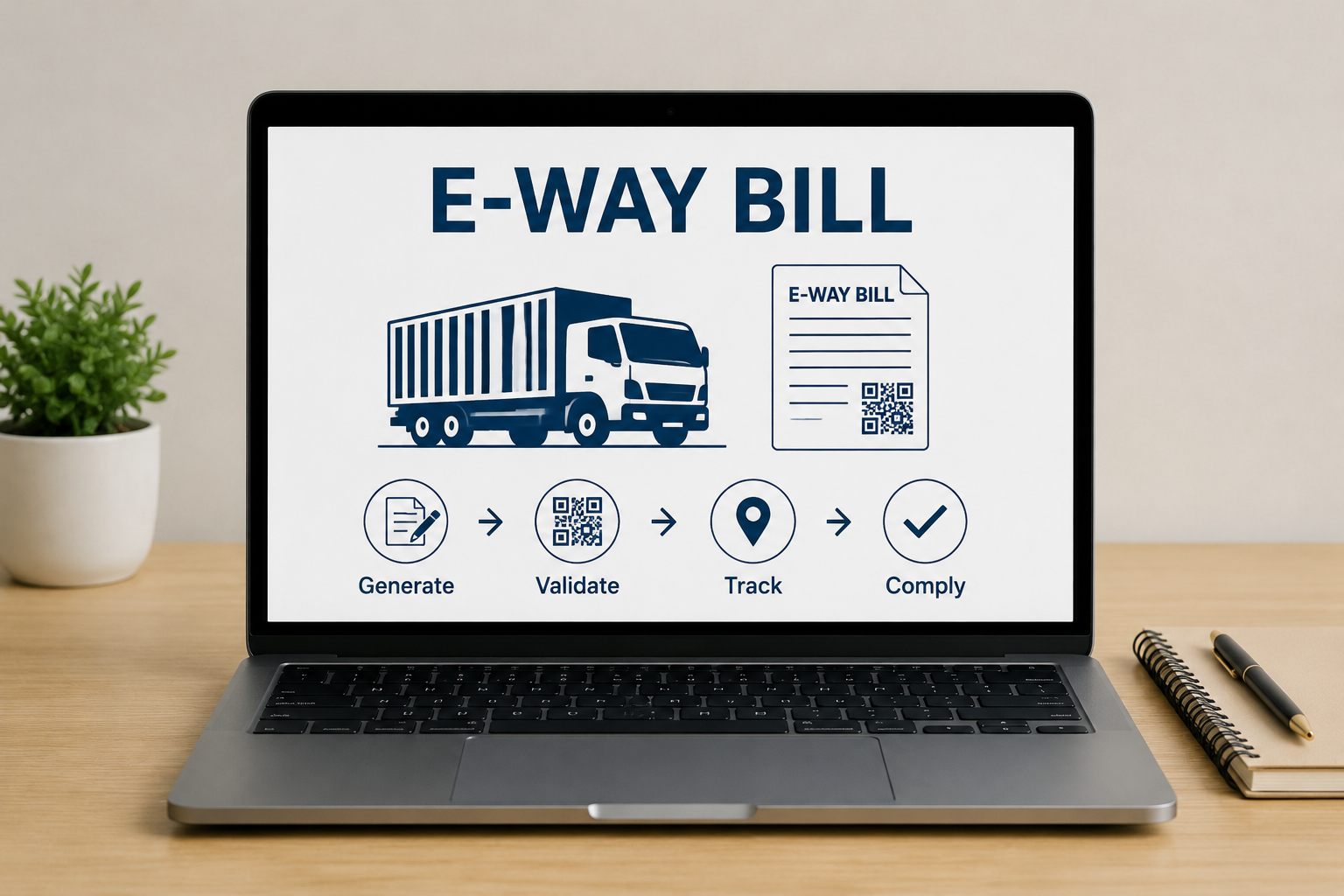
E-Way Bill for Transportation and Logistics Businesses
The transport and logistics industries play an important role in Goods Transportation Slip compliance. Transporters carrying products without a proper Goods Transportation Slip may face penalties, vehicle detention, or product confiscation under the GST laws.
Transporters are responsible for keeping accurate transportation records, vehicle details, route information, and shipment documentation while in transit. They may also generate Goods Transportation Slips on behalf of suppliers or recipients in specific circumstances.
In 2026, digital logistics management systems and GPS-enabled transport monitoring will improve compliance tracking and operational transparency in the transportation industry.
Common Mistakes in E-Way Bill Compliance
Many firms suffer compliance concerns as a result of erroneous invoice details, expired Goods Transportation Slips, incorrect transporter information, or the inability to prepare papers before delivery. Such mistakes might cause shipment delays and penalties.
Common compliance issues include wrong product values, mismatched GSTIN information, invalid vehicle numbers, duplicate documentation, and incomplete transporter records. Businesses should periodically verify documentation before beginning transportation.
Professional GST consultancy services can assist firms in avoiding these errors and ensuring that their logistics operations comply with GST laws.
Penalties for Noncompliance
Failure to comply with Goods Transportation Slip restrictions may result in severe penalties, the detention of products, the seizure of cars, and legal issues under GST legislation. Authorities undertake regular inspections and digital verifications during shipment.
Common fines can include:
- Monetary fines
- Detention of commodities
- Seizure of vehicles
- GST Compliance Notices
- Additional tax liabilities.
- Legal actions for major offenses.
Repeated noncompliance can harm corporate credibility, logistics operations, and tax records.
Benefits of the E-Way Billing System
The Goods Transportation Slip system has greatly increased transportation efficiency and tax transparency in India. It has decreased superfluous checkpoints, paperwork delays, and state-level transportation issues.
Businesses benefit from faster goods movement, greater logistical coordination, fewer transportation delays, increased compliance monitoring, and more efficient interstate trade operations. The digital technology improves tracking and accountability throughout the supply chain.
In today’s corporate environment, appropriate Goods Transportation Slip administration is critical for ensuring smooth logistics operations and regulatory compliance.
Updated GST Compliance Framework in 2026.
The GST compliance framework for 2026 has grown more technologically advanced and is linked with digital verification technologies. To detect abnormalities in transportation and taxation records, authorities now rely on automated surveillance systems, AI-based analytics, and real-time data validation.
Businesses must keep accurate invoice matching, transporter records, tax filings, and Goods Transportation Slip documentation to avoid compliance issues. Digital audits and automatic notices are increasingly more widespread in GST monitoring systems.
Companies that use automated accounting software and ERP integration are better positioned to ensure smooth compliance and decrease operational errors.
Government’s Role in GST Transportation Regulations
The GST Council, Central Board of Indirect Taxes and Customs, and state tax administrations all work to ensure transportation compliance. Authorities monitor the movement of commodities, manage digital verification systems, and enforce GST compliance.
The Goods Transportation Slip interface allows authorities to trace shipments electronically and decrease tax fraud by improving transparency and paperwork management. Regular updates and technology advancements are helping to strengthen India’s GST logistics framework.
Strict monitoring ensures that enterprises adhere to proper tax rules while running efficient and legally compliant transportation operations throughout India.
Why Professional GST Consultation Is Important
GST compliance and E-Way Bill administration require ongoing monitoring of regulations, documentation requirements, tax procedures, and transportation laws. Businesses frequently require expert assistance to manage compliance correctly and efficiently.
Professional consultants may assist businesses with GST registration, E-Way Bill creation, invoice administration, transportation compliance, return filing, audit preparation, and legal documentation. Expert advice decreases the likelihood of penalties, shipment delays, and tax issues.
Businesses in manufacturing, wholesale trade, retail supply, exports, logistics, and e-commerce benefit greatly from structured GST compliance management and professional advisory services.
Conclusion
The E-Way Bill system has become a critical component of India’s GST compliance and transportation framework. Businesses must maintain sufficient digital documentation, invoice accuracy, transport records, and compliance procedures by 2026 to facilitate the smooth movement of goods across India.
From interstate transportation and stock transfers to logistics management and GST certification, every stage of the product’s movement necessitates proper compliance and paperwork. Businesses that adhere to proper rules can avoid penalties, increase logistics efficiency, and retain strong operational stability.
With increased digitization and regulatory oversight, proper E-Way Bill compliance has become vital for firms seeking long-term growth, legal protection, and ongoing supply chain operations under India’s GST system.
About us
Sharda Associates is a reputable financial and business consulting firm in India that offers professional services in GST registration, E-Way Bill compliance, taxation consultancy, accounting, auditing, ROC compliance, MSME registration, project reports, feasibility reports, CMA reports, and legal documentation services.
Our skilled consultants provide trustworthy GST solutions and compliance management to manufacturers, traders, startups, MSMEs, transportation enterprises, wholesalers, retailers, and e-commerce organizations throughout India. We simplify difficult tax procedures while maintaining total legal compliance and seamless corporate operations.
Sharda Associates is dedicated to providing transparent, accurate, professional, and result-oriented consulting services to organizations seeking operational efficiency and long-term financial growth.
Call: +91 79870 21896 or WhatsApp: +91 89899 77769.
Frequently Asked Questions.
- What is an E-Way Bill for GST in India?
An E-Way Bill is an electronic transportation document required for moving products above the stipulated value limitations under GST regulations while maintaining legal compliance and tax transparency during transit operations.
- When does E-Way Bill creation become necessary for businesses?
Under India’s GST transportation requirements, businesses must prepare an E-Way Bill before moving taxable products that exceed defined threshold limits during interstate or appropriate intrastate transit.
- Who can create an E-Way Bill through the GST portal?
Suppliers, beneficiaries, registered taxpayers, carriers, and authorized logistics operators can all generate E-Way Bills based on the kind of transaction and transportation arrangements involved in goods movement.
- Which documents are necessary for E-Way Bill creation and transportation compliance?
Tax invoices, transporter data, GSTIN information, vehicle numbers, delivery challans, product descriptions, and shipping destination details are frequently required to generate acceptable E-Way Bills under GST requirements.
- What happens when items are carried without a valid E-Way Bill?
Transporting products without a valid E-Way Bill can result in penalties, detention of commodities, vehicle seizure, compliance notices, and legal issues under GST transportation and taxation regulations.
- Does the E-Way Bill apply to both interstate and intrastate transportation?
Yes, E-Way Bill requirements may apply to both interstate and intrastate transportation, depending on GST regulations, transaction value, and special compliance criteria that apply in different Indian states.
- Can E-Way Bills be generated using automated accounting software systems?
Yes, current ERP systems and GST-integrated accounting software enable firms to generate E-Way Bills automatically, enhancing accuracy, compliance management, and logistical efficiency in transportation operations.
- Why is expert GST consulting necessary for E-Way Bill compliance management?
Professional advisors assist firms with GST registration, E-Way Bill creation, transportation compliance, invoice accuracy, return filing, legal documentation, and taxation procedures, all while reducing operational and compliance risks.