
Project Report for Electric Buffer Manufacturing
India has over 35 crore registered vehicles and a developing culture of car care and expert detailing, which is driving steady demand for electric buffers and polishing machines. Sharda Associates has delivered over 45,500 project reports, including CA-certified electric buffer manufacturing project reports for PMEGP and MSME bank financing. Starting at ₹2,999, delivered within 24-48 working hours.
Get Your Report
What Is an Electric Buffer? (Replace existing consumer description)
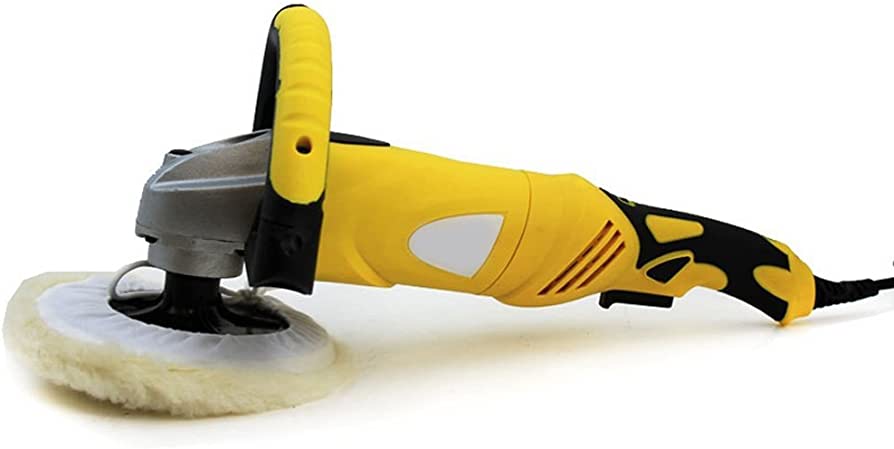
An electric buffer, also known as an electric polishing machine, orbital polisher, or rotary buffer, is a power tool that uses an electric motor to drive a rotating or oscillating foam or wool pad against a surface, applying polish, compound, or wax instead of rubbing by hand. The tool is used for paint correction, surface finishing, metal polishing, and surface preparation in the automotive, industrial, woodworking, and manufacturing industries.
An electric buffer is an electromechanical assembly that includes an electric motor (typically 500W-1200W single-phase AC or DC brushless), a gear reduction or eccentric mechanism that converts high-speed motor rotation into pad movement, a backing plate to which polishing pads are attached, a housing (typically die-cast aluminum or ABS plastic), and speed control electronics. These parts are assembled, tested, and sold as a completed power tool.
Electric buffers range in price from entry-level automobile buffers (₹800-2,500) to professional dual-action orbital polishers (₹5,000-15,000) and industrial surface preparation devices (₹20,000-60,000). Each tier serves distinct buyers and has varying quality standards, which opens up product variety potential for manufacturers.
Market Demand — Where Electric Buffers Are Used and Sold
The market for electric buffers in India is divided into five major demand segments:
- Auto detailing and automobile care: In Tier 1 and Tier 2 cities across India, the vehicle detailing sector has become much more professional. Car detailing facilities, which include paint correction, ceramic coating, and paint protection film, are opening in every city with an increasing car ownership base. Dual-action orbital polishers are used daily by professional detailers, and they need to be replaced every 12-24 months due to regular use. The car care product and tool market in India is increasing at a rate of 20% or more per year.
- Automobile manufacturing and workshops: Rotary and orbital buffers are used for surface finishing, paint correction after assembly, and pre-delivery inspection in automobile manufacturing facilities, body repair shops, and automotive ancillary units. Electric buffers are used in all multi-brand auto workshops and denting and painting shops.
- Metal fabrication and industrial finishing: Angle grinders with polishing pads and specialized polishing machines are used by fabrication businesses, manufacturers of stainless steel kitchen equipment, fabricators of elevator panels, and architectural metalwork units. A distinct, higher-power category is industrial surface finishing.
- Woodworking and furniture: Random orbital sanders and buffers are used for wax polishing and wood surface finishing by cabinet stores, furniture manufacturers, and wood floor finishers. An increasing source of demand is the growth of furniture manufacturing in India.
- Export market: Indian power tool producers sell their goods to markets in the Middle East, Africa, and Southeast Asia, where their prices are competitive with those of Chinese competitors in the entry-to-mid-range segment.
Types of Electric Buffers a Manufacturing Unit Can Produce
- Random Orbital Dual-Action (DA) Polisher: The most common professional car polishing tool; the pad travels in a random orbital pattern rather than a pure rotation. Professional detailers like this method since it is gentler on paint and less forceful than rotary.
- Rotary Buffer: Fixed rotation — increased cutting power, ideal for heavy paint correction and industrial polishing. The AC motor uses a simpler mechanism than DA.
- Mini Orbital Polisher (3-inch/5-inch): Small enough to fit in small spaces like door handles, bumper edges, and curves. Professional detailing kits are increasingly including supplementary products in addition to full-size DA polishers.
- Industrial Angle Polisher: Large-diameter backing plate and high-torque motor for polishing stainless steel, aluminum, and metal surfaces in fabrication. Motor power and pad installation differ from those used in automotive polishers.
- Floor Polisher/Buffer: A powerful floor cleaning and polishing machine for tiles, marble, concrete, and wood floors in hotels, hospitals, and commercial buildings. Large-format, walk-behind design.
Project Cost for Electric Buffer Manufacturing Unit
Cost Component | Small Unit (₹) | Medium Unit (₹) |
Motor winding and testing setup | 1,50,000–3,00,000 | 3,00,000–6,00,000 |
Die-cast housing (outsourced dies) | 1,50,000–3,00,000 | 3,00,000–6,00,000 |
Gear and eccentric mechanism machining | 1,00,000–2,00,000 | 2,50,000–5,00,000 |
PCB / speed controller assembly | 80,000–1,50,000 | 1,50,000–3,00,000 |
Raw material — copper wire, laminations, gears (3 months) | 1,50,000–3,00,000 | 3,00,000–6,00,000 |
BIS testing + quality equipment + working capital | 1,50,000–2,50,000 | 2,50,000–5,00,000 |
Total Project Cost | ₹8.30–15.00 lakh | ₹17.50–31 lakh |
PMEGP: Up to ₹50 lakh → 15–35% capital subsidy.
Manufacturing Process — How Electric Buffers Are Made
Electric buffer manufacture is an electromechanical assembly operation that combines motor production, precision mechanism assembly, housing production, and electronic integration.
Motor production: Copper wire is woven on laminated stator cores to power an alternating current or direct current motor. The rotor assembly was press-fitted to the shaft. Brushless DC motors use electronic commutation instead of carbon brushes. Motor performance (torque, speed, and efficiency) determines the tool’s quality.
Gear and eccentric mechanism: For DA (dual-action) polishers, an eccentric bearing on the motor shaft generates orbital motion. The gear reduction step fits the motor’s speed to the pad speed. The precision of the eccentric mechanism determines throw distance and pad movement quality.
Die-cast housing: Aluminum alloy housing die-cast to specification, including handles, motor compartment, and front bearing housing. For plastic-body tools — ABS injection moulding. Housing is generally outsourced to die casters in Rajkot or Pune by smaller manufacturers.
Speed control electronics: A TRIAC or PWM speed controller PCB enables variable speed operation. The electronic soft-start lowers the startup current spike. PCB assembly can be done in-house or by outsourcing.
Assembly and testing: All components are assembled using a production jig. Each assembled item was evaluated for no-load speed, vibration, current draw, and insulation resistance. BIS-marked units go through sample testing at a BIS-accredited laboratory.
Packaging: Includes a backing plate, user manual, and warranty card in a branded retail box.
What Our Electric Buffer Project Report Covers
- Product range: DA orbital polisher, rotary buffer, micro polisher, industrial angle polisher, and floor buffer.
- Manufacturing process: motor winding, eccentric mechanism, housing, speed control, assembly, and testing.
- Machinery list with supplier quotation references
- Raw material sourcing – copper wire (for motor winding), silicon steel laminations, die castings from Rajkot/Pune
- Make vs. buy decision: die-cast housing, gear mechanism, and PCB accurately assessed
- Installed capacity: units per month by product category.
- The 5-year utilisation schedule begins at 55-60%.
- Market analysis: automobile detailing, vehicle workshops, industrial finishing, export.
- Revenue forecasts are based on current wholesale pricing (₹800-15,000 per unit by kind).
- CMA data: all 7 RBI-prescribed statements.
- Verified DSCR above 1.25 for each repayment year. Properly written PMEGP employment generation part.
- Break-even analysis and payback plan.
Why Choose Sharda Associates
- 45,500+ project reports were delivered, covering power tools, electromechanical goods, and PMEGP industrial applications.
- The two most typically underestimated cost components in electric buffer project reports are accurately assessed: motor winding and die-cast housing.
- Outsourcing die-cast housing versus in-house is a significant early investment decision.
- BIS certification is required for organized retail and institutional supply channels.
- CA certification is approved by SBI, PNB, Bank of Baroda, Canara Bank, SIDBI, and KVIC.
- Starting at ₹2,999 · 24–48 hours
📞 +91 89899 77769 | All India service
Frequently Asked Questions
An electric buffer is a power tool that uses an electric motor to power a spinning or oscillating polishing pad. It is used for paint correction, surface finishing, and polishing in automotive (car detailing and workshops), industrial metal finishing, carpentry, and floor care applications. In India, the automobile detailing and workshop sector is the largest and fastest-growing buyer market.
Power tool and electromechanical equipment manufacture is eligible for PMEGP capital subsidies of 15-35% on projects up to ₹50 lakh. CA-certified KVIC-format project report with employment generating section required. Sharda Associates offers PMEGP project reports beginning from ₹2,999.
A rotary buffer rotates the pad in a fixed circular motion; great cutting power, utilized for heavy paint correction and industrial polishing, necessitates precision to avoid paint damage. Professional detailers choose dual-action (DA) orbital polishers, which move the pad in a random orbital pattern and are less forceful and safer on automobile paint. DA polishers are the leading professional market product.
Copper magnet wire for motor winding, silicon steel laminations for stator and rotor cores, die-cast aluminum housing (typically outsourced), carbon brushes (for brushed AC motors), precision-sourced gears and eccentric bearings, TRIAC or PWM speed controller PCB, backing plate, power cable, and packaging material.
BIS certification under IS 7637 (Electric Motor Driven Tools) is applicable to power tools, including electric buffers. BIS certification is necessary for supply to organised retail, institutional purchasers, and e-commerce platforms. Certification and testing fees must be included in the project report as pre-operative expenses.
Professional car detailing studios and auto workshops (primary professional buyers), automobile manufacturers and body shop suppliers, hardware and power tool distributors (for the retail channel), floor care and maintenance companies (floor polisher segment), furniture and woodworking units, and export buyers in the Middle East, Africa, and Southeast Asia via power tool export houses.
Melting kettles, mixers, blending systems, filtration units, cooling conveyors, pelletizing equipment, storage tanks, and packaging machinery are often needed in a hot melt adhesive manufacturing facility. A realistic financial plan is supported and production capacity is determined by the choice of machinery.
Wholesale price for an entry-level rotary buffer (500W, 180mm pad) ranges from ₹800 to 1,500. Mid-range DA orbital polisher (900W, 150mm) costs ₹2,500-5,000. Professional brushless DA polisher costs between ₹6,000-15,000. Industrial angle polishers (1000W+) range from ₹5,000 to ₹18,000. Floor polisher/buffer costs ₹4,500-12,000.
Starting at ₹2,999, with delivery within 24-48 working hours. PMEGP model includes employment generation, BIS certification costs, and a manufacture vs buy assessment for housing and gearboxes. If the bank has any concerns, there will be no charge for correction. Call +91 89899 77769.